Introduction
Hey, ever tried finishing a dress or craft project and felt something was missing? Maybe the stitching looked good, the fabric was strong, but the final piece still felt plain. That happens to a lot of DIY crafters. Small design upgrades often make the biggest difference.
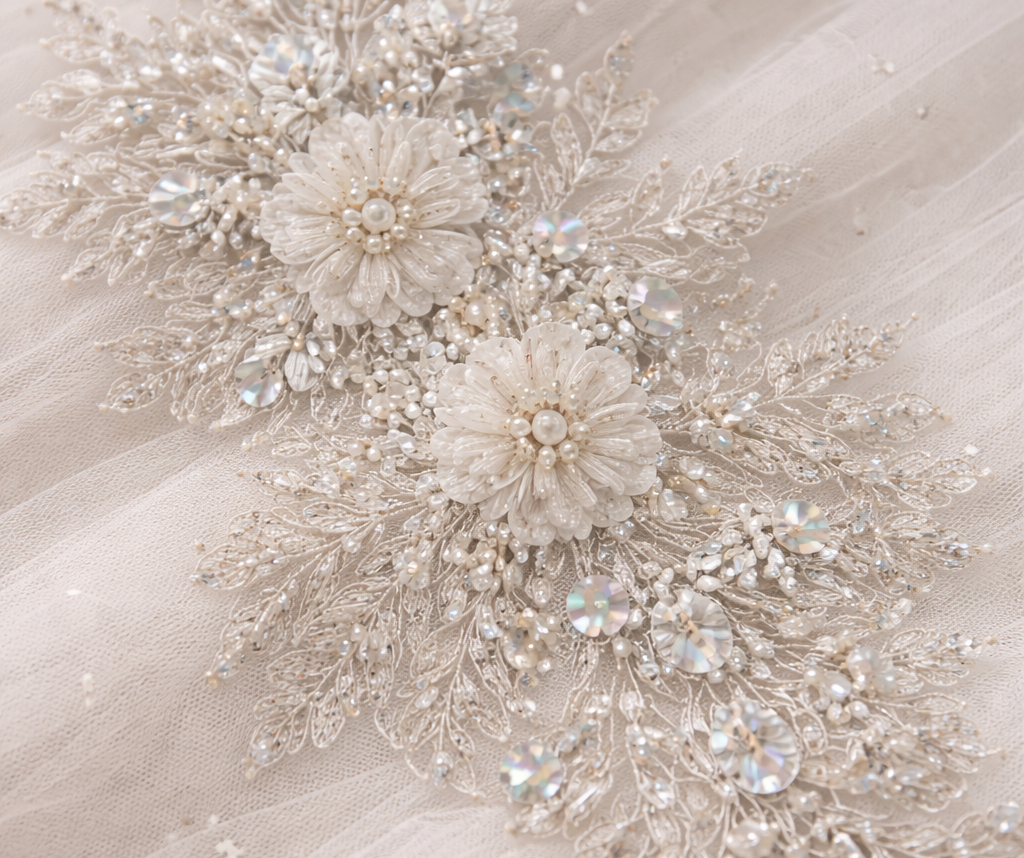
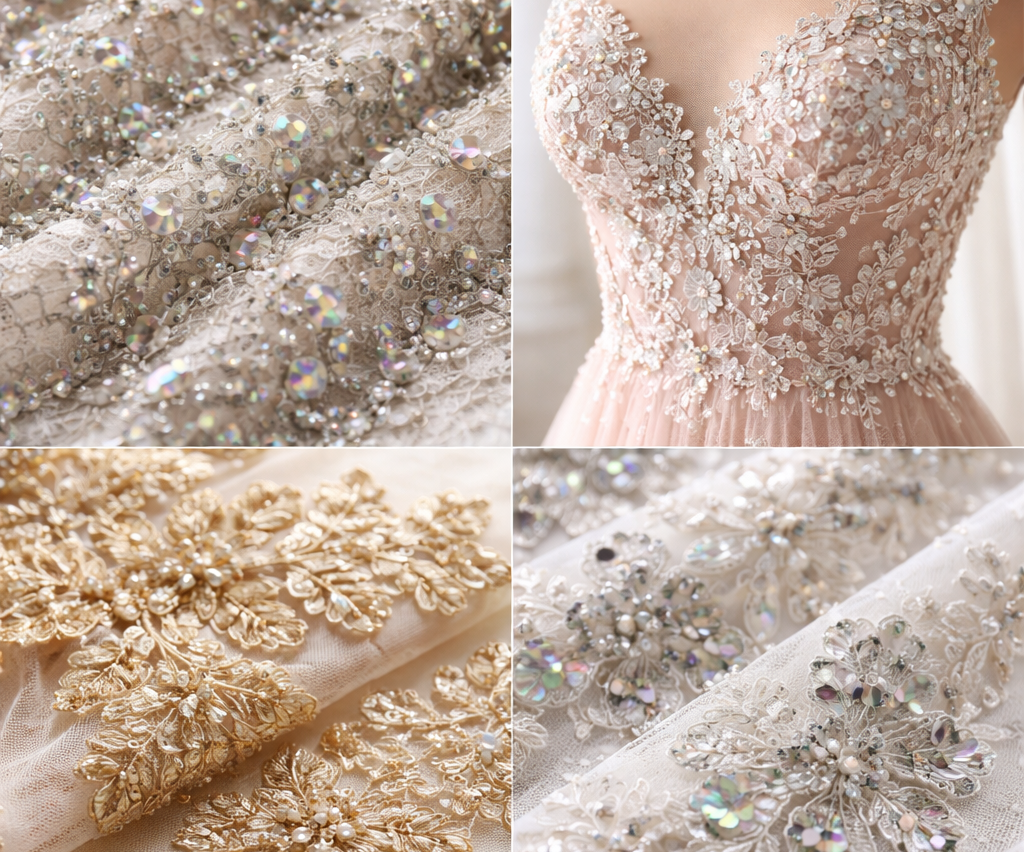
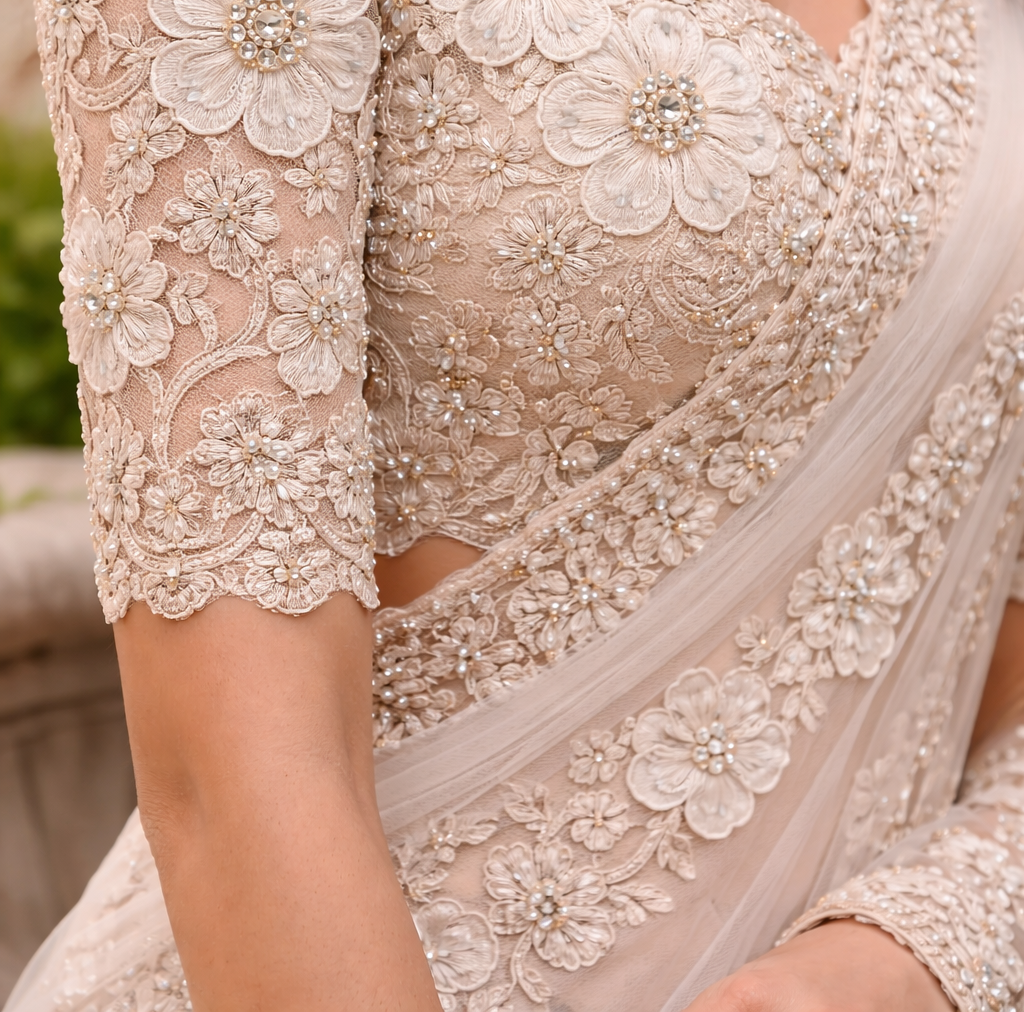
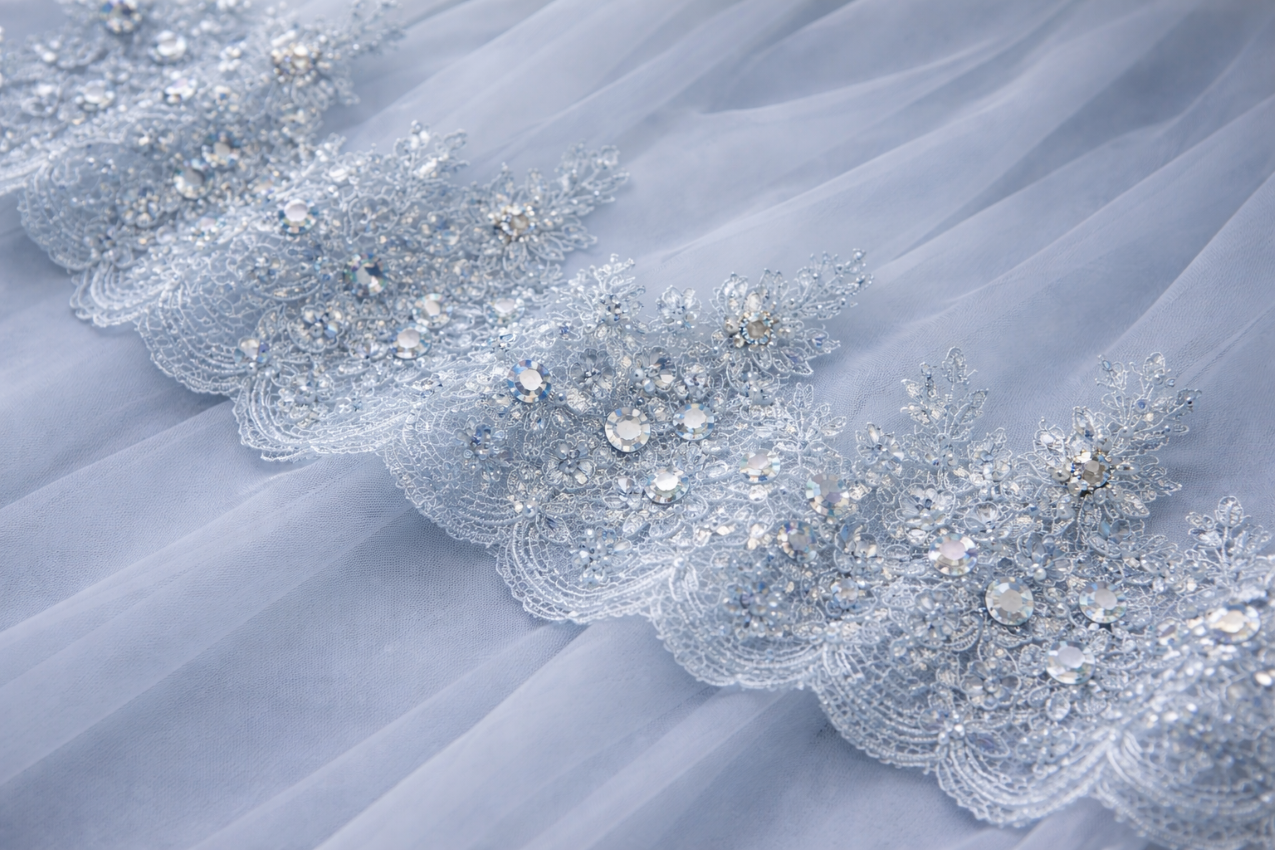
One quick upgrade many makers now use is sequin and rhinestone lace appliqués. These trims combine lace fabric with stitched sequins and glass rhinestones. The result is a decorative strip you can sew or heat-bond onto fabric. Dresses, bags, jackets, costumes, and even wedding décor use them.
Most lace appliqués today use nylon lace fabric weighing around 50g/m², which keeps them flexible but strong. Sequins are often 4–6mm PET plastic discs, stitched with polyester thread. Rhinestones used in trims are typically 3–5mm glass stones, sometimes cut with 5000+ facets similar to Swarovski-style crystals. That cut allows light to reflect easily, giving sparkle without expensive stones.
Another benefit is durability. Good appliqués use heat-bond adhesive backing tested to hold up to a 2kg pull force after bonding at 150–160°C for 10 seconds. That means the trim stays attached even after regular washing.
So if your project feels flat, the fix might not be new fabric. Sometimes it is just a strip of lace with sequins and rhinestones.
Let’s talk about the problems first.
The Problem
If you do sewing or DIY crafts, you probably tried decorative trims before. Many beginners buy cheap appliqués from craft stores or online marketplaces. They look good in photos, but once you start using them, problems show up quickly.
First issue: cheap glue backing. Many trims use low-grade adhesive that barely sticks to fabric. After ironing them onto cotton or polyester, the trim may peel off within days. This happens because some adhesives activate at only 90–100°C and lose strength after washing.
Second issue: plastic rhinestones with poor cuts. Cheap stones often have only a few flat facets. That means they reflect little light. Instead of sparkle, they look dull.
Third issue: weak stitching holding sequins. Some mass-produced appliqués use thin thread that breaks easily. Once one thread breaks, several sequins fall off.
Fourth issue: irregular lace base. Low-quality lace might be uneven or too stiff. If lace weight exceeds 80g/m², it becomes difficult to sew on delicate fabrics like chiffon or satin.
Another problem appears during washing. Some trims claim to be washable but fail quickly. Sequins crack, glue softens, and lace edges fray.
All these issues cause frustration. You spend time attaching a trim, finishing the project, and showing it to someone—only to notice pieces falling apart.
That’s why many crafters start looking for better appliqués made with stronger lace, stronger glue, and durable rhinestones.
Because when decorative trims fail, your entire project suffers.
Why It Bothers You (Agitate)
When a trim fails, the damage is bigger than just decoration.
Imagine you spent 4–5 hours sewing a dress or costume. You attach a decorative appliqué along the neckline. Everything looks good. But after the first wash, some sequins detach.
Now the piece looks uneven.
This happens more often than people think. Many low-quality trims use polypropylene sequins that crack after exposure to warm water above 40°C. Once cracked, the stitching loosens.
Another common problem is lace edge fraying. Cheap lace may skip the final heat sealing step. Without that step, the lace fibers begin separating after washing or friction.
Then there is the rhinestone issue. Cheap stones often use acrylic plastic instead of glass. Acrylic scratches easily. After a few uses, stones lose shine.
For sellers, the problem becomes even bigger.
Online marketplaces like Etsy and Amazon rely heavily on reviews. If a product decorated with cheap appliqués starts shedding stones, customers complain.
Returns increase.
Refund requests increase.
And negative reviews appear.
Even hobby crafters feel the loss. You spend money on materials, then need to repair the item again. A small $2 trim can lead to hours of extra work.
That’s why experienced crafters prefer durable lace appliqués with properly stitched sequins and glass rhinestones.
They cost slightly more—but they save time and frustration.
Your Fix: Key Features
Good sequin and rhinestone lace appliqués solve many of those problems. Here are the key features to look for when choosing trims.
• Nylon Lace Base (50g/m² Weight)
Most durable appliqués use 80% nylon lace blended with polyester, weighing around 50g/m². This keeps the lace flexible but strong. It drapes well on garments and does not stiffen fabric.
• Glass Rhinestones (3–5mm Size)
Higher-quality trims use glass rhinestones instead of acrylic. Glass stones often contain 5000+ micro facets, improving light reflection. Even small stones can sparkle under normal lighting.
• Heat-Bond Adhesive Layer
Many appliqués include a heat-activated adhesive backing. Good adhesives activate around 150–160°C and create strong bonds. Lab tests show these adhesives can withstand up to 2kg pulling force before detaching.
• Machine Wash Resistance
Better trims are tested for machine washing at 40°C. The adhesive and stitching remain stable after multiple wash cycles.
• Sequins with Reinforced Stitching
Sequins usually measure 4–6mm diameter. Durable appliqués stitch each sequin with polyester thread rated around 4kg tensile strength. This prevents loose sequins.
• Pattern Repeat Length
Lace trims are typically produced in repeating patterns. A common repeat length is 10cm, allowing symmetrical placement across garments.
• Bulk Rhinestone Packs
Some trims include detachable stones or packs. Bulk packs often contain 100 rhinestones costing around $0.10 each in wholesale markets. This makes replacement easy if needed.
• Flexible Application Methods
Good trims allow three installation methods:
-
Sewing
-
Heat pressing
-
Fabric glue
This flexibility helps when working with different fabrics like denim, satin, or organza.
Together, these features make appliqués much more reliable. Instead of decorations falling apart, they stay attached and keep their shine.
For DIY crafters, that means less repair work and more finished projects.
Real-World Case Study
A small Etsy clothing seller tested these trims in 2024.
The shop originally sold handmade evening dresses with simple lace borders. Monthly sales averaged $500. Most dresses used plain lace without decoration.
The seller decided to upgrade designs using sequin and rhinestone lace appliqués along necklines and sleeves.
Each dress used approximately 1.2 meters of lace trim costing about $6. The trims contained 3mm glass rhinestones and stitched sequins.
After updating product photos and relaunching listings, the results changed quickly.
Within four months:
-
Monthly revenue increased from $500 to $1500
-
The shop received 200+ customer reviews
-
Average rating reached 4.8 stars
-
Customers frequently mentioned the sparkle detail
The seller also noticed fewer complaints about decoration durability. Because the appliqués were stitched and heat bonded, stones stayed attached even after washing.
The upgrade cost per dress was small, but the visual difference increased customer interest.
For small sellers, this kind of trim upgrade can significantly improve product presentation.
FAQs
1. Can rhinestone lace trims be machine washed?
Yes, most good trims handle washing at 40°C.
2. Are glass rhinestones better than plastic?
Yes. Glass stones reflect more light and scratch less.
3. How are appliqués attached?
They can be sewn, glued, or heat-pressed.
4. Do sequins fall off easily?
Not when stitched with polyester thread.
5. What lace width is common?
Most trims range from 3cm to 12cm wide.
6. Can beginners use them?
Yes. Even simple ironing or sewing works.
Conclusion
If your projects feel plain or your trims keep failing, the solution may be simple. Switch to durable lace appliqués with sequins and glass rhinestones.
They cost only slightly more but last much longer. Strong lace bases, reinforced stitching, and heat-bond adhesives keep decorations attached even after washing.
For DIY crafters and small sellers, this small upgrade can change the final look of a project. Dresses, bags, jackets, and costumes instantly gain more detail.
If you want better results, test one trim on your next project. You might be surprised how much difference a small strip of lace can make.