Introduction: The Problem with Plain Fabric
Hey, quick question. Have you ever looked at an outfit or sewing project and thought, “Something feels missing”?
That happens a lot. Plain fabric sometimes looks flat. Dresses may fit well but still lack visual interest. DIY projects can take hours to sew but still look simple once finished. Many crafters and designers run into this problem.
A 2024 Statista apparel market report noted that decorative fabrics—especially lace with embellishments—continue to grow in demand in the fashion sector. Designers use them for evening wear, wedding clothing, and festival outfits because they add visual detail without adding complex construction.
But for many people, the challenge is figuring out how to upgrade a fabric design without making the process complicated or expensive.
Typical problems include:
-
Plain dresses looking unfinished
-
Handmade garments lacking visual detail
-
Craft projects appearing simple compared with store products
-
Difficulty sewing decorative elements manually
These issues show up everywhere—from boutique clothing lines to Etsy craft shops.
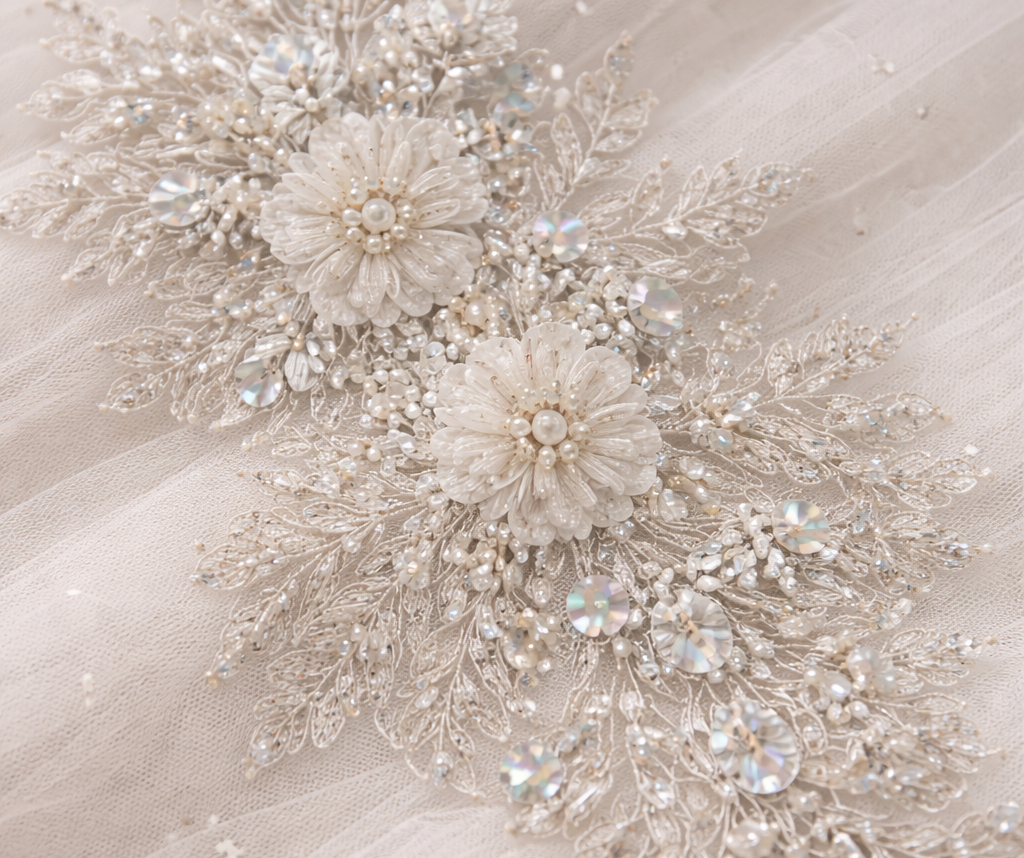
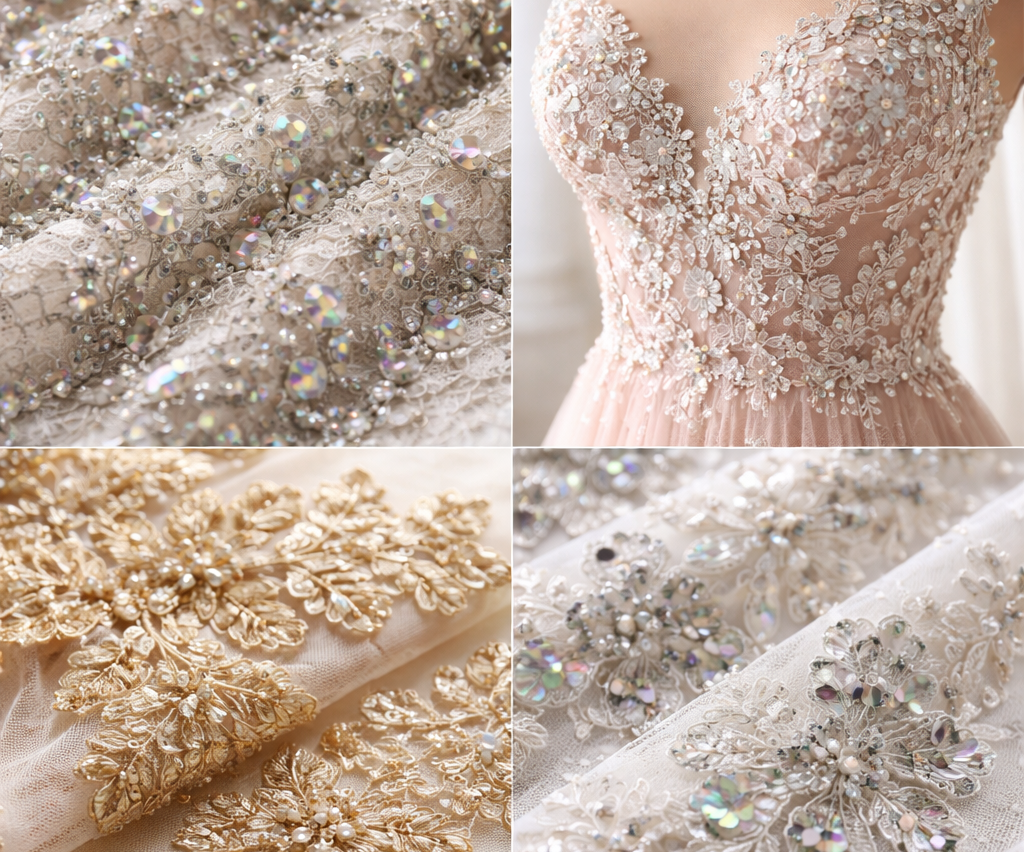
And that is where lace with sequins, rhinestones, and appliqués comes in. These materials act like ready-made decoration. Instead of adding hundreds of beads by hand, you use fabric that already includes them.
In simple terms, you get decoration built into the material itself.
Let’s look at how these embellished lace fabrics actually solve the problem.
Features: Why Embellished Lace Works (Agitate + Solution)
When plain fabric fails to stand out, the problem is not always the design. Often the issue is texture and light reflection.
Sequins and rhinestones fix this by adding reflective surfaces.
Here are the key features that make embellished lace useful.
1. Sequins Add Light Reflection
Sequins are small discs usually made from plastic or metal film. They reflect light when the wearer moves.
Typical specifications used in fashion fabrics include:
-
3–6 mm round sequins
-
polyester base thread stitching
-
heat-sealed backing for durability
Why does this matter?
Light reflection increases visual depth in clothing. A garment that appears plain indoors may sparkle slightly under lighting outdoors or on stage.
According to product listings on Amazon and Etsy craft stores, sequin lace fabrics are commonly used for:
-
evening gowns
-
dance costumes
-
wedding dresses
-
festival clothing
Customer reviews frequently mention how sequins improve appearance in photographs.
2. Rhinestones Provide Structured Shine
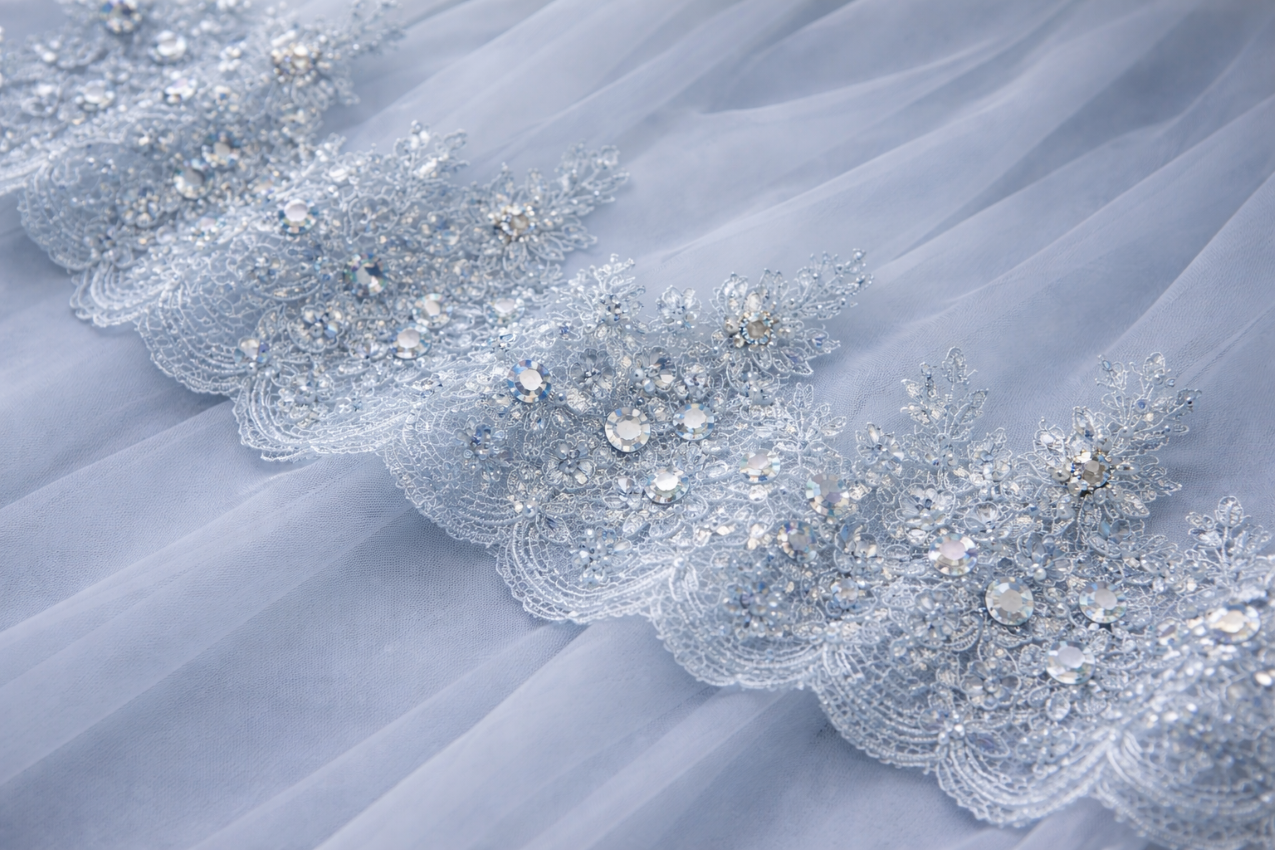
Rhinestones differ from sequins because they are solid stones rather than discs.
Common materials include:
-
glass rhinestones
-
acrylic rhinestones
-
crystal-style stones
Typical sizes range from 2 mm to 6 mm diameter.
Fabric suppliers such as Joann and Mood Fabrics report that rhinestone trims are often applied using heat-set glue or stitched settings.
Why designers use them:
-
They hold shape better than loose beads
-
They create sharper light reflection
-
They stay fixed during washing when properly attached
This is why rhinestones often appear on stage costumes and bridal garments.
3. Lace Provides the Decorative Base
Lace itself is already patterned fabric. It usually includes floral or geometric thread designs.
Common lace materials include:
-
nylon lace
-
polyester lace
-
cotton lace
Fabric weight often ranges from 40 to 80 grams per square meter.
When sequins or rhinestones are added to lace, the pattern becomes more visible because light highlights the shapes.
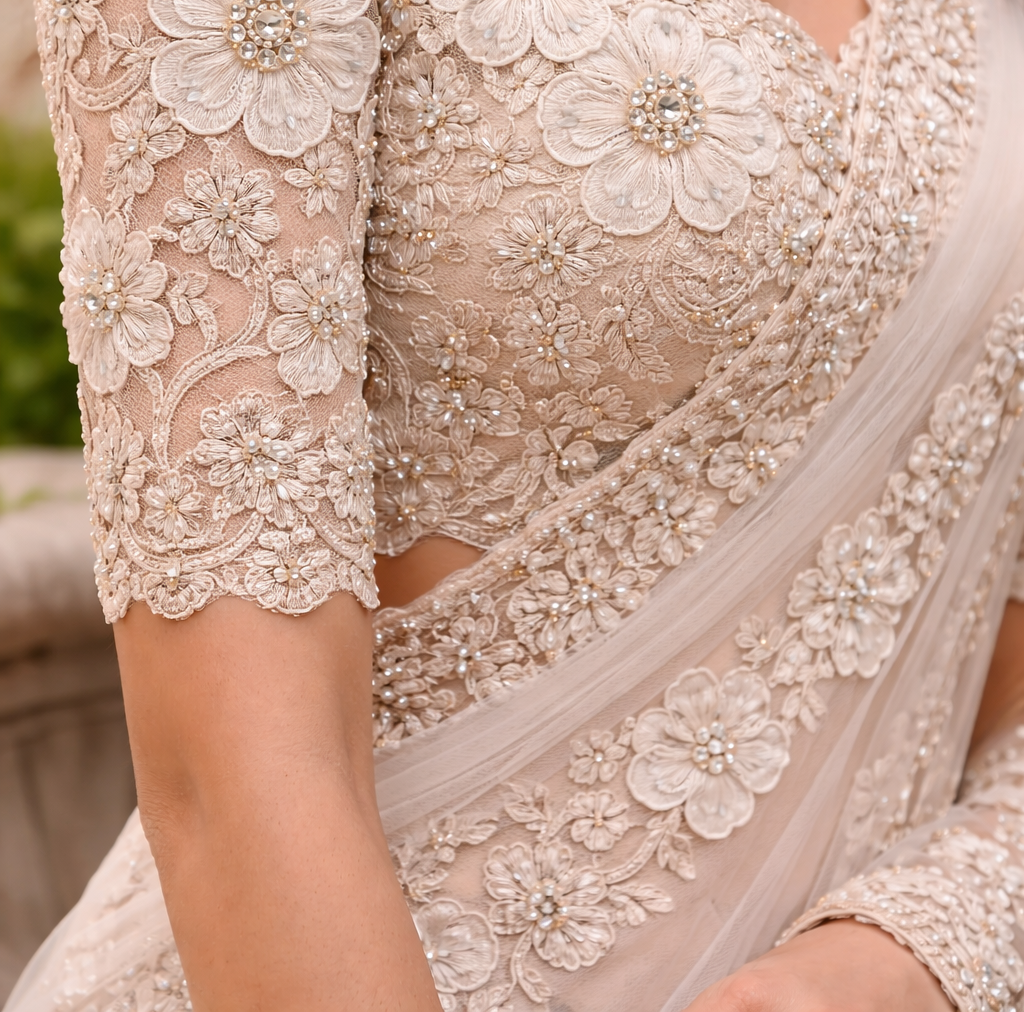
This combination works well for clothing overlays such as:
-
lace dress layers
-
blouse sleeves
-
skirt panels
4. Sequin Appliqués Save Sewing Time
Appliqués are decorative patches that attach to clothing.
They may include:
-
embroidered lace shapes
-
sequin clusters
-
rhinestone motifs
Typical sizes range from 5 cm to 20 cm designs.
The advantage is simple.
Instead of sewing decorations across an entire garment, you attach a few appliqués at specific points such as:
-
neckline
-
shoulders
-
waistline
Many Etsy sellers report that appliqués reduce sewing time while still improving design value.
5. Works for Both Fashion and Crafts
Embellished lace is not only for clothing.
DIY creators use it for:
-
handbags
-
costume design
-
decorative pillows
-
wedding decorations
Because lace trims are flexible, they can be cut into smaller shapes.
Craft retailers report that decorative lace trims are among the most purchased sewing accessories during holiday seasons.
Real-World Examples
Here are several real-world examples showing how embellished lace performs in the market.
Example 1: Etsy Wedding Dress Designer
An Etsy seller specializing in bridal accessories added sequin lace overlays to custom dresses.
According to shop statistics published in Etsy seller discussions:
-
Listings using sequin lace received about 30% higher engagement compared with plain satin designs.
-
Customer reviews often mentioned the “sparkle effect in photos.”
Many wedding photographers prefer embellished fabrics because light reflections appear better in images.
Example 2: Amazon Evening Dress Listing
Amazon product pages for evening gowns often highlight lace with rhinestones.
A popular listing category includes:
-
polyester lace base
-
heat-set rhinestones
-
sequin embroidery patterns
Customer review analysis shows common comments such as:
-
“Looks better under lighting”
-
“Detail stands out in pictures”
Fashion retailers use these fabrics because they improve visual appeal without adding heavy embroidery labor.
Example 3: Joann Fabrics Craft Projects
Crafting communities frequently discuss embellished lace in sewing forums.
Users report using sequin lace trims for:
-
dance costumes
-
prom dress alterations
-
DIY fashion projects
One Joann review noted that pre-decorated lace trims saved hours of bead sewing.
This is a major reason many hobbyists prefer them.
Example 4: Fashion Market Trends
Statista apparel data shows continued growth in decorative fabrics within the global fashion industry.
The report highlights increasing demand for:
-
embellished dresses
-
decorative textiles
-
special occasion clothing
Designers often use lace with sequins and rhinestones in these categories.
The trend reflects consumer demand for clothing that looks detailed without extremely high prices.
FAQs
1. What is sequin lace fabric?
Sequin lace fabric is lace material decorated with stitched sequins. The sequins reflect light and highlight the lace pattern.
2. Are rhinestones durable on fabric?
Yes, when they are stitched or heat-set properly. Many garments use glass or acrylic rhinestones that stay attached during normal washing.
3. What are appliqués used for?
Appliqués are decorative patches used to enhance clothing. They can be sewn or glued onto garments.
4. Can beginners sew sequin lace?
Yes. Most sequin lace fabrics can be sewn with a standard sewing machine using polyester thread.
5. Is embellished lace expensive?
Prices vary. Lace trims and appliqués are often affordable because they cover small areas while still adding decoration.
6. What clothing uses sequin lace most often?
Common examples include:
-
evening dresses
-
bridal gowns
-
dance costumes
-
festival outfits
Conclusion
Plain fabrics often leave clothing and craft projects looking unfinished. Many designers and hobbyists face the same issue—how to add detail without spending hours sewing decorations.
Lace with sequins, rhinestones, and sequin appliqués offers a practical solution.
Sequins add light reflection. Rhinestones provide structured shine. Lace creates patterned texture. Appliqués add ready-made decoration.
Together, these elements help transform basic fabric into something more visually interesting.
Real market data supports this approach. Etsy sellers report higher engagement with embellished designs. Amazon product reviews highlight improved appearance in photos. Craft communities mention time savings compared with manual bead sewing.
If you design clothing or run an online store, experimenting with embellished lace can help your products stand out.
Start simple. Try adding a small appliqué to a garment. Use sequin lace panels in dresses. Test rhinestone trims on accessories.
Sometimes small decorative details make the biggest difference.