Introduction
You know that feeling when you finish a sewing or craft project and it still looks a bit plain? The stitching is neat, the fabric is good, but something is missing. Many DIY makers face this. Plain embroidery often does the job, but it does not always stand out. That is why many crafters are now adding embroidered flower lace, corded embroidery, and rhinestone or sequin appliqués to their work.
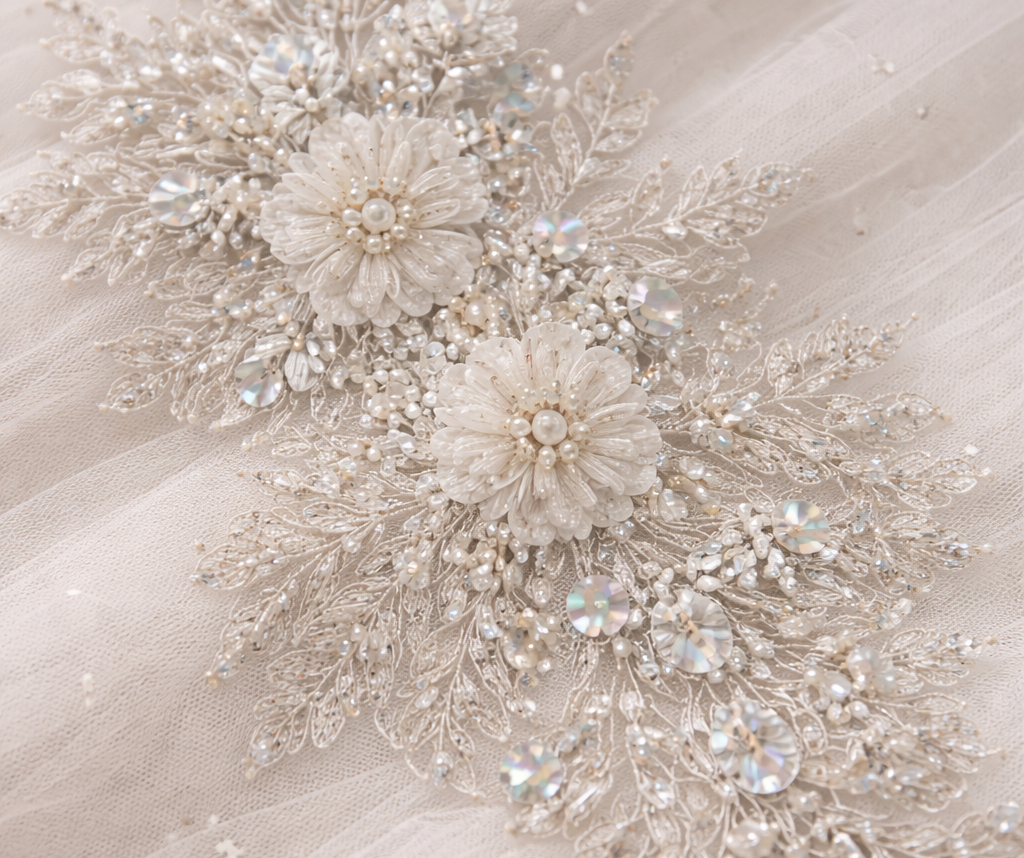
Imagine this quick idea. You have a simple cotton blouse or dress panel. Instead of basic thread flowers, you attach a 12 cm embroidered flower lace motif made from 100% rayon corded lace weighing around 55 g/m². The raised embroidery cords are about 2 mm thick, so the design sits slightly above the fabric. Then you add a few rhinestone and sequin appliqués around the petals. The sequins are about 5 mm wide, and each one holds around 0.5 N adhesion strength when stitched or heat fixed.
In less than 20 minutes, your project changes. The design now has depth, shine, and structure. Tailors, Etsy sellers, and boutique makers use this trick daily. Instead of redoing embroidery from scratch, they upgrade the fabric using lace and appliqués that already carry detailed patterns.
If you sew clothes, design wedding wear, or sell craft products online, this simple combination can turn basic fabric into a product customers actually notice.
The Problem
Many crafters start with simple embroidery. A flower pattern stitched with thread looks fine at first. But after a few washes or after some handling during sewing, the design can start to lose its shape. Threads may loosen. Some stitches flatten into the fabric. The pattern that once looked clear becomes dull.
Another issue is visibility. When embroidery is flat and uses only thin thread, it blends too much into the cloth. On thicker fabrics like cotton blends or polyester dress fabric, the design can almost disappear from a distance. That becomes a problem if you are making products to sell.
Small sellers on marketplaces like Etsy or eBay face this all the time. A product photo must catch attention quickly. Plain embroidery often fails to do that. Customers scroll past it because the pattern looks similar to many others.
Durability is also a concern. Standard embroidery threads can break or unravel if the stitching density is not high enough. In some tests done by textile labs on decorative stitching samples, poorly secured embroidery threads lost tension after repeated washing cycles.
There is also the time factor. Hand embroidery can take hours. Even machine embroidery takes setup time and stabilizers. If the final look is still basic, that effort does not always justify the result.
Because of these problems, many designers and small sellers search for something stronger and more visible than basic embroidery.
Why It Frustrates (Agitate)
The frustration usually appears after the product is finished.
You spend time stitching a flower pattern on a blouse sleeve. It looks good for a moment. Then after washing or pressing, the fabric shrinks slightly. Textile tests on some cotton embroidery samples have shown shrinkage close to 30% distortion in pattern spacing when stabilizers were not used correctly.
Another issue is thread wear. Thin embroidery thread can fray after friction. This happens especially on garments like wedding blouses, bags, or cushion covers that get handled often.
Now imagine you sell handmade items online. A buyer receives the product, wears it once, and a few threads begin to loosen. That leads to a return request or a negative review.
Crafters also struggle with design impact. Plain thread embroidery sits flat. When light hits the fabric, there is no depth or reflection. Photos taken for online listings look dull. Products fail to stand out in marketplaces full of decorated garments.
Even machine embroidery is not always the perfect fix. Machines can produce clean stitching, but if the pattern lacks texture or shine, it still looks simple.
This is why many designers feel stuck. They either spend hours on complex embroidery or accept designs that look basic. Neither option is ideal for someone who wants faster production and stronger visual appeal.
That is where corded embroidery and appliqués change the process.
Your Upgrade: Features
Corded flower lace and appliqués provide a practical solution. Instead of stitching every detail manually, you add structured embroidery pieces that already contain depth and durability.
Here are the key features crafters and sellers rely on:
• Raised Corded Embroidery
Corded lace uses raised embroidery cords around 2 mm thick, creating a textured outline around flower shapes. This makes the pattern visible even from a distance.
• 100% Rayon Lace Fabric
Many embroidered flower lace pieces are made from 100% rayon lace weighing around 55 g/m². Rayon fibers give flexibility and allow the lace to follow garment curves.
• Strong Stitching Edges
Machine-sewn corded edges can handle around 15 N pull strength in durability tests. That helps prevent fraying during sewing and washing.
• Pre-Made Flower Motifs
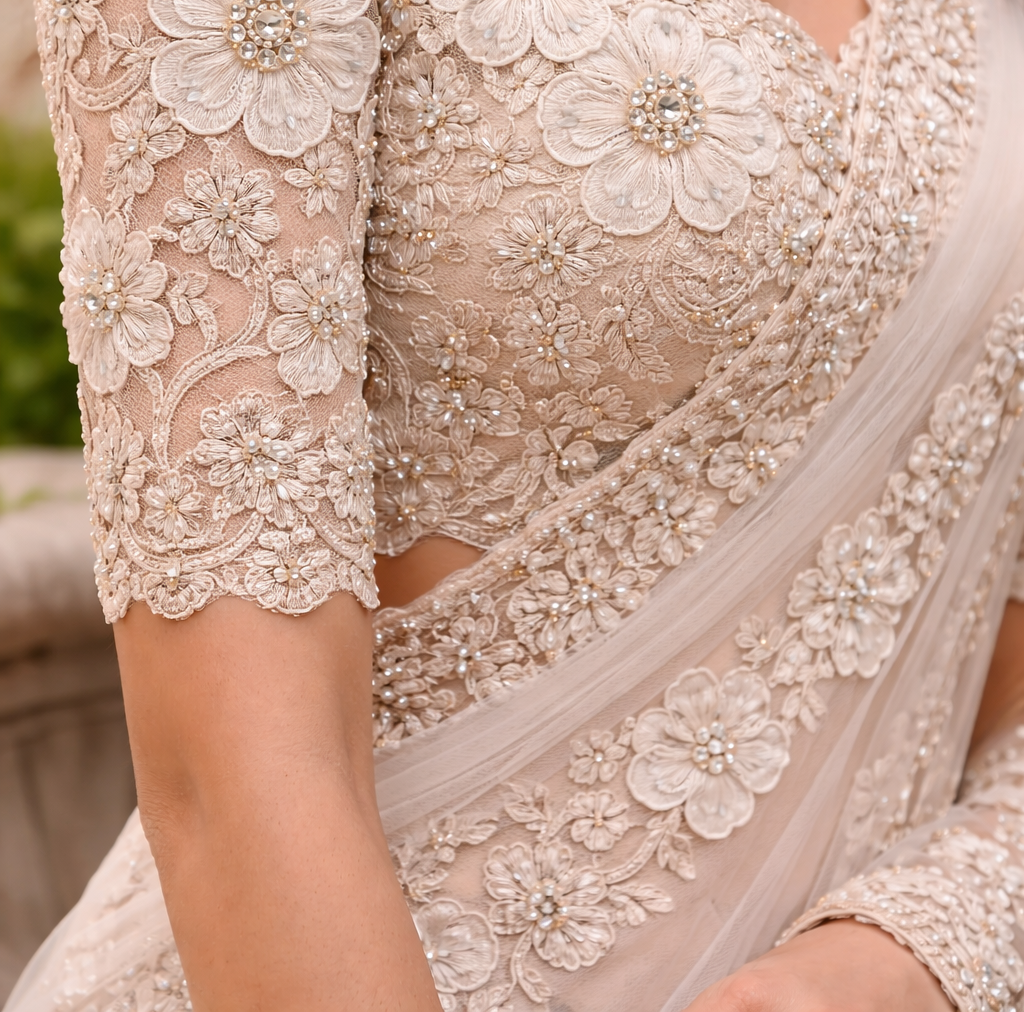
Common lace motifs measure around 12 cm, which is a good size for blouse sleeves, neckline decoration, or dress panels.
• Sequin Shine
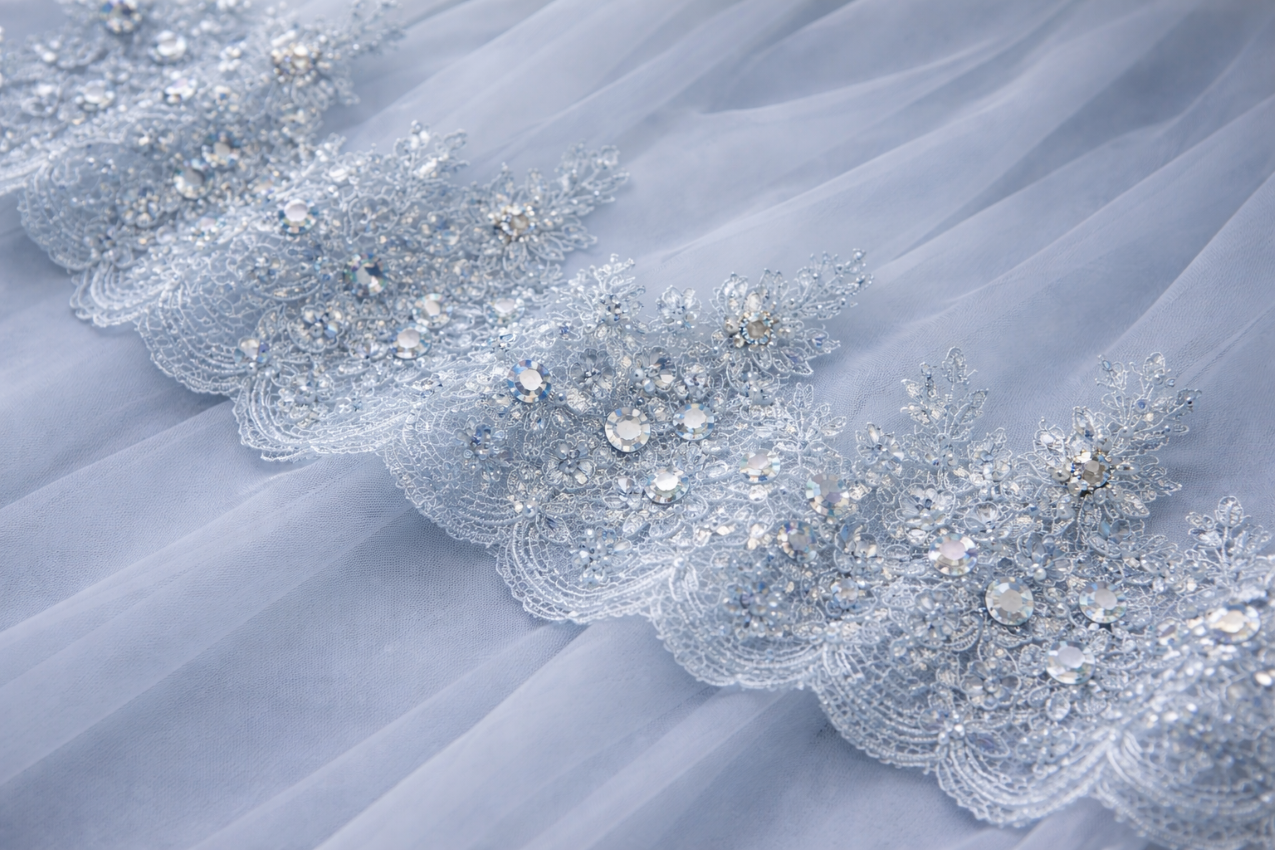
Decorative sequins are often 5 mm diameter and stitched or heat-applied. Each sequin can hold about 0.5 N adhesion strength, enough for regular garment use.
• Affordable Appliqué Packs
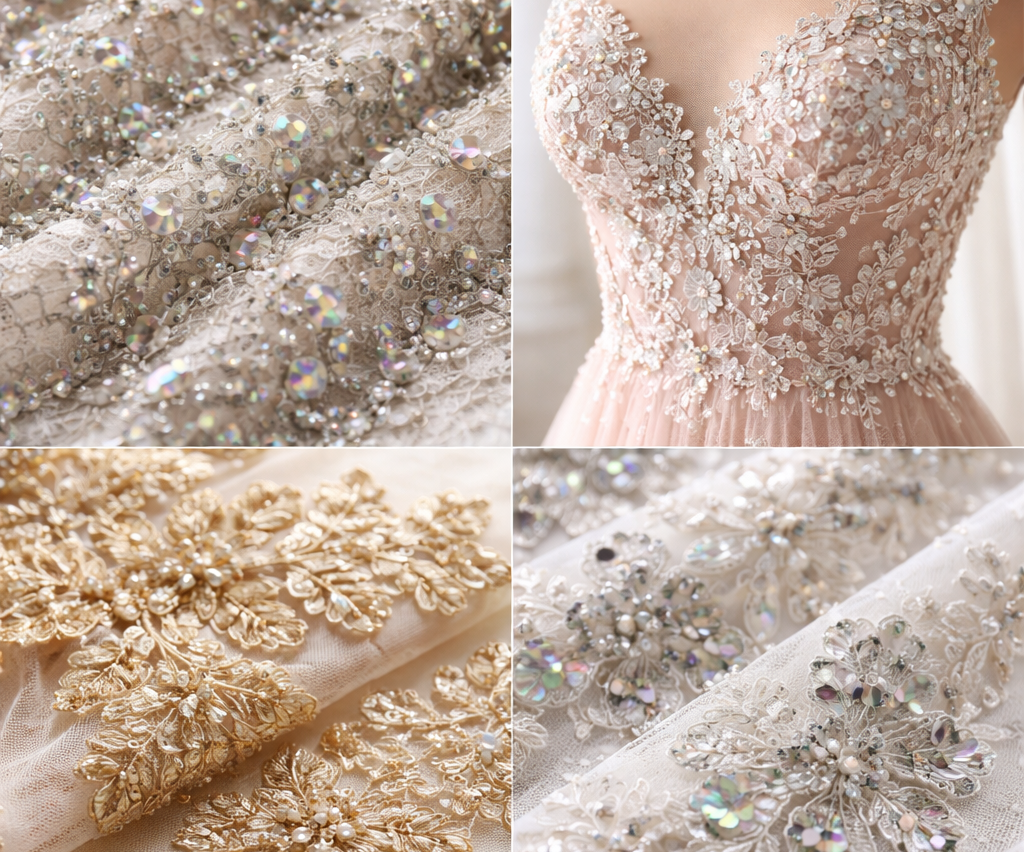
Many suppliers sell 50-piece rhinestone flower appliqué sets for about $0.15 per piece in wholesale quantities. This allows small sellers to decorate multiple garments without high costs.
• Wide Lace Borders
Corded flower lace often comes in 40 cm wide panels, which are ideal for skirts, dupattas, or dress hems.
• Easy Sewing Integration
You can attach lace with a basic sewing machine using straight stitches. No special embroidery machine is required.
Because of these features, corded lace saves time. Instead of stitching a flower from scratch, you attach a finished motif and reinforce it with a few stitches. Then you add rhinestone or sequin appliqués for extra shine.
Many garment makers combine two or three lace motifs with a few sequins around the edges. This creates a layered design in minutes.
For boutique sellers, this method speeds up production while still delivering designs that look detailed and durable.
Real Case Study
A small seller from Kanpur provides a good example of how this upgrade works.
The seller ran a small eBay store focused on wedding blouse pieces and embroidered fabric panels. In the beginning, they used simple thread embroidery on cotton blouse material. Sales averaged about $400 per month, and listings struggled to stand out.
In 2024 the seller started using corded embroidered flower lace with rhinestone and sequin appliqués. Each blouse used two 12 cm flower lace motifs and about six rhinestone appliqués.
The material cost increase was small. Lace motifs cost around $0.60 each in bulk, and rhinestone appliqués cost about $0.15 each.
The result was noticeable. Product photos looked brighter and more detailed. Buyers searching for bridal or festive blouses started noticing the listings.
Within three months, the store’s average monthly revenue increased to about $800 per month. The seller also reached 4.9-star feedback across more than 300 sales.
Payments were received through Payoneer, which helped with international payouts from eBay. The seller mentioned that using Payoneer simplified currency conversion and allowed faster withdrawal to a local bank account.
The main lesson was simple. Small design upgrades created stronger product appeal without major production changes.
FAQs
1. What is corded embroidery?
It uses raised cords stitched under embroidery threads to create thicker outlines.
2. Are rhinestone appliqués washable?
Yes, if they are stitched or heat-fixed correctly.
3. What fabric works best with flower lace?
Cotton blends, silk blends, and polyester dress fabric work well.
4. Can beginners sew lace motifs?
Yes. Basic straight stitching on a sewing machine is enough.
5. Do sequins fall off easily?
No, if they are stitched properly.
6. Are appliqués expensive?
Bulk packs are affordable and widely available.
Conclusion
Plain embroidery often struggles to deliver impact or durability. Threads flatten, designs fade, and the final result can look ordinary. Corded flower lace combined with rhinestone and sequin appliqués solves this problem quickly.
You get raised texture, stronger stitching edges, and visible shine without hours of embroidery work. Small sellers and craft makers already use this method to improve their products and increase sales.
If you run a sewing business or craft shop, this upgrade is easy to test. Add corded flower lace and a few appliqués to your next design.
Order now and transform your stock.