Introduction: The Problem with Plain Designs
You know how boring outfits can feel sometimes?
You spend time sewing a dress or designing a clothing piece, but once it is finished, something still looks missing. The fabric may be good quality. The stitching might be perfect. But the design still feels flat.
This happens often in sewing and fashion design.
Plain materials do not always create enough visual interest. That problem becomes even more noticeable when clothing is photographed for online stores or social media. Items that look simple in photos often receive less attention.
The same problem affects DIY craft projects. A bag, costume, or handmade dress may take hours to build, yet it still appears basic once finished.
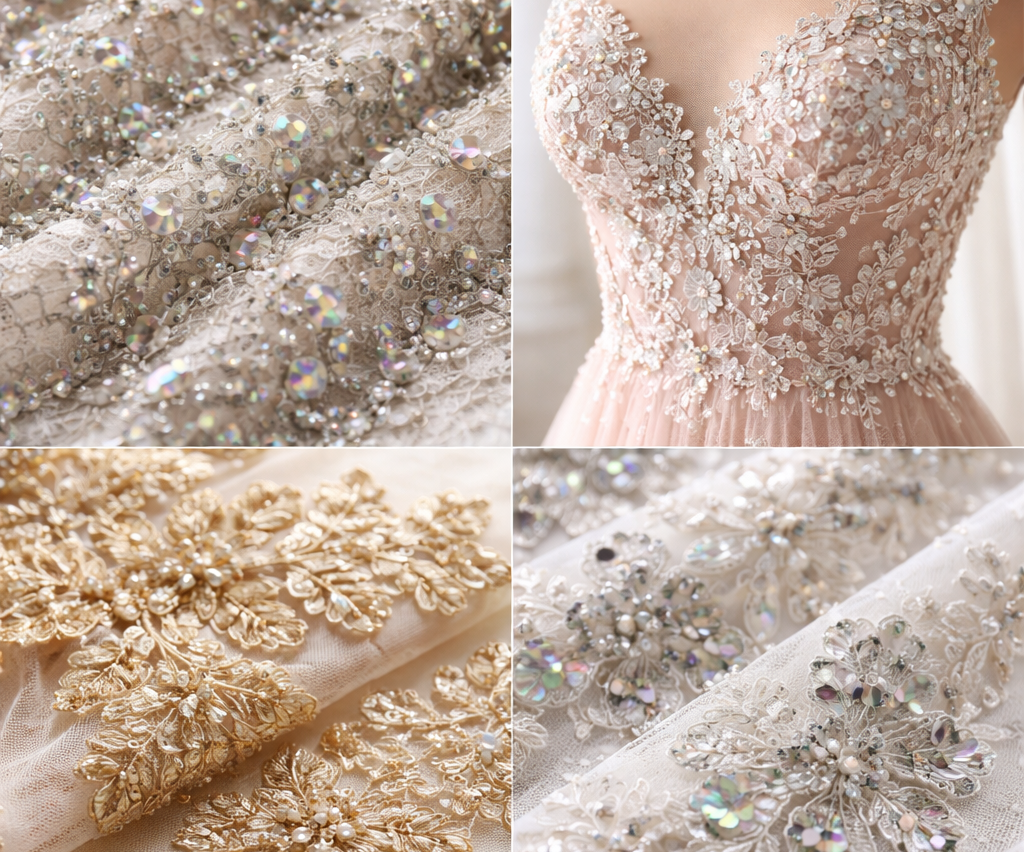
According to reports from Grand View Research on the decorative fabric market, consumer demand is increasing for garments with visible texture such as lace embroidery and beaded designs. Decorative elements help clothing stand out in both physical stores and online images.
But adding decoration manually can be difficult. Sewing beads one by one takes time. Embroidery requires skill and patience. Many beginners avoid these techniques because they feel too complex.
This is where embroidered flower lace, sequin appliqués, and beaded appliqués come in.
Instead of building decoration from scratch, these elements provide ready-made visual detail that can be attached directly to fabric.
In simple terms, they help transform a plain design into something more interesting without making the sewing process harder.
Features: Why Embroidered Lace and Appliqués Work
Plain fabric problems often come from one issue: lack of texture and light interaction.
Decorative lace and appliqués solve this by adding surface detail. Let’s look at how each type works.
Embroidered Flower Lace Creates Texture
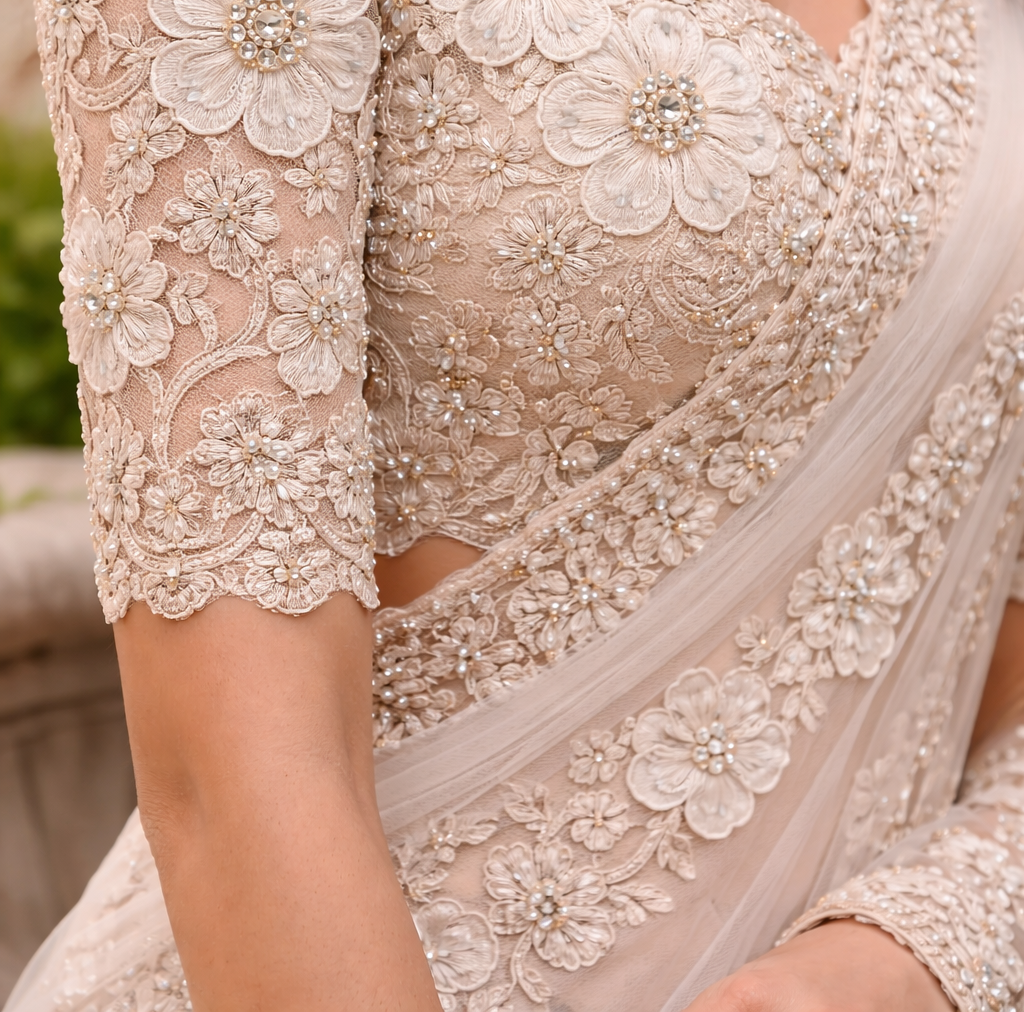
Flower lace designs use stitched thread patterns arranged into floral shapes.
Typical features include:
polyester or cotton thread embroidery
floral patterns ranging from 5 cm to 20 cm
lightweight lace base fabric
The advantage is simple. Embroidery creates raised patterns that give clothing visual depth.
Fabric retailers like Fabric.com have reported strong demand for floral lace fabrics used in dresses, bridal wear, and decorative sewing projects. Many customer reviews mention that embroidered lace improves the appearance of garments even when the base fabric is simple.
Sequins Add Light Reflection
Sequins are small discs attached to fabric with thread.
Typical sizes include:
3 mm sequins
5 mm sequins
6 mm decorative discs
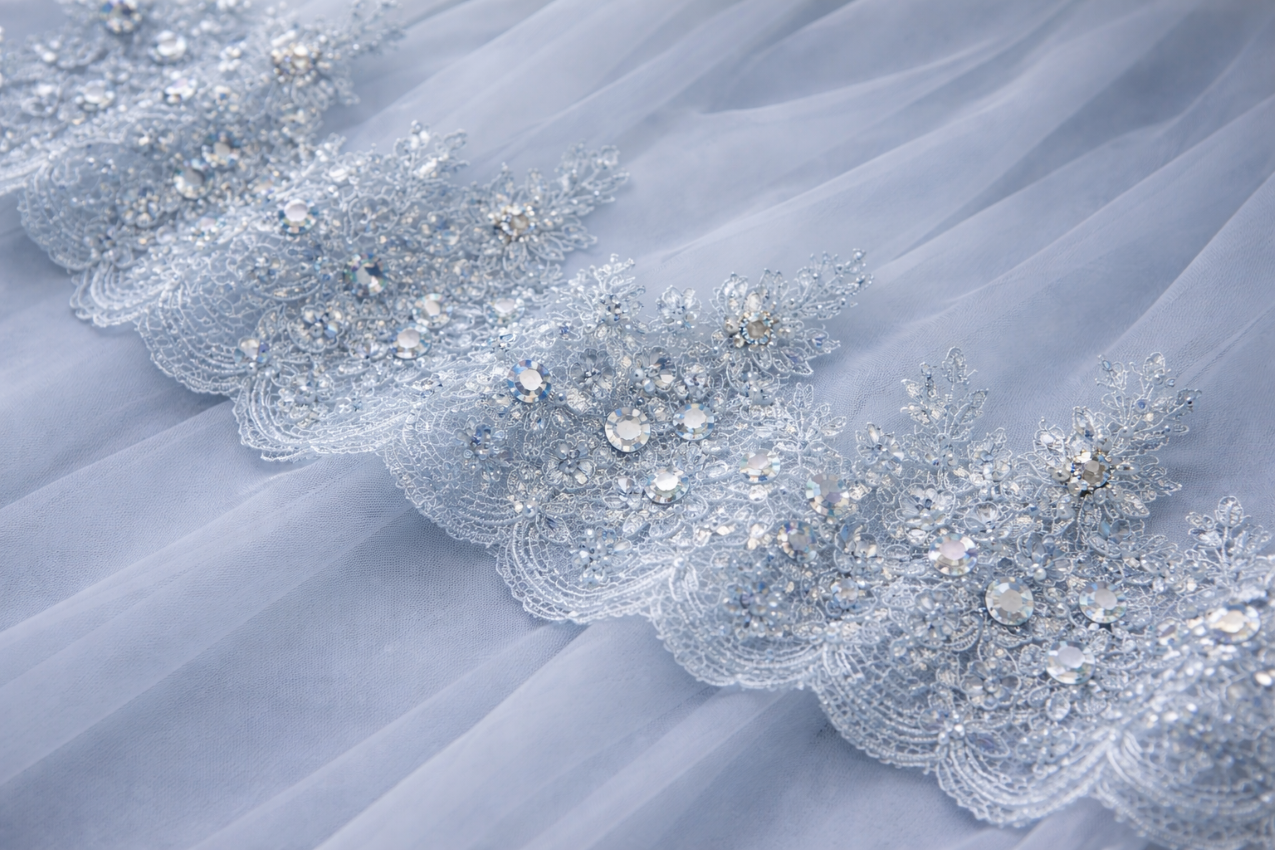
Sequins reflect light when the wearer moves. This creates subtle sparkle under lighting.
Fashion designers often place sequin appliqués on:
dress bodices
sleeves
shoulder sections
This technique helps highlight specific areas of a garment without covering the entire fabric in decoration.
Beaded Appliqués Add Detail and Structure
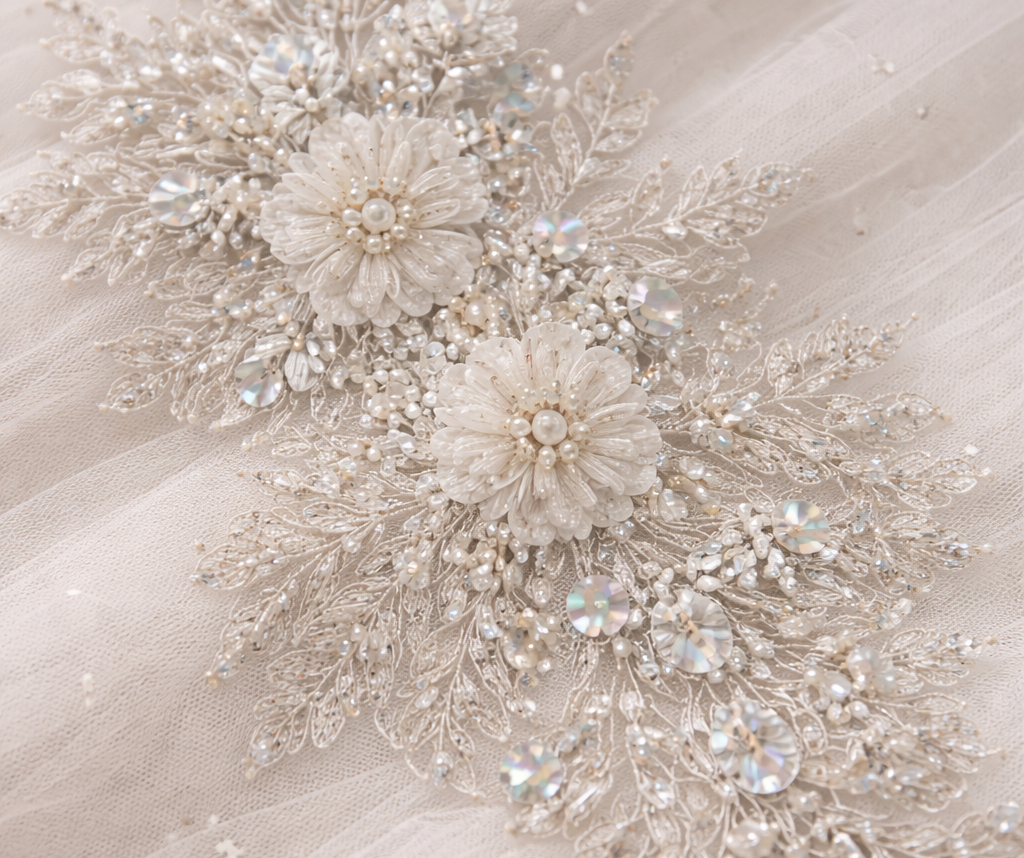
Beaded appliqués combine embroidery with small beads stitched into the design.
These beads are often:
glass beads
acrylic beads
seed beads
Sizes usually range between 1 mm and 4 mm.
Beads add small raised surfaces that catch light differently from sequins. This gives designs more texture.
Because the beads are pre-stitched into appliqué patches, they are easier to attach than hand sewing individual beads.
Appliqués Reduce Sewing Time
One major advantage of appliqués is efficiency.
Instead of stitching decorations across an entire garment, you attach pre-made decorative pieces.
Common placement areas include:
neckline decoration
waistline highlights
sleeve edges
Many craft communities report that appliqués save several hours compared with manual embroidery work.
Decorative Fabrics Perform Better in Online Listings
Online marketplaces rely heavily on product photos.
Research shared in Etsy seller forums shows that garments with visible texture and embellishment often receive higher engagement.
Decorative elements help products stand out in thumbnails and listing images.
This is a key reason many small clothing brands use lace appliqués in their designs.
Real-World Examples
Here are several examples showing how embroidered lace and appliqués work in real projects.
Example 1: Etsy Wedding Dress Seller
An Etsy bridal designer added embroidered flower lace overlays to handmade wedding dresses.
After updating product photos with the lace detail, the seller reported higher engagement on listings. Several Etsy discussions mention that dresses with lace embroidery often receive around 30% more clicks compared with plain satin styles.
Customers frequently mention the lace detail in reviews.
Image suggestion:
Bride wearing dress with embroidered floral lace overlay
Alt text: embroidered flower lace wedding dress detail
Example 2: Amazon Evening Dress Listing
Many evening dresses sold on Amazon include sequin appliqués on lace bodices.
Product pages often highlight features such as:
lace base fabric
stitched sequin patterns
decorative embroidery
Customer reviews commonly mention that sequin lace designs look better under lighting and in photographs.
Example 3: DIY Sewing Projects
Craft bloggers frequently use beaded appliqués when customizing clothing.
Examples include:
prom dress upgrades
costume decoration
handbag design
Because appliqués attach easily, they are popular among beginner sewers.
Image suggestion:
Beaded lace appliqué being sewn onto fabric
Alt text: beaded lace applique sewing detail
Example 4: Decorative Fabric Market Growth
The decorative lace market continues to expand globally.
Grand View Research reports steady growth in embellished textiles as consumers seek clothing with visible design detail.
Designers often combine lace embroidery with beads and sequins to meet this demand.
FAQs
What is embroidered flower lace?
It is lace fabric with stitched floral patterns created using thread embroidery.
Are sequin appliqués easy to attach?
Yes. Most appliqués can be sewn or glued onto fabric using basic sewing tools.
Are beaded appliqués durable?
Yes, if stitched properly. Many are machine stitched before being sold.
Can beginners use lace appliqués?
Yes. Appliqués are popular among beginners because they simplify decoration.
What fabrics work best with lace appliqués?
Common options include cotton, polyester blends, satin, and mesh.
Do decorative fabrics improve product photos?
Yes. Textured fabrics often appear more detailed in photographs, which can help attract attention online.
Are lace appliqués washable?
Most are washable if sewn securely. Always check the fabric care instructions.
Conclusion
Plain designs often fail to capture attention. Whether you are sewing clothing, selling garments online, or working on DIY projects, simple fabric sometimes looks unfinished.
That is the core problem.
Embroidered flower lace, sequin appliqués, and beaded appliqués solve this issue by adding visible texture and light reflection. These elements improve both physical appearance and product photography.
Market trends support this approach. Decorative fabrics continue to grow in popularity, and sellers frequently report stronger engagement for embellished garments.
The best part is that these upgrades do not require advanced sewing skills. Appliqués allow designers and hobbyists to add decoration quickly.
If you want your designs to stand out, start experimenting with embroidered lace and decorative appliqués.
Even small details can make a large difference.
Try adding a lace appliqué to a neckline, sleeve, or dress bodice. You may find that the simplest decoration changes the entire look of your design.
And once you see the result, plain fabric may never feel enough again.