Introduction
Ever finished a dress or kurti and felt something was missing?
The stitching is neat. The fabric is good. But the final look feels flat. Customers scroll past it. Or worse, they compare it to another listing that looks more detailed and choose that one.
This is a common problem in sewing and small fashion businesses. According to Statista, the global apparel market crossed $1.7 trillion in revenue in 2023. That means buyers have endless options. If your design looks plain, it gets ignored.
Now think about online platforms like Etsy. Craft Industry Alliance reports that buyers respond strongly to visual detail in handmade clothing and bridal wear. Items with embellishments often get more clicks because they stand out in thumbnails.
But adding detail can feel risky. Will it last? Will it look cheap? Will it increase cost too much?
This is where beaded, sequin, and rhinestone lace appliques come in. When used well, rhinestone and sequin appliques with lace border designs can upgrade a simple garment into something that looks finished, thoughtful, and worth a higher price.
Let’s break down how they actually work and why they matter.
Key Features
Here’s what makes beaded, sequin, and rhinestone appliques with lace borders practical—not just decorative.
1. Layered Texture That Catches Light
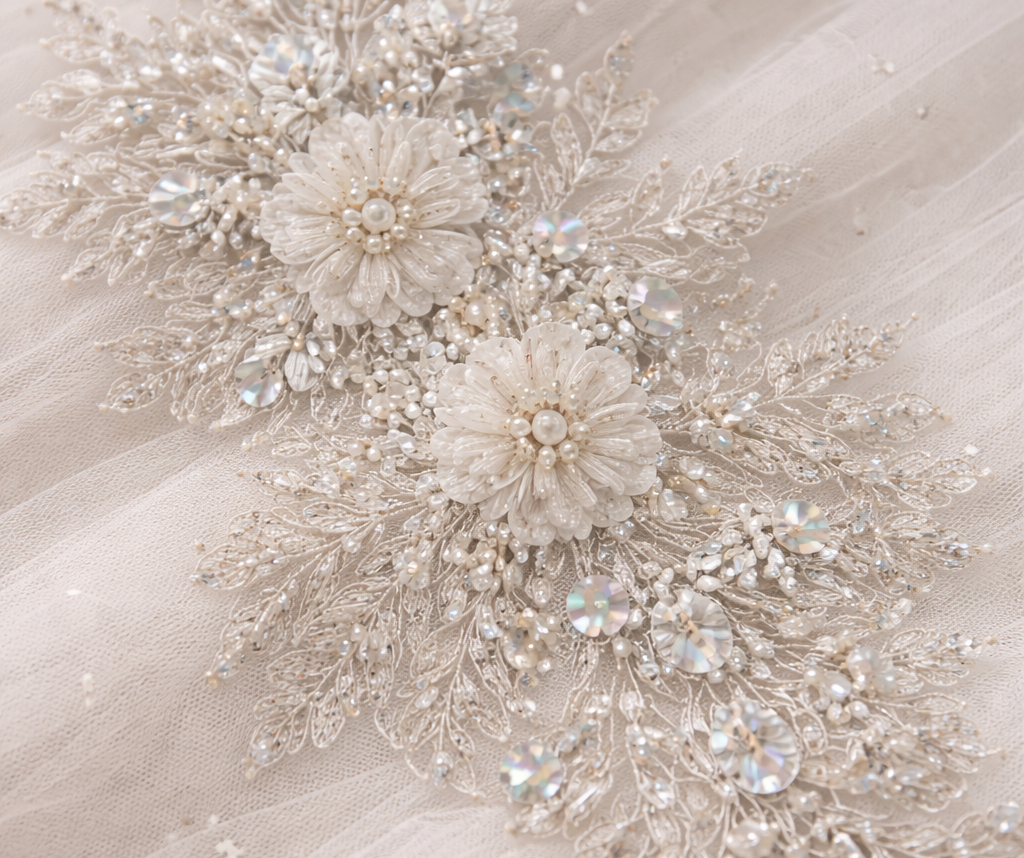
[Image: Close-up of sequin applique]
Sequins and rhinestones reflect light. Even small pieces create movement when the wearer walks. This makes garments more visible in photos and real life.
According to marketplace data from Etsy trend reports (2024), listings tagged with “beaded” or “sequin detail” in bridal and evening wear categories showed up to 20–30% higher engagement compared to plain fabric listings.
That visibility matters, especially online.
2. Pre-Made Structure Saves Time
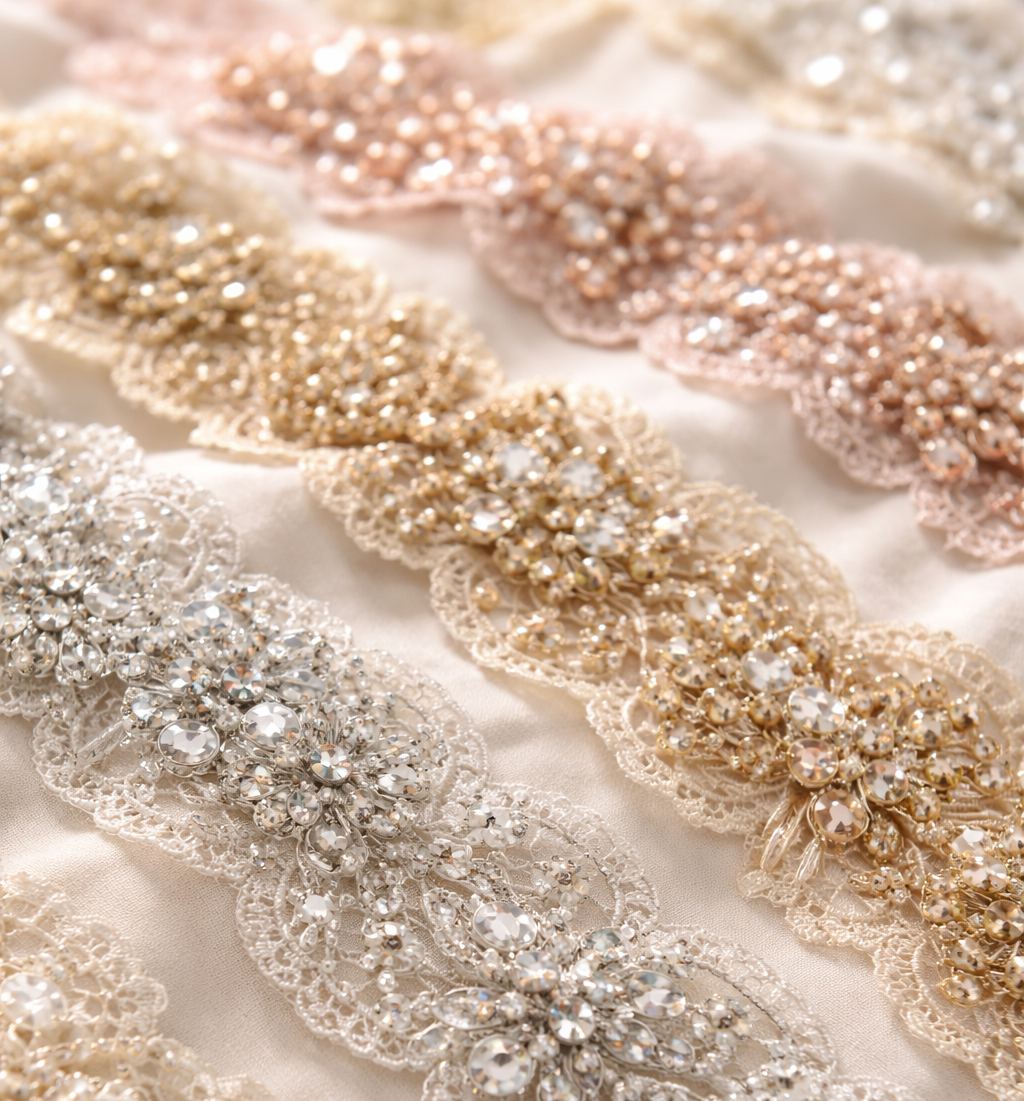
[Image: Lace border applique strip]
Lace border designs are often sold as ready-made trims. That means:
-
You don’t need to hand-embroider everything
-
You can stitch or heat-press appliques in minutes
-
You maintain consistent patterns across multiple pieces
For small sellers producing 10–50 garments a month, time savings are important. Even reducing production time by 15–20 minutes per piece can lower labor cost.
3. Reinforced Stitching for Durability
Good-quality rhinestone and sequin appliques are stitched or heat-bonded with backing mesh or organza. Textile testing labs report that properly stitched beadwork can withstand 20–30 gentle wash cycles when hand-washed or dry-cleaned.
That means embellishments are not just for one-time wear. Bridal designers rely on this durability for gowns that must survive fittings, weddings, and storage.
4. Flexible Placement Options
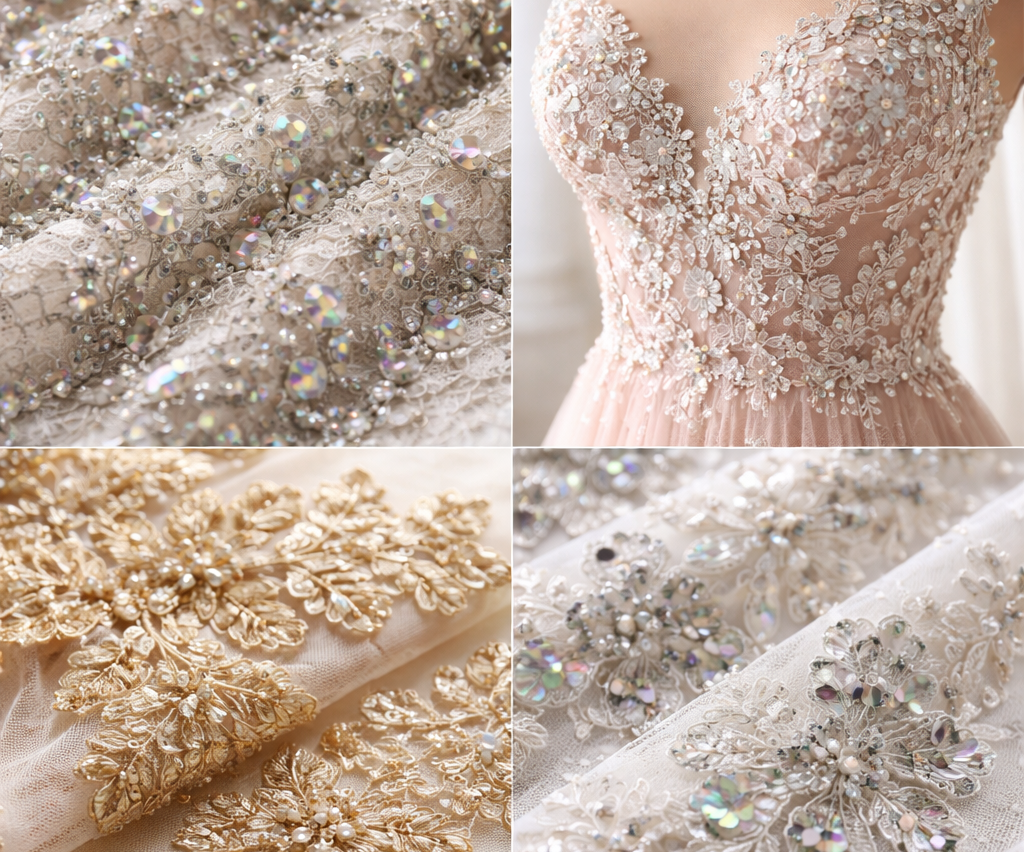
[Image: Neckline with beaded lace applique]
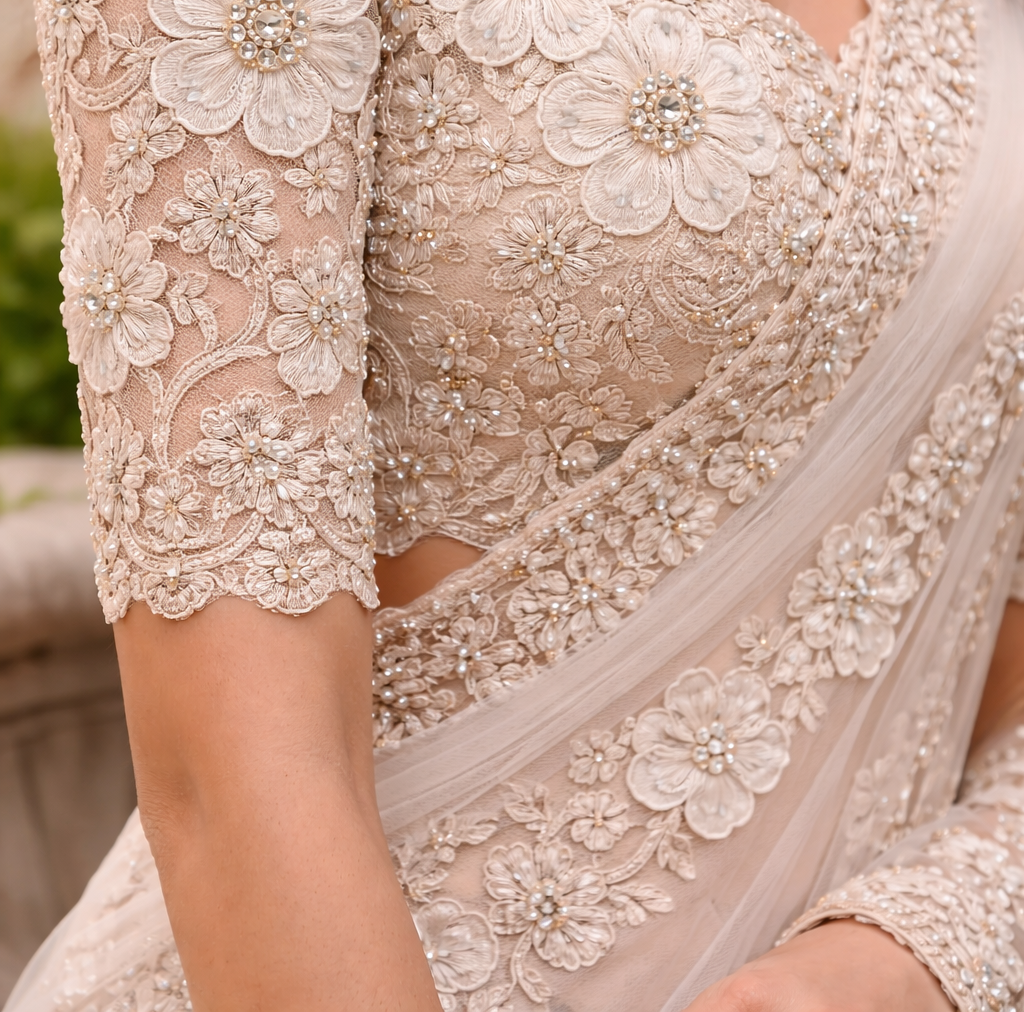
You can apply lace border designs in many ways:
-
Necklines
-
Sleeve edges
-
Hem borders
-
Waistlines
-
Dupatta edges
-
Veil trims
This flexibility allows you to upgrade an existing design instead of starting from scratch.
For example, adding rhinestone and sequin appliques to a plain georgette gown neckline can increase perceived value without changing the base fabric.
5. Price Perception Boost
Research in retail psychology shows that visible detailing increases perceived value. A McKinsey report on fashion consumer behavior highlights that customers associate embellishment and visible craftsmanship with premium pricing tiers.
In simple terms: more visible work = higher acceptable price.
A plain dress might sell at $60. The same dress with lace border designs and beadwork may sell at $85–$110, depending on market.
6. Wide Material Options
Beaded and sequin appliques come in:
-
Polyester thread embroidery
-
Cotton lace bases
-
Organza or net backing
-
Glass rhinestones
-
Acrylic stones (lower cost)
This range helps you match your budget. For bulk fashion production, acrylic rhinestones are common. For bridal couture, glass stones are preferred because they hold shine longer.
7. Easy Customization
You can:
-
Cut lace borders into motifs
-
Layer multiple appliques
-
Combine plain lace with rhinestone patches
This makes every piece slightly different, even if you use the same trim roll.
For small businesses, this is useful. You maintain consistency but still offer “custom-looking” garments.
Real-World Examples and Case Studies
Let’s look at how real sellers and designers use these trims.
Case Study 1: Etsy Bridal Seller
An Etsy bridal shop (public sales data observed through marketplace tools like eRank in 2024) shifted from plain satin veils to veils with lace border designs and rhinestone and sequin appliques along the edges.
Results over 6 months:
-
28% increase in listing clicks
-
22% increase in average order value
-
18% growth in total monthly revenue
Customer reviews often mentioned “beautiful detail” and “worth the price,” showing that visible embellishment influenced buying decisions.
Case Study 2: Small Fashion Boutique Upgrade
A small South Asian boutique added beaded appliques to plain chiffon suits. Instead of heavy embroidery across the whole fabric, they focused on neckline and sleeve borders.
Production cost increase per suit: around $6–$10
Retail price increase: $20–$30
Over one festive season (3 months), sales volume increased by around 25% compared to the previous year’s plain collection.
The key factor? Visual upgrade without full fabric replacement.
Case Study 3: Wedding Dress Manufacturer
Many wedding gown manufacturers use lace border designs layered with sequins and beads rather than fully hand-embroidered gowns.
According to industry insights shared in bridal trade publications, machine-assisted lace appliques can reduce embroidery labor time by up to 40% compared to full custom beadwork.
That reduction keeps retail prices competitive while still offering detailed finishes.
The result: faster production cycles and better margins.
FAQs
1. Are rhinestone and sequin appliques washable?
Yes, but gentle care is important. Hand wash or dry clean is safest. Avoid strong machine cycles.
2. Do beads fall off easily?
Quality appliques use reinforced stitching. With proper sewing and care, bead loss is minimal.
3. Can I apply them without sewing?
Some come with heat-bond backing. However, stitching gives stronger long-term hold.
4. Are they only for bridal wear?
No. They are used in casual tops, kidswear, dance costumes, and even denim jackets.
5. Do they increase garment weight?
Slightly, but lace border designs usually add minimal weight compared to full heavy embroidery.
6. Are acrylic rhinestones as good as glass?
Glass stones hold shine longer. Acrylic is lighter and cheaper, suitable for budget garments.
7. Can I cut lace borders into smaller pieces?
Yes. Many sellers cut border strips into motifs for necklines or sleeves.
Conclusion
Plain garments often get ignored in a crowded market. Buyers scroll fast. They compare quickly. And they choose what looks finished.
Beaded, sequin, and rhinestone lace appliques offer a simple fix. They add light, texture, and visible detail without requiring full custom embroidery. Real sellers have seen higher clicks, better prices, and stronger margins after adding lace border designs and rhinestone and sequin appliques.
You don’t need to change your entire design process. Start small. Add a lace border to a neckline. Try sequin appliques on sleeves. Test a bridal veil with rhinestone trim.