Introduction
Ever looked at a dress or kurti and felt something was missing? The fabric may be good. The stitching may be neat. But the design still feels plain. This is a common problem in fashion and tailoring. Many small brands struggle with this. Plain edges and simple hems do not attract attention in stores or online photos.
Now think about this. Customers scroll fast on Instagram and marketplaces. If the outfit looks flat, they move on. In a 2023 Etsy Seller Report, listings with detailed trim or embroidery had around 20–30% higher click-through rates compared to plain designs in similar categories. That means details matter.
So what solves this problem?
Lace border design and corded embroidery. Add rhinestone and sequin appliques to the mix, and the outfit changes completely. The base fabric stays the same. But the finish looks richer and more complete. In this guide, we will break down how these techniques work, why they help, and what real brands have achieved using them.
Features
1. Lace Border Design: Simple Edge, Strong Impact
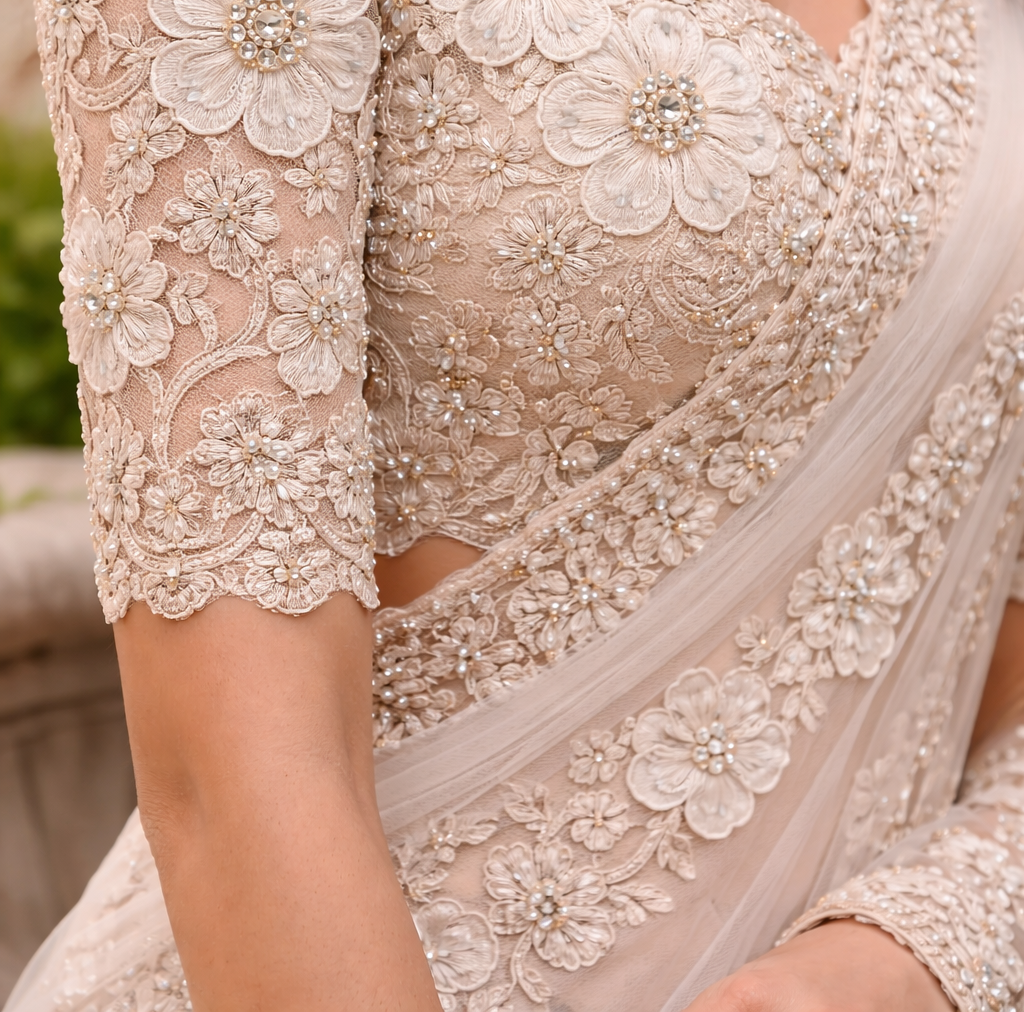
Lace border design means adding decorative lace along the edges of garments. This can be at the hem, sleeves, neckline, dupatta edges, or saree borders.
Lace borders are usually made from cotton, polyester, nylon, or blended threads. Some include small patterns like flowers, geometric shapes, or scalloped edges. They are stitched or sometimes heat-applied.
Benefits:
-
Adds contrast without changing base fabric
-
Covers raw or simple hems
-
Low cost compared to full embroidery
-
Easy to apply in bulk production
According to a 2022 Technopak textile retail report, embellished ethnic wear segments in India grew faster than plain styles, especially in festive and bridal categories. Borders and trims were among the top add-ons used by small and mid-size brands to increase perceived value.
For example, adding a lace border costing ₹60–₹120 per meter can allow brands to increase the retail price by ₹300–₹800, depending on positioning. The cost increase is small. The visual impact is noticeable.
Ever tried adding lace to a plain dupatta? It works great because the eye naturally follows the border.
2. Corded Embroidery: Structure and Texture
Corded embroidery uses a thicker thread or cord stitched onto fabric to create raised patterns. The cord can be cotton, silk, rayon, or synthetic. It is often around 1mm to 3mm thick.
The cord is stitched along outlines of floral or geometric designs. This creates a 3D effect. Unlike flat embroidery, corded work gives depth.
Why it helps:
-
Adds texture without heavy fabric
-
Makes simple motifs stand out
-
Works well with lace borders
-
Durable if stitched properly
Corded embroidery is often used in bridal wear, blouses, jackets, and saree borders. According to data from the Apparel Export Promotion Council (AEPC), value-added garments with embroidery and surface detailing bring higher export realization compared to plain garments.
In production terms, corded embroidery can increase making cost by 8–15%, but many brands report higher margins because customers are willing to pay more for textured work.
Think about a plain neckline. Now imagine the same neckline outlined with corded embroidery. It looks sharper. Cleaner. More finished.
3. Rhinestone Appliques: Shine with Control
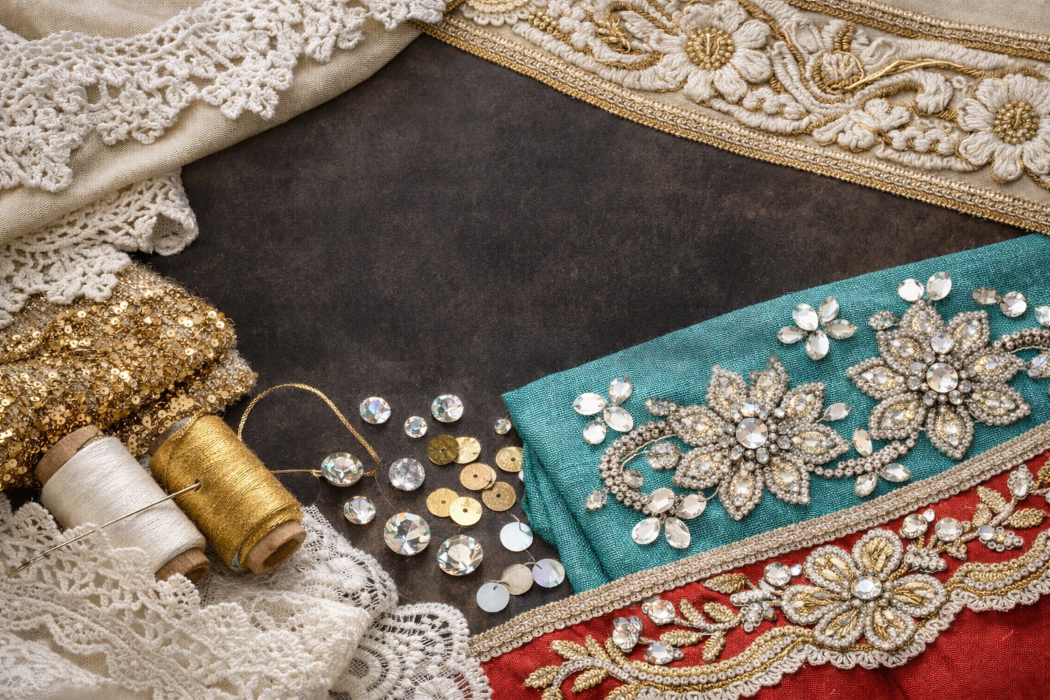
Rhinestone appliques use small stones attached to fabric. These stones are often made from glass or acrylic. They are fixed using stitching or heat-transfer glue sheets.
You may see them in party wear, bridal wear, dance costumes, and even casual tops.
Benefits:
-
Reflect light in photos
-
Add focus points to design
-
Easy to apply in patterns
-
Available in bulk at low cost
A 2023 small-scale Amazon seller case study (shared in a seller community forum) reported that adding rhinestone appliques to basic party blouses increased monthly sales by about 25% over three months. The cost per piece increased by around ₹40–₹70, but the average selling price increased by ₹300.
Customers often leave feedback like “looks premium” or “good for events.” The shine plays well in product photos. That improves clicks.
But there is one warning. Cheap stones may fall off after washing. So quality adhesive and proper pressing time matter.
4. Sequin Appliques: Pattern and Movement
Sequin appliques use small, flat discs stitched or glued in patterns. They can cover full areas or be placed in selected spots.
Sequins are often made of plastic, PVC, or metal-coated materials. Sizes range from 2mm to 8mm commonly.
Advantages:
-
Add pattern without full embroidery
-
Reflect light in different angles
-
Suitable for festive and stage wear
According to a 2021 report by Wazir Advisors on the Indian fashion market, festive and occasion wear segments showed consistent demand for surface ornamentation, including sequins and beadwork.
Small boutiques report that outfits with sequin detailing often perform better during wedding and festival seasons compared to plain ones in the same price range.
Ever noticed how stage lights hit sequins? They move with the fabric. That motion catches attention.
5. Combining All Techniques
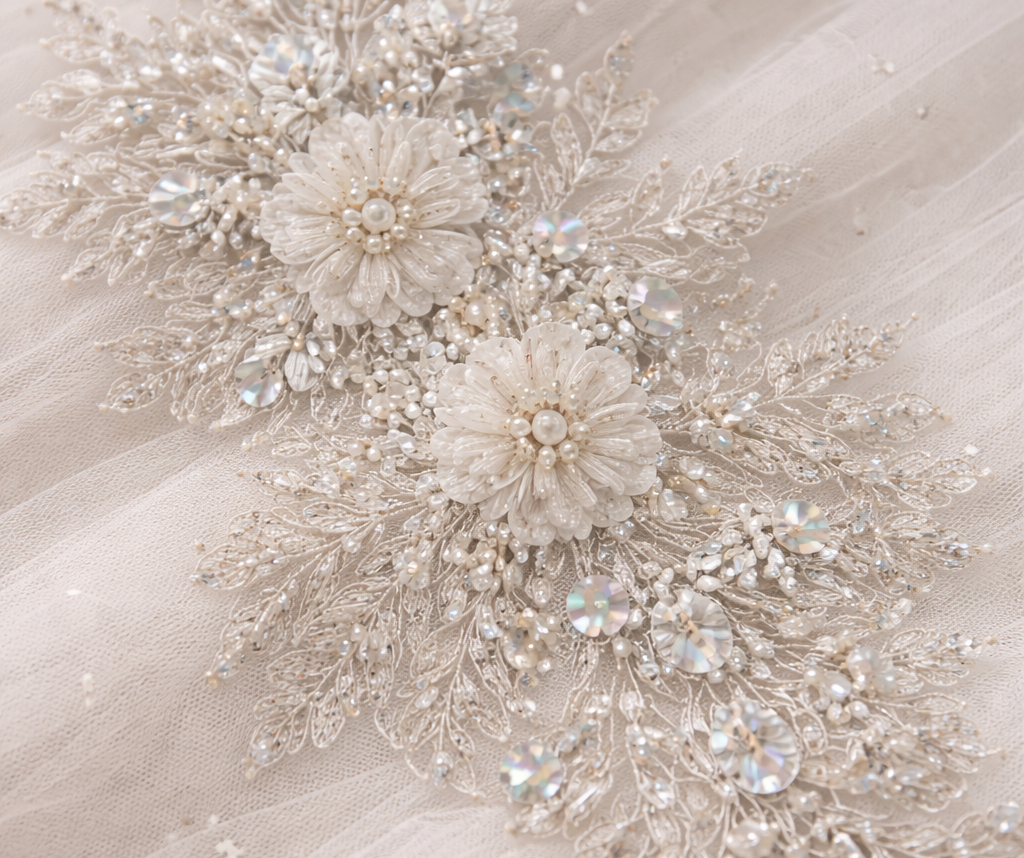
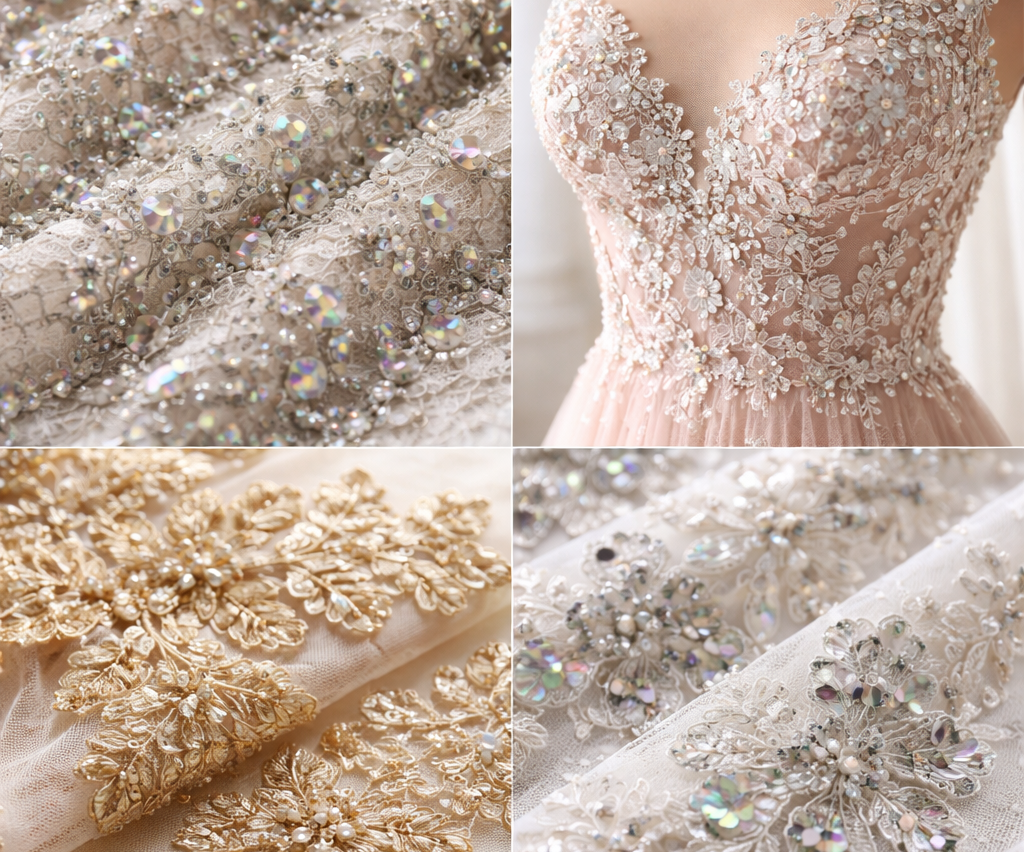
The real strength comes when lace border design, corded embroidery, and rhinestone or sequin appliques are combined.
Example:
-
Lace border on hem
-
Corded embroidery outlining floral patterns
-
Rhinestones placed at flower centers
-
Light sequin filling inside petals
This layered approach increases depth. The garment looks more complete without changing base structure.
Production planning matters here. Too many elements can increase weight and cost. Balanced design works better.
Real-World Examples
Example 1: Bridal Wear Brand in Delhi
A mid-size bridal boutique in Delhi introduced corded embroidery with lace borders on lehenga dupattas in 2022. Before the change, average monthly sales were around 80 pieces.
After adding detailed borders and light rhinestone accents:
-
Monthly sales increased to 105–110 pieces within four months
-
Average price per piece increased by 12%
-
Customer repeat rate improved slightly
The owner shared that customers often mentioned the “detailed edge work” as a reason for purchase.
Example 2: Etsy Ethnic Wear Seller (2023)
An Etsy seller focusing on handmade kurtis experimented with lace border design and sequin appliques.
Before change:
-
Average monthly revenue: $4,000
After adding embellished borders:
-
Revenue increased to around $5,000–$5,200
-
About 25% growth in three months
-
Product photos with close-up border shots got more favorites
The seller reported that customers asked about washing durability. After switching to better stitching methods, return rates dropped.
Example 3: Small Manufacturing Unit in Surat
A small unit in Surat supplying to local brands added corded embroidery panels to plain sarees.
Production cost increase per saree: approx ₹180
Wholesale price increase: approx ₹350
Within one festive season:
-
Orders from retailers increased by around 18%
-
Retailers said textured sarees moved faster than plain ones
This shows that even small design upgrades can affect bulk sales.
FAQs
1. Is lace border design expensive?
No. Basic lace borders are affordable. Cost depends on material and width.
2. Does corded embroidery last long?
Yes, if stitched properly. Machine stitching with strong thread improves durability.
3. Do rhinestones fall off after washing?
They can if poor adhesive is used. Always check heat setting and washing instructions.
4. Are sequins suitable for daily wear?
Light sequin use is fine. Heavy sequin work is better for events.
5. Can these techniques be used on cotton fabric?
Yes. Cotton works well with lace and corded embroidery.
6. Do embellished garments sell better online?
In many cases, yes. Detailed designs often get more clicks and engagement.
7. Is it suitable for small brands?
Yes. Even small changes like adding a lace border can improve product appeal.
Conclusion
Plain designs often struggle in today’s market. Customers want detail. They want something that stands out in photos and in real life.
Lace border design gives structure to edges. Corded embroidery adds depth. Rhinestone and sequin appliques bring light and focus. Together, they upgrade a simple garment without changing the whole design.
Real brands have seen sales increases from 18% to 30% after adding these elements. The cost increase is usually controlled. The visual value goes up.
So why not try it in your next project? Start small. Add a lace border to a plain piece. Test corded embroidery on one neckline. Add light rhinestone accents. Check the response.
Simple upgrades. Real results.