Introduction
Ever pulled out a dress or jacket and thought, “This needs something extra”? You don’t want to buy new clothes. You just want sparkle. Fast. That’s where appliques come in.
But here’s the problem. Not all sparkle stays in place. You glue rhinestones. They fall off after one wash. You stitch sequins. Threads snap during a party. You iron a patch. It peels at the edges. Now you’re stuck fixing it minutes before an event.
It gets worse. Cheap glue cracks. Plastic sequins curl with heat. Low-quality rhinestones lose shine because the foil backing scratches off. You spend money and time, but the result doesn’t last.
So what’s the fix?
Durable sequin and beaded appliques. Strong rhinestone and sequin appliques. The right sizes. The right stitching. The right backing. When chosen well, they survive washing, dancing, stage lights, and long events.
Ready to add some bling? Let’s go.
Sequin and Beaded Appliques Basics
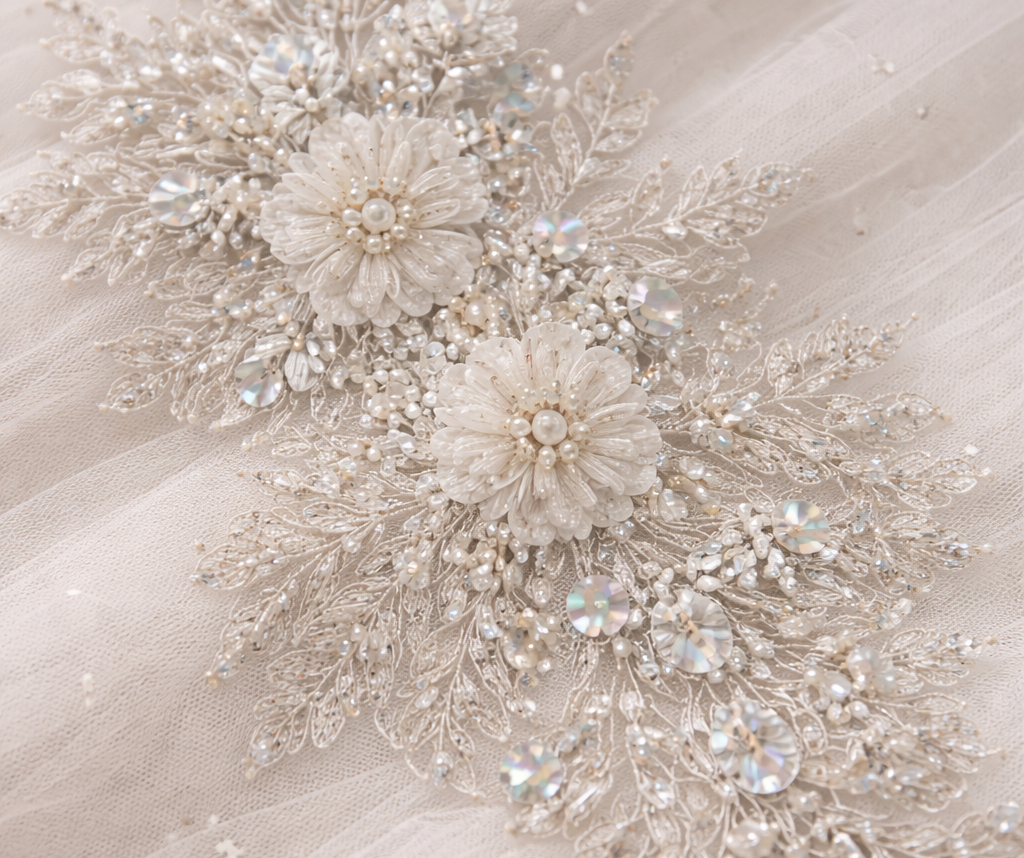
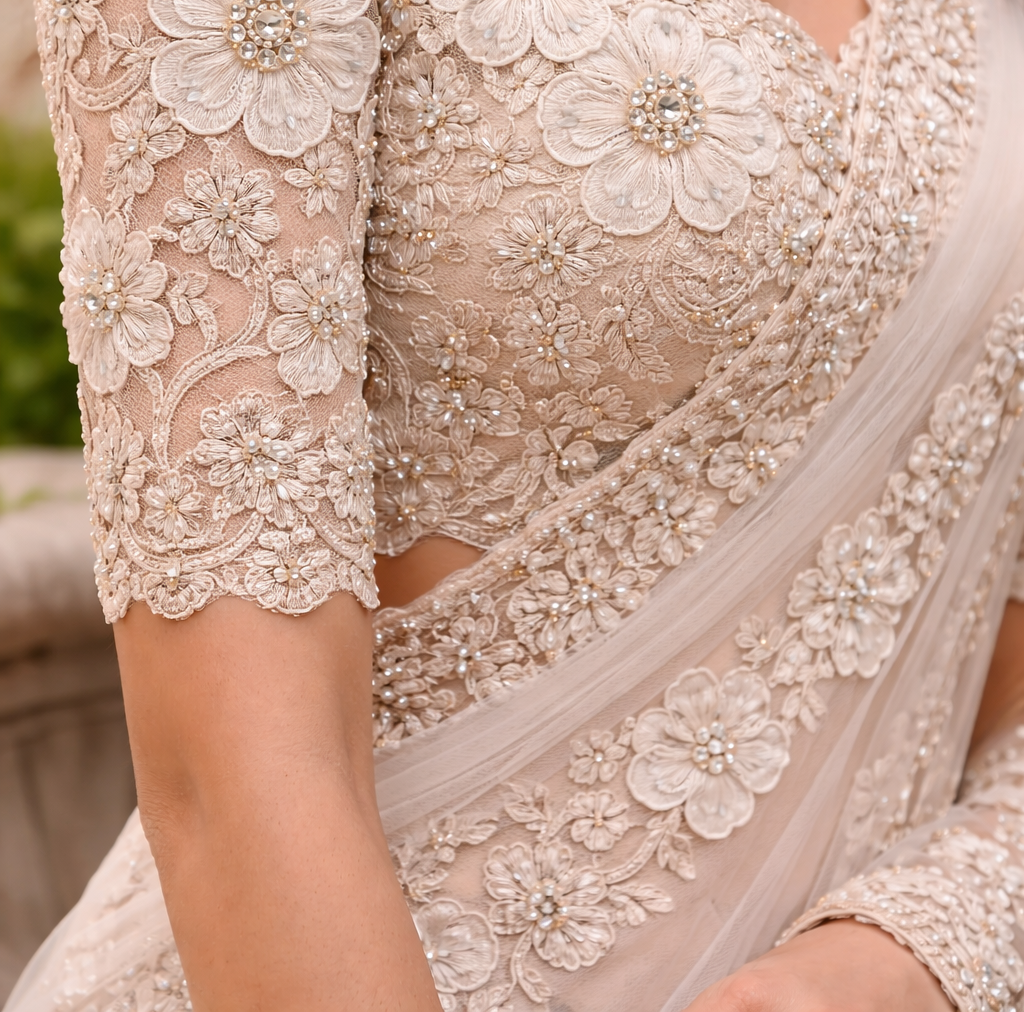
Sequin appliques are fabric patches decorated with sequins. Beaded appliques add glass, plastic, or metal beads for texture. Many designs combine both.
Typical specs:
-
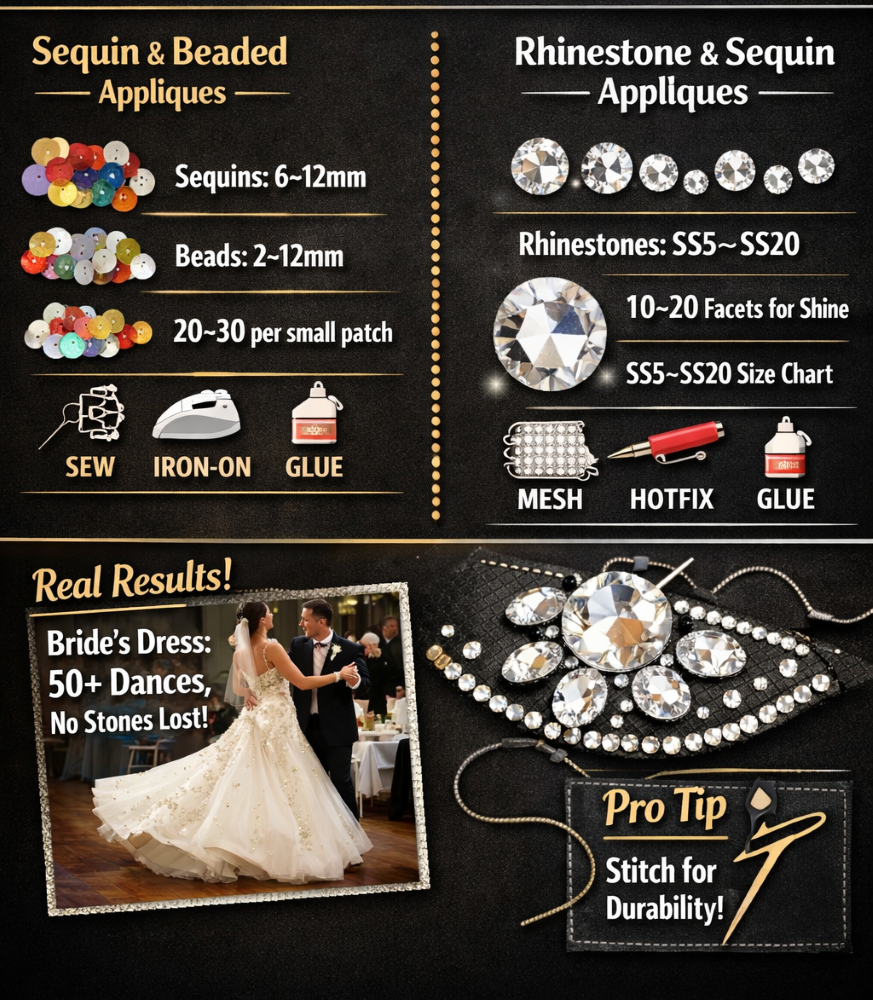
Sequin size: 6mm, 8mm, 10mm, 12mm
-
Material: plastic (PVC or PET) or metal
-
Quantity: 20–30 sequins per small applique (3x3 inch size)
-
Beads: seed beads (2–3mm), bugle beads (5–12mm length)
-
Base: mesh, organza, felt, or cotton
Small appliques for collars or sleeves may contain 20–30 sequins. Larger costume patches can hold 100+ pieces.
How They’re Made
Most sequin and beaded appliques are machine-stitched. Industrial embroidery machines stitch sequins through the center hole using polyester thread. For beads, either hand stitching or multi-needle embroidery is used.
Threads matter. Nylon or polyester thread is common because it resists breaking under tension. Cotton thread can snap faster during heavy movement.
Sequins overlap slightly like fish scales. This reduces gaps and increases shine coverage. Beads are stitched tightly to reduce swinging or snagging.
Metal sequins are heavier but more heat-resistant. Plastic ones are lighter and cheaper. For dance costumes, lightweight plastic is often preferred to reduce fabric pull.
Attachment Types
You have three main ways to attach them:
1. Sew-on (Most durable)
Hand stitch or machine stitch around the edges. This holds through washing and movement. Best for bridal wear and stage outfits.
2. Iron-on (Heat adhesive backing)
Has glue layer activated by heat (around 120–150°C). Quick method. Not ideal for thick fabrics or frequent washing.
3. Glue-on
Fabric glue or hot glue. Fast, but weakest long term. Glue can crack after bending.
If you want durability, sewing wins. Iron-on is okay for light use. Glue is short-term.
When properly sewn, sequin and beaded appliques can last years.
Rhinestone and Sequin Appliques Breakdown
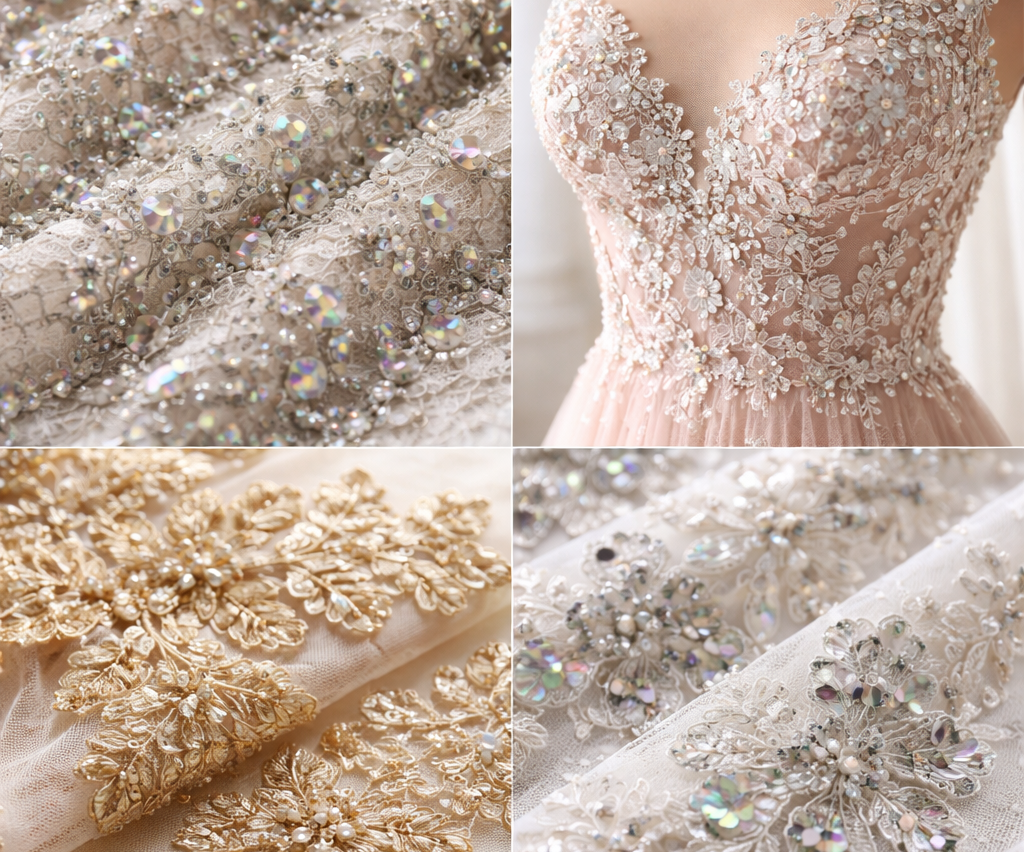
Rhinestone appliques focus on shine from faceted stones. Many combine rhinestones with sequins for layered sparkle.
Rhinestone facts:
-
Sizes: SS5 to SS20
-
SS5 ≈ 1.8mm
-
SS10 ≈ 2.8mm
-
SS16 ≈ 4mm
-
SS20 ≈ 4.8mm
-
Facets: 10–20 cut surfaces for light reflection
-
Materials: acrylic, resin, glass
Glass rhinestones reflect light better than acrylic because of higher density and clearer facets. Acrylic ones are lighter and cheaper.
Most rhinestones use foil backing to reflect light forward. If backing scratches, shine reduces.
Size Chart SS5–SS20
Here’s a simple guide:
-
SS5–SS8: Small detail work, edges, lettering
-
SS10–SS12: Mid-level sparkle for tops and sleeves
-
SS16–SS20: Strong shine for stage outfits and bridal wear
Smaller stones create even shine coverage. Larger stones create bold light points.
Rhinestone appliques can be:
-
Pre-set on mesh
-
Hotfix (heat-activated glue on back)
-
Flatback (requires glue)
Hotfix stones melt adhesive at around 120–170°C. Press for 10–15 seconds with steady pressure.
For heavy movement events, stitching mesh-based rhinestone appliques is safer than glue-only stones.
Real Wins and Fails
Let’s talk real life.
Pros of Sequin and Beaded Appliques
-
Flexible on fabric
-
Lower cost than glass rhinestones
-
Good for large coverage
-
Lightweight (plastic sequins)
-
Easy to sew
Cons
-
Threads can snap if poorly stitched
-
Plastic sequins can melt under high heat
-
Less sharp shine compared to rhinestones
Pros of Rhinestone Appliques
-
High shine due to facets
-
Clear light reflection
-
Smaller stones give clean detail
-
Good for spotlight events
Cons
-
Foil backing can scratch
-
Glue-only stones may fall
-
Heavier if using glass
Wedding Dress Case Study (2025)
In 2025, a bride added a sequin and rhinestone applique to her reception dress. The applique was mesh-based, combining SS12 glass rhinestones and 8mm sequins.
Attachment method: hand-stitched around border plus spot stitching inside.
Event result: dress survived 50+ dances. No stone loss. No thread break. Dress was dry-cleaned after event. Shine remained intact.
Compare this to a fail case. Another outfit used glue-only flatback rhinestones. After 3 hours of dancing, 10% of stones fell off. Heat and fabric stretch weakened glue.
Lesson? Stitching plus quality material equals durability.
FAQs
1. Do rhinestones wash well?
Glass rhinestones hold better than acrylic. Hand wash or gentle cycle is safer. Avoid high heat drying.
2. Are sequins better than rhinestones?
Depends on purpose. Sequins give spread sparkle. Rhinestones give sharp shine.
3. Can I mix both?
Yes. Many applique designs combine sequins for base shine and rhinestones for highlight.
4. Do iron-on appliques last?
They last for light wear. For heavy use, stitch edges.
5. Which is better for dance costumes?
Lightweight plastic sequins plus stitched rhinestone mesh works well.
6. Do rhinestones scratch easily?
Acrylic scratches more than glass. Foil backing can wear off with friction.
7. What size rhinestone should beginners use?
SS10 or SS12 is easy to handle and gives visible sparkle.
8. How many sequins are in a small applique?
Usually 20–30 for a 3x3 inch patch, more for larger designs.
Conclusion
Dull clothes don’t need replacing. They need smart upgrades. Cheap glue and random stones cause stress. Durable sequin appliques, beaded appliques, and rhinestone appliques fix that.
Pick the right size. Choose stitched over glue. Use glass for strong shine. Combine sequins and rhinestones for balance.
Ready to upgrade that jacket or dress? Grab yours now and stitch it right the first time. Sparkle that lasts beats sparkle that falls off.