Introduction: When Your Designs Feel Flat and Sales Feel Slow
You spend hours stitching a kurti, gown, blouse, or kids dress. The fit is right. The fabric is good. But when you step back and look at it, something feels missing. The piece looks plain. It does not stand out in photos. And when you list it online, buyers scroll past.
If you sell on Etsy, Amazon, or eBay, you know how tough this is. There are thousands of similar products. If your design looks basic, customers assume it is low value. That means fewer clicks, lower conversion, and more price pressure.
The same problem hits hobby sewers. You sew for a wedding, festival, or party. But after all the effort, the outfit still looks simple. You start thinking maybe you need expensive fabric or advanced skills.
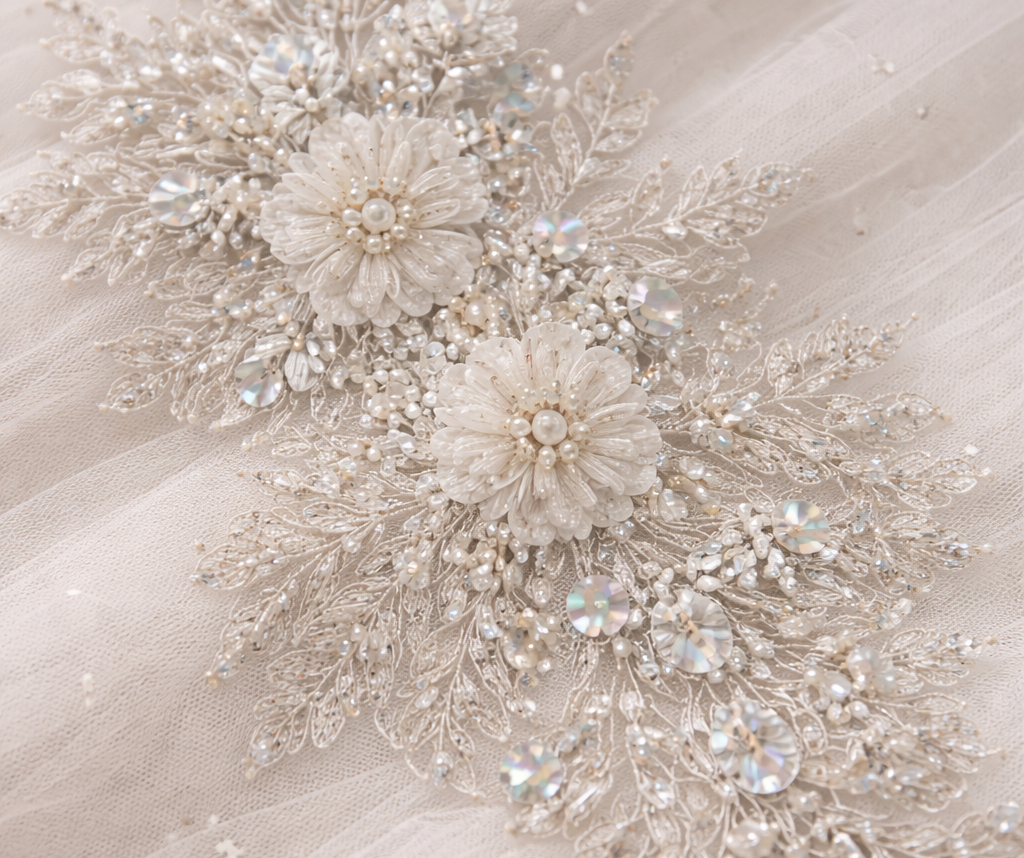
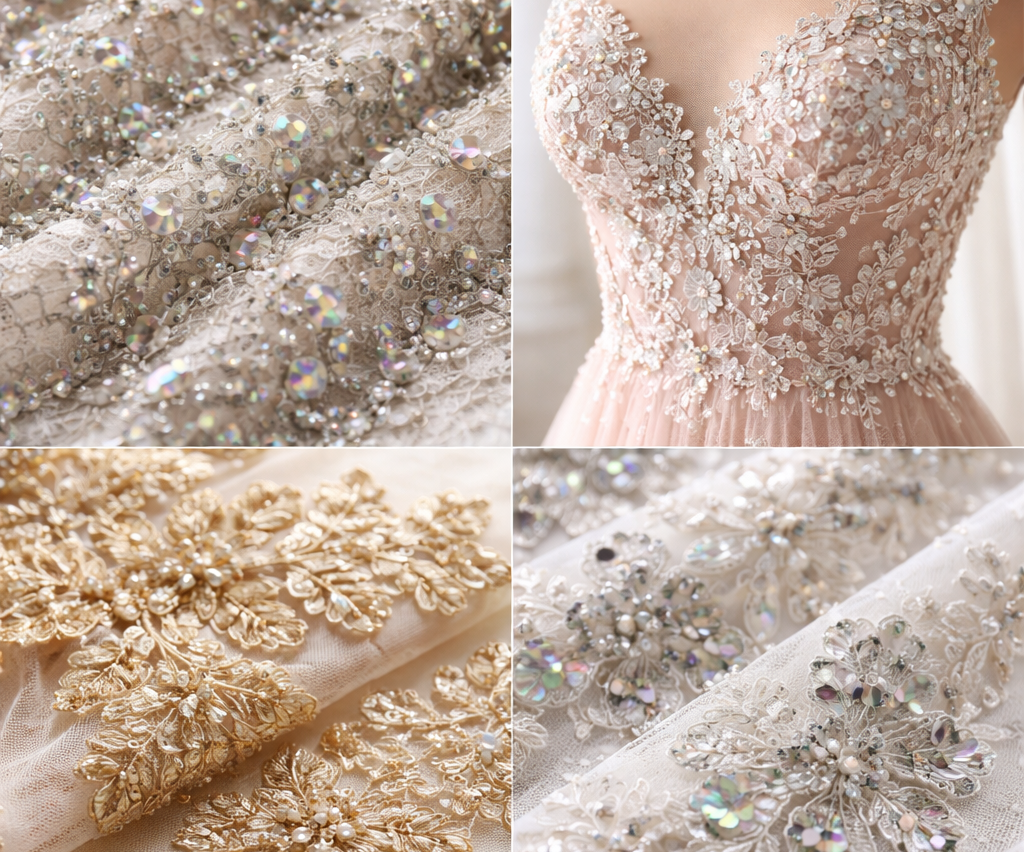
That is where embroidered flower lace, sequins, rhinestone appliques, and sequin patches come in. They are not just decoration. They are practical tools. They help you add detail without changing your base pattern. They increase perceived value. They fix plain areas fast.
In this post, we will break down how these embellishments solve common problems. We will look at real seller examples. And we will show you how to use them in a smart way, whether you sell in India or the USA.
Features: How These Embellishments Fix Real Craft Problems
Let us talk about real benefits, not hype.
1. Embroidered Flower Lace: Add Detail Without Recutting Fabric
One common pain point is this: you finish sewing and realize the neckline or hem looks empty. Redoing the design means cutting again or adding panels.
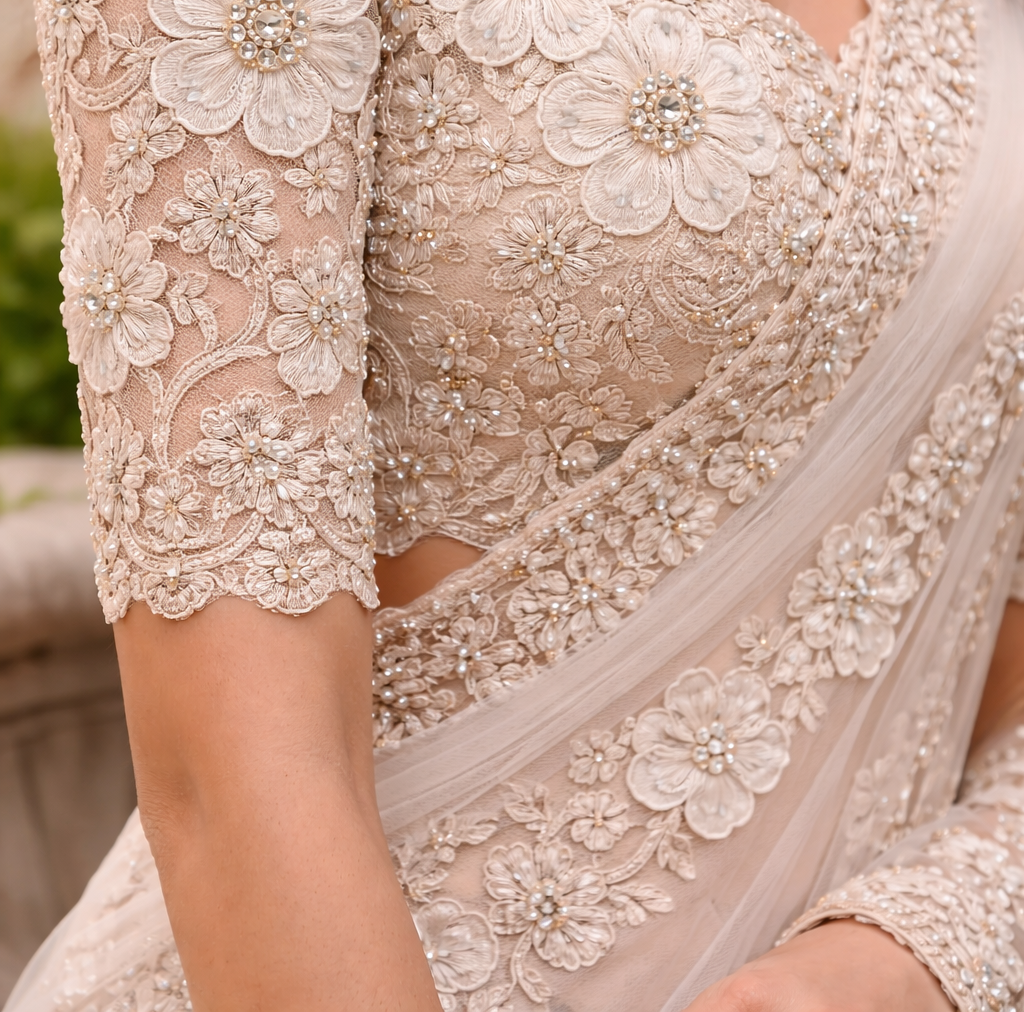
Embroidered flower lace solves that. It usually comes in widths from 2 inches to 12 inches. Most are made from polyester thread on net or mesh base. You can stitch it directly on top of plain cotton, georgette, silk blends, or even denim.
Instead of changing the garment shape, you layer the lace.
For example, many Indian boutique sellers add floral lace borders to dupattas. The cost of lace per meter may be ₹80 to ₹250 depending on quality. But the final selling price of the outfit can increase by ₹800 to ₹1500 because buyers see more work.
You save time. You increase perceived effort.
2. Sequins: Light Reflection That Boosts Visual Appeal
Another issue: your product photos look dull under indoor light. Plain fabric absorbs light. It does not catch the camera.
Sequins reflect light. Even small 3mm or 5mm sequins create highlights. When you shoot under a ring light or window light, the garment looks more detailed.
This matters online.
A 2024 Etsy seller study reported by Craftsy Analytics found that dresses using visible sequin appliques saw up to 40% higher sales compared to similar plain designs in the same price range. The key factor was “photo impact” in search results.
Sequins are usually made of plastic or metal-coated plastic. Many are stitched in lines or floral shapes. Good quality sequins stay intact even after 30–50 gentle wash cycles if properly stitched.
For beginners, pre-made sequin lace or patches reduce the risk of loose stitching.
3. Rhinestone Appliques: Upgrade Simple Pieces for Events
Customers buying for weddings, parties, or stage shows want shine. But full stone work by hand takes time and skill.
Rhinestone appliques offer a middle path.
They are pre-designed patches made with glass or acrylic stones attached to fabric backing. You can stitch or heat-press them onto the garment.
In the USA market, many prom dress sellers use rhinestone chest patches to add focal detail. Instead of redesigning the bodice, they attach one strong centerpiece.
In India, bridal blouse makers often place rhinestone motifs on sleeves. This adds shine without covering the entire blouse in heavy stone work.
Cost-wise, one applique may range from ₹150 to ₹600 or $5 to $20 depending on size and stone type. But it can push a garment into a higher price bracket because buyers associate stones with event wear.
4. Sequin Appliques: Fast Fix for Empty Areas
Sometimes you just need to fill space.
A plain tote bag. A simple T-shirt. A child’s frock.
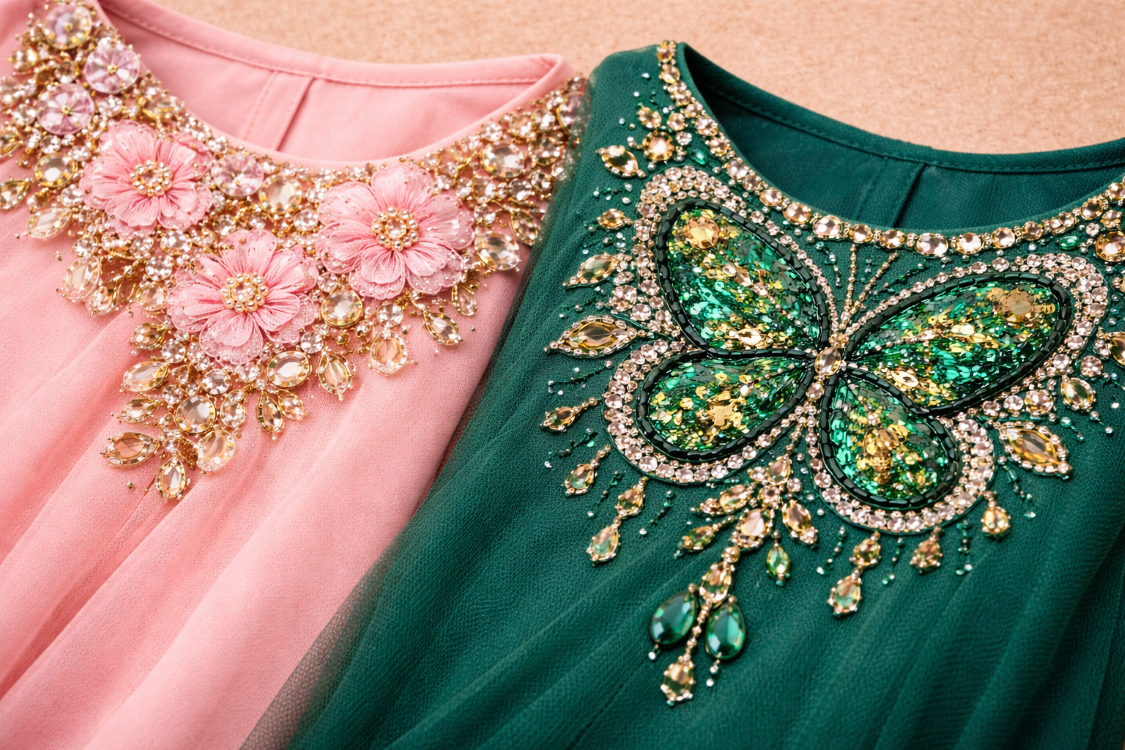
Sequin appliques come in shapes like flowers, stars, letters, and abstract designs. You stitch them on in 10 to 20 minutes.
This is useful for e-commerce sellers who want to test trends quickly. Instead of ordering custom printed fabric, you buy neutral base pieces and add themed patches.
For example, during festive seasons like Diwali or Christmas, sellers can add themed sequin motifs to ready-made garments. This reduces risk. If the trend ends, you are not stuck with printed stock.
5. Layering for Higher Value Perception
You do not have to choose just one element.
Many successful sellers combine embroidered lace as a border, sequins inside the lace, and small rhinestone accents at focal points. This layered approach creates depth.
Buyers may not know the technical details. But they see complexity. And complexity often justifies higher pricing.
Real-World Examples: Seller Success Stories
Let us look at practical cases.
Case 1: Etsy Seller in the USA – 40% Sales Growth
An Etsy dress seller in 2024 tested two versions of a summer dress. One was plain cotton. The other added sequin floral appliques around the neckline and waist.
According to Craftsy Analytics data shared in a seller webinar, the embellished version generated 40% higher sales over three months. Click-through rates improved because the product thumbnail looked more detailed.
The seller reported only a 12% increase in production cost. But the retail price increased by 25%. The margin improved.
Key lesson: small embellishment, strong visual difference.
Case 2: Indian eBay Boutique – Festive Kurti Line
A boutique seller in Delhi listed plain rayon kurtis for ₹999. Sales were steady but slow.
For the festive season, they added embroidered flower lace panels and small rhinestone motifs near the neckline. The new price was ₹1699.
Over two months, festive orders increased by about 35% compared to the previous plain design batch. The seller shared in a community group that customers mentioned “rich look” and “wedding suitable” in reviews.
Production time increased slightly. But the higher price covered labor and material.
Case 3: Amazon Handmade Seller – Kids Wear Customization
An Amazon Handmade seller in the USA sold basic cotton kids dresses. Competition was strong.
They started offering optional sequin star appliques and rhinestone name initials. Customers could select add-ons for an extra fee.
Add-on attachment cost was low. But average order value increased by 18% over six months. Personalization plus sparkle created a simple upsell model.
Key lesson: embellishments are not just design tools. They are revenue tools.
FAQs: Common Questions From Crafters and Sellers
1. Are sequins and rhinestones safe for regular washing?
If stitched properly and washed gently, good quality sequins can handle 30 to 50 washes. Heat-pressed stones may loosen over time, so stitching around edges is safer for long-term use.
2. Do embellished garments feel heavy?
Light lace and small sequins add minimal weight. Large stone patches can feel heavier, so place them in areas like neckline or waist, not full skirts.
3. Are these materials suitable for Indian heat?
Yes, but choose breathable base fabrics like cotton or rayon. Avoid covering the entire garment with dense stone work for summer wear.
4. Do buyers in the USA prefer heavy embellishment?
It depends on category. For prom, dance, and stage wear, shine works well. For daily wear, small accents are better.
5. Is it expensive to start using these materials?
You can start small. Buy 1–2 meters of lace and a few applique patches. Test on limited stock. Scale after checking response.
6. Can beginners use these without advanced sewing skills?
Yes. Pre-made patches are beginner friendly. Basic hand stitching is enough to secure most appliques.
Conclusion: Stop Letting Plain Designs Limit You
If your garments look flat, if your online photos do not stand out, or if customers keep negotiating on price, the problem may not be your stitching skill.
It may be lack of visible detail.
Embroidered flower lace, sequins, rhinestone appliques, and sequin patches give you a practical upgrade path. You do not need new patterns. You do not need expensive machines. You add, layer, and test.
Start with one design. Add a lace border. Place a sequin motif. Attach a rhinestone centerpiece. Take new photos. Compare response.
For sellers in India and the USA, the market rewards visual detail. Use these tools smartly. Increase perceived value. Improve margins. And give your customers something that feels special without making your process complicated.