Introduction
If you’ve ever paused to admire a sparkling evening gown, a detailed bridal dress, or even a statement jacket, chances are rhinestone and sequin appliques or embroidered flower lace played a big role. These decorative elements have been part of fashion and textile design for decades, yet they continue to feel fresh and exciting.
Designers love them because they instantly elevate a garment. Small details catch the light, add texture, and turn simple fabric into something memorable. For small brands, designers, and DIY creators, they also offer a practical way to add value without redesigning an entire piece from scratch.
In this article, we’ll take a close look at rhinestone and sequin appliques alongside embroidered flower lace. We’ll explore how they’re made, how they’re used, the common problems people face when working with them, and how to solve those issues in real-world projects.
Features & Techniques: What Makes These Materials Special?
Rhinestone Appliques
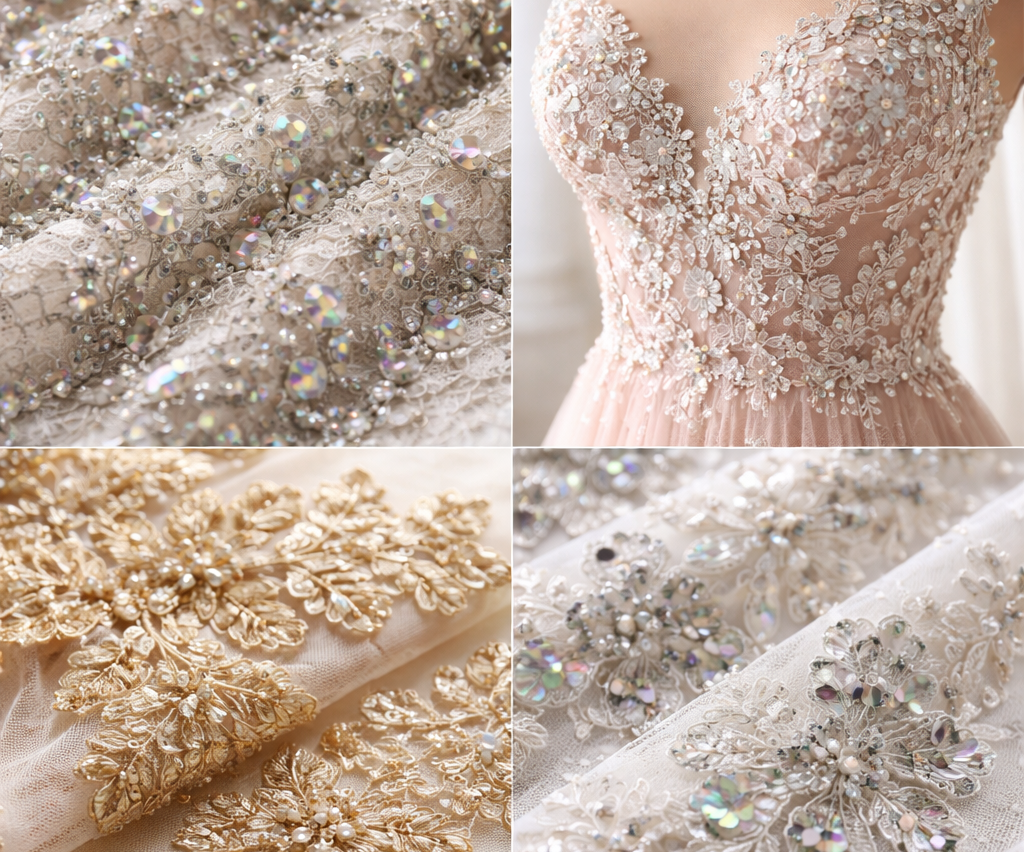
Rhinestone appliques are decorative patches made with crystal-like stones attached to a base fabric. They are usually heat-set, sewn, or glued onto garments.
Key features:
-
Reflect light and create shine
-
Available in many shapes, sizes, and colors
-
Often used on eveningwear, dance costumes, denim, and accessories
Rhinestones can be made from glass, acrylic, or crystal. Higher-quality stones sparkle more and last longer, which is why they are popular in formal and performance wear.
Sequin Appliques
Sequins are small, flat, shiny discs stitched onto fabric. When grouped together as an applique, they form patterns such as flowers, geometric shapes, or abstract designs.
Key features:
-
Lightweight shine compared to rhinestones
-
Flexible and easy to stitch
-
Ideal for movement-based designs
Sequin appliques are common in party dresses, stage costumes, and festive apparel. They move with the fabric, making them perfect for garments that need flow.
Embroidered Flower Lace
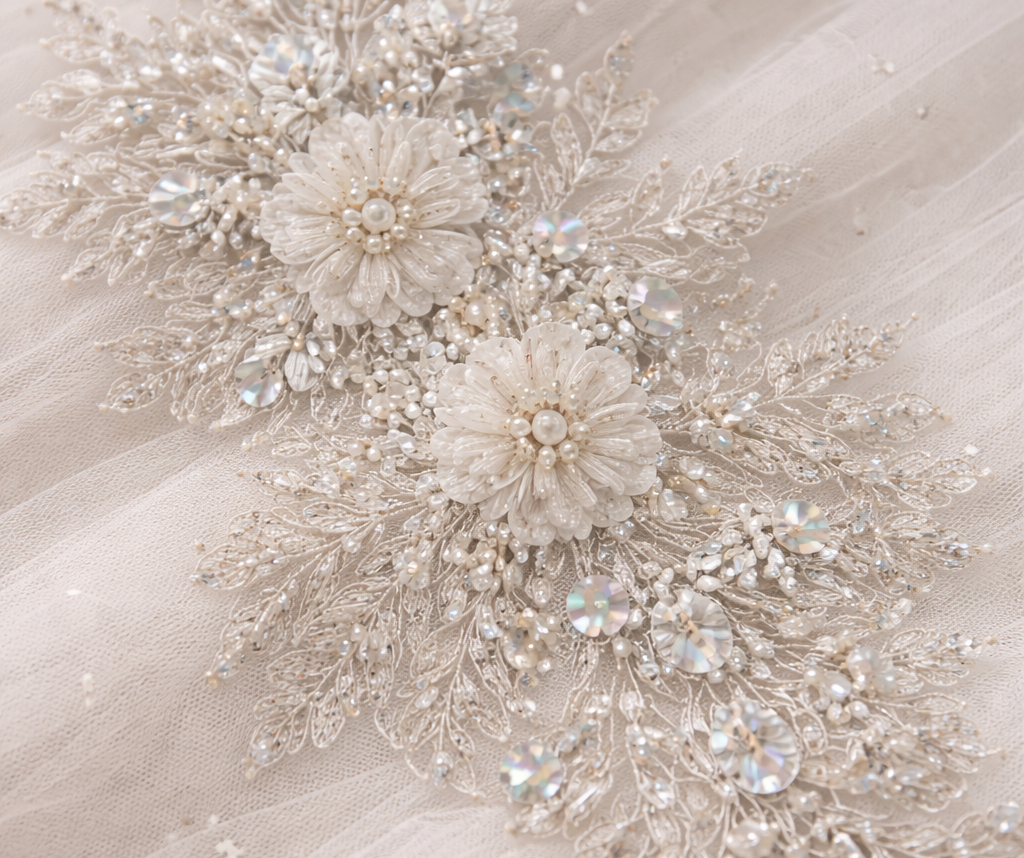
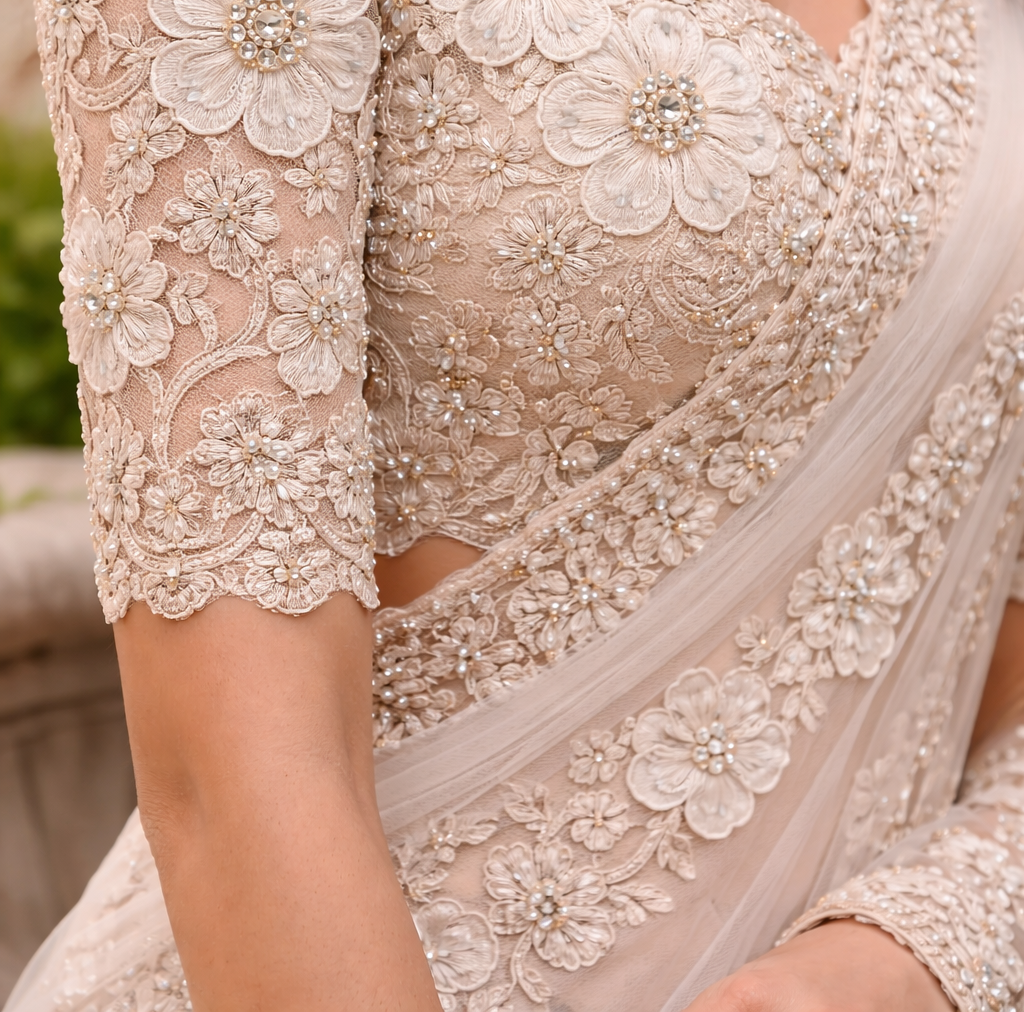
Embroidered flower lace combines lace fabric with detailed floral embroidery. Threads are stitched into mesh or net bases, creating raised, textured designs.
Key features:
-
Soft, elegant appearance
-
Can be subtle or bold
-
Works well for layering
This type of lace is especially popular in bridal gowns, traditional wear, blouses, and luxury home textiles. Unlike sequins and rhinestones, flower lace adds beauty without heavy shine.
How Designers Use Appliques and Lace in Practice
These materials are incredibly versatile. Designers apply them in different ways depending on the look and function of the garment.
Common applications include:
-
Necklines and bodices for formal dresses
-
Sleeves and hems for added detail
-
Jackets, bags, and shoes for statement accents
-
DIY fashion upgrades, such as customizing denim or scarves
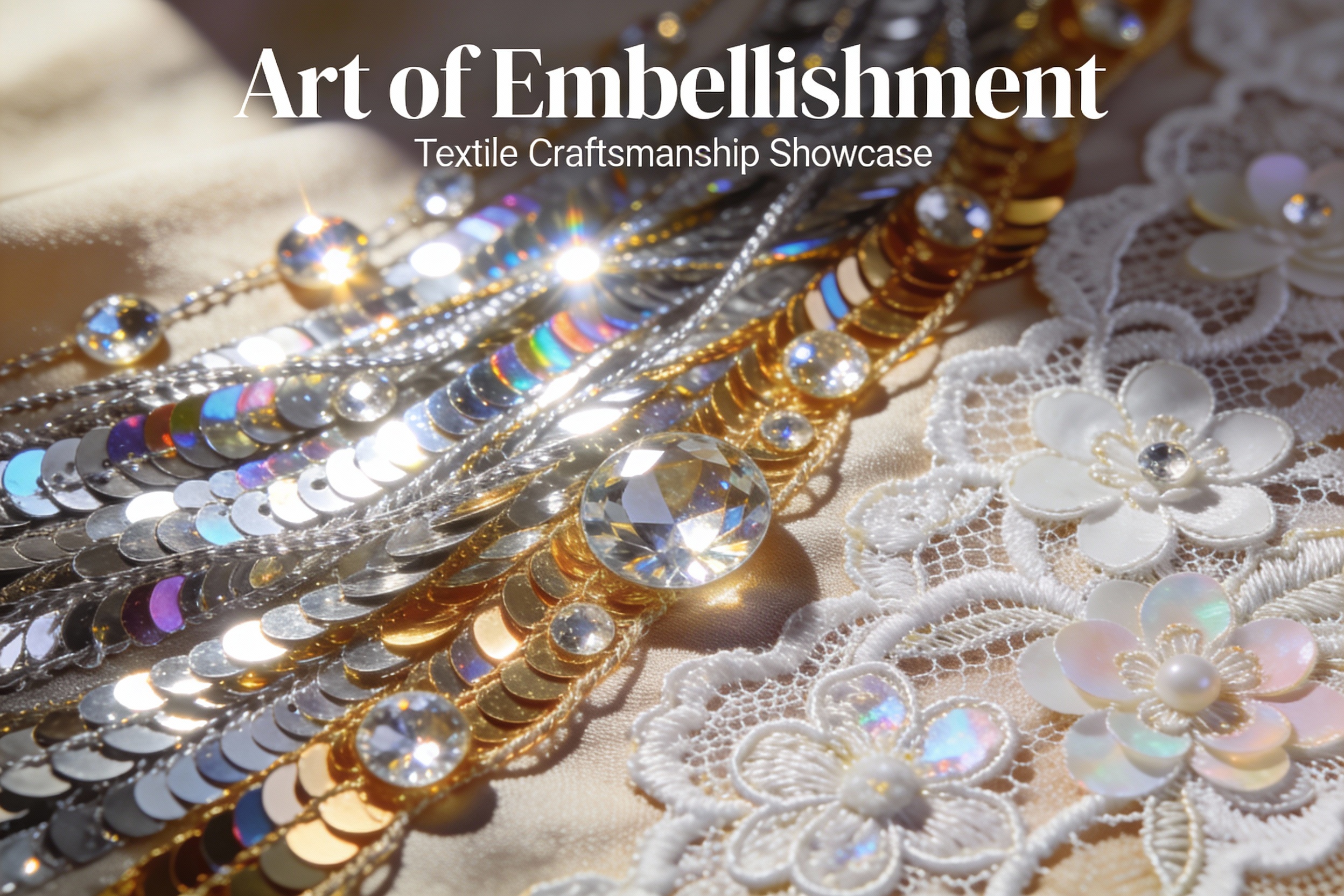
Many designers mix rhinestone appliques with embroidered flower lace to balance sparkle and softness. Lace creates a base of elegance, while stones add highlights where light naturally hits.
The Problem: Why Do People Hesitate to Use These Materials?
Despite their popularity, many designers and makers hesitate to work with rhinestone appliques, sequin appliques, and embroidered lace.
Some common concerns include:
-
Fear of damaging delicate fabrics
-
Worry that embellishments will fall off
-
Belief that these materials are “too flashy”
-
Uncertainty about washing and care
These worries often stop people from experimenting, even when these elements could clearly improve their designs.
The Agitation: What Happens When These Concerns Go Unchecked?
Avoiding decorative appliques can lead to missed opportunities. Garments may look plain or similar to mass-produced items. Small brands may struggle to stand out in crowded markets.
Poor application techniques can also cause real problems:
-
Stones falling off after one wash
-
Lace tearing under stress
-
Discomfort when embellishments rub against skin
In retail, this can result in returns, negative reviews, and damaged brand trust. For DIY creators, it can mean wasted time and materials.
The Solution: Practical Ways to Use Appliques and Lace Successfully
The good news is that most issues are easy to solve with the right approach.
Choose the Right Base Fabric
Heavy rhinestone appliques need strong fabrics like satin, denim, or velvet. Embroidered flower lace works best on stable bases or layered over lining fabric.
Secure Application Methods
-
Sewing offers the strongest hold for lace and sequins.
-
Heat-set rhinestones require correct temperature and pressure.
-
Fabric glue should be used sparingly and only for light designs.
Plan Placement Carefully
Place heavy embellishments where the fabric experiences less stress, such as bodices rather than underarms. This improves comfort and durability.
Test Before Final Use
Always test washing, pressing, and wear on a fabric sample. This step alone prevents most long-term issues.
Real-World Example: Adding Value Through Appliques
A small bridalwear studio in Southeast Asia faced a common challenge: customers wanted luxury-looking gowns, but budgets were limited. Instead of using expensive full-beaded fabrics, the designers chose embroidered flower lace as the base material.
They added rhinestone appliques only at key points—along the neckline and waistline. This approach reduced material costs while still delivering sparkle where it mattered most.
The result? Dresses that looked high-end, stayed comfortable to wear, and were easier to alter for custom fittings. Customer satisfaction increased, and the studio built a reputation for “affordable luxury” designs.
This example shows how smart use of appliques and lace can create real business value without overcomplicating production.
Care and Maintenance Tips
Proper care keeps embellished garments looking good for years.
Basic tips:
-
Hand wash or use gentle machine cycles
-
Turn garments inside out
-
Avoid high heat when ironing
-
Store flat or hang carefully to avoid pulling
These small steps make a big difference, especially for rhinestones and lace.
Frequently Asked Questions (FAQs)
1. Are rhinestone appliques heavy?
Some are, especially glass or crystal ones. Always check weight before applying to lightweight fabrics.
2. Can sequin appliques be sewn by hand?
Yes. Hand sewing gives better control and reduces the risk of damaging the base fabric.
3. Is embroidered flower lace suitable for daily wear?
Yes, when layered or lined properly. Choose softer embroidery for comfort.
4. How do I prevent stones from falling off?
Use proper heat settings or stitching, and avoid harsh washing methods.
5. Can I mix lace with sequins and rhinestones?
Absolutely. Many designers combine them to balance elegance and sparkle.
Conclusion
Rhinestone and sequin appliques, along with embroidered flower lace, remain powerful tools in fashion and textile design. They help transform simple garments into standout pieces, whether you’re designing bridal wear, party dresses, or custom DIY fashion.
The key is understanding their features, knowing the common challenges, and applying them with care. When used thoughtfully, these materials don’t just decorate clothing—they add value, personality, and lasting appeal.
If you’ve been hesitant to experiment, now is the time to start small, test your ideas, and let these classic embellishments work their mag