Introduction
Walk through any fashion store, bridal boutique, or fabric market, and you will quickly notice how much detail matters. A simple dress can look ordinary, while the same dress with the right surface decoration feels complete and intentional. This is where sequin appliques, trims, and embroidered flower lace come in.
These materials are widely used across fashion, costume design, home textiles, and crafts. They appear on evening gowns, wedding dresses, festival outfits, accessories, curtains, and even footwear. Their role is not just decorative. They help designers shape identity, improve perceived value, and adapt designs without changing the base structure of a product.
In this article, we’ll break down how sequin appliques, trims, and embroidered flower lace work in real production settings. Using the PAS framework, we’ll look at common problems, why they matter, and how these embellishments provide practical solutions.
The Problem: Designs That Look Flat or Repetitive
In fashion and textile production, one common issue is lack of surface interest. Many garments rely on plain fabrics and simple cuts. While this can work for basics, it creates challenges in categories like:
-
Occasion wear
-
Bridal fashion
-
Performance and stage costumes
-
Handmade or small-batch products
Another problem is design repetition. Brands often reuse patterns and silhouettes to control costs. Over time, collections can start to look too similar, making it harder to attract repeat customers.
There’s also the issue of cost and time. Adding embroidery or redesigning fabric from scratch takes skilled labor and longer production cycles. For small brands and workshops, this can be expensive and unrealistic.
The Agitation: Why This Hurts Designers and Makers
When products look flat or repetitive, they struggle to stand out in a competitive market. Customers scroll fast, browse quickly, and compare many options at once. If a garment does not catch attention early, it is often ignored.
In bridal and eveningwear, expectations are even higher. Buyers look for texture, shine, and detail. A dress without surface decoration may feel unfinished, even if the fabric quality is high.
For independent designers and craft sellers, this problem limits growth. Redesigning patterns every season costs money and time. Without flexible design tools, creativity can feel restricted.
This is why the industry relies on ready-made, adaptable embellishments that can refresh designs without rebuilding them.
The Solution: Sequin Appliques, Trims, and Embroidered Flower Lace
Sequin appliques, trims, and embroidered flower lace offer a practical solution to these challenges. They allow designers to enhance garments and textiles quickly, consistently, and at a controlled cost.
These elements can be added during or after garment construction. They work across many fabric types and design styles. Most importantly, they provide instant texture, structure, and visual interest.
Because they are available in standard designs and custom options, they support both mass production and handmade work.
Features of Sequin Appliques
1. Light Reflection and Movement
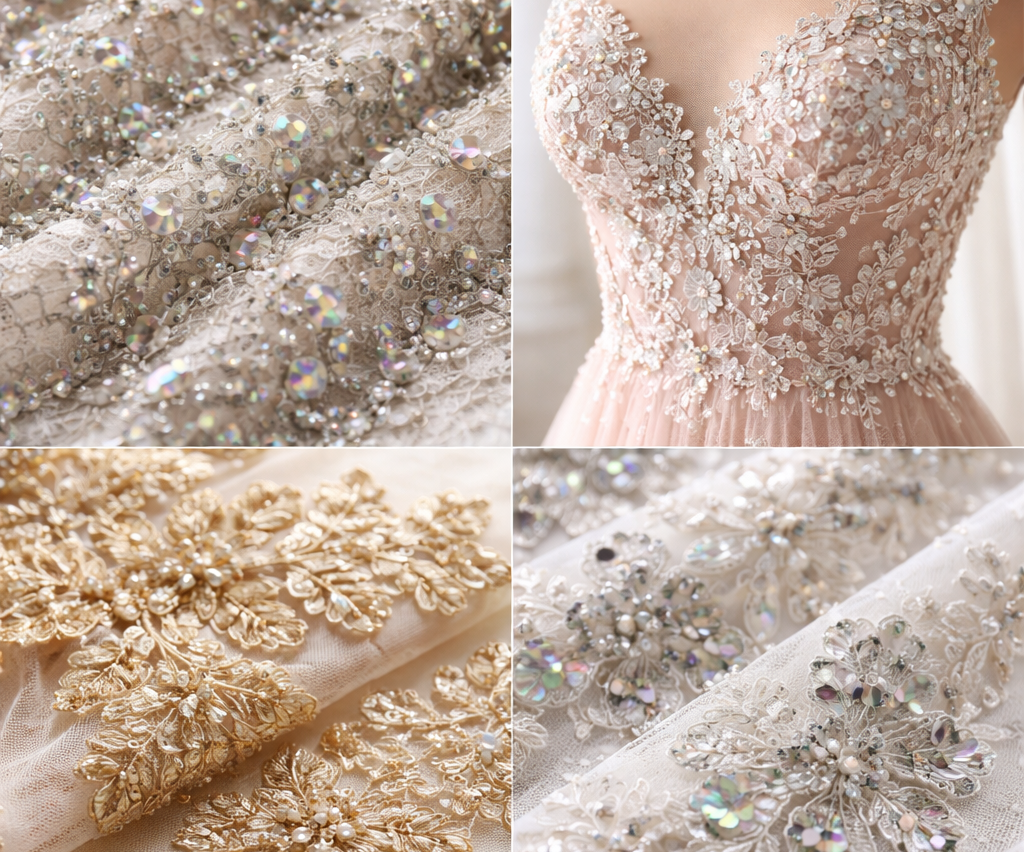
Sequins reflect light when the wearer moves. This creates a dynamic surface that works well for eveningwear, dance costumes, and performance outfits.
2. Flexible Placement
Sequin appliques can be placed on bodices, sleeves, shoulders, skirts, or accessories. Designers often use them to highlight specific areas without covering the entire garment.
3. Sewing or Heat Application
Many sequin appliques are sewn by hand or machine. Some designs include heat-set backing, making them suitable for faster production.
4. Design Consistency
Because appliques are pre-made, brands can achieve consistent results across multiple pieces. This is important for collections and uniforms.
Features of Trims
1. Clean Finishing
Trims are commonly used on edges such as hems, necklines, cuffs, and seams. They help garments look polished and complete.
2. Design Balance
A trim can frame a garment and bring visual balance. This is especially useful when working with simple shapes or solid-color fabrics.
3. Cost Control
Using trims allows designers to add detail without increasing fabric or pattern complexity. This helps manage production budgets.
4. Wide Industry Use
Trims are used not only in fashion, but also in home textiles like curtains, table linens, and cushions.
Features of Embroidered Flower Lace
1. Structured Decoration
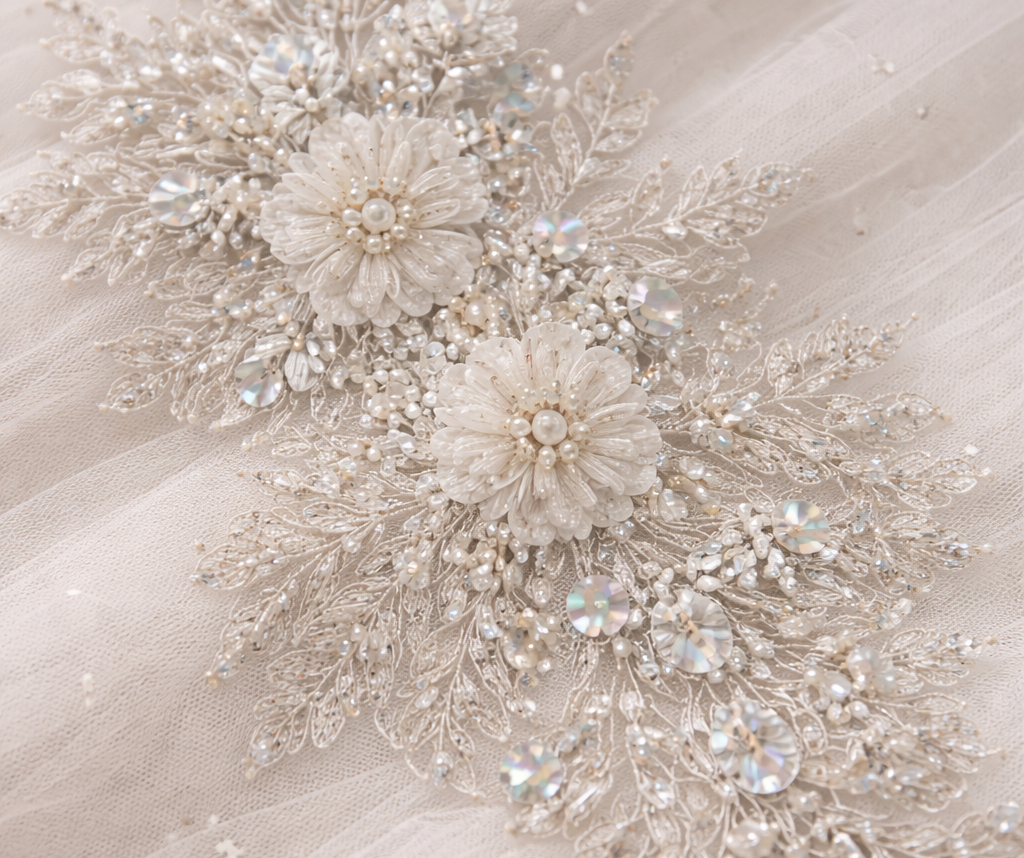
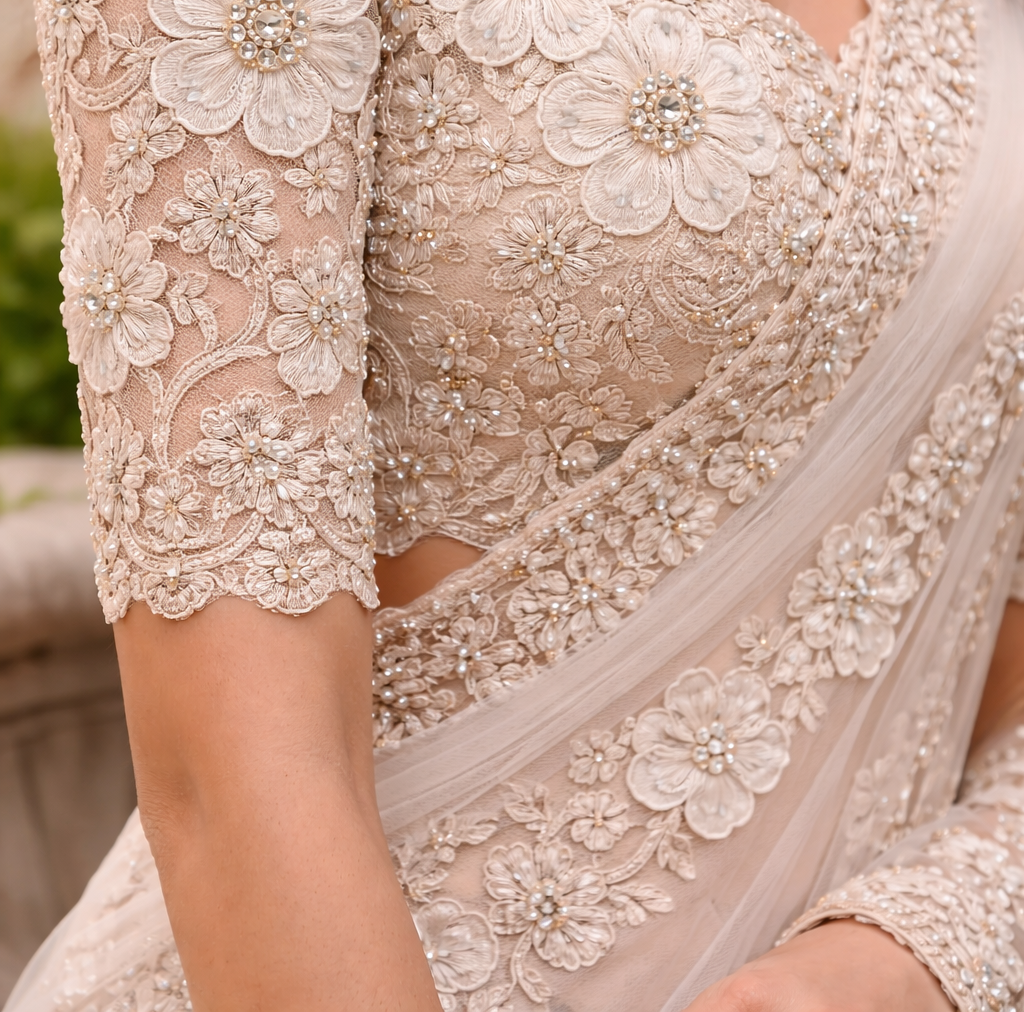
Embroidered flower lace combines fabric and embroidery, creating a stable decorative layer. This makes it suitable for garments that need both detail and support.
2. Natural Motifs
Floral designs remain popular across cultures and markets. They work well for bridal wear, formal clothing, and traditional garments.
3. Breathable and Lightweight
Unlike heavy beadwork, embroidered lace adds detail without making garments uncomfortable to wear.
4. Versatile Use
Flower lace can be used as panels, overlays, borders, or inserts. Designers often layer it over sheer or solid fabrics.
Rhinestone and Sequin Appliques: Practical Benefits
1. High Visibility
Rhinestones and sequins are widely used in stage wear and event fashion because they catch light easily.
2. Durability in Performance Settings
When properly applied, these appliques hold up well under movement, lighting, and frequent wear.
3. Time Efficiency
Compared to custom embroidery, ready-made rhinestone appliques reduce labor time while achieving similar impact.
4. Market Appeal
Consumers often associate sparkle with celebration, making these appliques popular in festive and luxury markets.
Real-World Industry Examples
Bridal Fashion Example
Luxury bridal brands such as Pronovias regularly use embroidered flower lace combined with sequin appliques. Instead of covering entire gowns, they place detailed lace on bodices and trains, while using sequins to add subtle shine. This approach keeps dresses elegant, wearable, and cost-efficient.
Ready-to-Wear and High Fashion
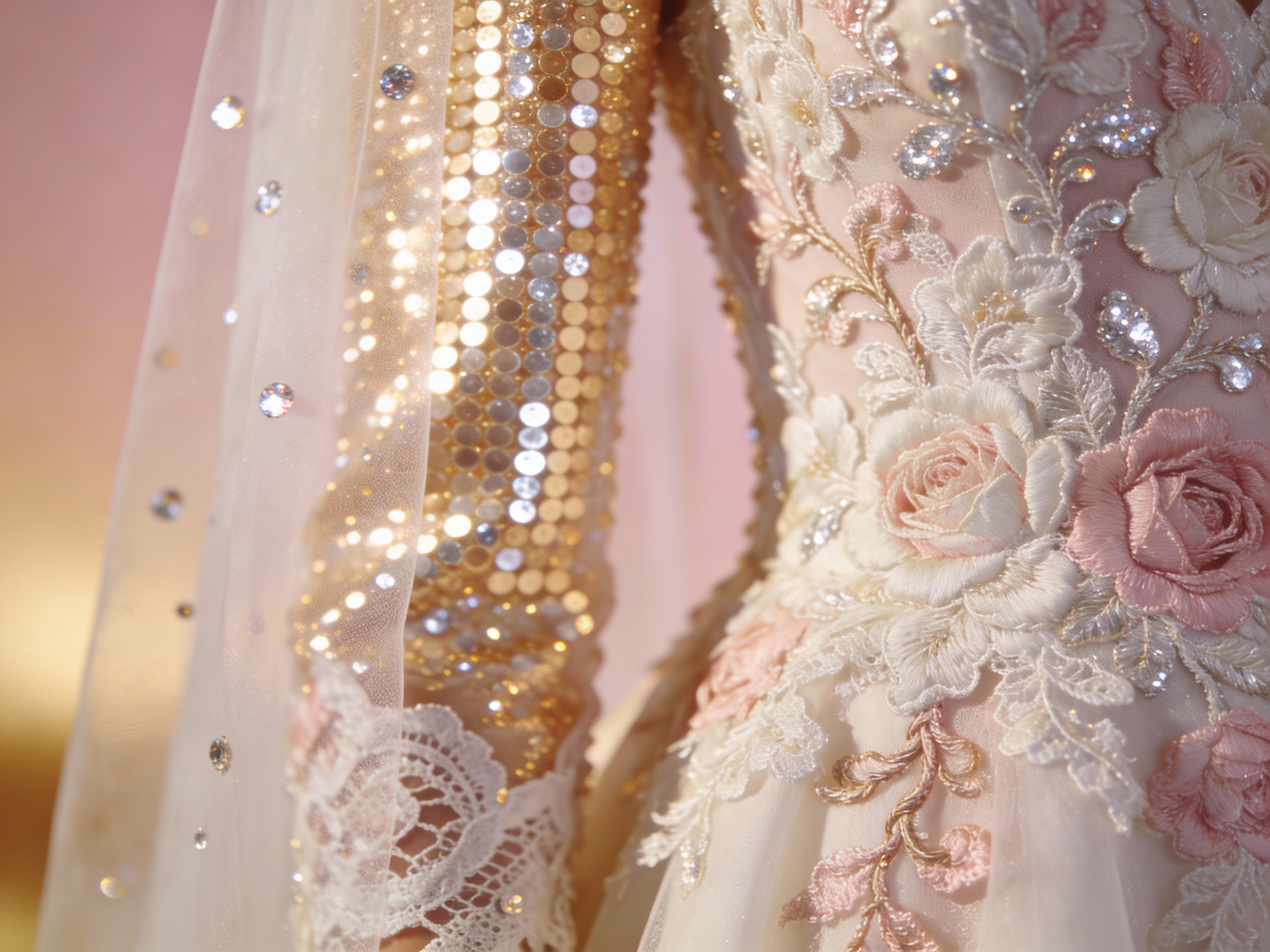
Fashion houses like Elie Saab are known for layered embroidery, lace, and sequins. Their collections often rely on embroidered flower lace as a base, with sequin trims and appliques added to enhance depth without changing garment structure.
Small Business and Craft Use
Independent designers and Etsy sellers often use sequin trims and lace to customize simple garments or accessories. This allows them to offer unique products without investing in large-scale production tools.
FAQs
1. Are sequin appliques suitable for everyday clothing?
Yes. Smaller designs and lighter sequins are commonly used on tops, jackets, and casual dresses.
2. How are embroidered flower lace pieces attached?
They are usually sewn onto garments or used as overlays during construction.
3. Are rhinestone appliques heavy?
Most modern designs are lightweight, but dense patterns can add weight if used in large areas.
4. Can trims be washed safely?
Yes, but gentle washing is recommended. Hand washing or delicate cycles help extend lifespan.
5. Do these embellishments support sustainable fashion?
Yes. They are often used in garment repair, customization, and upcycling, reducing textile waste.
Conclusion
Sequin appliques, trims, and embroidered flower lace play an important role in modern fashion and textile design. They solve common problems such as flat designs, limited customization, and high redesign costs. These elements offer flexibility, consistency, and strong visual impact across industries.
From luxury bridal gowns to small handmade products, their use continues to grow because they work. Designers value them for their practicality, while consumers appreciate the added detail and finish.
Understanding how and where to use these embellishments helps designers, makers, and businesses create products that feel complete, appealing, and market-ready.