Introduction
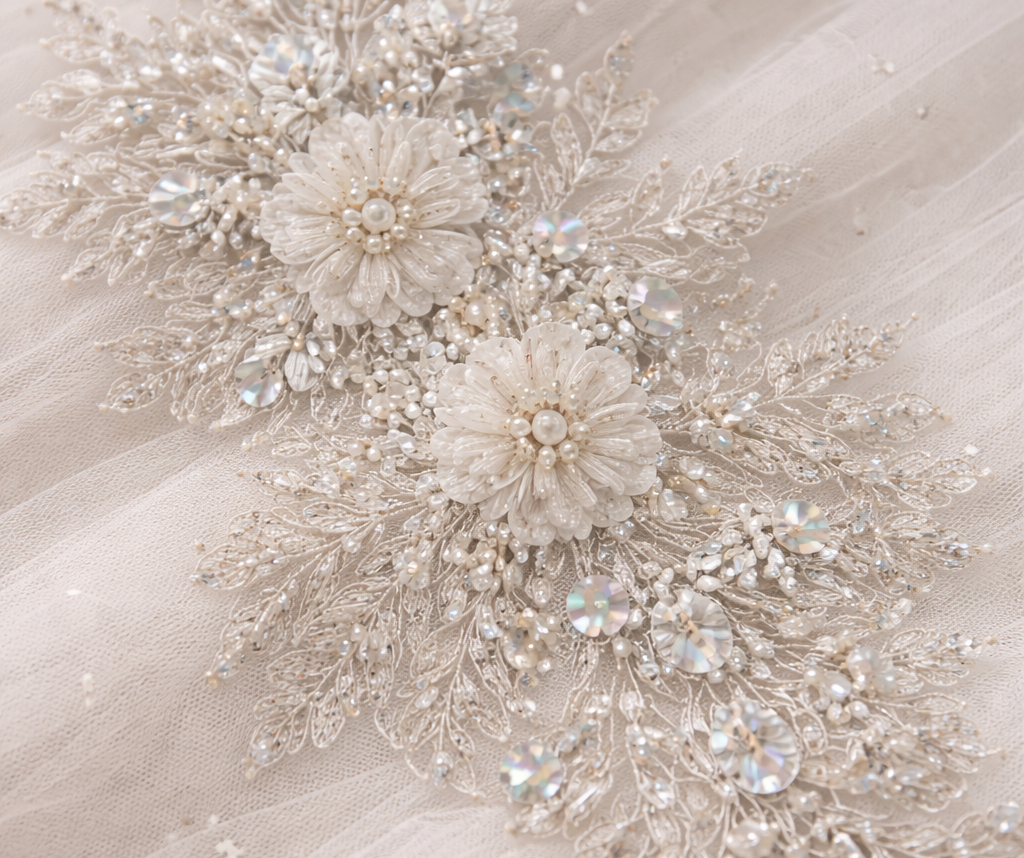
If you sew, craft, or style outfits for events, you’ve probably seen how much difference a small embellishment can make. That’s the main reason people keep buying lace with sequins, sequin and beaded appliques. They help you add detail without rebuilding the whole garment or decor piece.
Here’s why different groups use them:
-
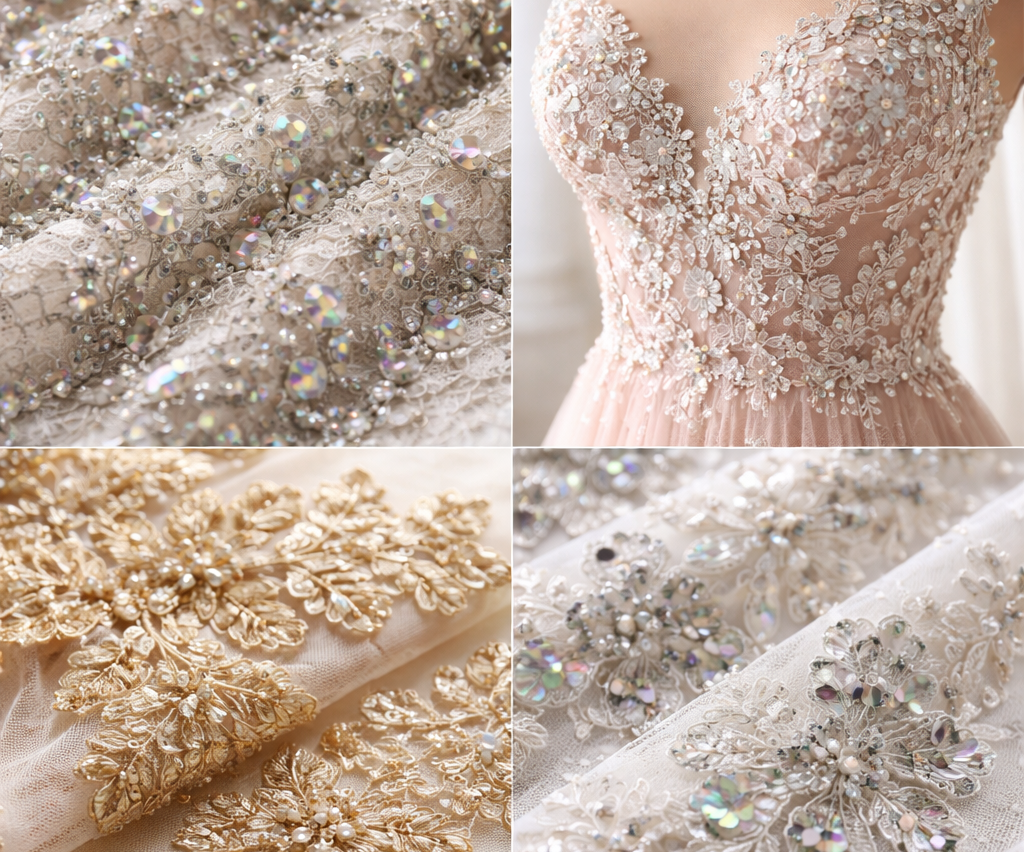
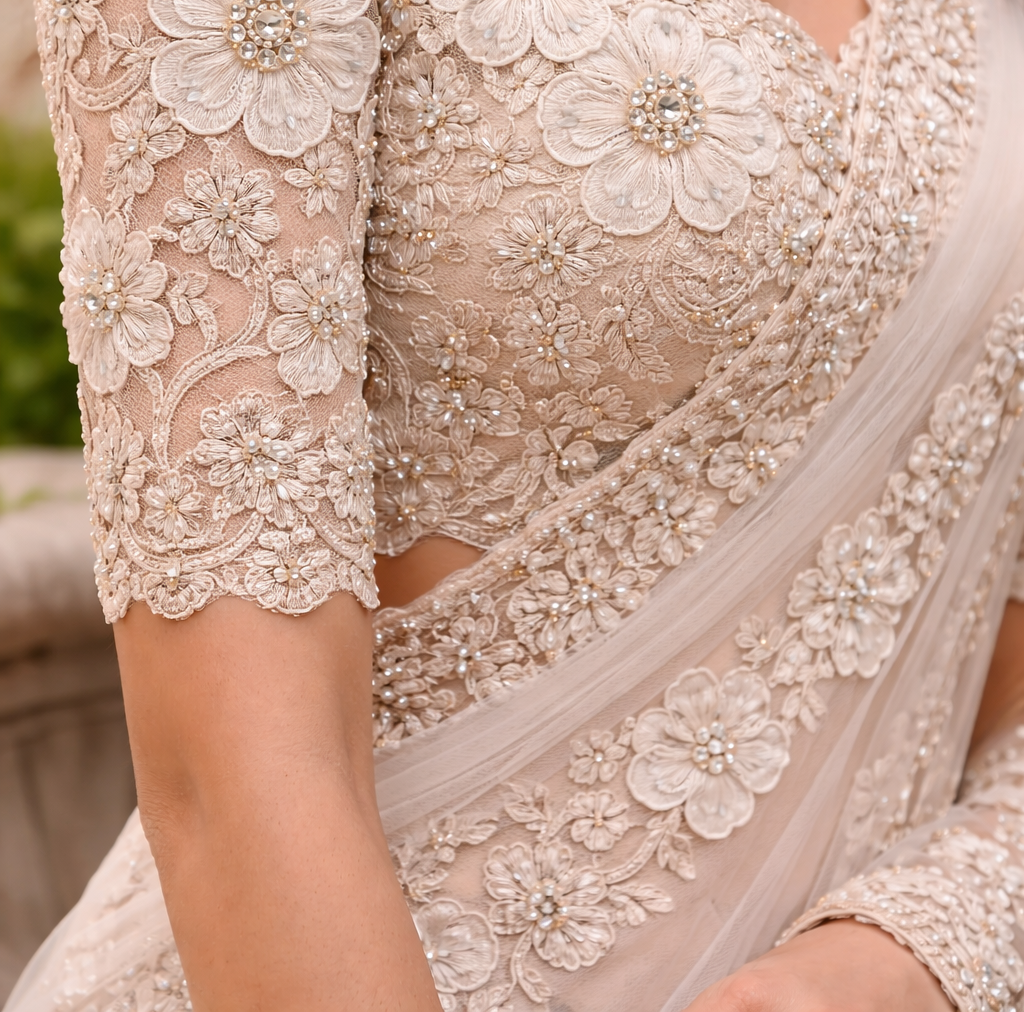
Fashion designers and dressmakers: to highlight necklines, bodices, sleeves, and hems. Appliques are also common in bridal alterations, where a seamstress may add motifs to cover a seam, adjust a neckline, or blend an added panel into the original lace.
-
Crafters and DIY makers: to upgrade jackets, bags, hair pieces, headbands, and costumes with a focused design element.
-
Home decor makers: to add sparkle to cushion covers, table runners, wall hangings, holiday decor, and even framed textile art.
-
Special occasion wear: wedding gowns, reception outfits, dance costumes, stage outfits, pageant wear, and festive clothing where the look needs to hold up in photos and lighting.
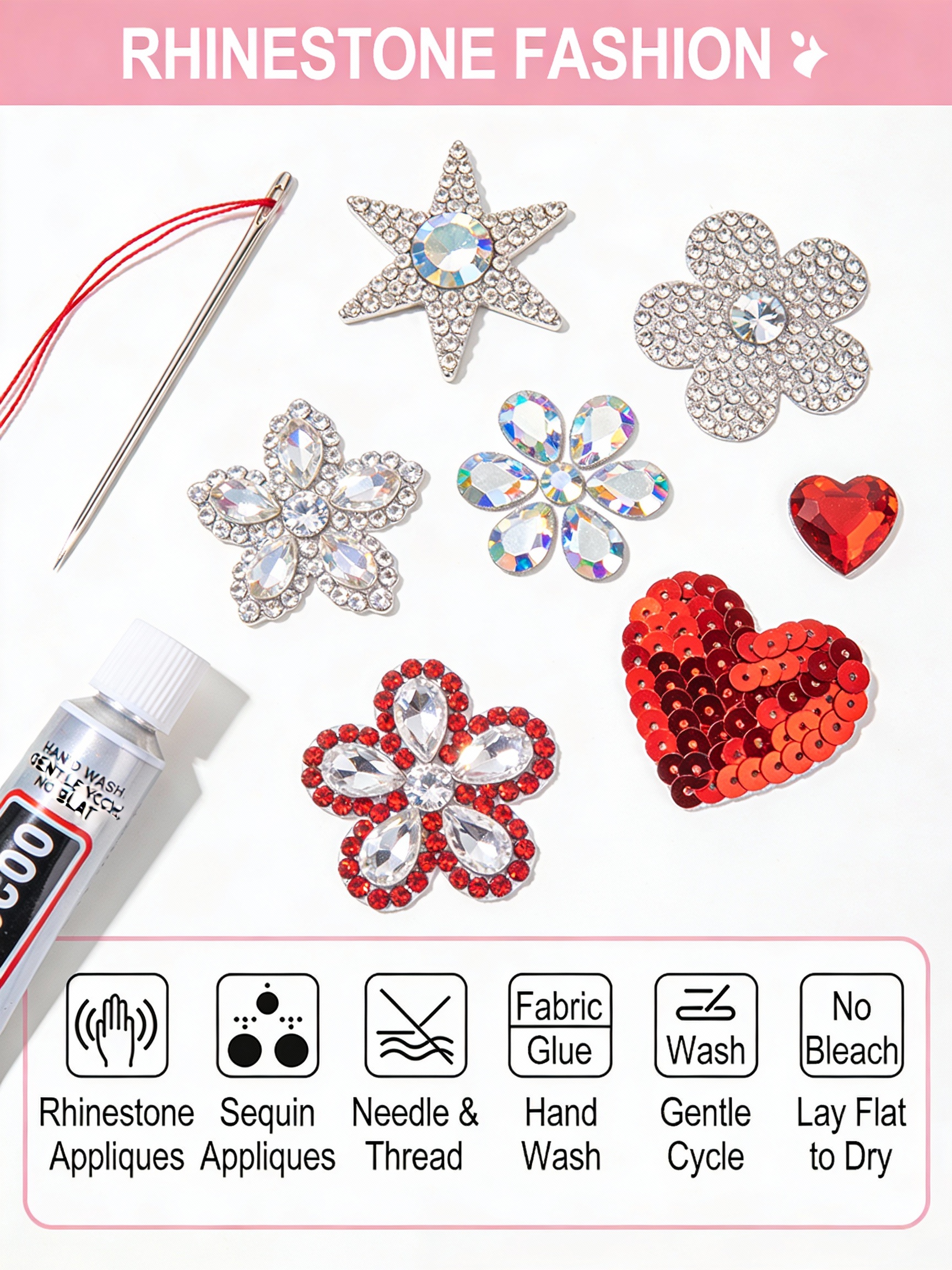
Alongside lace motifs, there’s another popular category: rhinestone and sequin appliques. These are often used when you need extra shine under light—think dance floors, stage lights, and evening events. They’re widely used in performance wear because rhinestones reflect light strongly and can be applied in repeatable patterns for consistent sparkle.
This sounds simple—buy the applique, attach it, and you’re done. But that’s exactly where many people get stuck.
Problem (PAS): The common issues people face
Appliques can look perfect in a listing photo, then behave very differently once you actually try to use them. The main problems usually fall into three buckets: quality, application, and design limitations.
1) Quality problems
-
Loose beads and sequins: Some pieces are stitched quickly, and the thread ends are not secured well. A few wears later, beads start dropping.
-
Scratchy backing: Stiffer mesh backings can irritate skin, especially on bodices, straps, and sleeves.
-
Uneven stitching: This can cause the applique to sit awkwardly and create puckers on lightweight fabric.
2) Application problems
-
Hard to shape: A flat applique may not sit smoothly over curves like a bust, hip, or shoulder unless you clip, overlap, or hand-stitch carefully.
-
Visible glue marks: If you use too much adhesive, it can darken sheer fabrics or leave a shiny patch that shows in photos.
-
Heat damage: Some appliques include synthetic mesh or plastic sequins that can warp if pressed too hot.
3) Limited design options
-
Size mismatch: A motif that looks big online may be tiny in real life, or too large to fit the placement you want.
-
Color mismatch: “Ivory” lace can vary a lot from one maker to another, which matters for bridal projects.
-
Style mismatch: Sometimes you find the right shape but the beads are the wrong tone (warm vs cool), which can clash with the base fabric.
Extra issues specific to rhinestone and sequin appliques
Rhinestone and sequin appliques have their own set of headaches:
-
Adhesion failures: Some are sew-on, some are hotfix (heat-activated glue), and some are glue-on. If you treat them all the same, stones can lift or fall.
-
Cracking and lifting on stretch fabrics: If the base fabric stretches but the adhesive sets stiff, stones can pop off at stress points.
-
Care confusion: A garment that looks durable can still lose stones if the cleaning method is too rough.
So the problem isn’t “appliques are bad.” The problem is that the wrong applique, or the wrong method, can turn a quick upgrade into a repair job.
Agitate (PAS): What goes wrong when quality or technique is off
When appliques fail, it’s rarely subtle. And it usually happens at the worst time—right before an event, or after the first wear.
Here are the real consequences:
-
Ruined fabric: Glue stains, heat marks, or pulled threads can permanently damage delicate fabric like tulle, chiffon, or satin.
-
Wasted time: You spend hours sewing, then spend more hours reinforcing, re-stitching, or replacing fallen beads.
-
Money loss: If you sell your work, one unhappy customer can mean refunds, alterations, or reputation damage.
-
Comfort problems: Scratchy appliques can make a dress unwearable even if it looks great on a hanger.
-
Photo regret: Missing stones and uneven edges show up clearly in close-up event photos.
Mini case study 1: Bridal rush repair after bead loss
In bridal alterations, a common scenario is this: a dress arrives with a beaded lace motif near the neckline or waist, and during the final fitting, the seamstress notices bead loss around high-friction areas (like under the arm or at the waistline). The fix usually involves:
-
trimming loose threads,
-
re-securing bead clusters with matching thread,
-
adding hidden anchor stitches,
-
and sometimes placing a second motif to cover a stressed area.
This kind of repair is very real in bridal work because wedding gowns go through fittings, transport, and long wear hours. If the applique wasn’t stitched well to begin with, it shows fast.
Mini case study 2: DIY jacket upgrade that didn’t survive movement
A common DIY project is adding rhinestone appliques to a denim or faux-leather jacket for a party or concert. People often choose glue-only because it feels faster. The problem: jacket shoulders bend and rub constantly. If stones are only lightly glued, you can end the night with missing sections and a “bald patch” where the design used to be.
That’s frustrating because the jacket itself is fine. It’s the attachment method that didn’t match the wear conditions.
These examples have the same lesson: low-quality materials and rushed attachment methods don’t just “look slightly worse.” They create cleanup and repairs.
Solution (PAS): Better selection + simple technique checks
The good news is you don’t need advanced skills to get better results. You mainly need two things:
-
choose pieces built for your use case, and
-
attach them in a way that matches how the item will be worn and cleaned.
How to choose high-quality lace with sequins, sequin and beaded appliques
Use this quick checklist when you shop or inspect what you already have:
-
Check stitch security: Gently flex the applique and look for loose thread ends. A few loose ends can be fixed, but many loose ends is a warning sign.
-
Check bead placement: Beads should sit tight, not swing freely. Swinging beads snag more easily.
-
Check the backing: Soft net tends to feel better against skin. Stiff mesh is better for structured pieces but can be scratchy.
-
Match weight to fabric: Heavy beaded motifs can drag lightweight fabrics and cause ripples.
How to choose rhinestone and sequin appliques
Before you buy, ask: “How will I attach this?”
-
Sew-on is best for movement-heavy areas and items that need longer life.
-
Hotfix can work well for flat areas and stable fabrics if you apply even heat and pressure.
-
Glue-on can work for awkward shapes and quick decor items, but you need a fabric-safe adhesive and careful application.
If you’re unsure, choose a piece you can reinforce with a few hidden stitches. Even when stones are hotfix or glued, a couple of anchor stitches at edges can prevent lifting.
Simple application tips that save projects
-
Always test first: Use a scrap of the same fabric and do a mini test (heat or glue) before the final placement.
-
Mark placement lightly: Chalk or removable fabric marker helps you align symmetrical motifs.
-
Secure stress points: Waistlines, underarms, shoulder seams, and cuffs need extra support.
-
Plan cleaning early: If the item will be washed, avoid glue-only when possible, or keep the applique away from high-friction areas.
Features: What matters most when buying and using appliques
Types of lace with sequins and beaded appliques
Most appliques fit into these types:
-
Single motifs: small shapes for shoulder corners, hair accessories, or center-front detail.
-
Paired motifs (left and right): common for bodices, hips, and symmetrical skirt placements.
-
Border trims: great for hems, veils, dupattas, and table runners.
-
All-over lace panels: useful when you want consistent sparkle across a larger area.
Quick placement guide
-
Neckline and shoulder: choose softer backing for comfort.
-
Waist and hip: choose stronger stitching and be ready to reinforce.
-
Sleeves: keep weight light so the sleeve still drapes.
Materials and durability of sequin and beaded appliques
Durability comes from how the materials work together:
-
Thread quality and stitch density: tighter, cleaner stitching usually means better hold.
-
Bead type and placement: bigger beads snag more; densely packed beads need stronger base support.
-
Sequin type: some sequins are more rigid; some are softer and quieter. Rigid sequins can crack if bent sharply.
For wearables, it’s smart to treat appliques like functional parts of the garment, not just decorations. If it bends, rubs, or stretches, reinforce it.
How to apply rhinestone and sequin appliques
Here are practical attachment options, explained in plain steps.
1) Sewing
Best for: garments, costumes, and anything that moves a lot.
-
Pin in place.
-
Stitch around the edge with small stitches.
-
Add a few hidden stitches inside the design to stop shifting.
-
If the applique is thick, use a strong needle and consider a thimble.
2) Hotfix (heat application)
Best for: stable fabrics and flatter areas.
-
Make sure the surface is smooth.
-
Use a pressing cloth to protect the stones and fabric.
-
Apply even pressure. Avoid “tapping” the iron.
-
Let it cool and rest before handling a lot.
3) Glue application
Best for: decor items, accessories, and shapes that are hard to sew.
-
Use tiny dots of glue rather than big lines.
-
Press and hold to avoid sliding.
-
Let it cure fully before moving or wearing.
Common uses in fashion and home decor
Fashion
-
Bridal bodices and illusion necklines
-
Sleeve cuffs and shoulder accents
-
Hem borders on partywear
-
Dance and stage costumes where sparkle matters under lighting
Home decor
-
Cushion corners and center motifs
-
Table runners and festive decor
-
Framed fabric art (great for delicate appliques that shouldn’t be washed often)
FAQs
1) How do I attach lace with sequins to fabric?
Pin it first, then sew around the edges. Add a few hidden stitches inside the motif for extra hold.
2) What are the best types of rhinestone appliques for clothing?
Sew-on is the safest for clothing that moves a lot. Hotfix can work well on stable fabrics when applied evenly.
3) Can I wash garments with sequin and beaded appliques?
Often yes, but treat them gently. Hand washing or a gentle cycle (inside out, in a laundry bag) is safer than rough washing.
4) What are the differences between machine and hand-applied appliques?
Machine application is faster and consistent on flat areas. Hand application gives better control on curves and helps reinforce stress points.
5) How do I choose the right applique for my project?
Match the applique’s weight to your fabric, choose a backing that feels comfortable, and pick an attachment method that suits wear and cleaning.
6) How do I stop rhinestones from falling off?
Avoid glue-only on high-movement zones, apply even pressure for hotfix, and add a few small stitches at edges when you can.
Real-world examples / Case study
Case study 1: Wedding gown detail using lace with sequins and beaded appliques
In bridal design and alterations, lace motifs are often used to create a “finished” bodice without changing the whole pattern. A common approach is:
-
place beaded lace appliques along the neckline and into the sleeves,
-
layer smaller motifs to blend seams,
-
and use matching pieces to extend lace coverage after resizing.
This is practical because bridal gowns often need last-mile adjustments, and appliques help hide joins and keep the lace pattern looking continuous in photos.
Case study 2: Home decor upgrade using rhinestone and sequin appliques
A reliable DIY decor use is upgrading cushion covers or a table runner for a seasonal event. Crafters often choose rhinestone appliques for decor because:
-
the base item doesn’t stretch much,
-
the applique sits on a flatter surface,
-
and the decor is used for short periods, not daily wear.
A smart technique here is to stitch the applique at corners even if you use a small amount of glue in the center. That way, the piece stays in place and resists peeling at edges.
Conclusion
Lace with sequins, sequin and beaded appliques can be a fast way to add detail, but quality and technique decide whether the result lasts. Low-quality stitching or the wrong attachment method can lead to bead loss, lifting edges, and wasted time—especially on garments that bend and move.
If you remember only a few things, make it these: check the stitching before you commit, test your method on scraps, and reinforce stress points. Do that, and your next project with rhinestone and sequin appliques or beaded lace motifs is much more likely to look good and stay together after real wear.