Introduction: Why these two techniques matter right now
If you’ve ever held a lace sample that looked amazing on a hanger—but somehow fell flat once it became a dress—you already understand why texture matters. Fashion today is packed with close-up photos, short videos, and harsh lighting. Details that used to “read” from a distance now need to look good from a few inches away.
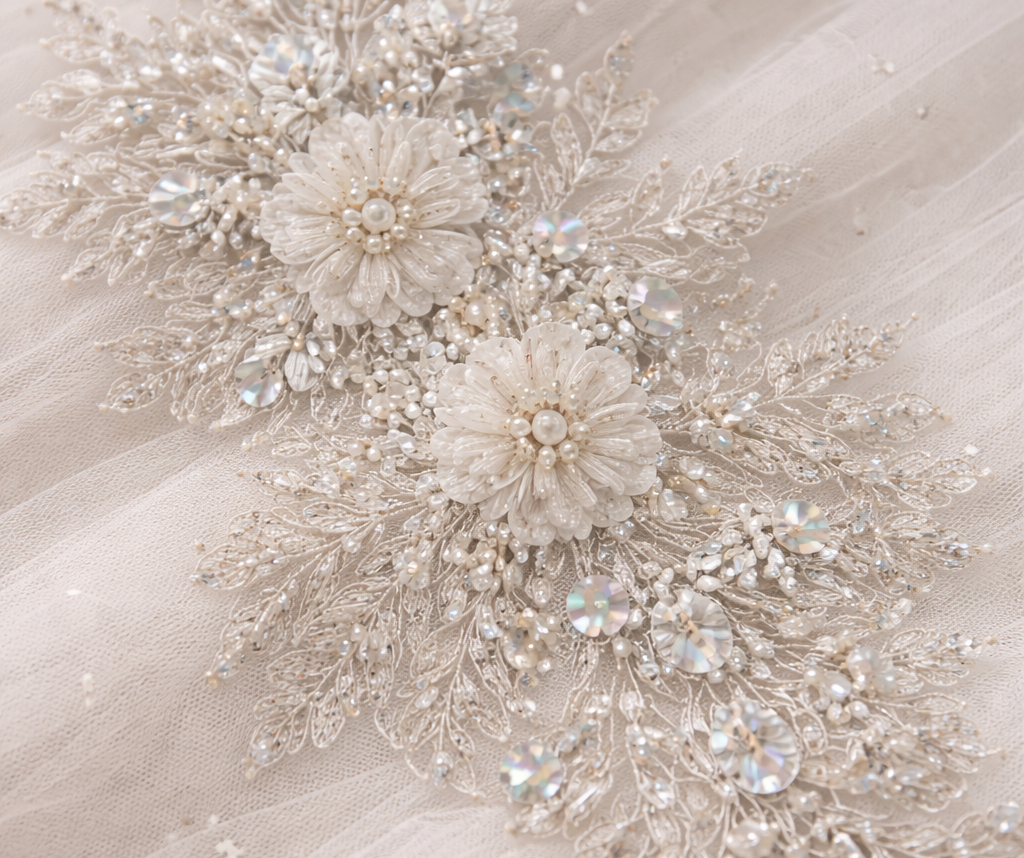
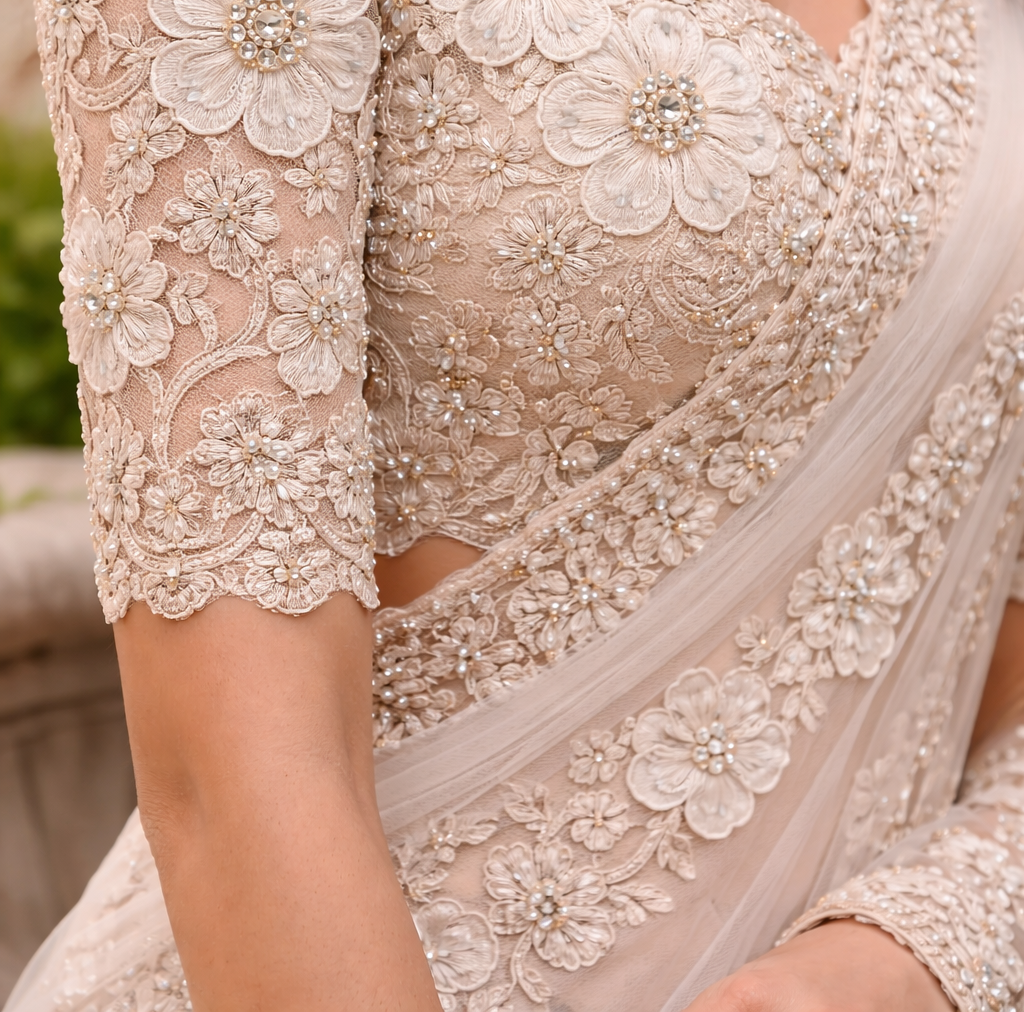
That’s where embroidered flower lace and corded embroidery step in. Flower lace gives you soft, romantic shapes with clear outlines. Corded embroidery adds raised lines that make a design look sharp, structured, and expensive—without needing heavy fabric or complicated pattern changes.
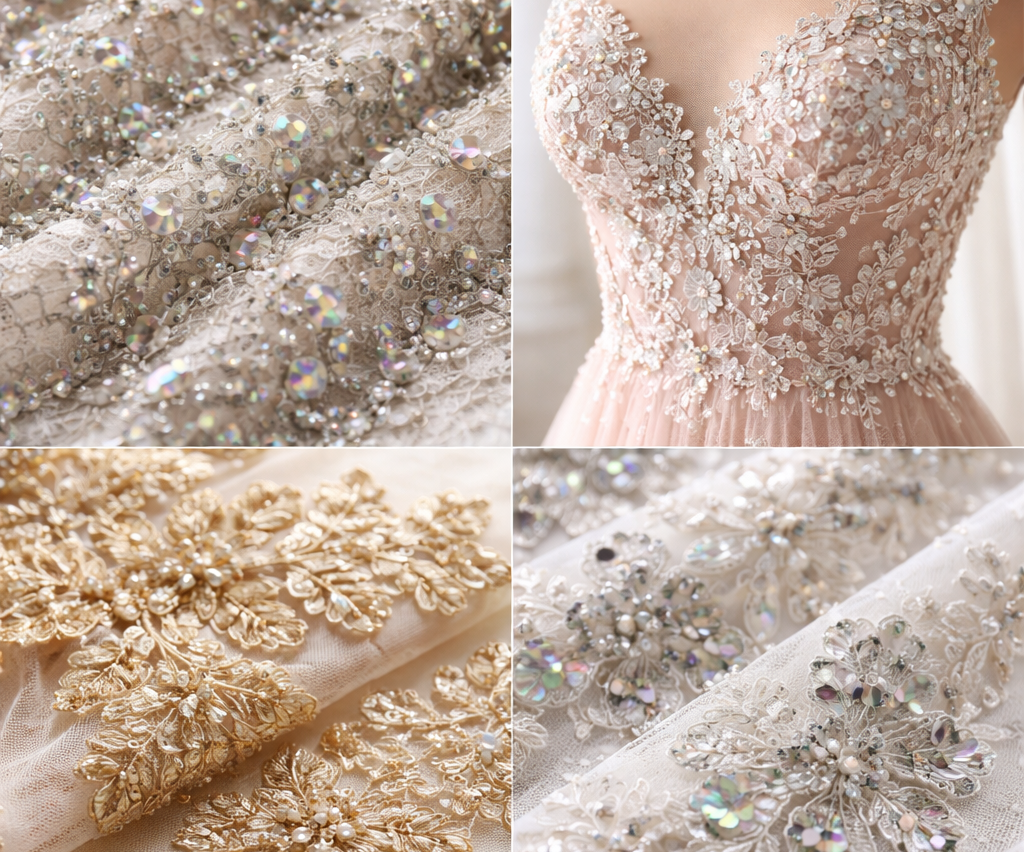
And yes, these techniques also pair naturally with sequin appliqués and rhinestone appliqués when you want controlled sparkle without turning the whole garment into a disco ball.
PROBLEM: When lace and embroidery don’t deliver in real life
Let’s name the common headaches designers, brands, and even home sewists run into:
1) “Pretty” lace that looks flat on the body
A lot of lace looks detailed on the roll, but once it’s layered over lining or stretched across curves, the pattern can blur. Floral shapes lose definition. The garment reads as “nice,” not “wow.”
2) Designs that look busy instead of premium
When you add flowers, leaves, and swirls with the same stitch thickness everywhere, the surface can feel noisy. There’s no hierarchy—nothing tells your eye what to look at first.
3) Sampling takes too long (and gets expensive fast)
If you’re testing multiple colorways, different grounds (tulle vs organza vs mesh), or adding bead/sequin/rhinestone elements, sampling can stretch into weeks. That slows launches and makes teams second-guess decisions.
A real example from the lingerie embroidery world: in a case study involving Swiss embroidery supplier Forster Rohner, they noted that color variations and drafts often had to be physically embroidered, creating extra sampling cost and taking weeks, while digital variations could be created in minutes once their process was set up.
AGITATE: What these problems cost you (beyond money)
When lace falls flat or sampling drags on, it’s not just annoying—it affects the whole product story.
You lose impact in photos and product pages
Customers zoom in. They pause reels. They look for proof that the piece is worth the price. If the floral work blends into the background, your garment can look like something they’ve already seen.
You risk quality complaints and returns
Flat-looking lace can be mistaken for printed patterns in images. And poorly planned embellishments—like heavy rhinestone appliqués on weak net—can lead to sagging, puckering, or scratchiness where it matters most.
You miss timing
Seasonal drops and bridal timelines don’t wait. If your sampling workflow eats weeks every time you try a new color or layout, you end up launching later—or launching with “safe” designs you’re not excited about.
In the same Forster Rohner digital sampling story, they describe how digitizing embroideries and using 3D helped support faster decision-making and reduced the need for repeated physical sampling rounds.
SOLUTION: How embroidered flower lace + corded embroidery fix it
Think of these two as a simple combo:
-
Embroidered flower lace gives you the motif (the pretty floral shapes).
-
Corded embroidery gives you the structure (the raised outline and crisp edges).
Together, they create depth that reads clearly in real life and on camera.
Features: What makes embroidered flower lace and corded embroidery work
1) Embroidered flower lace: the “motif-first” approach
Embroidered flower lace usually starts with a base (often tulle/net/mesh) and builds floral shapes using thread stitches. The best versions use:
-
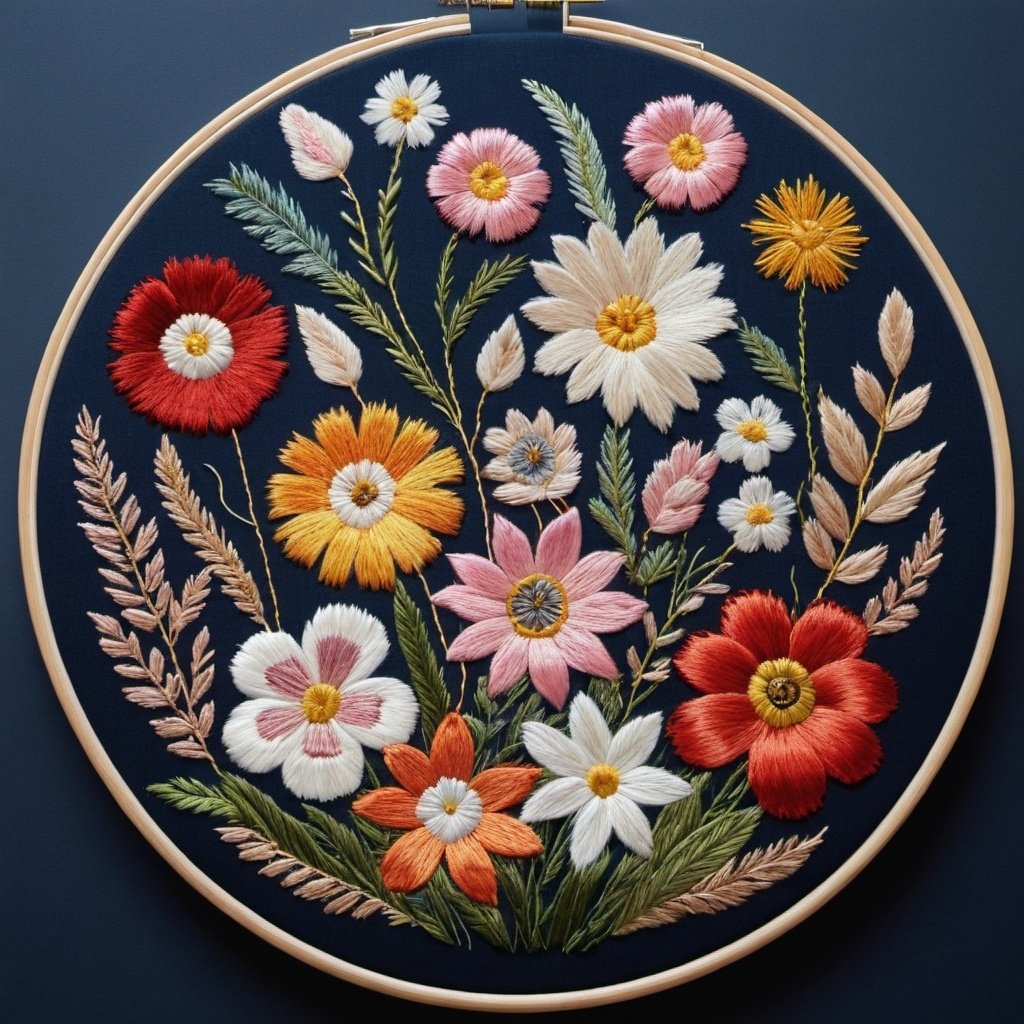
Satin stitches for smooth petal fills
-
Chain or stem stitches for neat outlines
-
Layering (some petals stitched denser than others)
Why it’s loved:
-
Flowers are easy to “place” on bodices, sleeves, veils, and hems.
-
It can look soft or bold depending on thread weight and spacing.
-
It plays well with cutwork looks (where motifs feel more separate and graphic).
2) Corded embroidery: raised lines that give instant clarity
Corded embroidery is all about adding a thicker line (cord/thread/yarn) and holding it down with small stitches—a method known as couching. The Royal School of Needlework describes couching as a stitch that works especially well as an outline and is widely used in surface embroidery.
In lace-making terms, you’ll also hear cordonnet. In needle lace, a cordonnet is a foundation outline formed by a couched thread—basically a built-in “frame” for the motif. Why corded details change everything:
-
Outlines look cleaner (great for floral petals and vines)
-
Motifs pop even on busy backgrounds
-
It gives a “3D” look without heavy beading
3) Materials that matter (and why buyers should ask)
If you’re sourcing or buying, these details affect comfort and durability:
Base / ground fabric
-
Tulle/net: light, airy, common for bridal and eveningwear (but needs careful support)
-
Organza: slightly firmer, holds shape well
-
Mesh: stretch versions are comfy but can distort dense embroidery if not stabilized
Thread choices
-
Polyester: strong, consistent, usually colorfast
-
Viscose/rayon: nice sheen, can be slightly less sturdy in harsh washing
-
Cotton: softer, more matte, great for a natural look
Cord choices
-
Soft cord for comfort on skin areas
-
Firm cord for crisp edges (especially in guipure-style looks)
4) Design advantages you can actually use
Here’s what you get in practical terms:
-
Better “read” from far and near: flowers stay recognizable
-
More control: corded outlines guide the eye (like linework in a drawing)
-
Easier upgrade path: you can add sparkle in specific zones (neckline, cuffs, waist)
Where rhinestone and sequin appliqués fit in
If your lace already has structure from corded outlines, it becomes easier to place sparkle without chaos:
-
Add sequin appliqués on a few flower centers for light-catching points
-
Use rhinestone appliqués where you want sharper shine (like neckline framing)
Tip that saves headaches: heavier appliqués should land on areas with support (seams, denser embroidery zones, or backed sections), not floating net.
Real-world Examples / Case Study: How the industry uses these ideas
Example 1: Faster design decisions with digital embroidery (Forster Rohner + Chantelle)
A useful case study comes from Vizoo’s write-up on digital embroidery workflows with Forster Rohner (a Swiss embroidery supplier founded in 1904). They list the company at 650+ employees and describe how digitizing embroidery helped reduce repeated physical sampling.
Two details that matter for anyone working with embroidered lace:
-
Digital variations in minutes vs weeks: They note that color variations and drafts previously required physical embroidery and could take weeks, while digital variations could be created in minutes once the system was in place.
-
A real collection developed fully in 3D: They mention lingerie brand Chantelle and say its collection “FLEURS” was developed entirely in 3D during the design process, as an early digital collaboration milestone.
Why this belongs in a lace-and-cording conversation: when you’re dealing with floral motifs, corded outlines, and placement changes, speed matters. Anything that helps teams preview how raised details will sit on the body reduces costly back-and-forth.
Example 2: High-impact embroidery on a major runway moment (Victoria’s Secret Fashion Show 2024)
A Swiss Textiles industry article reports that Forster Rohner produced the embroidery for the Victoria’s Secret Fashion Show 2024, describing close collaboration and emphasizing hand-finished detail—specifically noting that each sequin was precisely sewn on by hand (quoted from Victoria’s Secret’s creative leadership in the piece).
This is a real reminder of how brands use the same “formula” we’re talking about:
-
strong embroidery foundations (often including raised outlines)
-
controlled shine (sequins, crystals/rhinestones)
-
placement that supports the design story, not random sparkle everywhere
FAQs (Buyer- and maker-friendly)
1) What’s the difference between corded embroidery and corded lace?
Corded embroidery is the technique of using cord held down with stitches (couching) to create raised lines. Corded lace often refers to lace where motifs are highlighted with thicker threads so the pattern stands out. The effect is similar: clearer outlines and more depth.
2) Is embroidered flower lace itchy or uncomfortable?
It depends on the ground fabric and thread density. Dense stitching plus stiff net can feel rough on bare skin. For comfort, choose softer net/mesh, avoid bulky cords in high-friction zones, and consider lining or strategic placement.
3) Can I add sequin appliqués and rhinestone appliqués to corded embroidery?
Yes—and corded outlines often help. The raised structure makes it easier to “anchor” sparkle visually. Just watch weight: rhinestones can pull on net if the area isn’t supported.
4) How do I keep corded embroidery from puckering?
Puckering usually comes from mismatch between stitch tension, cord thickness, and base fabric stability. Stabilizers, correct tension, and placing heavier cording on firmer bases (or backed areas) helps a lot.
5) Is this only for bridal and eveningwear?
Not at all. You’ll see floral embroidered lace on tops, skirts, co-ords, resortwear cover-ups, and even streetwear trims. The key is scale: smaller motifs for daily wear, bolder corded outlines for statement pieces.
6) How should I wash and store garments with these details?
Best practice is gentle care: hand wash or delicate cycle (if the garment label allows), use a laundry bag, and avoid aggressive spinning. Store flat or hung carefully so heavy appliqués don’t stretch the lace.
Conclusion: The practical takeaway
If you want embroidery that looks clear, premium, and camera-ready, embroidered flower lace and corded embroidery are a smart pair. Flower motifs give the romance; corded outlines give the structure. Add sequin appliqués or rhinestone appliqués where you want shine, and you get a balanced look that feels intentional—not overloaded.
Most importantly, these techniques solve real problems: flat-looking lace, unclear patterns, and slow decision cycles. And the industry examples show it’s not just theory—major suppliers and brands use these tools (and even digital workflows) to move faster while keeping quality high