Introduction
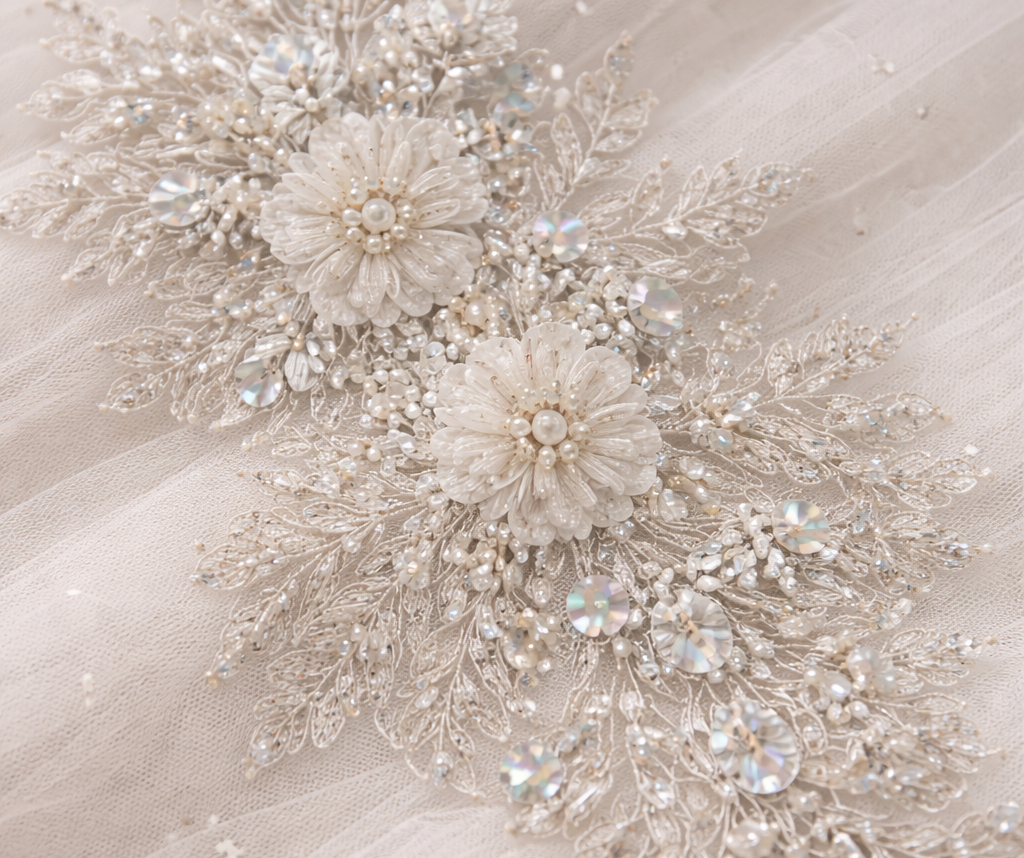
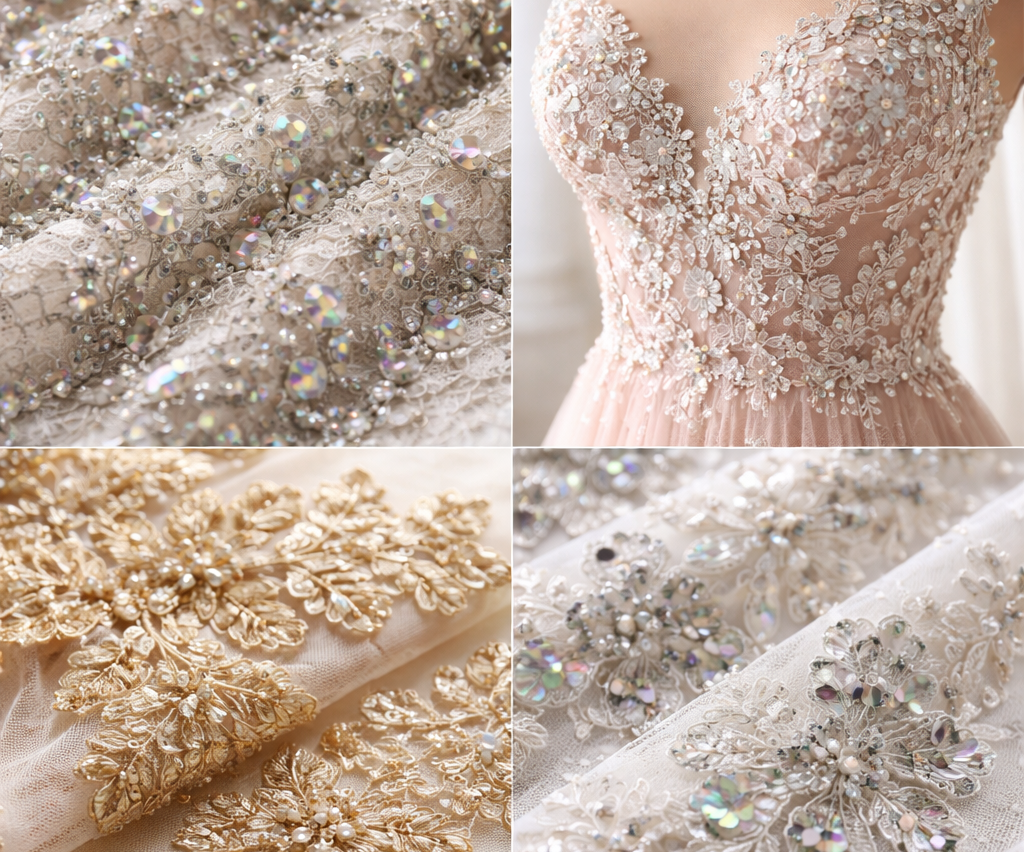
Rhinestone and sequin appliqués, along with lace border designs, are key details in modern fashion. They are widely used in bridal wear, couture gowns, party dresses, ethnic outfits, and eveningwear. These elements help turn a plain garment into something eye-catching without changing the base fabric.
Lace borders frame a garment. They define hems, necklines, sleeves, and panels. Rhinestone and sequin appliqués add sparkle, texture, and focus points. When used together correctly, they improve the look and value of a design. When used poorly, they can cause problems in finish, comfort, and durability.
This blog explains the real challenges designers and buyers face and how smart choices in appliqués and lace border design can solve them.
Problem (P): Common Challenges with Appliqués and Lace Borders
Many designers and boutique owners struggle with similar issues when working with rhinestone and sequin appliqués and lace borders.
One major issue is choosing the right lace border design. Borders come in many styles—floral, scalloped, geometric, heavy, light, wide, narrow. Without proper planning, the border may overpower the dress or look mismatched.
Another concern is quality and durability of appliqués. Stones may fall off, sequins may twist, or embroidery threads may loosen after stitching or cleaning. This often happens when appliqués are chosen without considering fabric weight and garment use.
There is also confusion about matching materials. A heavy rhinestone appliqué on soft net fabric can pull the lace down. A stiff lace border on a flowy fabric can affect drape and comfort.
These problems are common—and costly.
Agitate (A): Why These Problems Matter in Real Life
These issues do not just affect design. They affect business, reputation, and customer trust.
For designers, using the wrong lace border or appliqué means redoing work, adjusting patterns, or even rejecting finished garments. This wastes time and labor.
For boutiques, poor-quality appliqués lead to customer complaints. Brides often notice missing stones or uneven borders quickly. Even one negative experience can result in returns or lost referrals.
In couture and bridal wear, consistency matters. A gown must look the same from every angle and under different lighting. Uneven sparkle or poorly aligned borders ruin the final effect.
In real production, small mistakes add up. Industry reports show that embellishment-related rework can increase garment costs by 10–15%, especially in hand-finished pieces.
Solution (S): Smart Use of Appliqués and Lace Borders
The solution is not to avoid rhinestones, sequins, or lace borders—but to use them thoughtfully.
Start by choosing compatible materials. Lace borders should match the fabric’s weight and flexibility. Appliqués should suit the garment’s use—bridal, party, or casual wear.
Placement is just as important as design. Using rhinestone appliqués only on focal areas like the bodice, neckline, or waist keeps the dress balanced and comfortable.
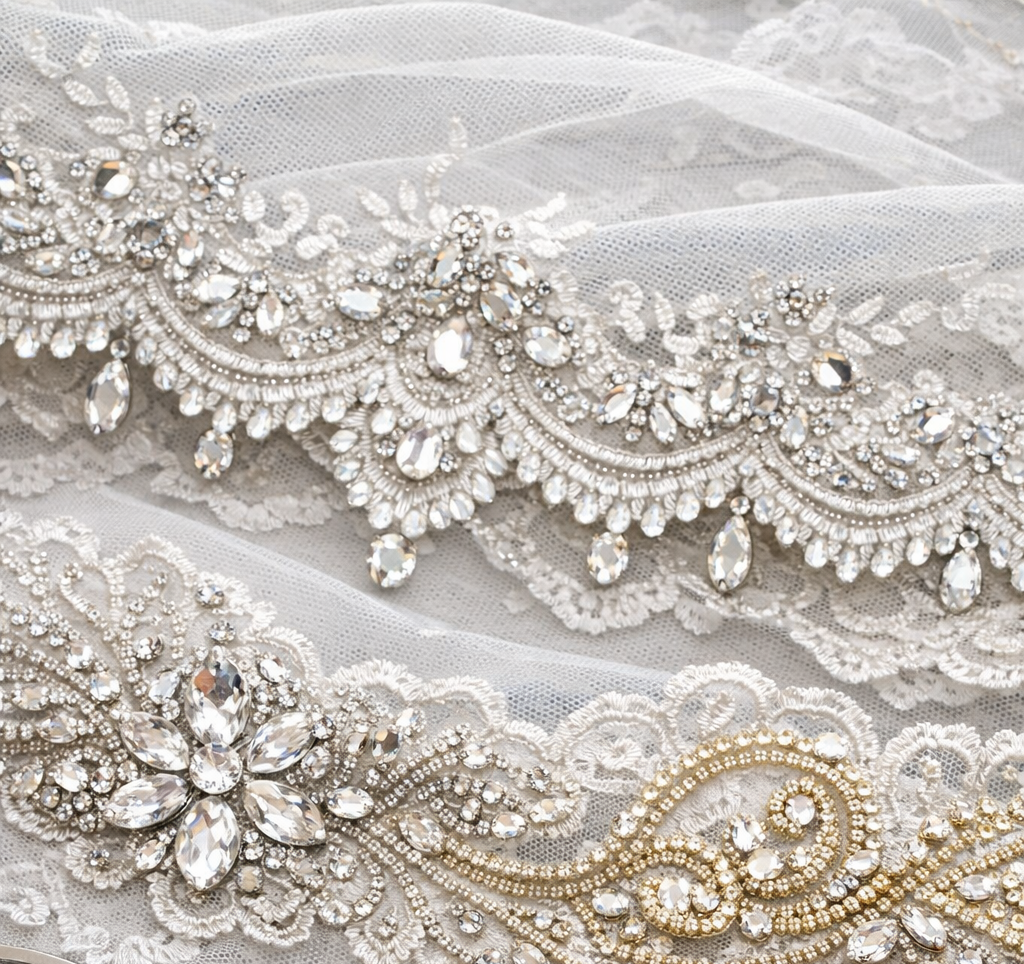
Color coordination also matters. Clear stones work well on white and ivory lace. Champagne or silver stones suit pastel and neutral fabrics. Sequins should match or softly contrast with lace threads.
When these elements work together, the result is a garment that looks polished, wears well, and satisfies customers.
Features: Lace Border Designs and Appliqué Types
Types of Lace Border Designs
Floral Lace Borders
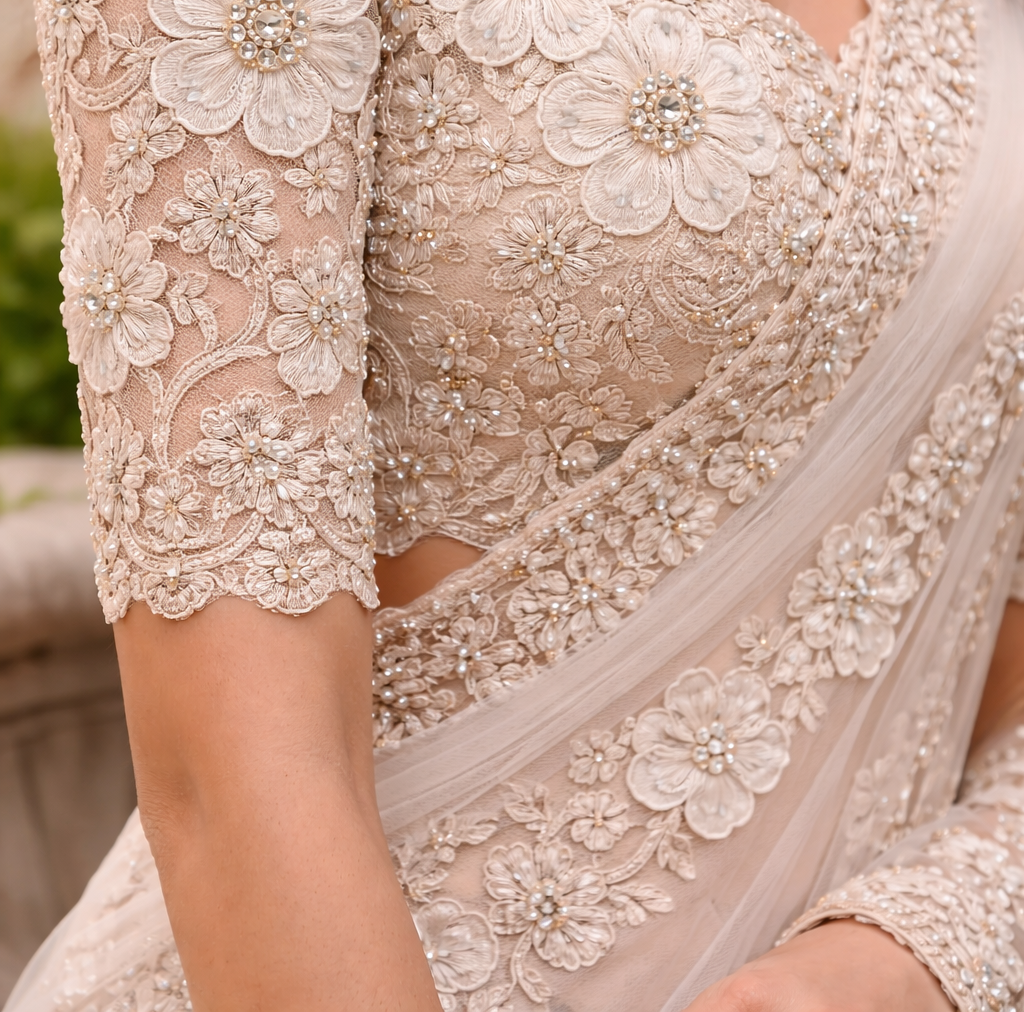
These are the most popular in bridal and evening wear. They work well for hems, veils, and sleeve edges. Floral borders support embellishments better due to denser embroidery.
Geometric Lace Borders
Used in modern and fusion wear. These borders give clean lines and are often paired with minimal rhinestone work.
Scalloped Lace Borders
Common in gowns and sarees. Scalloped edges create a finished look without extra stitching.
Wide vs. Narrow Borders
Wide borders (8–12 inches) suit lehengas and gowns. Narrow borders (2–4 inches) work for sleeves, necklines, and dupattas.
Types of Rhinestone and Sequin Appliqués
Hotfix Rhinestone Appliqués
Applied using heat. Fast and consistent for bulk production. Best for polyester and net lace.
Sew-on Rhinestone Appliqués
More secure than hotfix. Used in couture and bridal wear where durability is critical.
Sequin Appliqués
Lightweight and flexible. Suitable for large surface coverage without heavy feel.
Embroidered Appliqué Patches
Combine thread, sequins, and stones. Strong base makes them ideal for repeated use areas.
Practical Points Designers Should Consider
-
Durability: Sew-on methods last longer than glue-based ones
-
Comfort: Avoid heavy appliqués near armholes and waist
-
Maintenance: Hand wash or dry clean only for embellished lace
-
Ease of Stitching: Appliqués with mesh backing stitch faster and cleaner
Real-World Examples and Case-Style Insights
Case 1: Bridal Gown Upgrade with Lace Borders
A bridal designer worked with a plain satin gown and added a 6-inch floral lace border along the hem. Clear rhinestone appliqués were hand-stitched along the floral centers.
-
Fabric: Satin base with nylon lace
-
Result: Gown price increased by 20%
-
Customer feedback: “Looks custom-made”
The designer used embellishment only on the lower half, keeping the bodice light and comfortable.
Case 2: Boutique Standardizing Appliqué Combinations
A women’s boutique selling party dresses standardized three lace border and appliqué combinations for their seasonal collection.
-
Border width: 4 inches
-
Appliqué type: Hotfix rhinestones + sequin embroidery
-
Fabric: Polyester net
This reduced sampling time by 30% and improved size consistency. Customer returns related to embellishment issues dropped noticeably.
Case 3: Couture Gown with Heavy Sequin Borders
A couture dressmaker used wide scalloped lace borders with layered sequin appliqués for a red-carpet gown.
-
Border width: 10 inches
-
Stitch method: Hand-sewn with reinforced threads
-
Wear time tested: 6+ hours
Despite heavy embellishment, careful placement kept the gown balanced and wearable.
FAQs: Common Questions Answered
1. How do I choose the right lace border for bridal wear?
Choose soft floral lace with medium density. Avoid stiff borders that affect drape.
2. Can rhinestone and sequin appliqués be machine washed?
No. Hand wash or dry clean is recommended for longer life.
3. What fabric works best with heavy lace borders?
Satin, raw silk, and thick net support heavy borders better.
4. Do hotfix stones fall off easily?
They hold well on suitable fabric but are less durable than sew-on stones.
5. Are sequin appliqués comfortable to wear?
Yes, if placed away from friction areas and backed properly.
6. Can lace borders be reused in different designs?
Yes. Standard border widths allow reuse across multiple styles.
Conclusion
Rhinestone and sequin appliqués, combined with well-chosen lace border designs, add value, detail, and elegance to garments. Problems arise when materials, weight, or placement are ignored.
By understanding lace types, appliqué methods, and real-world usage, designers and boutique owners can avoid costly mistakes. Smart choices lead to better finishes, happier customers, and stronger collections.
The goal is not more decoration—but better decoration.