Introduction
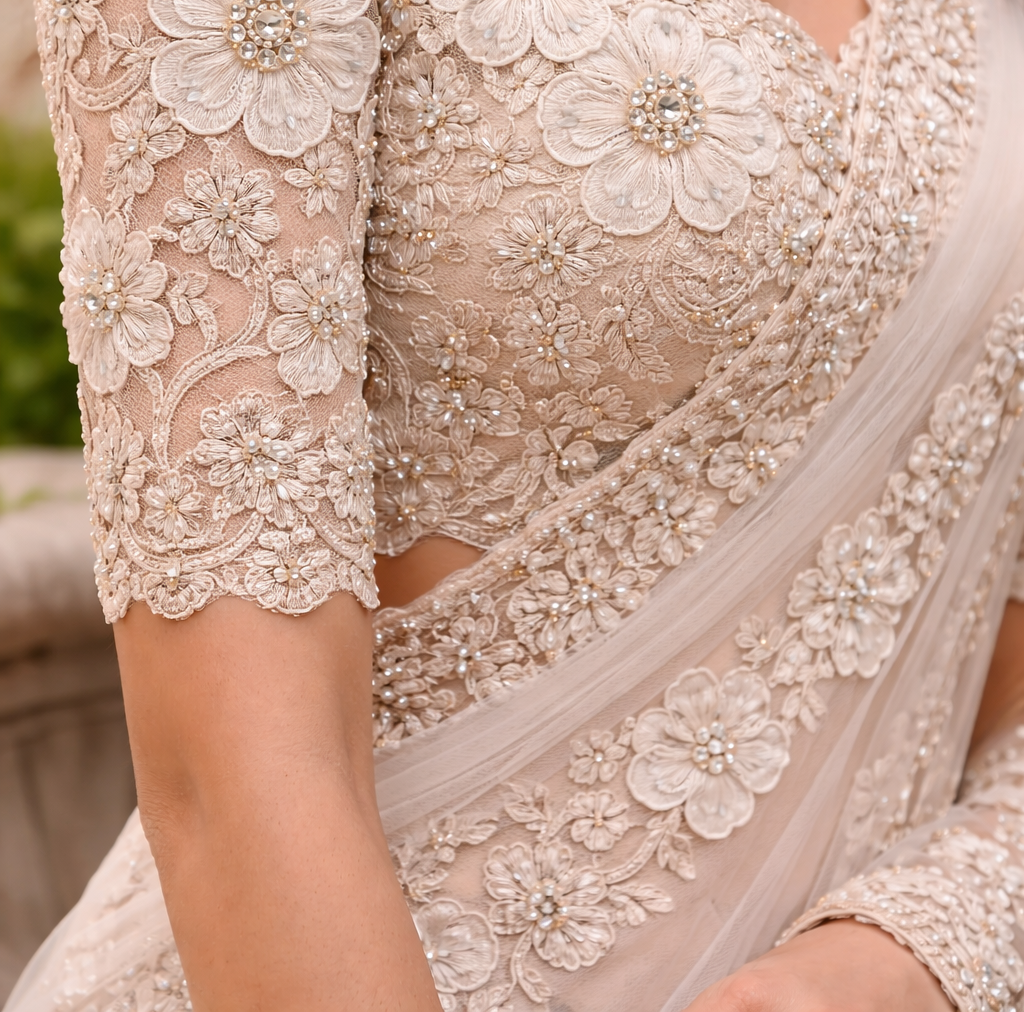
Floral lace material and lace borders are core elements in fashion and textile design. You see them in wedding dresses, evening gowns, ethnic wear, lingerie, and even home décor. Their soft patterns and open structure add detail without heavy fabric weight.
Over the years, lace has evolved. Today, designers do not rely only on plain lace. They mix floral lace with rhinestone and sequin appliqués to add shine, depth, and value. For buyers and designers, understanding how lace works—and how embellishments affect quality—helps avoid costly mistakes.
This guide explains floral lace materials, lace borders, common problems, and how smart embellishment choices can improve design and production results.
Problem: Choosing the Right Lace Is Not Easy
Many designers and buyers struggle when selecting floral lace material or lace borders. The problems usually fall into three areas:
Inconsistent quality
Lace can look good on a sample card but behave differently in bulk production. Some lace stretches unevenly, frays at the edges, or loses shape after stitching.
Finishing issues with borders
Lace borders often curl, tear, or fail to sit flat on garments. Poor finishing makes even expensive designs look cheap.
Limited embellishment options
Not all lace works well with rhinestones or sequins. Heavy embellishments can damage delicate lace or cause sagging, especially in bridal and evening wear.
These issues cost time, money, and trust between buyers and suppliers.
Agitate: Why These Lace Problems Matter
Lace problems do not stay small. They affect the entire supply chain.
For fashion designers, poor lace quality can ruin a finished garment. A bridal dress with uneven lace borders or falling sequins risks rejection by clients.
For manufacturers, lace defects increase fabric waste and rework costs. According to textile production studies, reprocessing due to trimming and embroidery errors can raise production costs by 8–12%.
For retail buyers, inconsistent lace quality leads to customer complaints and returns. In the luxury segment, even a small defect lowers perceived value.
For end customers, lace that scratches, breaks, or loses stones after one wear damages brand trust.
This is why understanding floral lace materials and proper embellishment methods is not optional—it is necessary.
Solution: Floral Lace with Rhinestone and Sequin Appliqués
The solution lies in choosing the right floral lace base and matching it with suitable appliqué techniques.
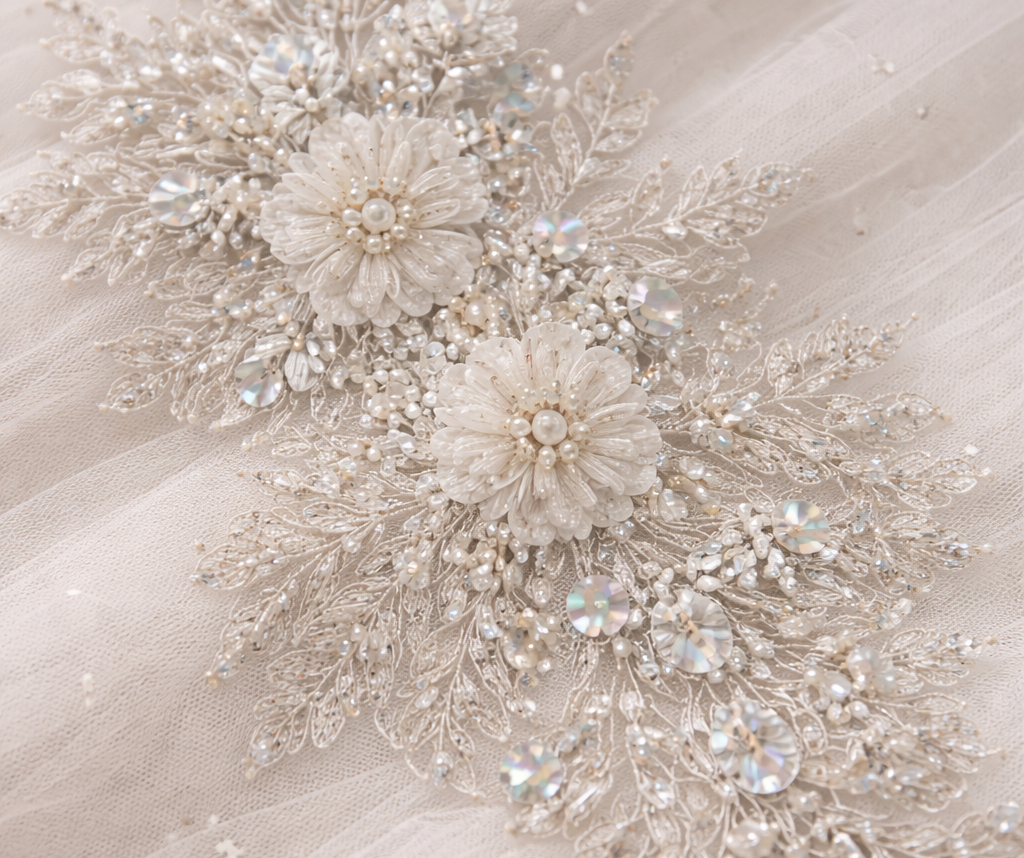
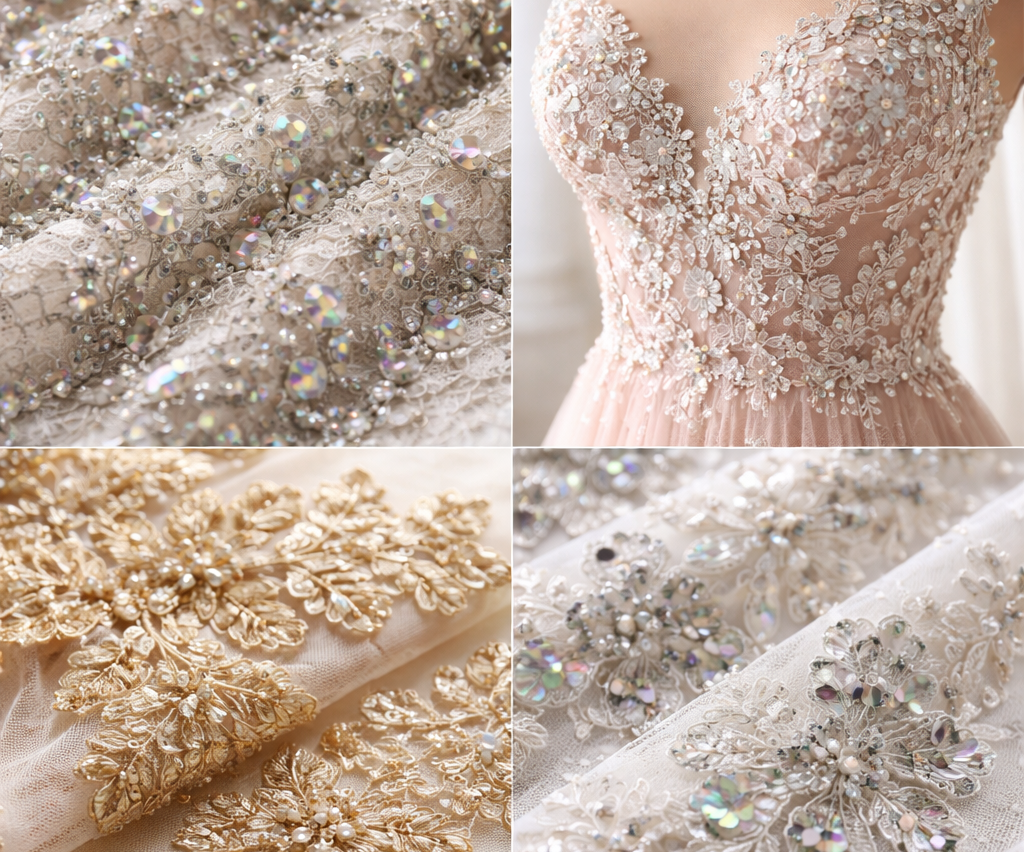
High-quality floral lace, when paired with well-applied rhinestones and sequins, delivers three key benefits:
-
Stronger visual impact without heavy fabric
-
Better durability when stitched correctly
-
Higher perceived value with controlled costs
Modern lace production uses embroidery machines, heat-fix stones, and hand-applied sequins to balance beauty and strength. When borders are reinforced with stable threads or mesh backing, they hold shape better and last longer.
Designers today often use embellished lace borders instead of fully embroidered panels to reduce weight and cost while keeping a premium look.
Features & Benefits of Floral Lace and Lace Borders
Fabric Types Used in Floral Lace
Floral lace materials are made from different fibers, each with practical uses:
-
Polyester lace – Durable, cost-effective, and widely used in mass production
-
Nylon lace – Soft and flexible, ideal for lingerie and bridal wear
-
Cotton lace – Breathable and natural, used in casual and ethnic designs
-
Silk lace – Rare and expensive, mainly for couture garments
Polyester and nylon blends dominate the market due to strength and compatibility with embellishments.
Design Patterns and Structure
Floral lace patterns range from small repeat motifs to large, bold florals. Dense floral patterns support rhinestones better than open net designs.
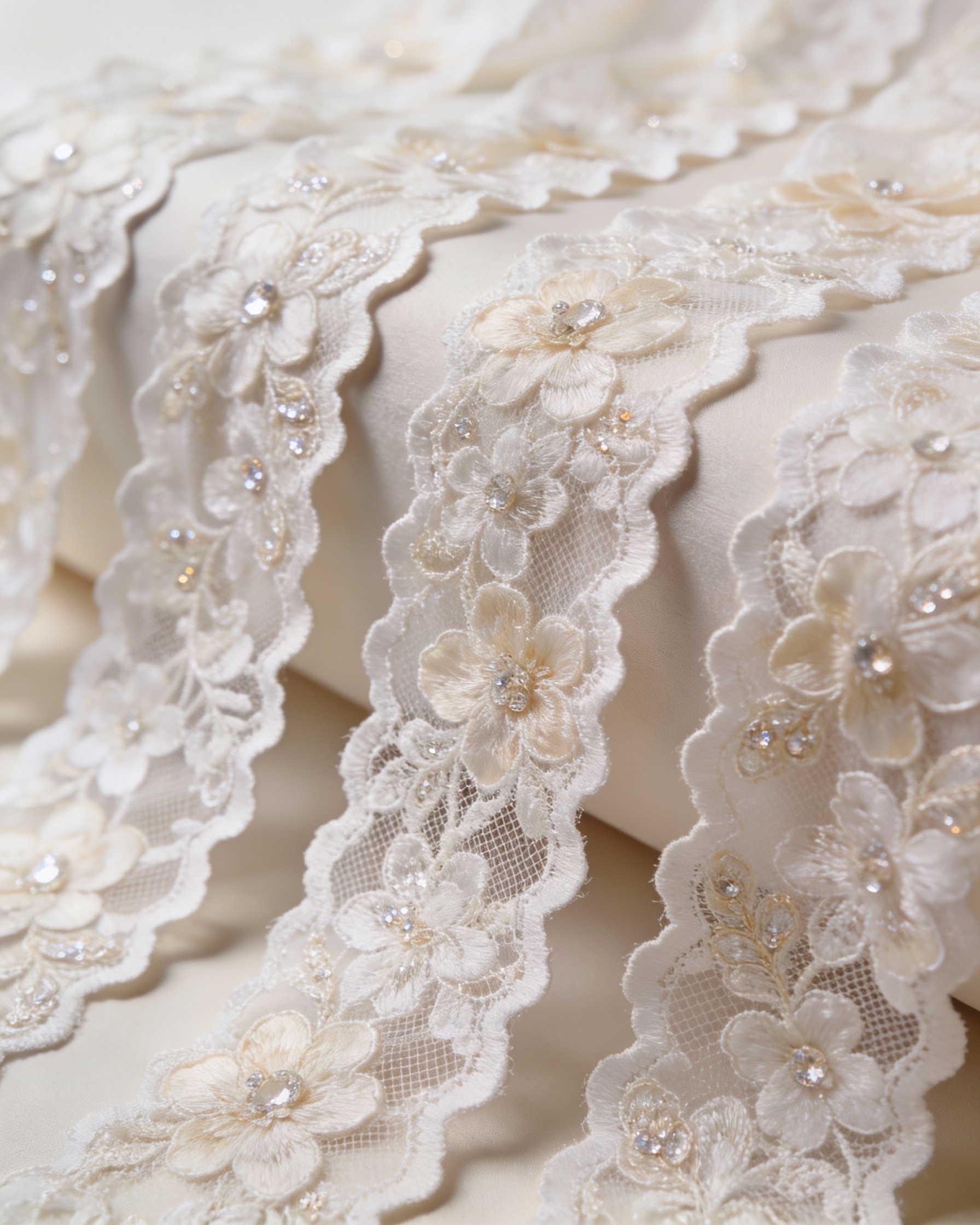
Lace borders usually feature:
-
Scalloped edges
-
Corded outlines
-
Reinforced embroidery threads
These features help borders sit flat and hold embellishments securely.
Rhinestone and Sequin Appliqué Benefits
-
Rhinestones add controlled shine and reflect light in eveningwear
-
Sequins provide texture and movement without heavy weight
-
Appliqués allow placement only where needed, reducing fabric stress
Heat-fix rhinestones are commonly used in commercial lace because they reduce stitching time and improve consistency.
Durability and Maintenance
Well-made floral lace with appliqués can handle:
-
Machine embroidery
-
Hand stitching
-
Moderate dry cleaning
Manufacturers report that lace reinforced with mesh backing reduces tear risk by up to 30% during embellishment.
Real-World Examples and Industry Case References
Bridal Lace Manufacturing in France
The lace industry in Calais is known for producing fine floral lace. Manufacturers there shifted from pure cotton lace to nylon blends to support light rhinestone embellishments. This change reduced breakage during embroidery and increased export demand for bridal lace.
Luxury Embellishment Standards
Crystal suppliers like Swarovski publish technical guidelines for applying stones on lace. Their data shows that smaller flat-back stones perform better on embroidered lace than large stones, reducing fabric stress and improving wash durability.
Indian Textile Export Case
Several lace exporters in India adopted sequin appliqué borders instead of fully embellished panels. This reduced garment weight by nearly 18% while maintaining a premium look, making shipping cheaper and production faster.
FAQs: Common Questions About Floral Lace and Lace Borders
1. Is floral lace suitable for heavy rhinestone work?
Yes, but only dense lace with reinforced embroidery threads should be used.
2. Do lace borders shrink after stitching?
Low-quality lace may shrink. Pre-shrunk or polyester lace avoids this issue.
3. Are heat-fix rhinestones safe for lace?
They are safe if temperature is controlled and lace fiber is heat-resistant.
4. Which lace is best for bridal wear?
Nylon or polyester floral lace with soft hand-feel works best.
5. Can sequin appliqués fall off easily?
If stitched properly, sequin appliqués remain secure through normal wear.
Conclusion
Floral lace material and lace borders remain essential in fashion and textile design. However, choosing the wrong lace or embellishment method leads to production issues and customer dissatisfaction.
By understanding fabric types, lace structure, and proper rhinestone and sequin appliqué techniques, designers and buyers can improve durability, control costs, and increase visual appeal. Real-world industry practices show that smart lace selection reduces waste, improves garment performance, and builds brand trust.