Introduction
Many fashion products fail before customers even touch them. The fabric may be good, the stitching may be neat, but the design feels empty. This is a common issue for designers, crafters, and online sellers working with dresses, blouses, veils, dance costumes, or accessories. Flat surfaces do not hold attention, especially on screens. Shoppers scroll fast, and plain designs disappear even faster.
This problem grows in bridalwear and occasion fashion. Buyers expect shine, texture, and detail. When garments lack clear focus points, they look unfinished. Designers often respond by adding more embroidery, but that increases time, labor cost, and inconsistency.
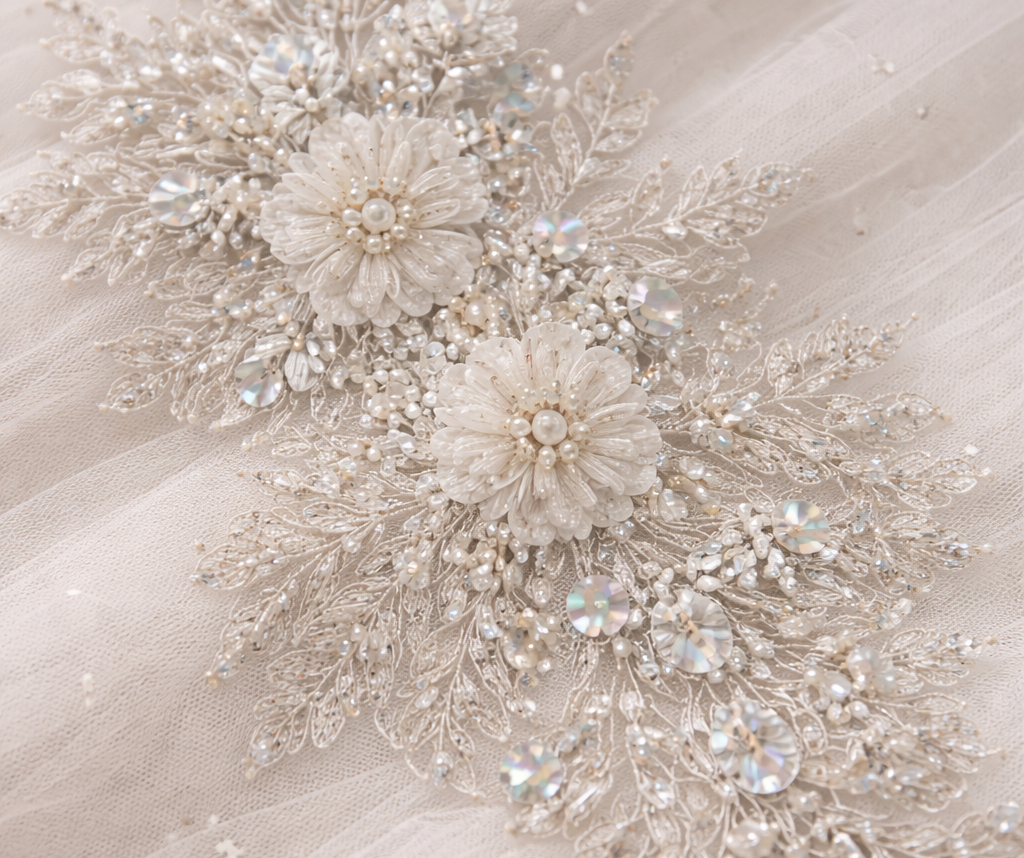
Embroidered flower lace combined with rhinestone and sequin appliques exists to solve this exact problem. These elements add controlled decoration, strong visual impact, and repeatable quality—without rebuilding the entire garment from scratch.
Features
Ignoring surface detail affects more than looks. It impacts comfort, production speed, and pricing power. Designers who rely only on full embroidery face long lead times and higher rejection rates. Handmade work also varies from piece to piece, which becomes risky in bulk production.
Embroidered Flower Lace as a Base
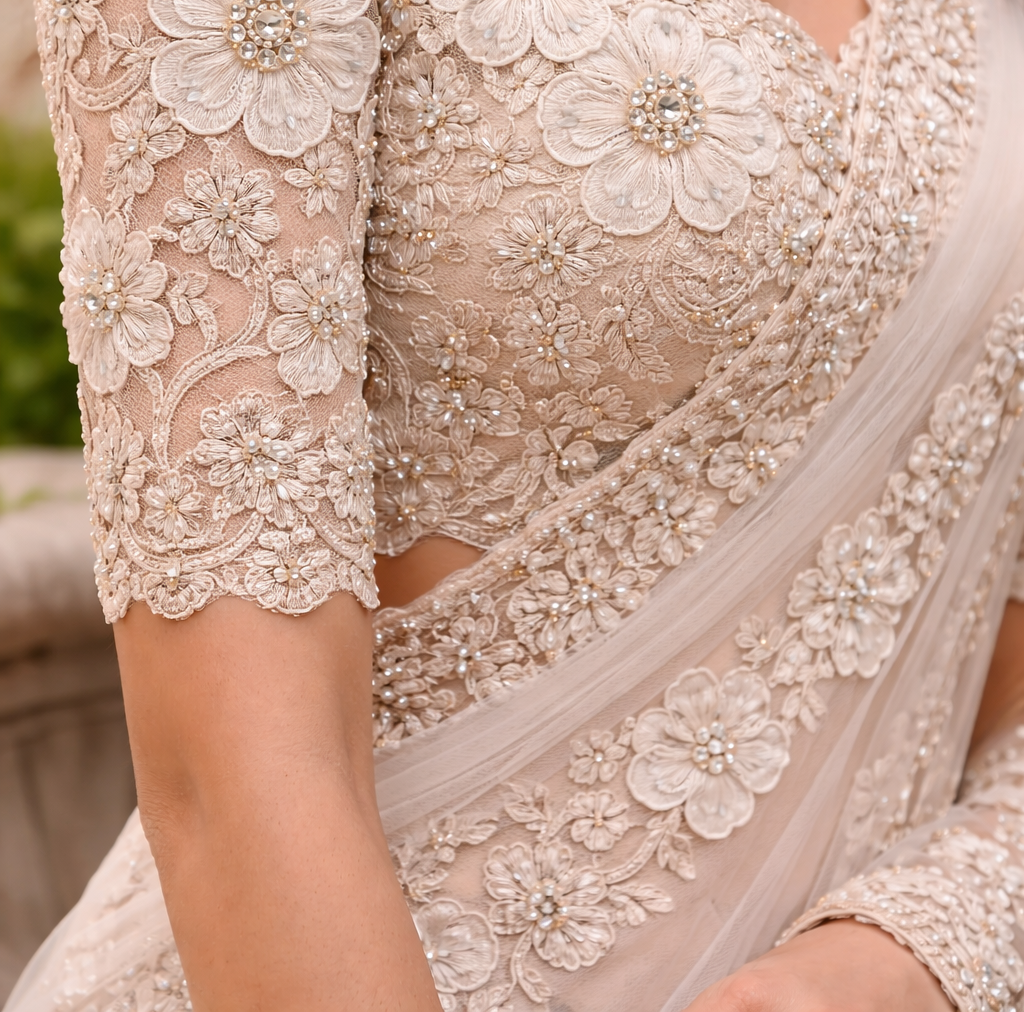
Embroidered flower lace provides structure and balance. Floral layouts guide the eye and help designers plan where to add shine without overcrowding the garment. Common lace bases include net, tulle, organza, and cotton mesh. These fabrics remain light while supporting embellishment weight.
Flower lace works especially well for:
-
Bridal gowns and veils
-
Saree borders and dupattas
-
Evening dresses and bodices
-
Accessories like belts and headpieces
Role of Rhinestone Appliques
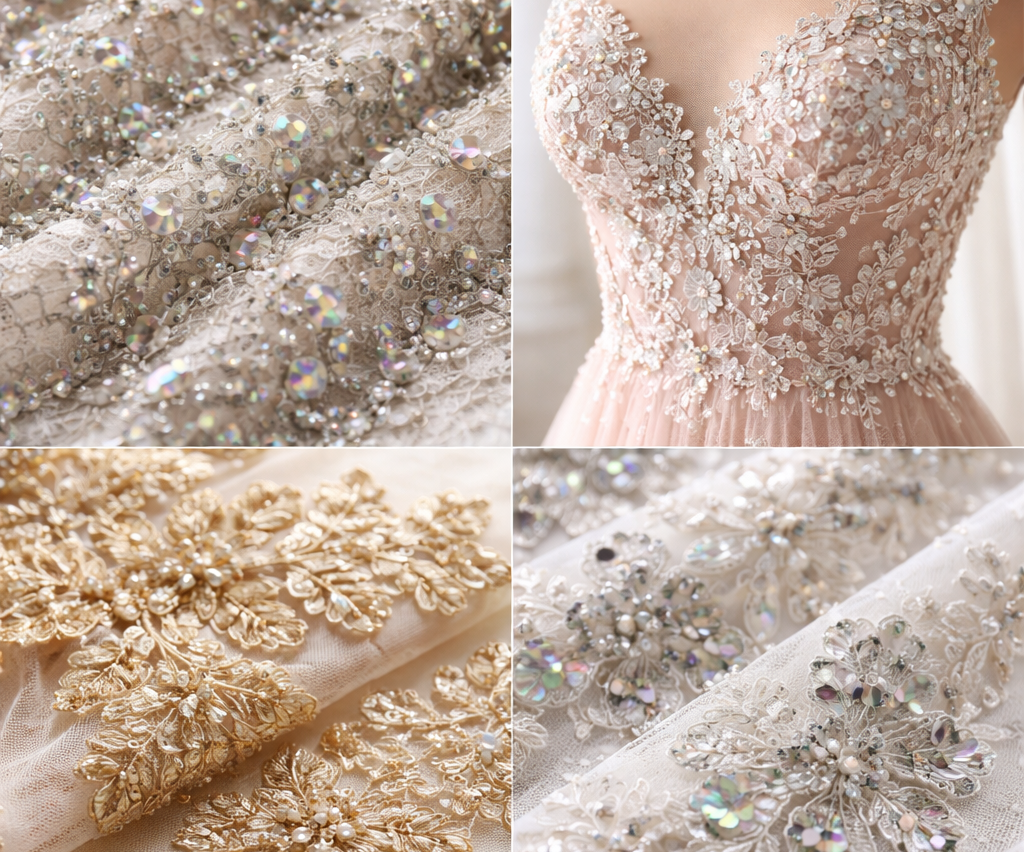
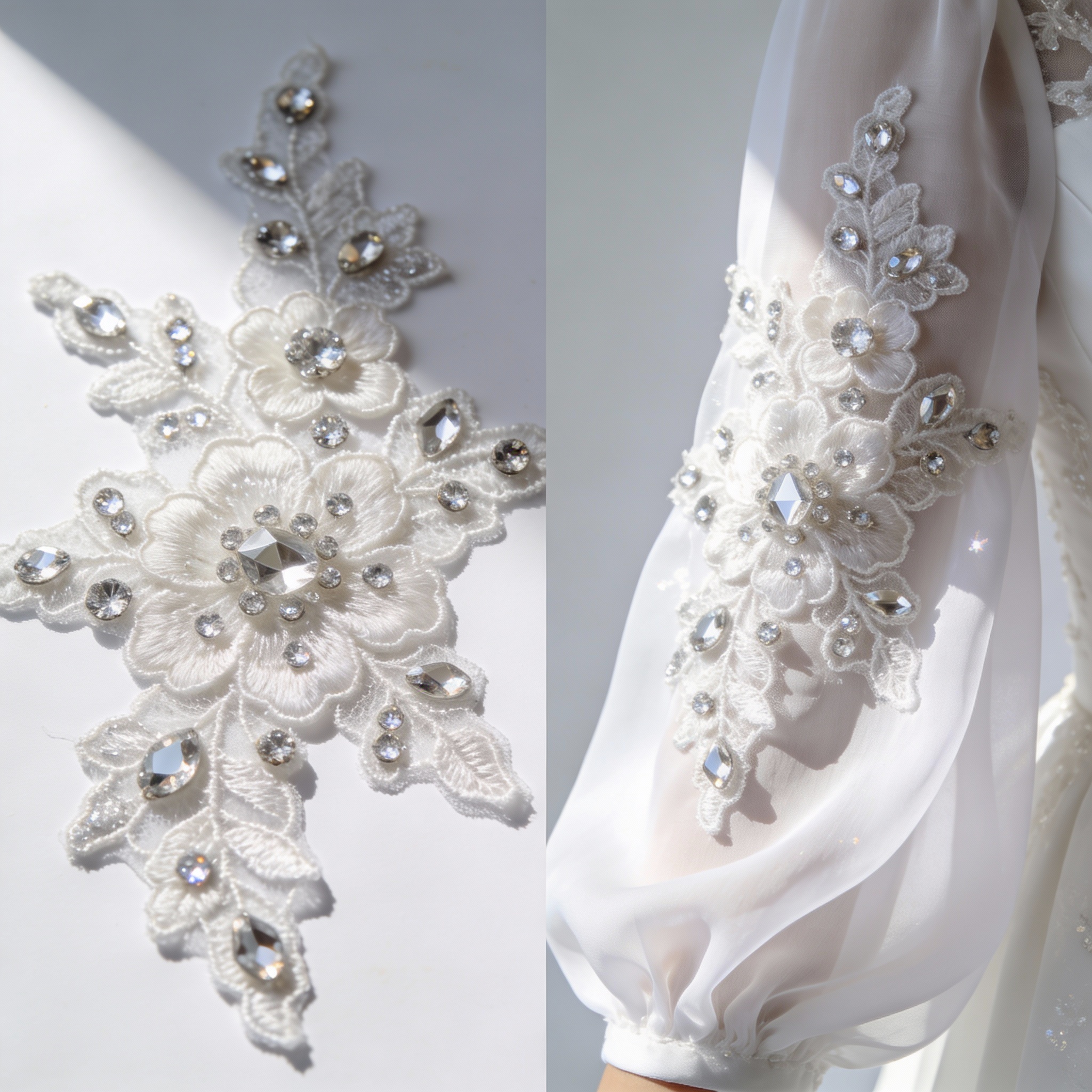
Rhinestone appliques add clear light reflection. Glass and crystal stones bounce light under store lighting, stage lights, and camera flash. This makes products stand out in photos and videos, which directly affects online sales.
Most commercial rhinestone appliques use:
-
Glass or crystal stones
-
Stitch-fixed or heat-fixed settings
-
Reinforced backing to prevent tearing
Compared to loose stones, appliques reduce stone loss and placement errors.
Role of Sequin Appliques
Sequin appliques add surface movement. When the wearer moves, sequins shift slightly, creating visual motion. This effect is subtle but effective, especially in dancewear and evening fashion.
Modern sequin embroidery machines allow:
-
Even spacing
-
Consistent tension
-
Lower rejection rates
Sequins are often paired with rhinestones to balance shine and texture.
Smart Placement Matters
Good designs do not overload the fabric. Appliques are most effective when placed at:
-
Necklines and yokes
-
Waistlines and side panels
-
Sleeve cuffs
-
Hemlines and borders
Flower lace frames these areas, while rhinestones and sequins highlight key shapes.
Real-World Examples and Case Studies
A bridalwear factory in Guangzhou replaced full hand embroidery with embroidered flower lace panels and rhinestone appliques. Before the change, each gown took about forty hours of labor. After switching methods, production time dropped to twenty-six hours. Labor cost fell by nearly thirty percent, while defect rates dropped due to consistent applique placement.
An Indian ethnic wear brand selling through its own website tested two blouse designs. One used plain embroidery. The second used the same embroidery with sequin appliques along the neckline. Website analytics showed the embellished version received eighteen percent more clicks and converted faster, even at a higher price point.
A small Etsy seller making lace hair accessories added rhinestone flower appliques to embroidered lace bases. Average selling price increased by over fifty percent within two months. Customer reviews mentioned “sparkle” and “photo-ready” appearance as key reasons for purchase.
A European dance costume supplier replaced loose rhinestones with stitched rhinestone appliques on flower lace panels. Stone loss complaints dropped by more than half in six months. This reduced refunds and improved repeat orders from dance schools.
These examples show a clear pattern. Controlled embellishment improves speed, consistency, and perceived value.
Additional Practical Insights
Sourcing Tips
-
Buy appliques with reinforced backing
-
Test stone adhesion before bulk orders
-
Match lace base strength to applique weight
-
Request wash-test samples from suppliers
Reliable sourcing prevents after-sales issues.
Production Tips
-
Attach appliques after base stitching, before lining
-
Use stabilizers under lace during stitching
-
Avoid overcrowding stones near stress points
-
Train workers on heat settings for rhinestones
Small process changes reduce damage and rework.
Market Trends
-
Bridal buyers prefer balanced shine, not heavy overload
-
Video-friendly designs perform better online
-
Lightweight embellishment is replacing heavy embroidery
-
Modular appliques help brands refresh designs faster
Designers who follow these trends stay competitive.
FAQs
Are rhinestone and sequin appliques heavy
No, when paired with proper lace bases and placed strategically.
Do appliques survive washing
Yes, with hand wash or dry clean. Avoid harsh machine cycles.
Can embroidered flower lace be reused
Yes, many brands reuse lace panels across collections.
Which is better for online sales
Rhinestones photograph brighter, sequins add movement in video.
Do appliques reduce production errors
Yes, they improve consistency compared to full hand embroidery.
Are these suitable for small businesses
Yes, they help small sellers create premium-looking products.
Conclusion
Embroidered flower lace, rhinestone, and sequin appliques are not decorative extras. They are practical tools for solving real design, production, and sales problems. Flat garments struggle to sell. Heavy embroidery slows work and raises costs.
Lace panels provide structure. Rhinestones add light. Sequins add movement. Together, they help designers and sellers create products that look finished, photograph well, and meet buyer expectations.
Whether you design bridalwear, craft handmade accessories, or sell fashion online, these elements give you control over time, cost, and quality. Instead of adding more work, they help you work smarter—and sell better.