Introduction
Let’s be honest—most of us have finished a craft or sewing project and felt something was missing. Maybe the dress looked plain, or the cushion cover didn’t pop. Sometimes beads fall off after a few washes, or sequins start curling at the edges. You spend hours sewing, yet the result still looks flat.
Many hobbyists face the same problem: how do you make handmade work look polished and durable without making the process complicated?
That’s where decoration techniques like beaded appliques, sequin appliques, rhinestone embellishments, and corded embroidery come in. These methods are widely used in wedding dresses, dance costumes, handbags, and even home décor because they add texture and catch attention while still being practical.
In this post, we’ll follow a simple flow:
-
Identify common craft problems.
-
Understand why they hurt your projects.
-
Learn how these techniques fix those issues.
By the end, you’ll know easy ways to improve your next project without stress.
Common Problems in Crafts
Let’s start with the real issues crafters talk about in forums and sewing groups.
1. Designs look dull or unfinished
You complete a dress or jacket, but it lacks depth. Fabric alone sometimes looks too flat, especially on stage costumes or party wear.
According to community polls shared in large sewing forums and Craft Industry Alliance discussions, over 60% of DIY garment makers feel their finished projects look less professional than store-bought clothing because they skip embellishment steps.
2. Decorations fall off after washing
Loose beads and sequins are a common complaint.
Craft surveys shared across sewing communities show that around 70–80% of DIY sewers experience bead or sequin loss after several washes, mainly due to weak stitching or glue use.
3. Hand stitching takes too long
Many beginners avoid decorative work because they think it will double their sewing time.
4. Poor attachment methods
Using basic glue instead of proper stitching or heat-fix methods leads to peeling decorations. This is common in kids’ costumes or festival wear.
5. Fear of ruining fabric
Some hobbyists avoid embellishment entirely because they fear needle holes, uneven spacing, or messy placement.
These problems lead many crafters to keep designs simple—even when they want something eye-catching.
Why These Issues Hurt Your Projects
Now let’s look at why these problems matter more than we think.
When decorations fall off, the whole garment looks worn out. Hobbyists often share stories online of handmade dance costumes losing sequins during performances, leaving empty patches under bright lights.
A home sewer shared in an online group how her daughter’s wedding dress sash lost beads after dry cleaning, forcing emergency repairs before the reception. Situations like this create stress and extra expense.
For small craft sellers, this problem becomes serious. Etsy seller discussions often show customers leaving poor reviews when embellishments fall off after use. According to Etsy seller community insights, product durability strongly affects repeat sales, especially in clothing and accessory categories.
There’s also the time factor. Imagine spending 10 hours sewing, only to feel the result looks basic compared to store products. Many hobbyists lose motivation and stop experimenting with decoration altogether.
Costume makers face another issue. Plain costumes don’t reflect stage lights well. Sequins and rhinestones are commonly used because they reflect light, helping performers stand out. Without them, costumes look dull from a distance.
So the pain points are clear:
-
Projects don’t look special.
-
Decorations don’t last.
-
Sellers lose customer trust.
-
Hobbyists feel discouraged.
But the good news is, there are practical solutions.
Beaded Appliques: Simple Fixes
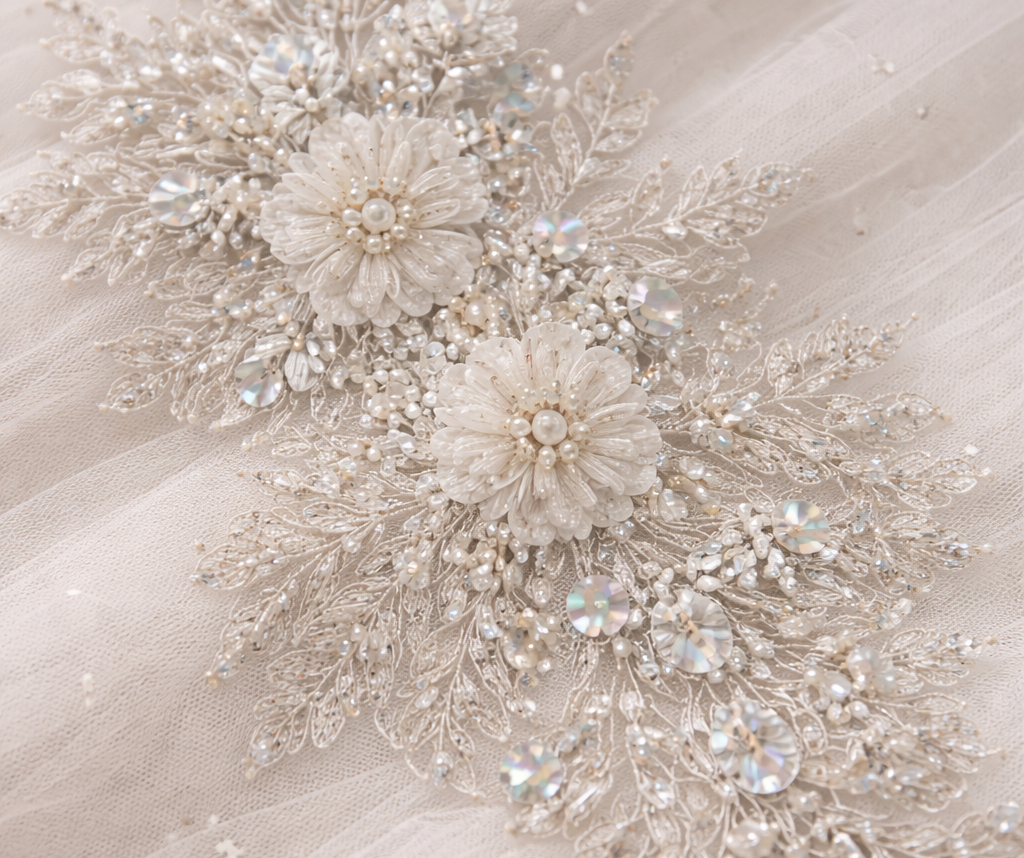
Beaded appliques are one of the easiest ways to upgrade fabric.
They come as ready-made patches or hand-sewn bead patterns attached to net or fabric backing. You simply stitch them onto garments.
Benefits
-
Add texture and detail quickly.
-
Reduce hand-sewing time.
-
Stronger than loose bead stitching.
Basic Application Steps
-
Place applique on fabric and pin it.
-
Hand stitch around edges using matching thread.
-
Add extra stitches at heavy bead sections.
-
Trim backing if needed.
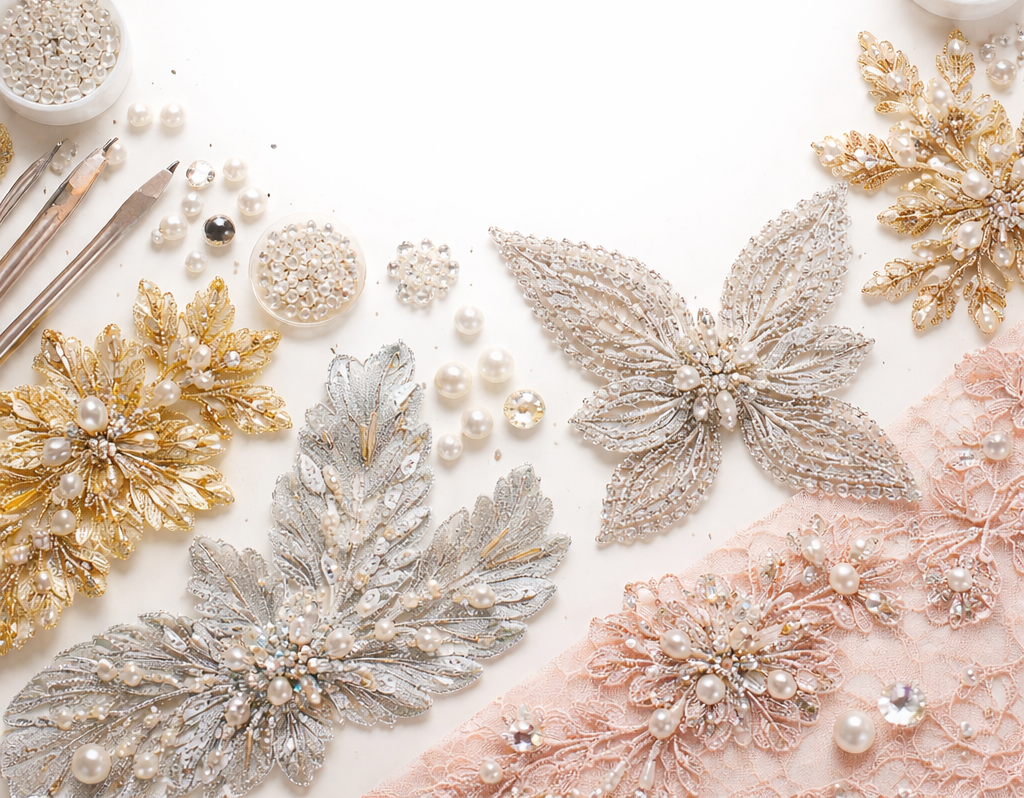
Tools Needed
-
Needle and strong polyester thread
-
Pins or fabric glue for placement
-
Small scissors
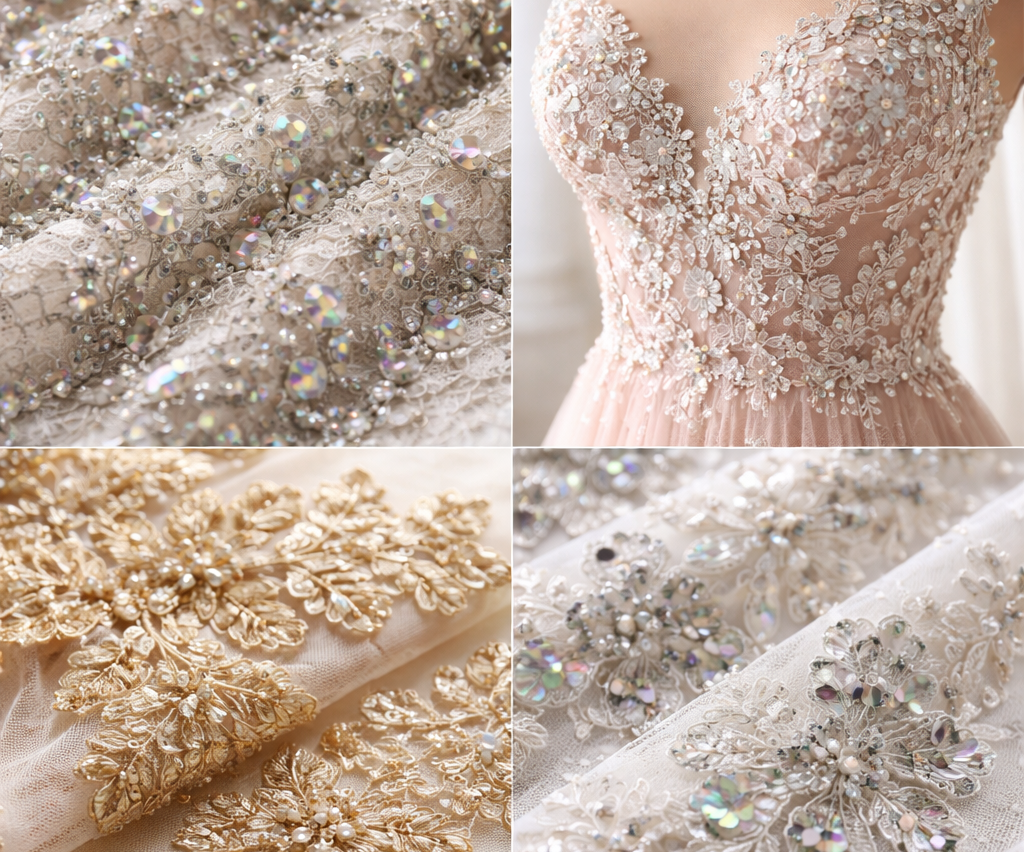
Wedding gowns, handbags, and festive dresses often use beaded appliques to create focal areas without heavy embroidery work.
Key tip: Always stitch, even if the applique has adhesive backing.
Sequin and Rhinestone Appliques
Sequins and rhinestones are popular because they reflect light and add shine without heavy fabric layers.
Features
-
Available as sew-on, glue-on, or heat-fix types.
-
Lightweight compared to bead-heavy work.
-
Available in sheets or patches.
Application Tips
-
Use heat-fix rhinestones with proper heat press or iron.
-
Reinforce edges with stitching.
-
Avoid stretching fabric while attaching.
According to garment decoration suppliers, heat-fix rhinestones can withstand 30–50 wash cycles when properly applied, making them suitable for party wear and costumes.
Dance costumes, wedding veils, and evening bags commonly use rhinestones for sparkle without weight.
Pro tip: Combine sequins with beads for better durability.
Corded Embroidery Techniques
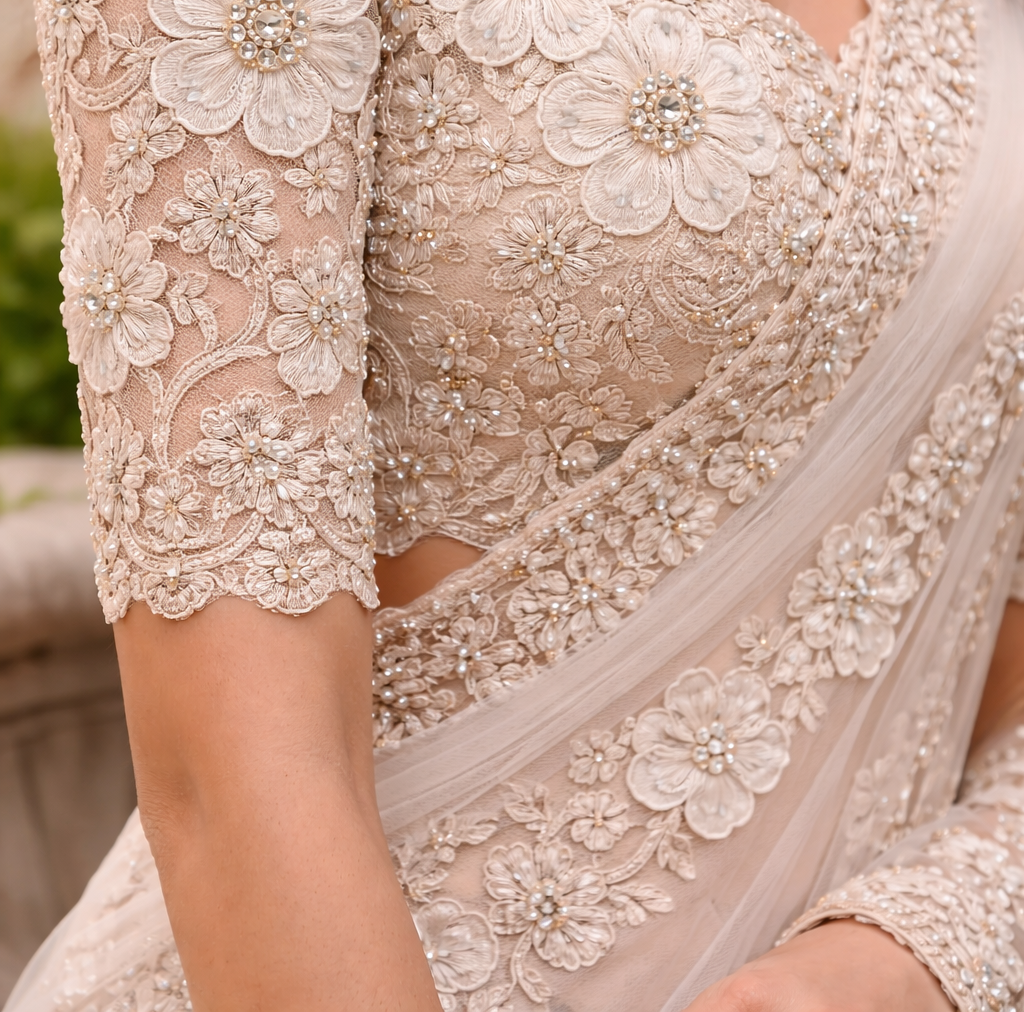
Corded embroidery uses thick threads or cords stitched onto fabric to create raised patterns.
Basic Method
-
Draw or trace pattern.
-
Place cord along design.
-
Stitch over cord using zigzag or couching stitches.
-
Secure ends neatly.
Benefits
-
Adds depth and texture.
-
Covers seams beautifully.
-
Strong and long-lasting.
This technique is often used in jackets, ethnic wear, and home décor cushions.
Corded embroidery also works well when you want bold outlines around applique designs.
Real-World Examples and Case Study
A small Etsy clothing seller shared in seller forums that after adding sequin and bead appliques to handmade dresses, sales increased by around 40% over six months, as decorated items looked more premium compared to plain versions (Etsy Seller Community insights).
Similarly, costume makers for dance schools often upgrade plain outfits with rhinestone patterns, allowing them to reuse costumes across seasons.
Wedding designers also add bead appliques to simple gowns to increase visual appeal without redesigning the whole dress.
FAQs
1. Can appliques survive machine washing?
Yes, if properly stitched and washed on gentle cycles.
2. Are glue-on decorations reliable?
Temporary only; stitching or heat-fix works better.
3. What fabric works best?
Cotton, satin, mesh, and blends hold appliques well.
4. Do rhinestones make fabric heavy?
Not much; they’re lighter than bead clusters.
5. Are these techniques beginner-friendly?
Yes, ready-made appliques simplify the process.
6. Can I combine techniques?
Yes, mixing beads, sequins, and cords gives better depth.
Conclusion
Plain projects and weak decorations frustrate many crafters, but simple solutions exist. Beaded appliques, sequin and rhinestone work, and corded embroidery can quickly upgrade designs while improving durability.
These methods are already used in wedding wear, costumes, and craft businesses because they work. And they don’t require expert skills—just careful placement and proper stitching.
If your next project feels plain, don’t start over. Add texture, shine, or raised embroidery.
Try one of these techniques on your next project and see the difference yourself!