Introduction: When Embellishment Isn’t Easy
You’ve pulled out your fabric, ordered beautiful embroidered flower lace, rhinestone, and sequin appliques, and… your project still looks underwhelming.
Problem is, these embellishments sound simple — stick them on, sew or glue, and bam: designer-level craft. But reality? They can be frustrating, time-consuming, and downright messy if you’re not prepared.
You might struggle with:
-
appliques that don’t lie flat,
-
rhinestones that fall off after one wash,
-
sequins that twist or don’t follow curves.
Suddenly, your custom wedding sash, kids’ costume, or table runner looks more like a frustration project than a wow piece.
Here’s the good news: you’re not alone in this struggle. Makers who sell decorated items on Etsy — where craft supplies, lace, and appliques are among top trending categories — are constantly refining how they prep, apply and finish these elements for lastingly beautiful results.
In this post, we’ll talk about what makes these materials great and hard, what real makers say they battle with, and practical step-by-step fixes you can use on your next project. Let’s dive in!
Key Features of Appliques — With Pain Points and Practical Fixes
Here’s how these three decoration types work and what DIY makers need to know, PLUS solutions to common hiccups.
1. Embroidered Flower Lace Appliques
What they are:
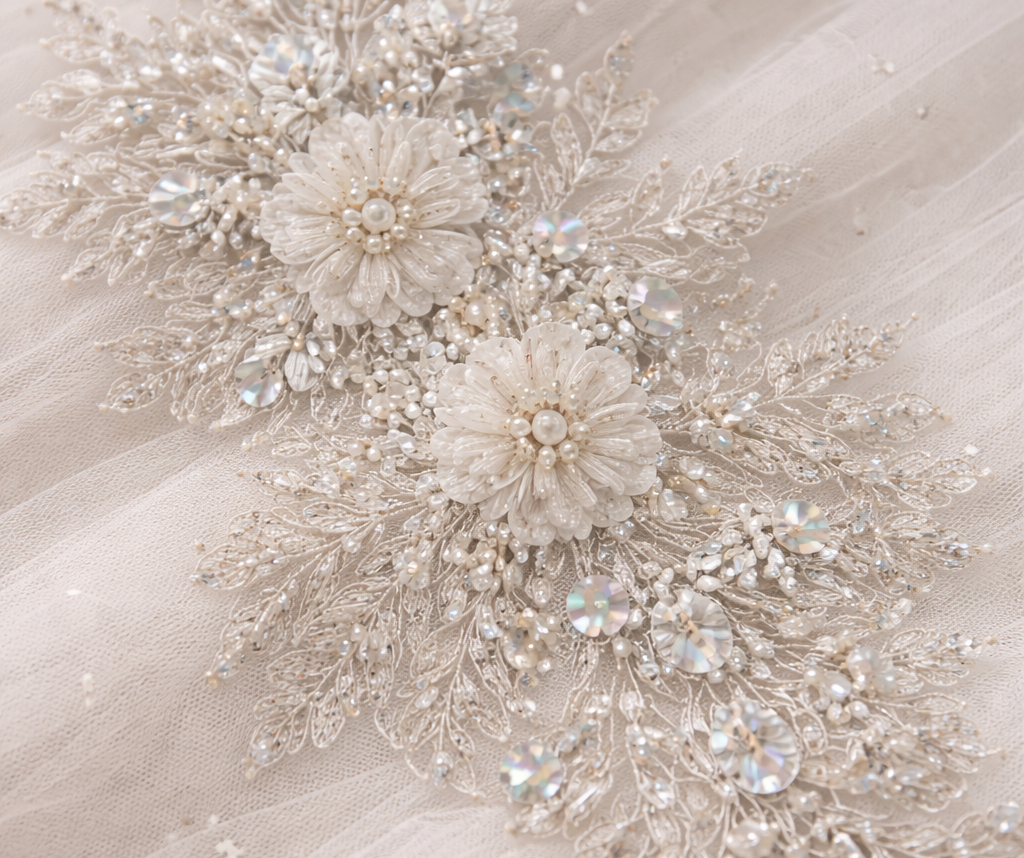
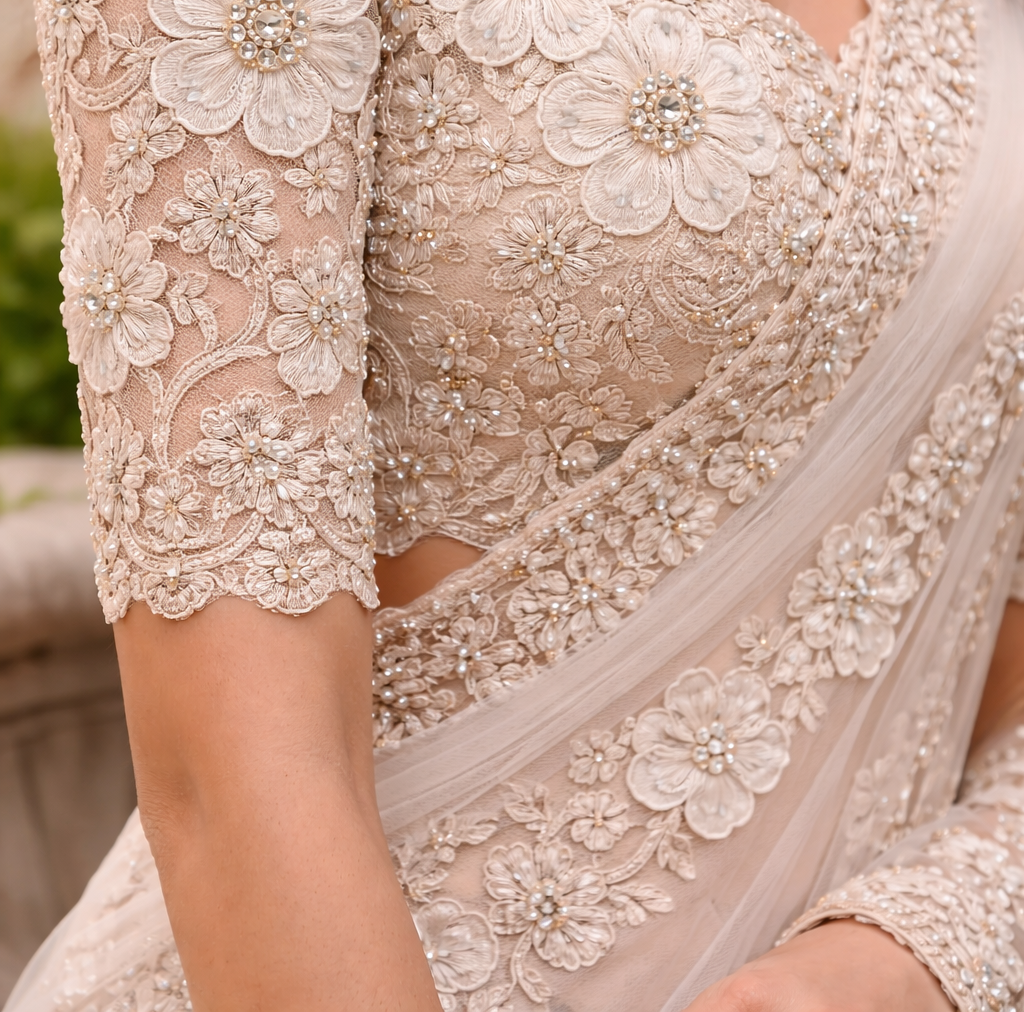
Lace pieces with stitched floral motifs you can sew or glue onto garments and fabric (from bridal gowns to tote bags).
Sizes & Materials:
-
Typically 1–5 inches for individual motifs; larger panels up to 10+ inches.
-
Made from cotton, polyester, or rayon threads on mesh or tulle backing.
Common Agitations:
-
Edges curl or lift: cheap lace trim often lacks stabilizing backing.
-
Shrinking when washed: some fibers and backing move differently when washed.
Solution Tips:
✔ Prep the edge: use fray check or zigzag stitch around cut applique edges before applying.
✔ Stabilize fabric: iron-on stabilizer under the area to keep lace flat.
✔ Choose fabric-friendly glue: if you don’t want to sew, use fabric glue labeled washable.
Pros & Cons:
-
Pros: Flexible, detailed textures; works on many fabrics.
-
Cons: Hand sewing takes time; machine sewing can be tricky over mesh.
2. Rhinestone Appliques
What they are:
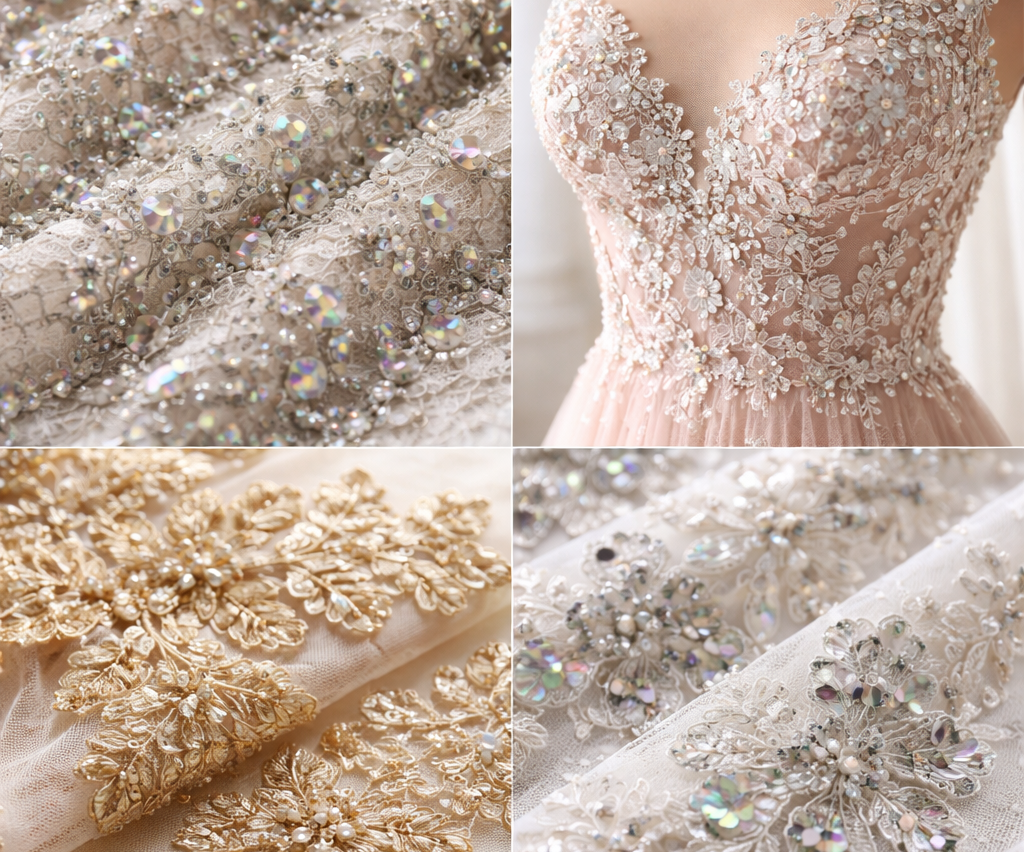
Crystal or acrylic stones fixed onto lace or a mesh base that sparkle under light.
Sizes & Materials:
-
Stones range from tiny SS6 (~2mm) to large SS30+ (~6–7mm+).
-
Mesh or lace base often polyester.
Common Agitations:
-
Stones falling off: especially common with drop-on glue or hotfix irons.
-
Patch does not match garment stretch or curve.
Solution Tips:
✔ Use hot-fix rhinestones + proper heat press: follow heat and time guidelines.
✔ Hand sew with beading thread: anchors rhinestones better than surface glue.
✔ Plan layout: especially on curves, pin first so you don’t have to redo.
Pros & Cons:
-
Pros: Eye-catching; adds dimension and shine.
-
Cons: Costly per piece; requires patience.
3. Sequin Appliques
What they are:
Plastic or metal disc-shaped elements sewn or glued in patterns.
Sizes & Materials:
-
Common sizes: flat 3mm–6mm or larger 8–12mm+ for bold looks.
-
Backed on lace, tulle, or mesh.
Common Agitations:
-
Twisting or flipping sequins: looks messy.
-
Sequin scratch-through on fabric: pokes threads.
Solution Tips:
✔ Lay sequins down first: pin then baste to secure before full sewing.
✔ Use soft backing: interfacing or stabilizer prevents scratching on delicate cloth.
Pros & Cons:
-
Pros: Affordable sparkle, lots of color and shape variety.
-
Cons: Can be scratchy; tricky to secure perfectly.
Real-World Examples & Case Studies
Here’s how real makers and DIYers use these embellishments — and how they solve their problems.
1. Bridal Dress Upcycle
A wedding dress rework using embroidered lace and rhinestone appliques became a top seller on Etsy. Makers report that bridal embellishment categories sell strong because brides want custom looks without couture prices.
Pain Points Solved:
-
Test-fit lace appliques before sewing to avoid distorting gown fabric.
-
Use beads and red thread for hand-sewing rhinestones in place of hot glue — less risk of melting or slipping.
Takeaway: Pre-planning and hand anchoring made the bigger final sale worth the effort.
2. Kids’ Costume Embellishment
Makers often use sequin appliques on kids’ dance costumes — sequins add fun patterns that catch stage light.
Pain Points Solved:
-
To prevent flaring sequins under stage lights, crafters sew down patterns first with stabilizer underlay.
-
Use stretch-compatible appliques if costume fabric stretches.
Takeaway: Pair sequins with stabilizers and plan for stretch.
3. Home Decor with Sparkle
Decorative pillows and wall hangings with rhinestones are trending on craft boards and Pinterest.
Pain Points Solved:
-
For home decor, use permanent fabric adhesive instead of sewing on heavy sequins — no distortion.
-
Protect backing with interfacing so pillows wash better.
Takeaway: Projects that won’t be washed often can lean into glue-based methods.
FAQs
1. Can I use sequins on stretchy fabric?
Yes — but use a stabilizer or stretch-compatible backing so sequins don’t pull and distort the fabric.
2. Are rhinestones washable?
They can be if hot-fixed properly and washed gently inside out.
3. Should I sew or glue appliques?
Sewing is stronger long-term. Glue works for decor and projects that won’t undergo stress.
4. What tools do I need?
Needle, beading thread, fabric glue, hotfix iron or press (for rhinestones), stabilizer.
5. Where to buy quality appliques?
Etsy has thousands of embroidered lace, rhinestone, and sequin appliques with reviews showing real maker experience.
6. Why do my appliques curl up?
Edges that aren’t stabilized or pre-treated tend to lift. Use fray-check or interfacing.
Conclusion: Your Next Shine Project
Here’s the good news — embroidered flower lace, rhinestone, and sequin appliques don’t have to be a frustration. Most of the common pain points — appliques lifting, rhinestones falling, sequins flipping — have practical fixes. Prep your fabric, choose the right stabilizer or glue tool, and plan your layout before you start sewing. These small extra steps make a huge difference.
And because embellishment trends — especially on craft platforms like Etsy — continue to grow, there’s real community data and maker experience to learn from before your next project.
So grab your kit, test a scrap fabric first, and stitch or press your way to a craft piece you’re proud to show off.