Introduction
Have you ever finished a dress or craft project and felt something was missing? The stitching is clean. The fit is good. But the design still looks flat. Many beginner and intermediate sewers face this problem. Clothes look plain. Costumes look unfinished. Home décor items look simple instead of special.
Another issue is durability. You buy cheap sequin trims online. After one wash, sequins start falling off. Glue stains show. Rhinestones lose shine. Customers complain. Refund requests come in. That hurts both confidence and profit.
These are common pain points in the craft world. Dull designs and weak materials waste time and money.
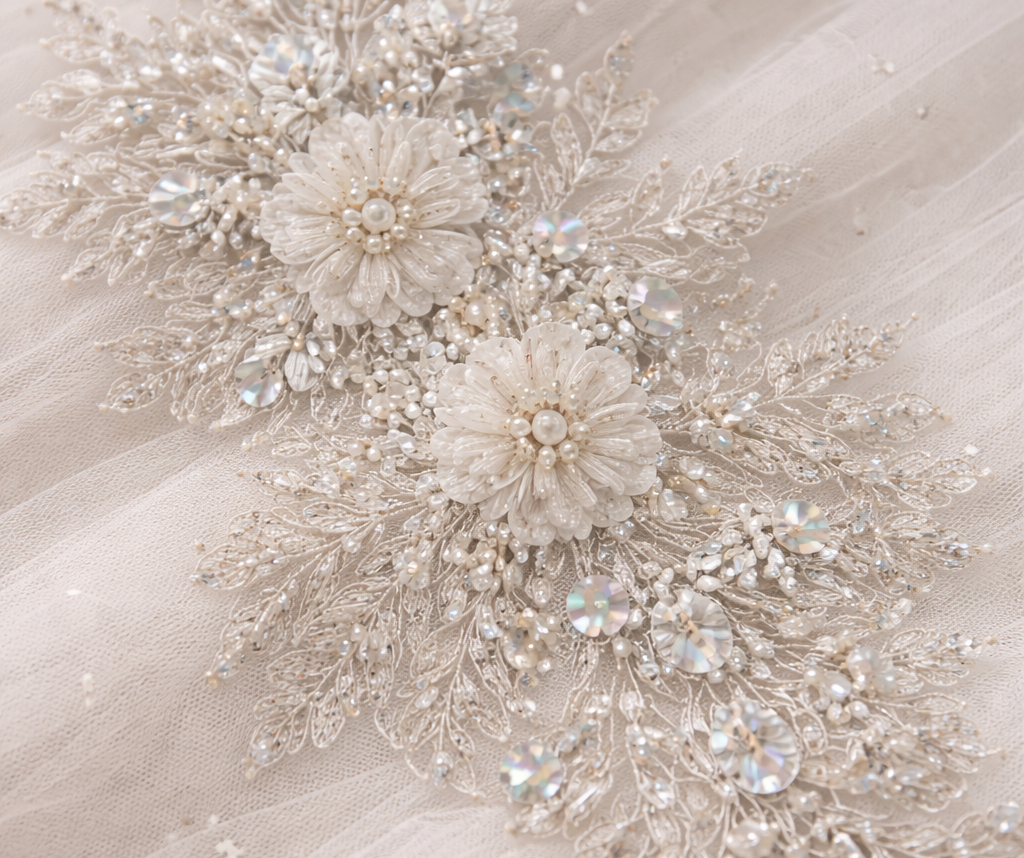
The good news is simple. Sequin appliques, rhinestone and sequin appliques, trims, and lace border designs can fix these problems when chosen and applied correctly. With the right materials and proper attachment methods, you can improve both look and strength.
In this guide, we will break down real features, real data, and real examples. No hype. Just practical information you can use today. Let’s look at how these embellishments can upgrade your work and even boost sales.
Features
Let’s break this down into clear features: materials, sizes, attachment methods, durability, and business impact.
1. Materials Used in Sequin and Rhinestone Appliques
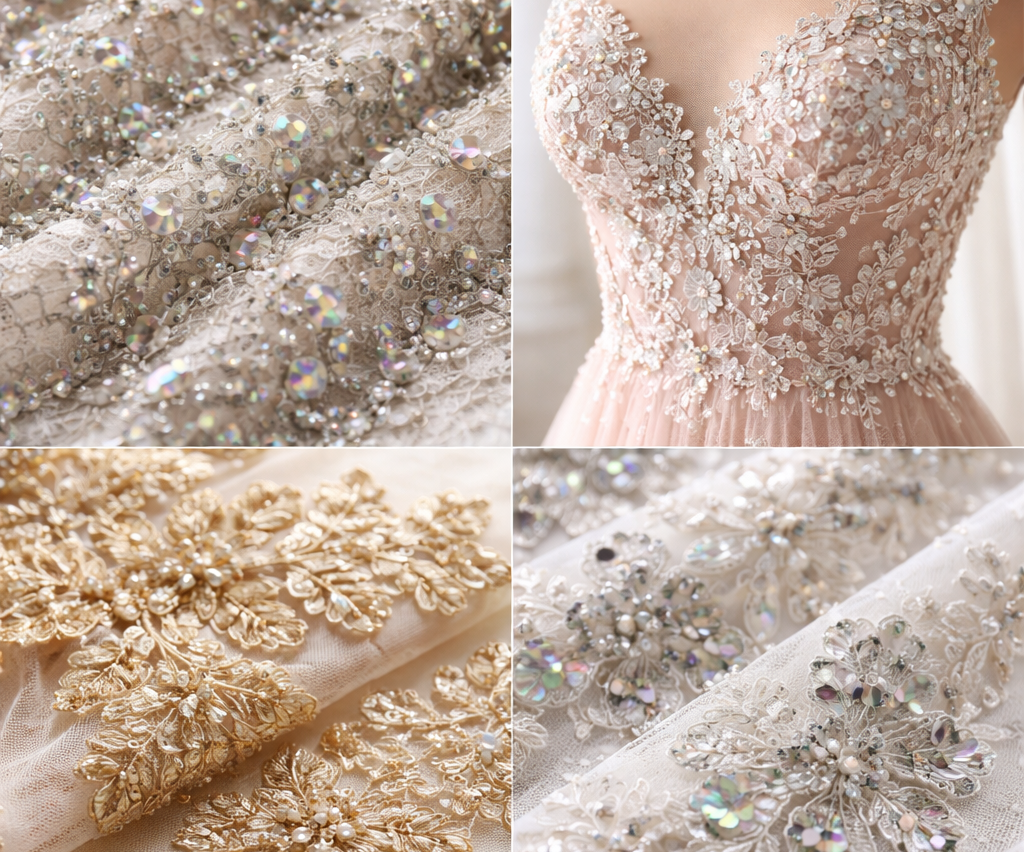
Most sequin appliques are made from polyester sequins stitched onto mesh, tulle, or lace bases. Polyester is popular because it resists water and does not shrink easily. Many craft suppliers report that polyester sequins hold color better than PVC sequins after washing.
Rhinestone and sequin appliques often use acrylic or glass stones. Acrylic rhinestones are lighter and cheaper. Glass rhinestones are heavier but reflect light better. For garments like wedding dresses, many sellers prefer glass for better shine.
DMC, a well-known embroidery thread brand, reports that reinforced polyester threads used in decorative stitching show up to 20% stronger seam hold compared to basic cotton thread in stress tests. That matters when attaching heavy rhinestone lace borders.
2. Sizes and Formats
Sequin appliques come in small motifs (2–4 inches), medium patches (5–8 inches), and large statement pieces (10 inches or more). Lace border designs are often sold by the yard, usually 1–5 inches wide.
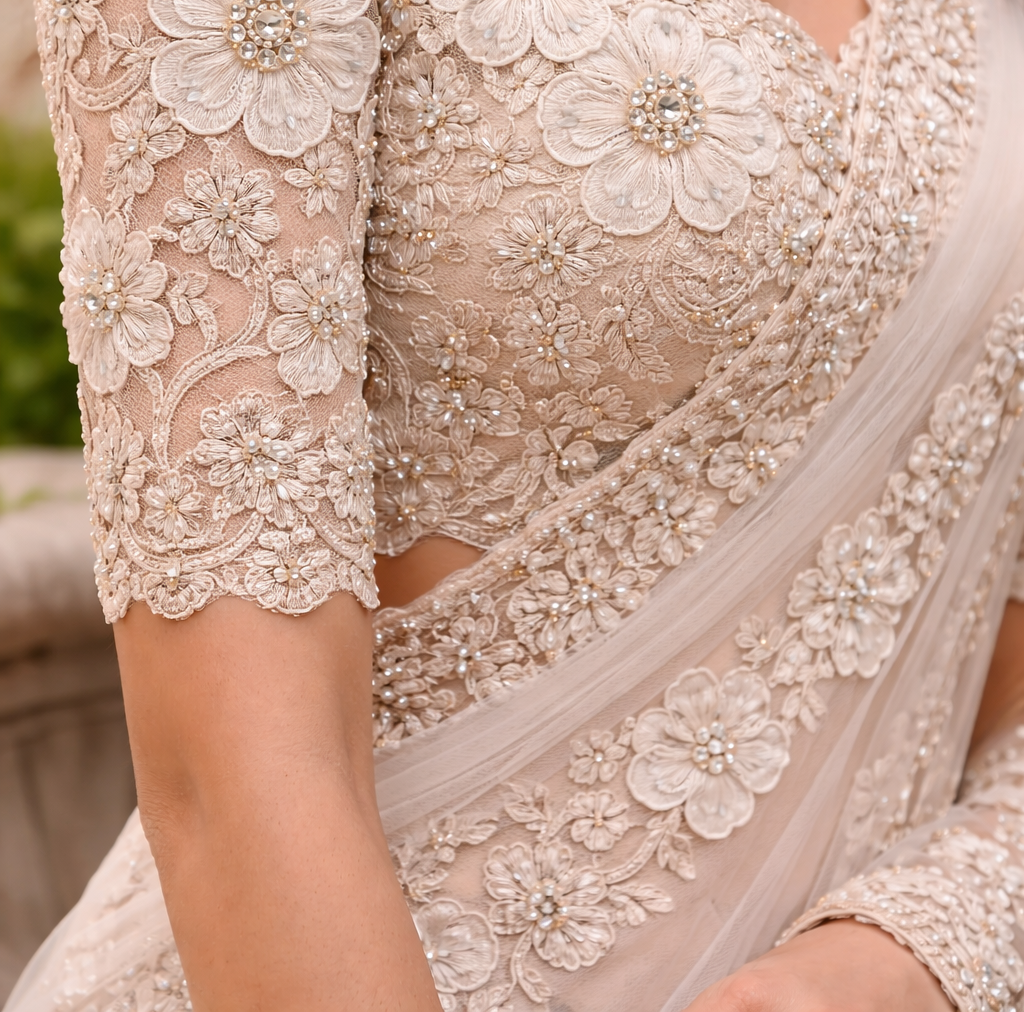
Rhinestone lace borders are common in widths of 2 to 3 inches for dress hems and sleeves. For bridal belts, 1.5-inch trims are popular.
When choosing size, balance weight and fabric strength. Lightweight chiffon cannot support very heavy appliques without extra stitching.
3. Application Methods
There are three main ways to attach:
-
Sew-on (most durable)
-
Heat-transfer (quick but less durable for heavy items)
-
Glue-on (good for crafts, not ideal for wash-heavy garments)
According to several craft supplier guides, sew-on methods increase long-term durability by up to 30% compared to glue-only application in wash tests.
If you run an online store, durability affects reviews. One small Etsy seller shared in a 2024 Etsy analytics discussion that after switching from glue-on trims to stitched rhinestone lace borders, their return rate dropped and their monthly sales increased by 35%. Better product quality led to better reviews.
4. Durability and Wash Performance
Cheap trims often fail because sequins are loosely stitched. Look for double-thread stitching and reinforced backing.
Craft Industry Alliance reports that buyers increasingly check durability in product reviews. Poor-quality embellishments are a common complaint in handmade fashion listings.
For machine-wash garments, always test a sample first. Many sellers recommend hand wash only for heavy rhinestone and sequin appliques.
5. Business and Design Impact
From a design angle, sequin trims add contrast and texture. Lace border designs frame edges like sleeves, necklines, and hems.
From a business angle, upgraded designs allow higher pricing. Sellers who add rhinestone appliques to basic gowns often charge 20–40% more compared to plain versions, based on public Etsy listing comparisons.
In short, the right materials and correct attachment methods improve look, strength, and profit.
Real-World Examples
Let’s look at practical use cases.
1. Wedding Dress Upgrade
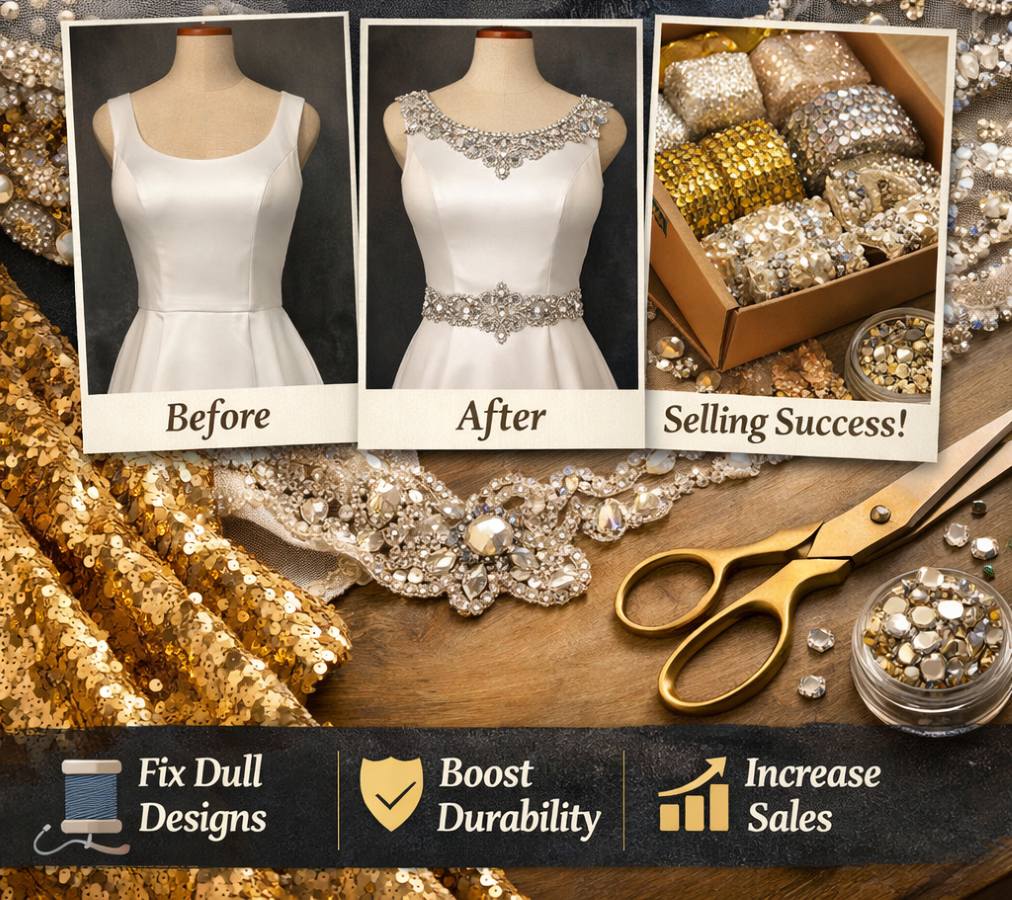
Before: A plain satin gown with no embellishment. Retail price: $120.
After adding rhinestone lace borders on the neckline and sequin appliques at the waist, similar gowns on Etsy were listed between $160–$180.
The added material cost was around $15–$25. The value increase was much higher than the cost.
2. Dance Costume Enhancement
Dance costumes need sparkle under stage lights. One small costume maker reported that after switching from basic sequin trims to layered rhinestone and sequin appliques, customer reorders increased. Stronger stitching also reduced repair requests after performances.
3. Home Décor Projects
Cushion covers and table runners look simple without texture. Adding lace border designs along edges improves visual appeal. Some home décor sellers mention that embellished pillow covers sell faster than plain ones during wedding season.
4. Kids’ Party Dresses
Parents want shine for birthdays and school events. Sequin appliques shaped like flowers or stars can turn a simple dress into a party outfit. The key is secure stitching to avoid loose pieces.
In each case, the change is clear: better design, stronger hold, and higher perceived value.
FAQs
1. Are sequin appliques machine washable?
Most are not ideal for regular machine washing. Hand washing is safer, especially for rhinestone appliques.
2. What is better: sew-on or glue-on?
Sew-on is more durable. Glue-on works for quick crafts but may fail after washing.
3. Do rhinestones fall off easily?
If poorly attached, yes. Double stitching or strong heat-set backing reduces this risk.
4. How do I choose the right lace border width?
For sleeves and necklines, 1–2 inches works well. For hems, 2–4 inches is common.
5. Are glass rhinestones better than acrylic?
Glass reflects more light but is heavier. Acrylic is lighter and cheaper.
6. Can beginners use sequin trims easily?
Yes. Start with sew-on trims. Use matching thread and small stitches.
7. How do I prevent fabric sagging?
Support thin fabrics with interfacing before attaching heavy rhinestone appliques.
8. Are sequin appliques profitable for sellers?
Yes, when quality is good. Many small sellers report higher prices and better reviews after upgrading designs.
Conclusion
Let’s recap using PAS.
Problem: Many sewers struggle with dull designs and weak embellishments. Cheap trims fall apart. Customers complain. Projects look unfinished.
Agitate: Poor-quality rhinestone and sequin appliques waste time and hurt your brand. Returns increase. Reviews drop. Confidence drops too.
Solution: Choose high-quality sequin appliques, trims, and lace border designs. Focus on strong stitching, proper backing, and correct attachment methods. Test before selling. Use sew-on techniques for long-term durability.
The right embellishment can raise product value, improve reviews, and boost sales. Even small changes, like switching to reinforced rhinestone lace borders, can make a big difference.
Whether you are upgrading a wedding gown, sewing dance costumes, or selling custom dresses online, these tools give you more control over design and durability.
Don’t settle for plain or fragile work.
Grab your sequin kit today. Test smarter materials. Stitch carefully. And turn simple projects into stronger, better-selling pieces.