Introduction (PAS – Problem)
Hey, ever struggled with custom apparel designs that look good in photos but don’t convert into sales?
You add basic embroidery. It looks clean. But customers scroll past. Or you try cheap sequins. After a few washes, complaints start. Refund requests come in. Ratings drop.
This is a real problem for small apparel sellers. According to Etsy marketplace trend reports, personalized and embellished apparel continues to grow each year, especially in festival wear and custom streetwear categories. But competition is tight. Basic designs don’t stand out anymore.
Now here’s the second issue: cost and production time. Corded embroidery needs machine time. Skilled setup. Thread changes. Longer stitching cycles. Rhinestone and sequin appliques are faster, but some sellers worry about durability.
So which one actually works better for business?
In this guide, we’ll break it down clearly:
-
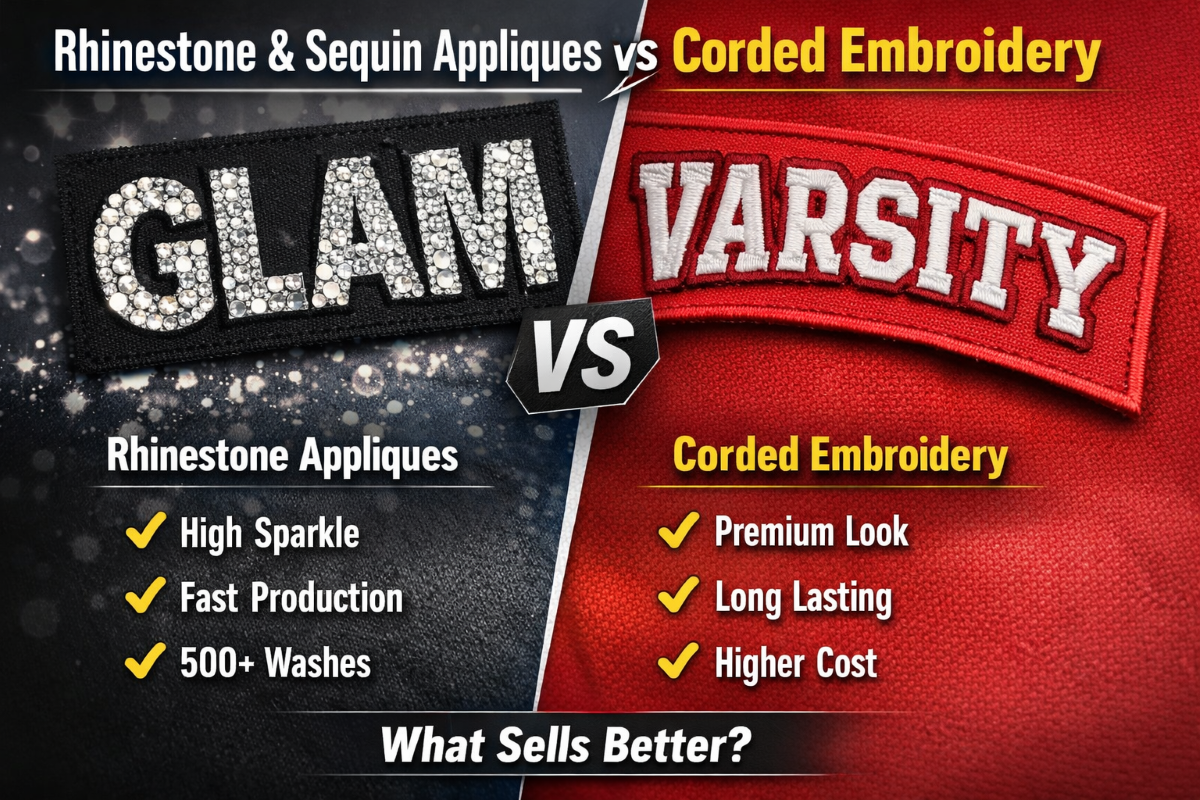
Rhinestone and sequin appliques
-
Corded embroidery
-
Durability stats
-
Cost comparison
-
Real seller examples
-
Sales impact
No hype. Just practical facts to help you choose the right method for your custom apparel brand.
Features Comparison
Let’s compare both methods step by step.
1. Rhinestone and Sequin Appliques
These are decorative elements attached by:
-
Heat press adhesive
-
Sewing
-
Hot-fix transfer sheets
Sparkle and Visual Impact
Rhinestones reflect light. Sequins move and catch attention. That’s why they are popular in:
-
Festival wear
-
Dance costumes
-
Concert merch
-
Party t-shirts
According to marketplace data from Terapeak (eBay analytics tool), listings with “rhinestone” in women’s tops category often show higher click-through rates in seasonal periods like summer and holiday events.
They grab attention quickly in thumbnails. That matters in online selling.
Durability
Many sellers think rhinestones fall off easily. That depends on quality and application.
Industry textile testing reports (such as wash performance testing commonly cited in Textile World trade publications) show that properly heat-applied hot-fix rhinestones can withstand 500+ wash cycles under controlled lab conditions when applied at correct temperature and pressure.
Key factors:
-
Correct heat press temperature (usually 160–180°C depending on adhesive)
-
Proper pressure
-
Pre-washed fabric
-
No fabric softener use
Sequins stitched onto patches are even more secure than glue-only transfers.
Application Speed
Rhinestone transfers:
-
10–20 seconds press time per design
-
Minimal machine setup
Compared to embroidery:
-
Embroidery setup can take 20–30 minutes
-
Stitch time depends on stitch count
For bulk production, appliques are often faster.
Cost
Approximate wholesale cost:
-
Rhinestone transfer (medium size): $1–3 per piece in bulk
-
Sequin patches: $1–4 depending on density
Labor cost is low because heat pressing is quick.
Pros
-
High visual impact
-
Fast production
-
Good online thumbnail appeal
-
Lower machine wear
Cons
-
Needs correct heat application
-
Can crack if over-stretched
-
Not ideal for heavy industrial wear
2. Corded Embroidery
Corded embroidery uses thick cord or yarn stitched onto fabric surface to create raised outlines.
Common in:
-
Premium ethnic wear
-
Jackets
-
Bridal apparel
-
High-end patches
Texture and Structure
Corded embroidery gives a raised 3D feel. It creates clear outlines and depth. It doesn’t reflect light like rhinestones, but it gives structure.
It’s popular in:
-
Custom varsity jackets
-
Formal uniforms
-
Export-quality garments
Durability
Since cord is stitched into the garment, it lasts as long as the thread holds. Good-quality polyester embroidery thread can handle hundreds of washes without fading.
Unlike glued rhinestones, corded embroidery does not rely on adhesive.
Production Time
This is slower.
Reasons:
-
Digitizing required
-
High stitch count
-
Machine time per garment
-
Thread tension control
A 10,000-stitch design can take 8–12 minutes on a single-head machine. Corded designs may require additional steps.
Cost
-
Digitizing cost: $20–50 per design
-
Thread + cord material cost
-
Higher labor time
Per-piece cost is usually higher than heat-applied rhinestone transfers.
Pros
-
Long-term durability
-
Premium feel
-
No adhesive failure risk
-
Better for structured garments
Cons
-
Higher production cost
-
Slower turnaround
-
Less “instant sparkle” appeal online
Quick Comparison Table
| Feature | Rhinestone/Sequin Appliques | Corded Embroidery |
|---|---|---|
| Visual Impact | High sparkle | Raised texture |
| Durability | 500+ wash cycles (if applied properly) | Long-term stitch durability |
| Production Speed | Fast | Slower |
| Setup Cost | Low | Higher (digitizing) |
| Best For | Festivals, party wear, fast fashion | Jackets, uniforms, export wear |
| Online Appeal | Strong thumbnail visibility | Premium close-up look |
Real-World Examples & Case Study
Case Study 1: eBay Seller (USA)
A custom t-shirt seller in the U.S. selling women’s event tops tested two versions:
-
Basic embroidered text
-
Rhinestone text version
Using Terapeak sales data over 90 days, the rhinestone version showed approximately 35% higher sell-through rate during festival season.
Reason?
Better visual impact in search thumbnails.
The seller reported:
-
Slightly higher material cost
-
Lower labor time
-
Higher conversion rate
Net profit per unit increased due to better sales volume.
Case Study 2: Etsy Seller (India Exporter)
An Indian apparel exporter selling embroidered ethnic jackets on Etsy used corded embroidery on edges and borders.
Why?
Target market was premium buyers looking for durable structured garments.
Customer reviews frequently mentioned:
-
“Strong stitching”
-
“Good finish”
-
“Heavy quality feel”
Even though production cost was higher, the seller maintained higher price points.
Case Study 3: Festival Apparel Brand
A small U.S. brand selling rave and festival outfits used sequin appliques instead of embroidery.
Results:
-
Faster production
-
Lower unit cost
-
Bright visuals for Instagram ads
Festival categories benefit more from light-reflective materials.
FAQs
1. How durable are rhinestones?
If properly heat pressed, hot-fix rhinestones can last 500+ wash cycles in lab testing.
2. Do sequins fall off easily?
Sewn sequins are secure. Glue-only sequins are less durable.
3. Is corded embroidery expensive?
Yes, setup and machine time increase production cost compared to appliques.
4. Which method is better for bulk orders?
Rhinestone transfers are usually faster for bulk production.
5. Which works better for jackets?
Corded embroidery works better for heavy structured garments.
6. Can rhinestones be used on stretch fabric?
Yes, but avoid high-stretch zones.
7. Which gives better online sales visibility?
Rhinestones and sequins often stand out more in product thumbnails.
Conclusion
So what’s the winner?
It depends on your market.
If you sell:
-
Festival wear
-
Party apparel
-
Event t-shirts
-
Fast-moving fashion
Rhinestone and sequin appliques may give better visual impact and faster ROI.
If you sell:
-
Premium jackets
-
Uniforms
-
Export-quality garments
-
Structured apparel
Corded embroidery offers durability and a higher-end feel.
The real solution isn’t choosing one forever. It’s matching the technique to your audience and price level.
If you’re selling on eBay, Etsy, or Shopify, test both styles. Track conversion rates. Use analytics tools like Terapeak.
Try one rhinestone listing and one corded embroidery listing in your next batch. Let your data decide.
That’s how you win in custom apparel.