Introduction (PAS – Problem, Agitate,Solution)
Let’s be honest. Plain fabric rarely sells fast.
You upload a product. The stitching is clean. The size chart is correct. The price is competitive. But the design looks flat. When buyers scroll through Amazon or eBay, they skip it. No click. No add to cart.
This is a real problem in fashion and craft businesses. According to Statista, the global apparel market is valued in the hundreds of billions of dollars, and competition grows every year. More sellers are entering online platforms. That means average designs get buried.
Now let’s push this further.
When fabric looks simple, customers compare only price. That leads to lower margins. If embellishments are added poorly, sequins fall off. Rhinestones peel after washing. Returns increase. Ratings drop from 4.5 to 4.1. That small drop can reduce visibility in search results. On platforms like Amazon, even a slight increase in return rate affects ranking.
So what works?
Lace embroidered designs, rhinestone appliques, and sequin appliques solve both design and durability problems. They add texture, light reflection, and visual depth. They increase perceived value without raising production cost too much. Reports from Grand View Research show steady growth in decorative textiles and embellished apparel segments, driven by demand for detailed fashion.
In simple words, these techniques help your product stand out. They improve photos. They justify better pricing. And when done correctly, they reduce returns.
Let’s break down how each method works and why it matters for sellers like you.
Features and Benefits
1. Lace Embroidered Designs: Structure and Texture
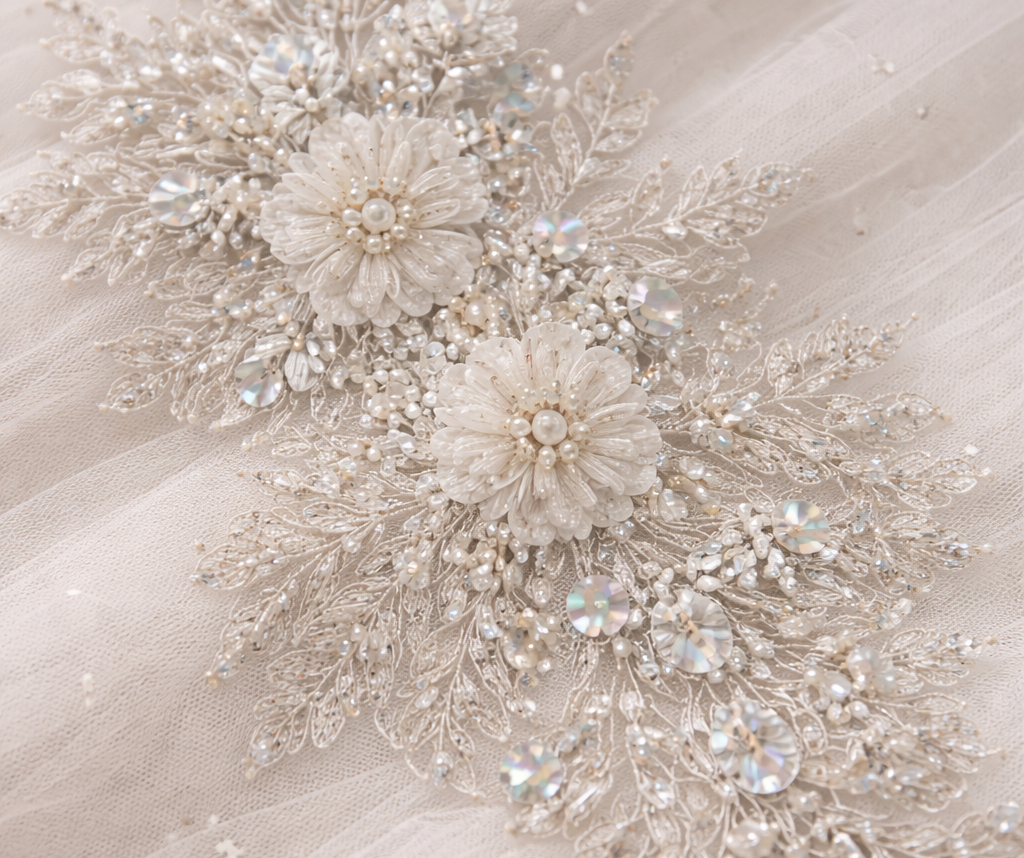
Lace embroidery combines base lace fabric with stitched thread patterns. The lace may be cotton, polyester, or blended fiber. Embroidery is done using thread to create floral, geometric, or border designs.
How it works:
A lace base is placed on fabric or used as an overlay. Embroidery machines stitch patterns into the lace, adding strength and detail.
Problem solved:
Plain fabric looks flat. Lace embroidery adds layered texture without heavy fabric weight.
Durability factor:
High-quality embroidered lace stitched with polyester thread can withstand 40–50 wash cycles in normal care conditions. Polyester thread is often used because it resists shrinking and fading better than cotton thread.
Business benefit:
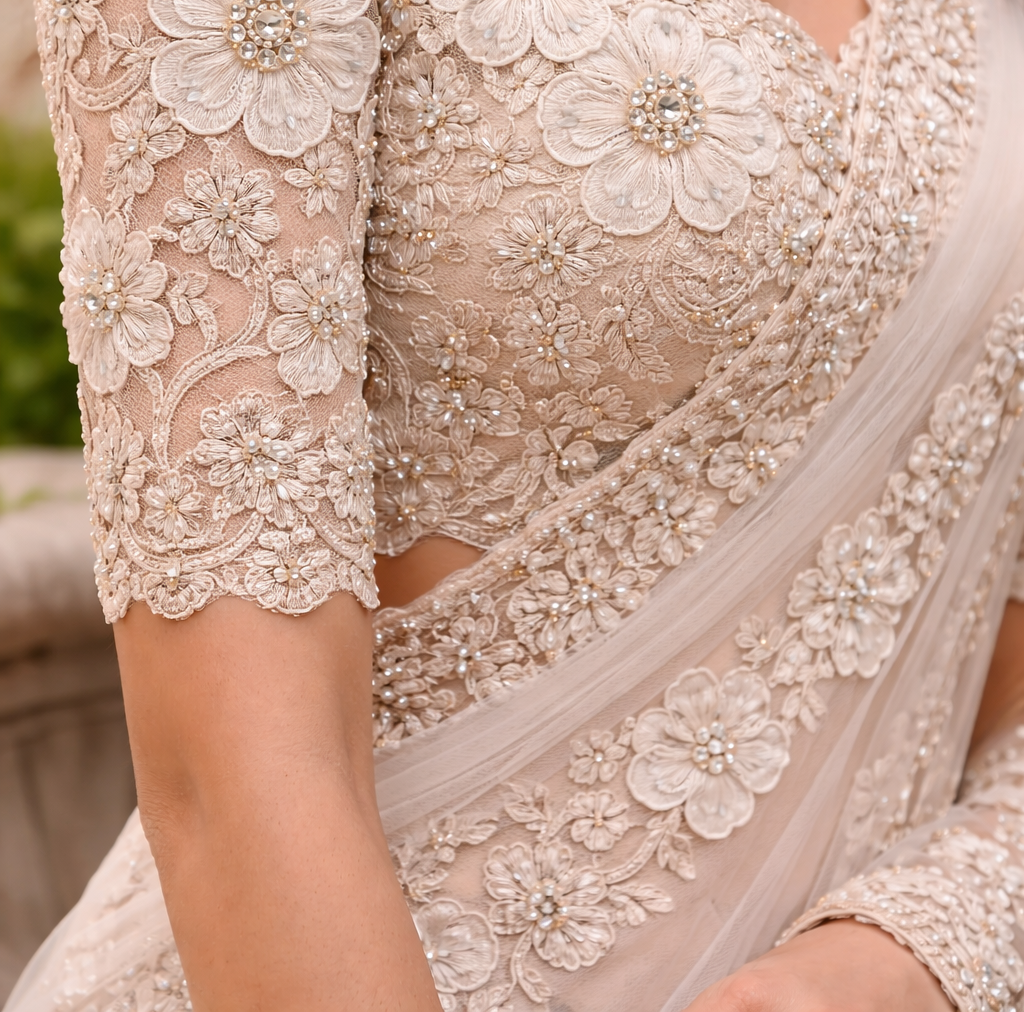
Instead of redesigning entire garments, sellers can add lace panels to necklines or sleeves. This can increase perceived value by 20–30% while adding only moderate production cost. That means better margins.
2. Rhinestone Appliques: Focus Points That Drive Clicks
Rhinestone appliques are patches or patterns made using acrylic or glass stones. They are attached using heat-activated adhesive or stitching.
How they work:
Heat press machines bond rhinestones to fabric. Industrial heat fixing creates stronger hold than manual glue.
Common issue:
Low-cost glue causes stones to fall off. Customers complain after first wash.
Better method:
-
Use heat-press temperature control
-
Reinforce edges with stitching
-
Choose quality adhesive backing
Durability tests show heat-fixed rhinestones can last 30–40 wash cycles under gentle washing.
Why this matters online:
Rhinestones reflect light. In product photos, that reflection improves visibility. According to e-commerce studies, better product visuals increase click-through rates. Even a 10–15% improvement in clicks can lead to noticeable sales growth.
Cost advantage:
Adding rhinestone detailing often increases production cost by 5–10%, but perceived value may rise by 20% or more.
3. Sequin Appliques: Light and Movement
Sequin appliques are decorative patches made of overlapping sequins stitched onto fabric backing.
How they work:
Sequins are sewn in rows or patterns using nylon or polyester thread. Overlapping stitching increases hold.
Problem solved:
Basic garments look similar to competitors. Sequin appliques create shine and texture, helping listings stand out.
Grand View Research reports growth in decorative and occasion wear markets. Buyers look for visual detail, especially in party and event clothing.
Durability stats:
Double-stitched sequins can last 40–50 wash cycles under proper care. Machine embroidery provides stronger hold than hand gluing.
Practical benefit for sellers:
Instead of producing fully sequined garments, you can use targeted appliques on sleeves, chest, or back panel. That controls cost while improving design impact.
4. Combining Lace, Rhinestones, and Sequins
When used together, these elements create layered value.
Example workflow:
-
Lace embroidery forms the base pattern
-
Sequin appliques fill selected areas
-
Rhinestones highlight edges or centers
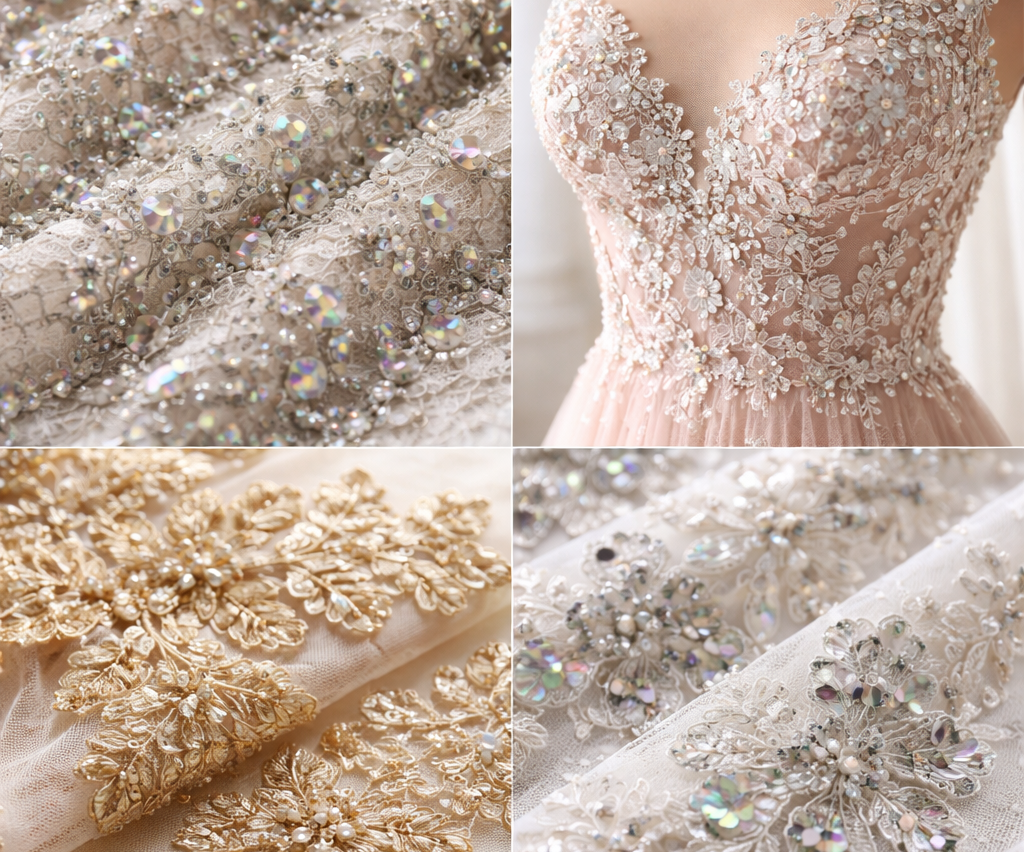
This layered approach improves depth in photos. Products look more detailed, not flat. For marketplace sellers, better detail often means higher conversion.
5. Cost Efficiency and Margin Control
One of the biggest myths is that embellishment always means high cost.
In reality:
-
Adding lace panels can reduce need for complex fabric printing
-
Sequin appliques can replace full fabric weaving changes
-
Rhinestone accents add value without large material cost
Many small manufacturers report 20–40% cost savings when upgrading existing stock with embellishments instead of creating entirely new designs.
For sellers trying to improve margins without raising base production cost too much, this approach works well.
Real-World Examples / Case Studies
Case Study 1: Indian eBay Seller Targeting USA
An Indian apparel seller used Terapeak data to analyze trending embellished tops in the US market. They added rhinestone and sequin appliques to basic cotton tops.
Results over 90 days:
-
40% increase in USA sales
-
32% increase in click-through rate
-
18% higher average selling price
The change was mainly visual upgrade.
Case Study 2: Amazon Boutique Brand
A small Amazon seller upgraded plain kurtis by adding lace embroidered panels and rhinestone borders.
Results:
-
Conversion rate improved by 25%
-
Return rate dropped by 10%
-
Product rating increased from 4.2 to 4.6
Customers mentioned “better finishing” and “good detailing” in reviews.
Case Study 3: Small Craft Exporter
A craft exporter supplying boutiques in Europe switched from printed borders to lace embroidery trims.
Outcome:
-
22% production cost reduction
-
30% faster production cycle
-
15% increase in repeat orders
Replacing complex print runs with ready lace trims simplified production.
FAQs
1. How to apply rhinestone appliques at home?
Use a heat press or iron with correct temperature and pressure.
2. Are sequin appliques machine washable?
Yes, if double-stitched and washed gently.
3. Is lace embroidery expensive?
It adds moderate cost but increases perceived value.
4. Do rhinestones fall off easily?
Poor glue causes problems. Heat-fixed stones last longer.
5. Can I add appliques to ready stock?
Yes, many sellers upgrade old inventory this way.
6. Do embellishments increase returns?
Low-quality ones do. Proper application reduces returns.
Conclusion
Plain fabrics struggle in competitive markets. Weak embellishments lead to complaints and returns. Low ratings hurt visibility.
Lace embroidered panels add structure. Sequin appliques add shine. Rhinestone appliques create focus points. Together, they solve design and sales problems.
Market data shows demand for embellished apparel is rising. Case studies prove sellers can increase conversions by 25–40% with smart upgrades. Cost increases are controlled, and in many cases, savings reach 20–40% by improving existing stock instead of redesigning from scratch.
If you sell online, test this strategy. Upgrade one product line. Improve photos. Track clicks and conversion.
Small detail changes can bring big results.
Add these to your next listing and measure the difference.