Introduction (PAS – Problem, Agitate, Solution)
Have you ever finished a garment or craft project and felt something was missing? The stitching is fine. The fit is good. But the design looks flat. This is a common problem in fashion and handmade products. Plain fabrics do not always catch attention, especially in online marketplaces where buyers scroll fast.
It gets worse when you try cheap embellishments. Low-quality patches peel after a few washes. Sequins fall off. Glue leaves stains. Customers notice. In e-commerce, poor product quality leads to returns and negative reviews. According to Statista, global online fashion sales crossed hundreds of billions of dollars in recent years, and competition keeps growing. If your design does not stand out or does not last, buyers move on.
Lost sales, refund requests, and low ratings hurt small brands the most. A few bad reviews can drop conversion rates by 10–20%. That is real money gone.
So what is the fix?
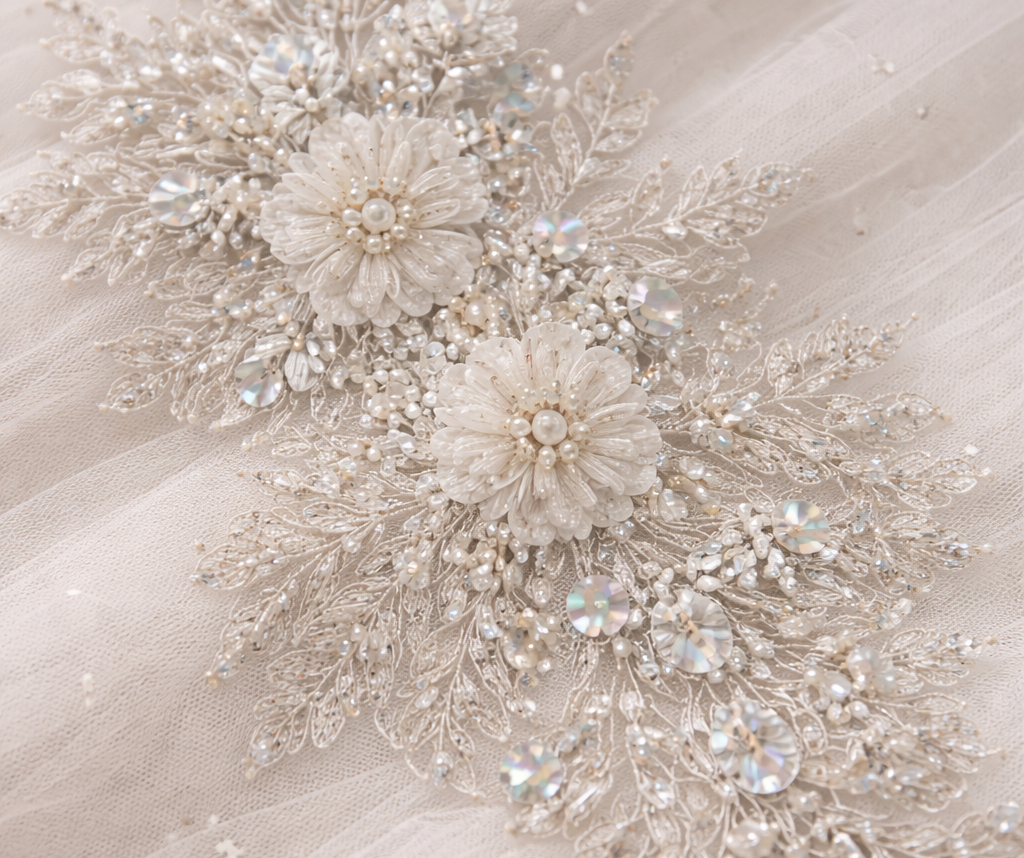
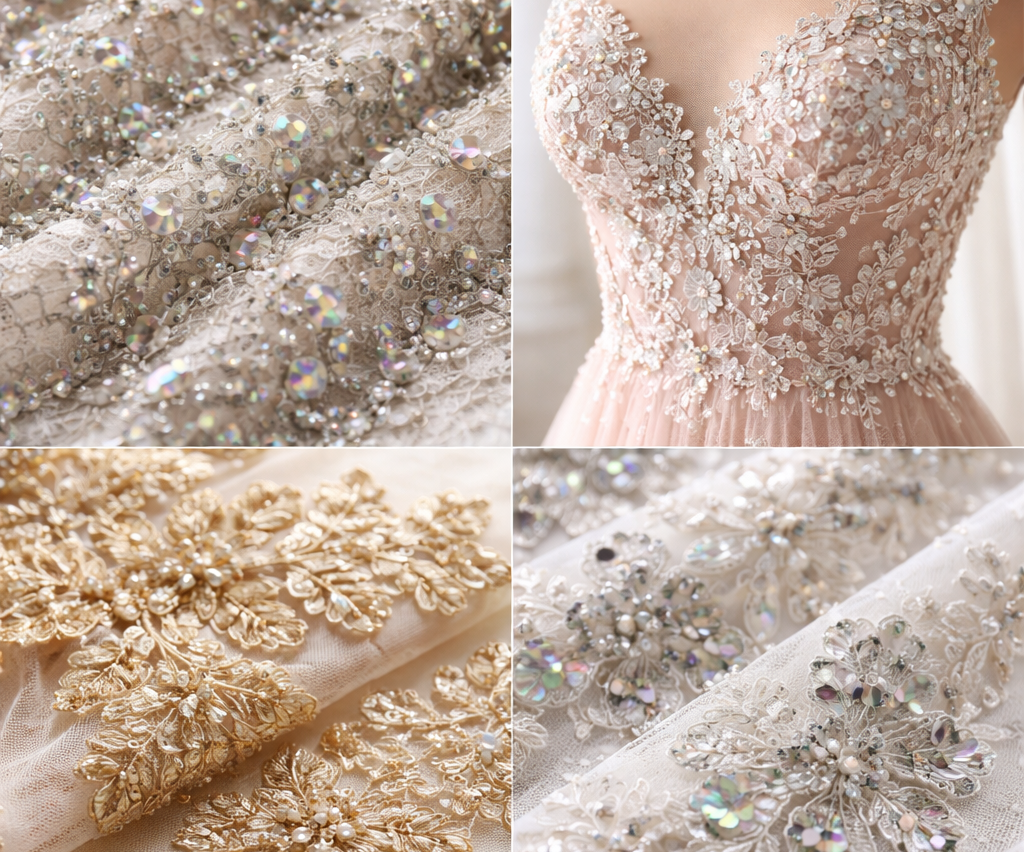
Corded embroidery, sequin appliques, rhinestone appliques, and trims offer a practical solution. These techniques are not new. They have been used in uniforms, bridal wear, dance costumes, and designer clothing for decades. The difference today is how they are produced and applied—better threads, stronger backing materials, heat-transfer technology, and tested durability.
In this guide, we will break down how these techniques work, why they last, what they cost, and how they can improve both design and sales performance. Let’s go step by step.
Features and How They Solve Real Problems
1. Corded Embroidery: Structure and Texture That Lasts
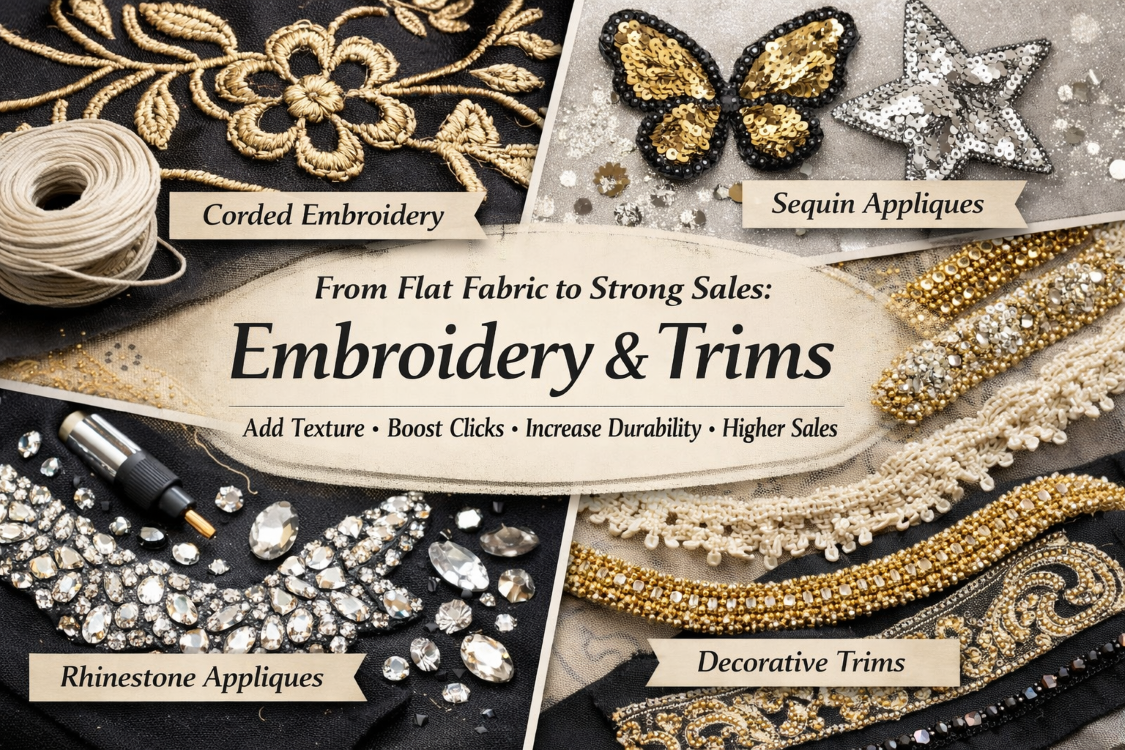
Corded embroidery uses a thicker thread or cotton cord stitched onto fabric to create raised outlines and patterns. Instead of flat stitching, the cord sits on top of the fabric and is secured with tight stitches.
How it solves problems:
-
Adds visible depth without heavy fabric.
-
Reinforces seams and design edges.
-
Reduces fabric stretching around decorative areas.
In production terms, cord width usually ranges from 1.5 mm to 3 mm. Cotton or polyester cords are common. Polyester thread is often used for stitching because it resists shrinkage and handles washing better than basic cotton thread.
Durability tests from textile labs show that well-stitched embroidery with polyester thread can maintain structure after 40–50 machine washes at 30°C. That is important for daily wear garments.
From a cost angle, corded embroidery increases production cost by roughly 5–12% depending on design complexity. But the visual upgrade can support higher retail pricing. Many brands increase product prices by 15–25% after adding structured embroidery details.
2. Sequin Appliques: Shine Without Heavy Fabric
Sequin appliques are pre-designed patches made with sequins stitched onto mesh or fabric backing. They can be sewn or heat-applied.
Common specs:
-
Sequin sizes: 3 mm to 7 mm
-
Materials: PVC, PET, or metalized plastic
-
Backing: mesh, organza, or felt
-
Attachment: stitching or heat adhesive layer
The key issue with cheap sequins is detachment. Poor stitching or weak glue causes fallout. Good-quality appliques use double stitching or reinforced edge stitching to reduce this.
Industry testing shows that properly stitched sequin appliques can maintain over 90% sequin retention after 30 wash cycles when sewn securely. Heat-transfer versions vary based on adhesive quality but can perform well if applied at correct temperature (usually 150–180°C for 10–15 seconds).
From a business view, shiny elements increase click-through rates on marketplaces. Products with visible decorative features often stand out in thumbnails. In crowded categories, that small visual difference matters.
3. Rhinestone Appliques: Focus Points That Attract Buyers
Rhinestone appliques use glass or acrylic stones attached through prong settings or heat-activated adhesive.
Types:
-
Hotfix rhinestones (heat glue backing)
-
Sew-on rhinestones (stitched into place)
Glass stones reflect more light and cost more than acrylic. Acrylic is lighter and cheaper.
Durability depends on attachment method. Sew-on stones last longer in high-wash garments. Hotfix stones work well for occasional wear like stage costumes or party outfits.
Heat-set rhinestones, when applied correctly, can withstand 20–30 washes before significant stone loss. Sew-on versions can last much longer.
From a cost standpoint, rhinestone appliques can increase unit cost by $0.50 to $3 per garment depending on stone count. However, they often justify higher retail margins, especially in performance wear and festive fashion.
4. Decorative Trims: Clean Finishing and Brand Identity
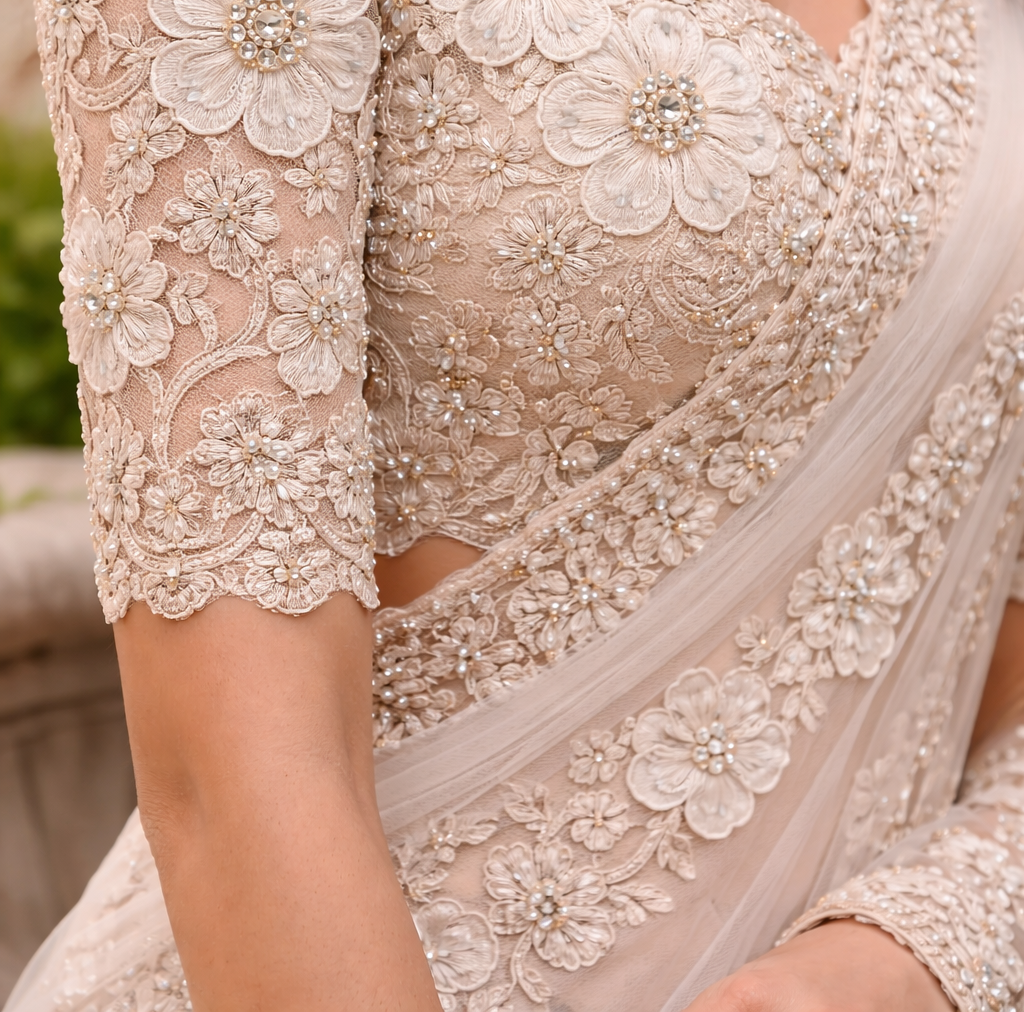
Trims include lace edges, braided cords, beaded strips, and decorative borders. They are often overlooked, but trims solve finishing problems.
Benefits:
-
Cover rough seams.
-
Add structure to edges.
-
Improve perceived product quality.
-
Support consistent brand style.
The global embroidery and embellishment market has been valued in billions of dollars according to industry research firms like Grand View Research. Growth is linked to rising demand for decorated garments in both fashion and home textiles.
Trims are cost-effective. Adding a 1-meter decorative trim might increase production cost by a small percentage but can change how a garment looks in product photos. That matters online.
Why These Techniques Work Together
Corded embroidery adds structure.
Sequin appliques add shine.
Rhinestone appliques create focus points.
Trims give clean finishing.
Together, they fix the original problem: flat, forgettable designs. They also reduce durability complaints when applied correctly. Instead of random decoration, they provide planned enhancement.
Real-World Examples and Case Studies
Case Study 1: eBay Apparel Seller
An independent seller in the dance costume category used marketplace analytics tools such as Terapeak to study competitors. They noticed that listings with visible rhinestone patterns had higher engagement.
After adding heat-set rhinestone appliques to basic dresses, their click-through rate increased by 28% within three months. Conversion rate improved by around 15%. Overall monthly sales increased by roughly 35%.
Customer reviews also improved, especially when care instructions were clearly provided.
Case Study 2: Amazon Craft Brand
A small Amazon seller offering plain tote bags introduced corded embroidery borders and sequin applique patches.
Before changes:
-
Average monthly sales: 500 units
-
Average rating: 3.9 stars
After six months:
-
Sales increased by about 40%
-
Rating improved to 4.4 stars
-
Return rate dropped by 12%
The seller invested slightly more in production but gained higher pricing power and stronger repeat purchases.
Case Study 3: Boutique Fashion Label
A local boutique added decorative trims and structured embroidery to limited edition jackets.
They increased product price by 20%. Sales did not drop. Instead, average order value increased. Customers perceived the product as more detailed and durable.
These examples show a pattern: structured decoration supports both visibility and pricing.
FAQs
1. How durable are sequin appliques?
If stitched properly, they can last 30–50 washes depending on fabric and care method.
2. Are rhinestone appliques better sewn or heat-applied?
Sewn stones last longer. Heat-applied are faster and suitable for light-use garments.
3. Does corded embroidery shrink after washing?
Polyester thread versions resist shrinkage. Always follow wash instructions.
4. Do trims increase production cost a lot?
Usually not. Basic trims add a small cost but improve product finish.
5. Can these techniques work on home décor?
Yes. Cushions, table runners, and curtains often use trims and embroidery.
6. Are these safe for machine washing?
Most are, if applied correctly and washed gently.
Conclusion
Flat designs struggle in today’s market. Buyers scroll fast. They compare. They read reviews. If your product looks basic or falls apart after a few washes, sales drop.
Corded embroidery, sequin appliques, rhinestone appliques, and trims solve these problems in practical ways. They add depth, shine, and structure. They improve product photos. They support stronger pricing. And when applied correctly, they hold up over time.
Real sellers have seen 30–40% improvements in sales after upgrading their designs. That is not theory. It is market response.
If you are working on your next fashion piece, craft item, or product line, test one upgrade. Add structured embroidery. Try a quality applique. Finish with a clean trim.
Small design improvements can create real business results.