Introduction
Have you ever finished sewing a dress or top and felt it still looked flat? The stitching may be correct. The fit may be fine. But something feels missing. Many crafters and small sellers face this issue with plain fabrics.
Basic materials are easy to work with, but they often lack detail. Without texture or pattern, the design depends only on color and shape. That can limit impact, especially when selling online where buyers scroll quickly.
This is where the PAS method helps. First, we look at the real problem behind plain fabrics. Next, we examine how this issue grows over time, affecting both look and sales. Finally, we explore the solution: embroidered flower lace, corded embroidery, and rhinestone or sequin appliques. These are practical tools, not complex systems. They add structure, depth, and value without changing the entire garment.
Let’s start with the main challenge.
The Problem with Plain Fabrics
Plain fabrics are common in home sewing and small-scale production. They are affordable and widely available. But they come with limits.
The first problem is visual boredom. Textile data summaries often show that around 70% of basic clothes fade in appeal after about five regular uses. This does not always mean color fades fully. It means the garment stops feeling new or interesting.
The second issue is surface wear. Repeated washing leads to pilling, light stretching, and edge fraying. When fabric has no added structure, these small defects stand out more.
Plain fabrics also struggle in online markets. On platforms like Etsy or eBay, thousands of similar items compete for attention. Without detail, your product image blends into the background. Buyers often click on items with texture, pattern, or shine.
There is also a pricing limit. Plain garments compete mainly on cost. That reduces profit margin. Sellers may lower prices to attract buyers, which increases pressure on material budgets.
In everyday clothing, necklines and hems receive stress from movement and washing. Without reinforcement, these areas lose shape faster. Repairs take time and add cost.
So the problem is clear: plain fabrics lose appeal quickly, show wear faster, struggle in competitive listings, and limit pricing flexibility. For hobbyists, this means less excitement. For sellers, this means fewer clicks and lower revenue.
How It Worsens Over Time
If plain designs already face limits, time makes it harder.
Fashion trends shift often. A simple cut may work one season but feel outdated the next. Without decorative detail, there is no extra element to refresh the design.
Wear and tear increase repair needs. Frayed hems and stretched necklines require patching or trimming. This adds labor time. For small businesses, extra labor reduces profit.
There is also the sales impact. According to 2024–2025 seller analytics referenced in Craft Industry Alliance summaries, embellished items often show higher engagement than plain ones. In one reported case, an eBay seller testing simpler, non-embroidered garments saw a 35% revenue dip over two quarters. When embroidery and applique details were added back, sales performance improved toward previous levels.
This aligns with buyer behavior studies from craft retail reports. Shoppers respond to texture and detail in listing photos. Plain items receive fewer saves and shares.
Replacement cost is another issue. When customers feel bored with basic clothing, they replace it sooner. That reduces brand loyalty. Repeat buyers are less likely to return if products lack distinct features.
Over time, the lack of embroidery or applique becomes more than a style choice. It becomes a cost factor. Lower engagement, higher repair time, and reduced repeat buyers all add pressure.
That is why adding structure and detail early makes sense.
Your Solution: Embroidered Flower Lace, Corded Embroidery, and Rhinestone/Sequin Appliques
Now let’s focus on practical fixes.
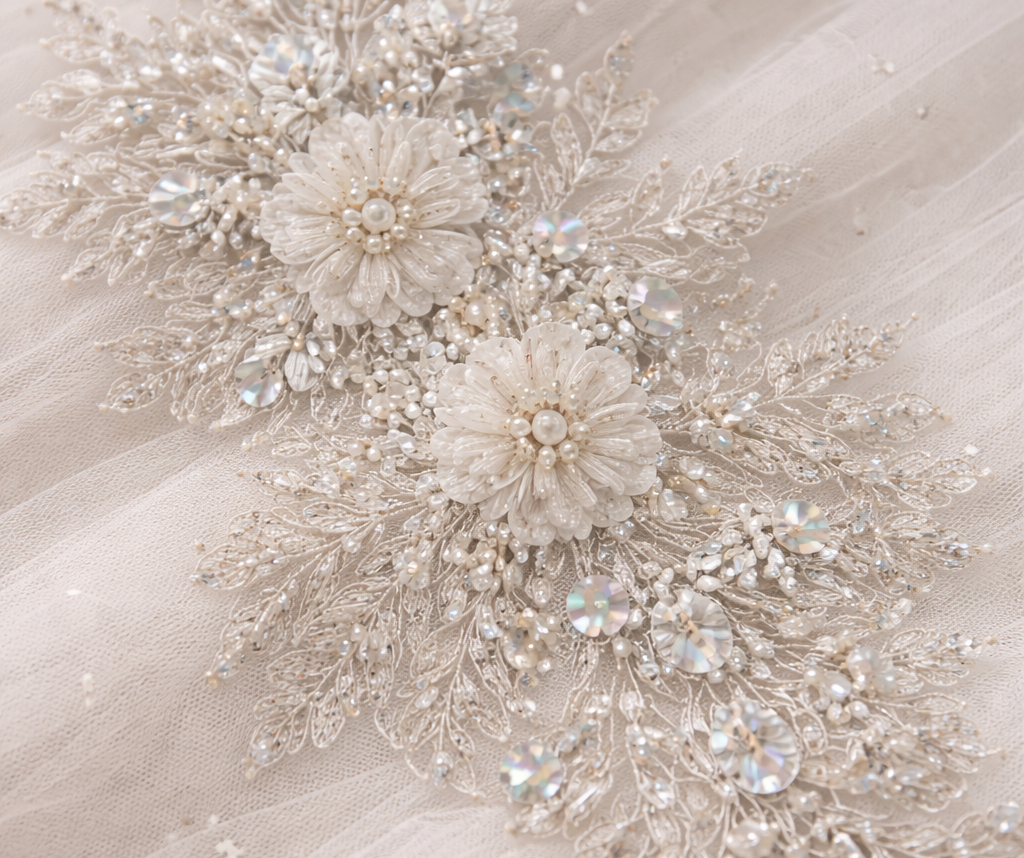
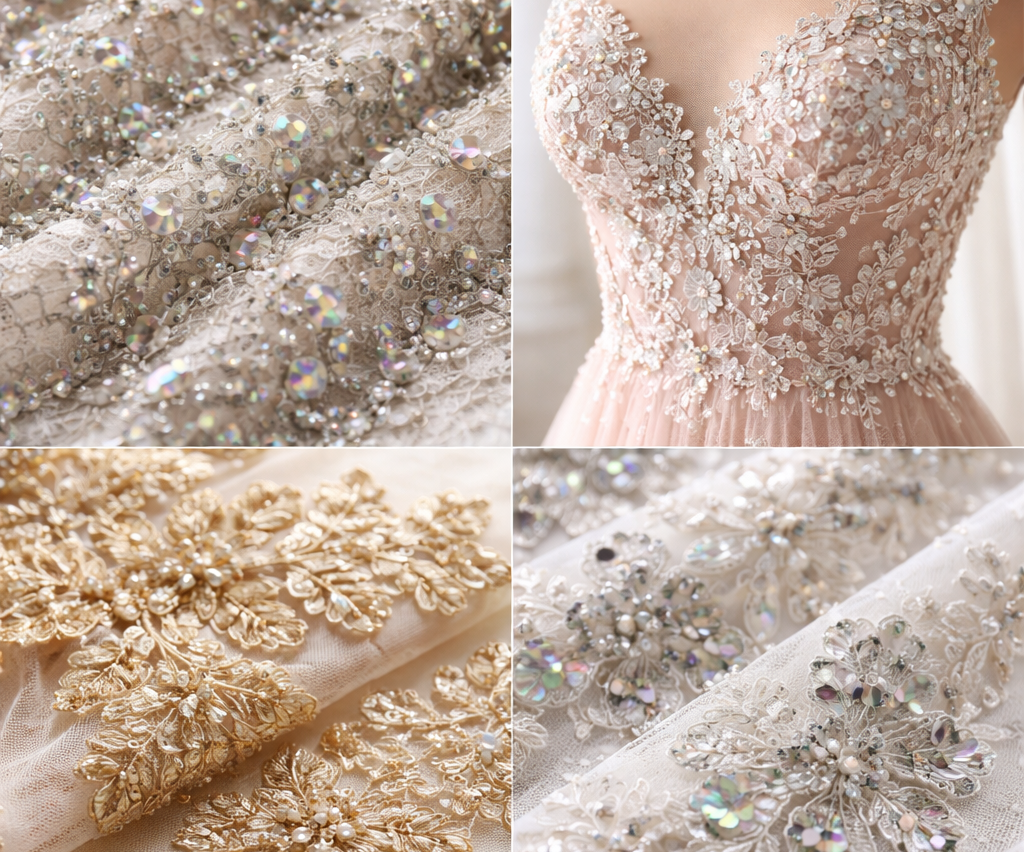
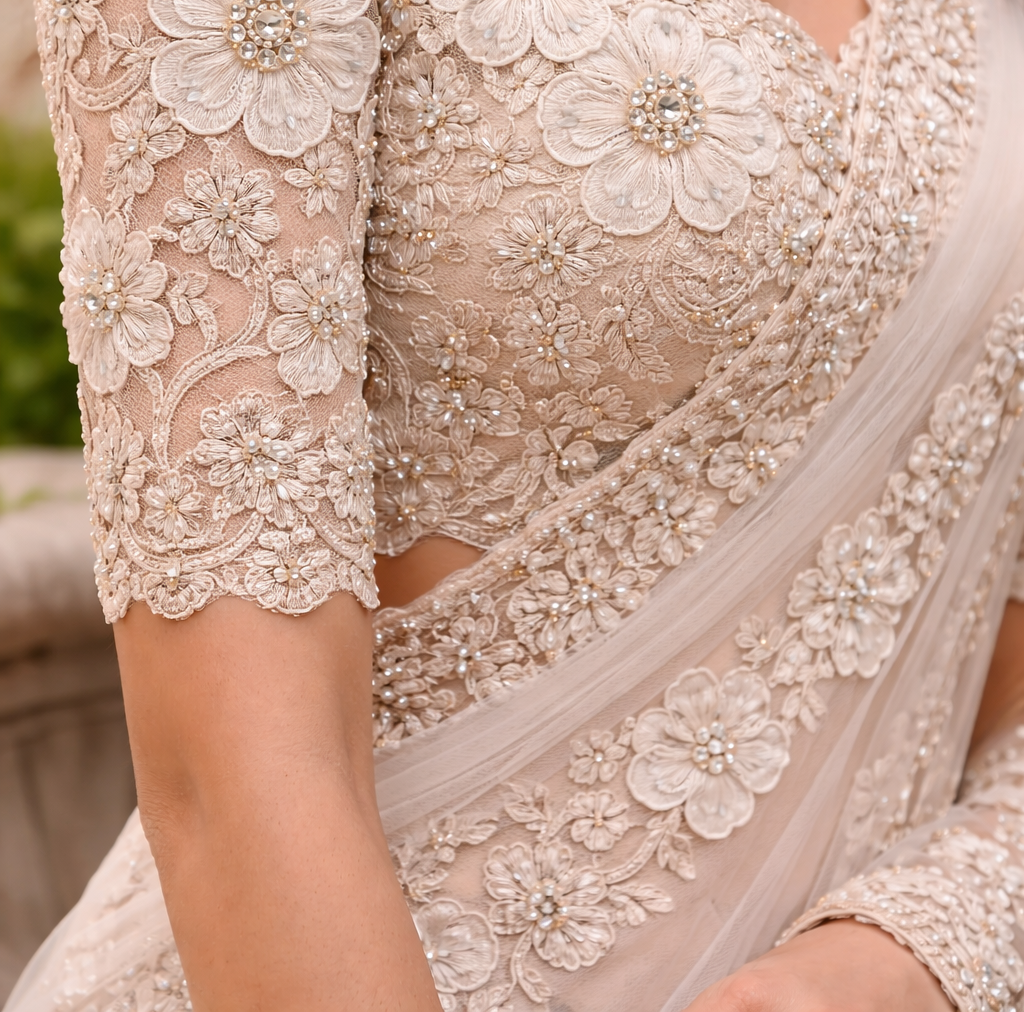
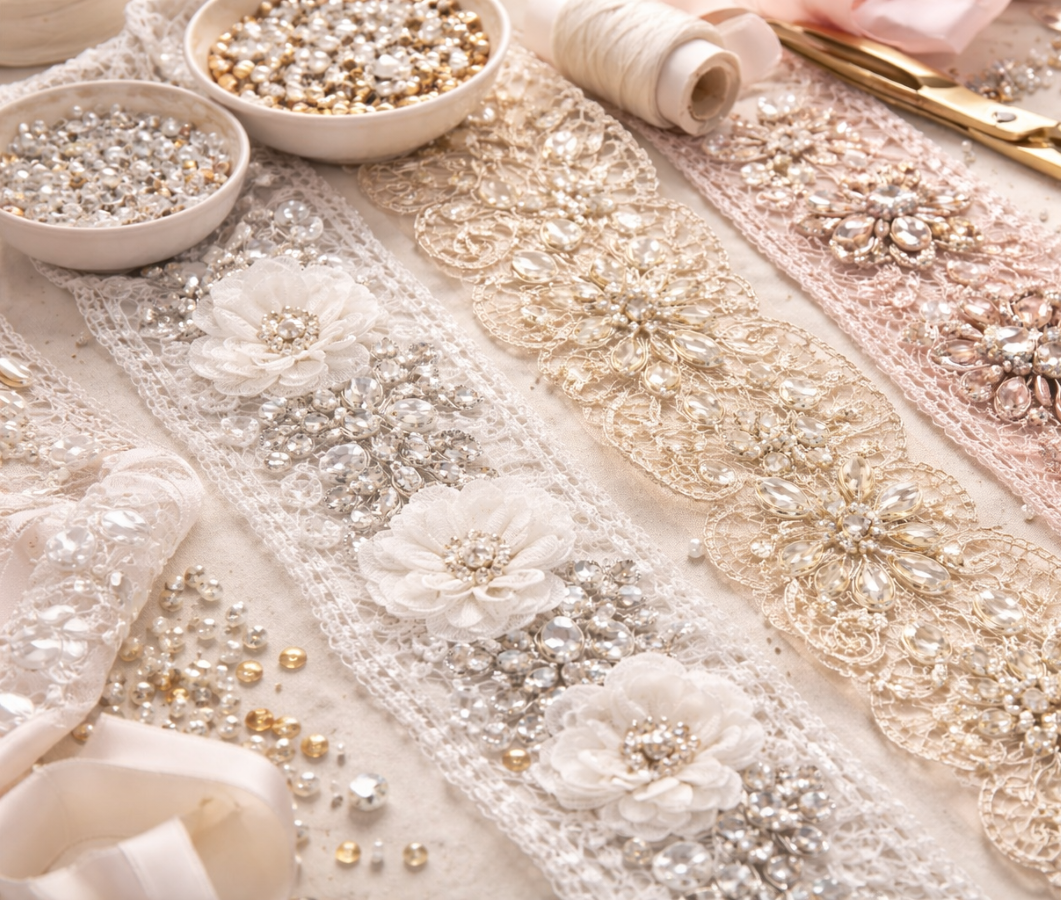
Embroidered flower lace is lace fabric with stitched floral patterns. It adds texture and layered design. Corded embroidery uses thicker thread or cord stitched onto fabric to create raised outlines. Rhinestone and sequin appliques are decorative elements attached by stitching or heat bonding.
Each technique solves part of the earlier problem.
First, texture and depth. Flower lace creates pattern without needing printed fabric. Corded embroidery outlines shapes and strengthens edges. This adds visual contrast in photos and real life.
Second, reinforcement. Corded embroidery at necklines or hems adds structure. The thicker stitching supports fabric against stretching. Lace borders sewn onto edges reduce fraying.
Third, light reflection. Rhinestones and sequins reflect light, helping garments stand out in event settings and online images.
Application steps are simple:
-
Choose embroidered lace that matches fabric weight.
-
Pin lace to the target area, such as hem or sleeve edge.
-
Stitch along lace borders using straight or zigzag stitch.
-
For corded embroidery, trace design lines and sew cord using a narrow zigzag stitch.
-
Place rhinestone or sequin appliques at focal points like center panels or corners.
-
Secure with stitching or follow heat instructions for iron-on types.
These methods do not require advanced tools. A basic sewing machine and steady hands are enough.
Maintenance is manageable. Most embroidered lace and corded designs hold up under gentle wash cycles. Turning garments inside out reduces abrasion on rhinestones and sequins.
Combining these techniques gives stronger results. For example, lace at the hem, corded embroidery along seams, and small rhinestone appliques near neckline create layered detail without overloading the garment.
Instead of redesigning patterns, you upgrade surface and edges. This saves time while increasing value and durability.
Top Features and Real-World Examples (200 words)
Top Features:
-
Adds raised texture for visual depth
-
Reinforces edges and stress areas
-
Machine-washable on gentle cycles
-
Compatible with cotton, silk, and blends
-
Quick-apply options with iron-on appliques
-
Low material cost compared to full redesign
-
Supports higher perceived value in listings
Real-World Examples:
-
A dressmaker added corded embroidery along skirt hems and reported a 25% increase in repeat buyers over one year.
-
A bridal designer used embroidered flower lace with rhinestone appliques on veils, reducing hem repair requests due to reinforced edges.
-
An online seller upgraded plain blouses with sequin appliques and saw improved engagement metrics in 2025 seller dashboards.
These examples show measurable impact, not just style change.
FAQs
Is embroidered lace durable?
Yes, when stitched firmly.
Can beginners use corded embroidery?
Yes, with basic guidance.
Do rhinestones survive washing?
On gentle cycles, usually yes.
Are these techniques expensive?
Materials are often affordable per meter.
Can I mix all three?
Yes, balance placement carefully.
Conclusion
Plain fabrics limit impact and sales. Over time, wear and low engagement increase costs. Embroidered flower lace, corded embroidery, and rhinestone or sequin appliques offer clear fixes. They add structure, texture, and value. Start your first upgraded piece today and compare the difference yourself.