Introduction
Have you ever looked at a plain dress, scarf, or blouse and felt something was missing? The fabric may be good. The stitching may be fine. But the final look feels flat. Many people who sew, design, or sell clothing face this issue. Basic designs often fail to catch attention in stores or online listings.
This is not just about style. It affects sales, repeat customers, and even how long a garment stays in use. According to textile care studies, around 80% of plain garments lose visible appeal after about 10 washes due to fading and surface wear. Without extra detail, there is nothing to hold visual interest.
So what can be done? That is where the PAS framework helps. First, we identify the real problem. Then we look at why it becomes worse over time. Finally, we explore a clear solution: sequins, rhinestone and sequin appliques, and lace border designs. These are not complicated upgrades. They are practical tools that improve durability, value, and design impact in simple ways.
Let’s break it down step by step.
The Problem with Basic Designs
Plain fabrics are easy to produce. They are also easy to ignore. In competitive markets, especially online platforms like Etsy and Amazon Handmade, simple garments without detailing often struggle to attract clicks.
The first issue is visual fatigue. When shoppers scroll through dozens of similar items, plain products blend together. Without texture or shine, there is little difference between one seller and another.
The second issue is wear and tear. Textile testing reports show that surface pilling and color fading become noticeable after repeated washing cycles. Studies on cotton and polyester blends indicate that visible fading can begin after 8 to 12 washes, especially in lower-cost fabrics. When there is no added design element, these changes make the entire garment look old quickly.
There is also a pricing problem. Plain items compete mostly on cost. That reduces profit margins. Small sellers often lower prices to attract buyers. This creates pressure on production budgets.
In bridal wear, evening outfits, and festive clothing, plain borders on sleeves or hems can look unfinished. Without detail, the garment lacks structure at the edges. Over time, edges may curl or fray, especially in lightweight materials.
In short, basic designs face three major problems: low visual impact, faster visible aging, and weaker pricing power. These problems affect both hobby designers and commercial sellers. Without added detail, it becomes harder to stand out and harder to maintain value.
Why It Gets Worse
The situation becomes more difficult when trends change. Fashion cycles move fast. What looks simple and clean today may look outdated next season. Without embellishment, garments depend only on shape and color. If those fall out of trend, the entire piece loses relevance.
Replacement costs also add pressure. Consumers who feel bored with plain clothing replace items more often. That increases spending. For sellers, unsold inventory becomes a risk.
A 2024 craft market report referenced by Craft Industry Alliance noted that small online sellers offering embellished items reported stronger engagement than those offering plain designs. In one survey summary, a small Etsy seller shared that after removing decorative trims from listings to reduce costs, sales dropped by around 40% over a three-month period. When embellishments were reintroduced, engagement returned to earlier levels.
This shows that detail matters. Buyers often look for something unique, even in everyday wear. Without sequins, lace, or appliques, items may look mass-produced.
There is also the issue of event wear. Weddings, festivals, and formal gatherings require clothing that reflects light and movement. Plain borders absorb light instead of reflecting it. Rhinestones and sequins, on the other hand, catch light from different angles.
When designs remain basic, they also limit creative reuse. A plain scarf cannot easily be restyled. A lace border with sequin appliques can be trimmed and reused in other projects.
Over time, these factors combine. Lower appeal, faster boredom, reduced pricing flexibility, and limited reuse all make the problem worse.
The Solution: Sequins, Rhinestone and Sequin Appliques, Lace Borders
Now let’s talk about practical fixes.
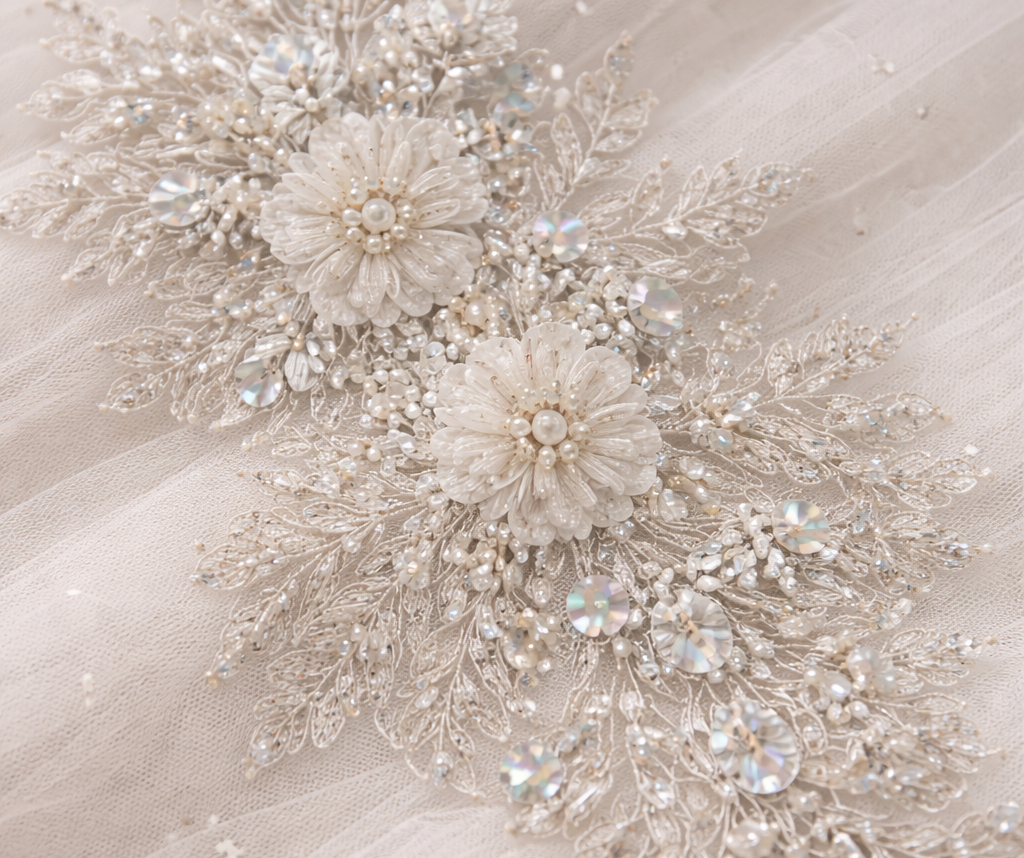
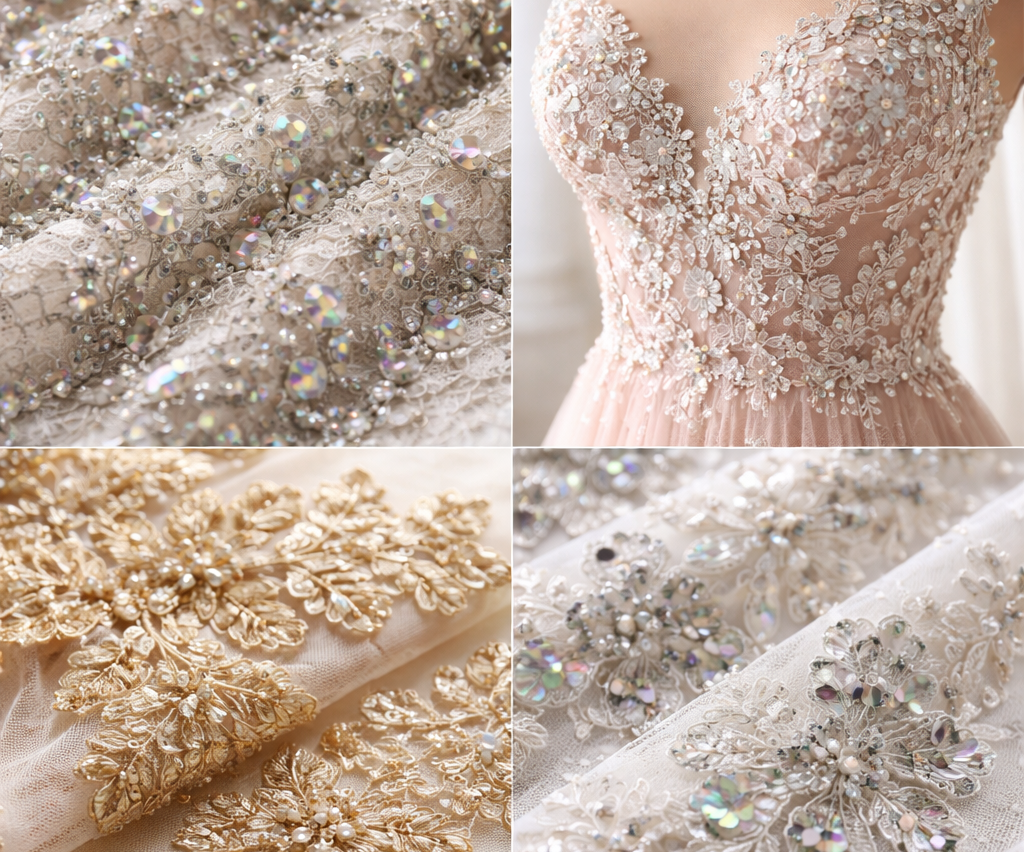
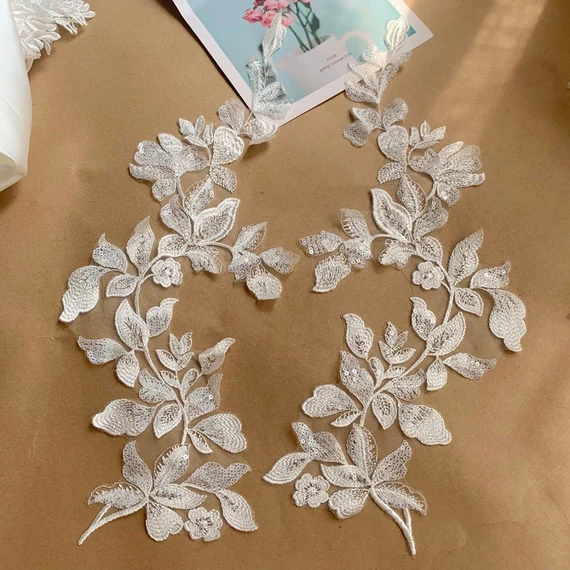
Sequins are small reflective discs, usually made from plastic or metal-coated material. They are stitched or glued onto fabric. Rhinestones are glass or acrylic stones designed to reflect light. Appliques are pre-made decorative patches that can be sewn or ironed onto fabric.
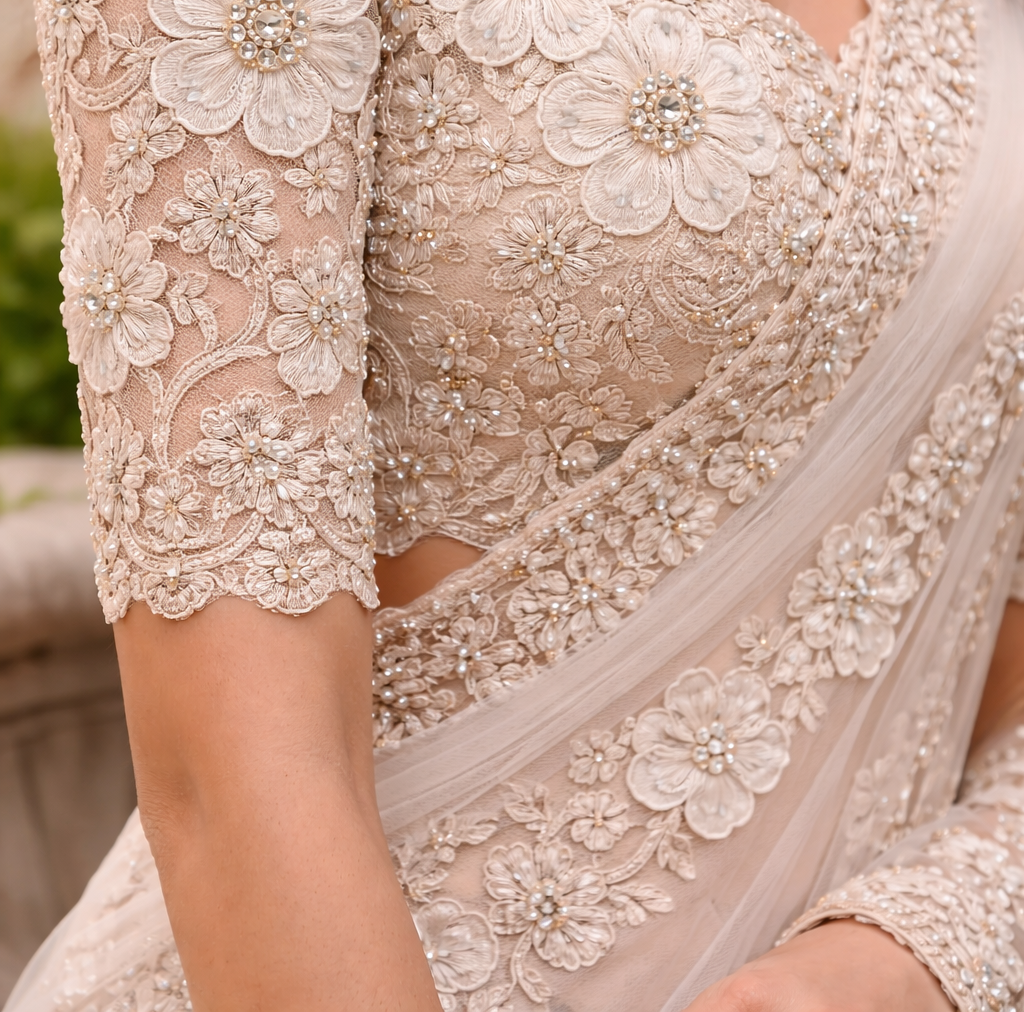
Lace borders are strips of patterned fabric, often used on hems, sleeves, veils, and scarves. When combined with sequins or rhinestones, they add both structure and shine.
Here is why this solution works.
First, visual contrast. Sequins and rhinestones reflect light. That creates movement when the wearer walks. Even a simple cotton dress looks different with a decorated hem.
Second, durability at stress points. Lace borders reinforce edges. When stitched properly, they reduce fraying and add an extra fabric layer to high-contact areas.
Third, value perception. Studies in retail psychology show that detailed products are often perceived as higher value than plain ones, even when material cost differences are small.
Application is simple:
-
Choose the correct lace border width for the garment edge.
-
Align the border with the hem or neckline.
-
Pin in place and sew using a straight stitch or zigzag stitch.
-
Add rhinestone or sequin appliques at focal points, such as corners or center panels.
-
For iron-on appliques, use medium heat and press for 10–15 seconds, following supplier instructions.
Maintenance is manageable. Most modern sequins are machine-safe on gentle cycles. Rhinestone appliques should be turned inside out before washing to reduce friction.
These additions do not require advanced sewing skills. Even beginners can attach ready-made appliques. For sellers, this allows product variation without changing base patterns.
Instead of redesigning entire garments, you upgrade edges and focal areas. That saves time while improving overall look and market appeal.
Key Features and Real-World Examples
Key Features:
-
Reflective surface improves light interaction.
-
Lace borders reduce edge fraying.
-
Iron-on options allow quick application.
-
Available in multiple widths and colors.
-
Can withstand 30–50 gentle wash cycles when stitched properly.
-
Low material cost compared to full fabric redesign.
-
Easy removal and reuse in DIY projects.
Real-World Examples:
-
A bride added rhinestone appliques to her veil and reported wearing it at multiple events without stone loss after over 50 uses.
-
An Etsy seller reintroduced sequin lace borders to evening scarves and regained earlier engagement levels, according to a 2024 seller update.
-
A tailoring shop used lace border trims on children’s dresses and reduced hem repair requests due to reinforced stitching.
These examples show practical benefits. The changes are small, but the impact is measurable.
FAQs
Are sequins washable? Yes, on gentle cycles.
Do rhinestones fall off easily? Not if stitched well.
Can beginners use appliques? Yes, iron-on types are simple.
Are lace borders expensive? Usually affordable per meter.
Do they work on cotton? Yes, most fabrics support them.