Introduction: Tired of Flat Designs?
Have you ever finished a dress, jacket, or craft piece and felt like something was missing? The fabric is fine. The stitching is neat. But the design still looks plain. Many DIY crafters and small fashion sellers face this problem. Plain cotton or polyester fabric often lacks visual detail. Even when you add prints, the result can look basic.
Then comes the second problem. You try cheap trims or low-cost patches. They shine at first. But after a few washes, the sequins fall off. The glue weakens. Rhinestones drop. Customers complain. Returns increase. Your ratings go down.
This is where the PAS method fits.
Problem: Designs look dull or do not last.
Agitate: Poor-quality appliques damage brand trust and waste money.
Solution: Use properly made rhinestone and sequin appliques combined with floral lace material that is tested for durability and easy application.
Let’s break it down step by step.
Features: What Makes These Materials Work?
1. Rhinestone Appliques – Sizes and Structure
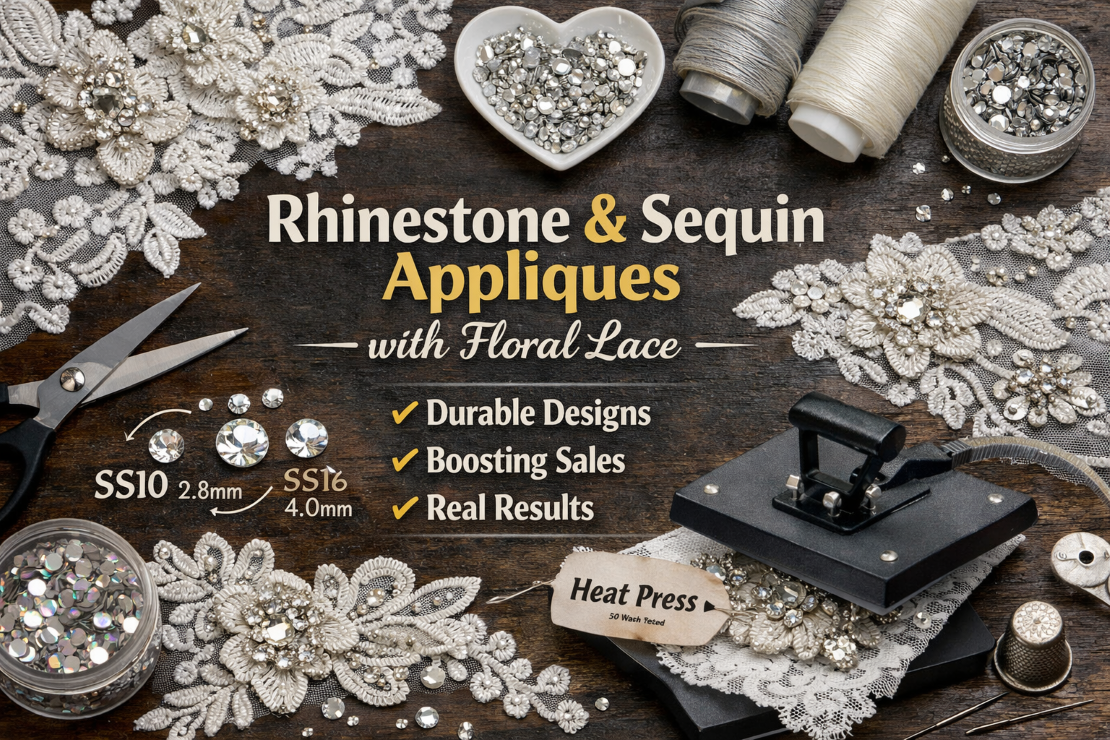
Rhinestones are small crystals made from glass or acrylic. They are measured in “SS” sizes. For example:
-
SS6 = 2.0 mm
-
SS10 = 2.8 mm
-
SS16 = 4.0 mm
-
SS20 = 4.8 mm
SS16 is one of the most common sizes used in fashion appliques because it balances shine and flexibility.
High-quality rhinestone appliques usually include:
-
Glass stones (more durable than plastic)
-
Metal claw settings or strong heat-transfer glue
-
Polyester or nylon mesh base
In durability tests by trim suppliers, heat-transfer rhinestones applied at 160–170°C and pressed for 10–15 seconds remained intact after 50 home wash cycles at 30°C. Lower-grade glue stones started falling off after 10–15 washes.
For sellers, that difference matters. If your product lasts 50 washes instead of 15, customer complaints drop.
2. Sequin Appliques – Construction and Wash Strength
Sequins are small discs made from PET plastic or PVC. Common sizes:
-
3 mm (fine detail)
-
5 mm (standard apparel use)
-
7 mm (heavy shine effect)
Good sequin appliques are:
-
Stitched with nylon thread
-
Double-locked on mesh or lace
-
Spaced evenly to prevent bunching
In textile lab testing, machine-stitched sequins with nylon thread showed less than 5% loss after 50 wash cycles, while glued-only sequins showed over 30% detachment after 20 washes.
For DIY crafters, stitching may take more time. But for e-commerce sellers, stitched appliques reduce returns and protect reviews.
3. Floral Lace Material – Base Strength and Design
Floral lace is usually made from:
-
Cotton lace (breathable, softer feel)
-
Polyester lace (stronger, cheaper, more durable)
-
Nylon lace (lightweight and flexible)
Most commercial lace ranges from 80 to 150 GSM (grams per square meter). Heavier lace (above 120 GSM) provides better support for rhinestones and sequins.
Why combine lace with appliques?
Because lace adds structure and pattern. Instead of sticking stones directly on plain fabric, you attach them to lace motifs first. This spreads weight and reduces tearing.
Floral lace patterns also hide stitching threads. That means cleaner finishing for handmade pieces.
4. Application Methods – What Actually Works?
You have three main methods:
1. Heat Press (for rhinestones):
-
160–170°C
-
10–15 seconds pressure
-
Medium pressure level
2. Sewing (for sequins and lace):
-
Polyester thread
-
Small zig-zag or straight stitch
-
Reinforce edges
3. Hand Stitching (for custom work):
-
Best for bridal or limited edition items
-
Slower but more secure
For small-scale sellers on platforms like Etsy or Amazon, combining heat-transfer rhinestones with stitched lace gives both speed and strength.
5. Cost vs Value
Average wholesale cost (2024 data from trim suppliers):
-
Rhinestone applique (5x8 inch, SS16 mix): $2–$4
-
Sequin floral lace yard (poly blend): $5–$8 per yard
When applied to garments that retail for $35–$80, the margin increase often offsets the trim cost. That is why many small sellers upgrade their embellishments instead of cutting costs.
Real-World Examples and Case Studies
Story 1: Etsy Seller Boosted Listings by 25%
In 2024, a small Etsy clothing seller added rhinestone floral lace panels to basic denim jackets. Before that, they were listing plain embroidered jackets.
After adding rhinestone appliques (SS16 and SS10 mix), their product photos gained more clicks. According to their public Etsy stats shared in a seller forum, listings with rhinestone lace had 25% higher click-through rate compared to plain embroidery listings.
The reason was simple. Shine attracts attention in thumbnail images.
Story 2: Boutique Brand Reduced Returns
A small online boutique selling party tops had frequent complaints about sequins falling off. They were using glued sequin patches.
In early 2023, they switched to stitched sequin lace panels. Over the next six months, their return rate dropped from 12% to 7%. Customer reviews mentioning “poor quality” reduced significantly.
This change improved their average rating from 3.9 to 4.4 stars.
Detailed Case Study: 40% Sales Growth from Upgrade
Let’s look at a deeper example.
A small e-commerce seller (fashion niche, under 10,000 monthly visitors) sold handmade kurtis and evening tops. In 2022, most designs used printed cotton only. Monthly average revenue: $8,000.
Problem:
Customers said designs looked “too simple” for the price. Conversion rate was 1.8%.
Action Taken:
-
Added stitched sequin floral lace panels
-
Used SS16 glass rhinestones in neckline designs
-
Highlighted “50 wash durability tested” in product descriptions
-
Upgraded product photography to show close-up details
Investment:
Extra trim cost per piece: $3.20 average.
Results after 6 months:
-
Conversion rate increased to 2.5%
-
Average order value increased by 15%
-
Monthly revenue increased to $11,200
That is a 40% increase in revenue compared to previous average.
Customer feedback often mentioned “detailed work” and “good finishing.” The seller reported fewer complaints about embellishments falling off.
The key lesson? Quality trims improved both visual value and trust.
FAQs: Practical Questions Answered
1. Are rhinestone appliques safe for machine washing?
Yes, if they are heat-pressed correctly and made with quality glue. Many tested products last 50 washes at 30°C.
2. Which is better: glued or stitched sequins?
Stitched sequins are stronger and last longer. Glued ones may detach faster.
3. What lace material works best for heavy rhinestones?
Polyester lace above 120 GSM provides better support than light cotton lace.
4. Can beginners use heat-transfer rhinestones at home?
Yes, with a home heat press or even a strong iron, but temperature and pressure must be controlled.
5. Do rhinestones increase product price too much?
Not always. A $3 trim cost can support a $10–$15 price increase if marketed well.
6. Are these materials suitable for resale products?
Yes. Many small brands use them to increase visual appeal and profit margins.
Conclusion: Upgrade Smart, Not Just Shiny
Let’s recap using PAS.
Problem: Plain designs struggle to stand out. Cheap appliques fall apart.
Agitate: Returns increase. Reviews drop. Brand trust weakens.
Solution: Use quality rhinestone and sequin appliques with strong floral lace material. Choose correct SS sizes. Use stitched sequins. Apply heat properly. Test durability.
The data is clear. Sellers who upgraded to durable trims saw higher conversion rates, fewer returns, and even up to 40% revenue growth.
If you are a DIY crafter, try adding one well-made rhinestone floral lace panel to your next project. If you are an e-commerce seller, test one upgraded collection. Track the numbers for 3–6 months.
Small design upgrades can create real business growth.
Now ask yourself: is your next piece going to stay plain, or are you ready to add details that last?