Introduction (Problem)
In today’s fashion and garment industry, standing out is more difficult than ever. Customers browse countless outfits daily on social media, in stores, and online. Plain fabrics often go unnoticed. Designers and brands face one big challenge — how to make their products look special without raising costs too much.
Many clothes look simple or unfinished, especially in bridalwear, eveningwear, and festive outfits. Plain cuts and fabrics are not enough anymore. Shoppers now want clothes with shine, texture, and fine details.
This is where beaded appliques, rhinestone and sequin appliques, and lace borders make a difference. These ready-made decorations help brands turn basic designs into attractive pieces without changing the whole garment.
Why This Is a Bigger Problem Than It Looks (Agitate)
When clothes lack detailing, several problems come up:
Products start to look similar to competitors.
Customers feel prices are too high for simple designs.
Brands struggle to explain their premium prices.
Return rates rise because products look plain in person.
According to reports from textile sourcing platforms, more than 60% of buyers say garment detailing affects their purchase decision — especially for festive or special occasions. Missing these design elements can directly affect sales.
Manufacturers also feel pressure from faster order timelines. Hand embroidery takes time and skilled workers. Without ready-to-use decorations, production slows down, and costs go up.
Ignoring decorative elements like appliques and lace borders can leave brands behind current trends that focus on shine, surface texture, and handcrafted looks.
The Practical Solution: Appliques and Lace Borders (Solution)
What Are Beaded and Sequin Appliques?
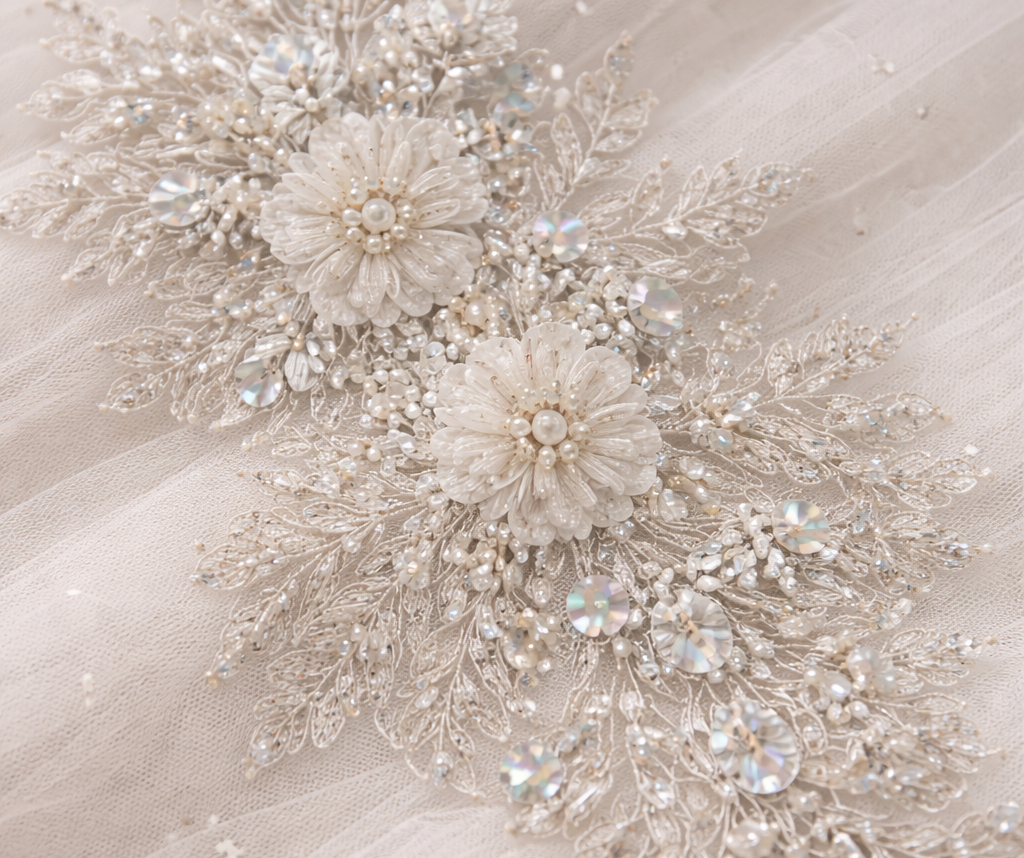
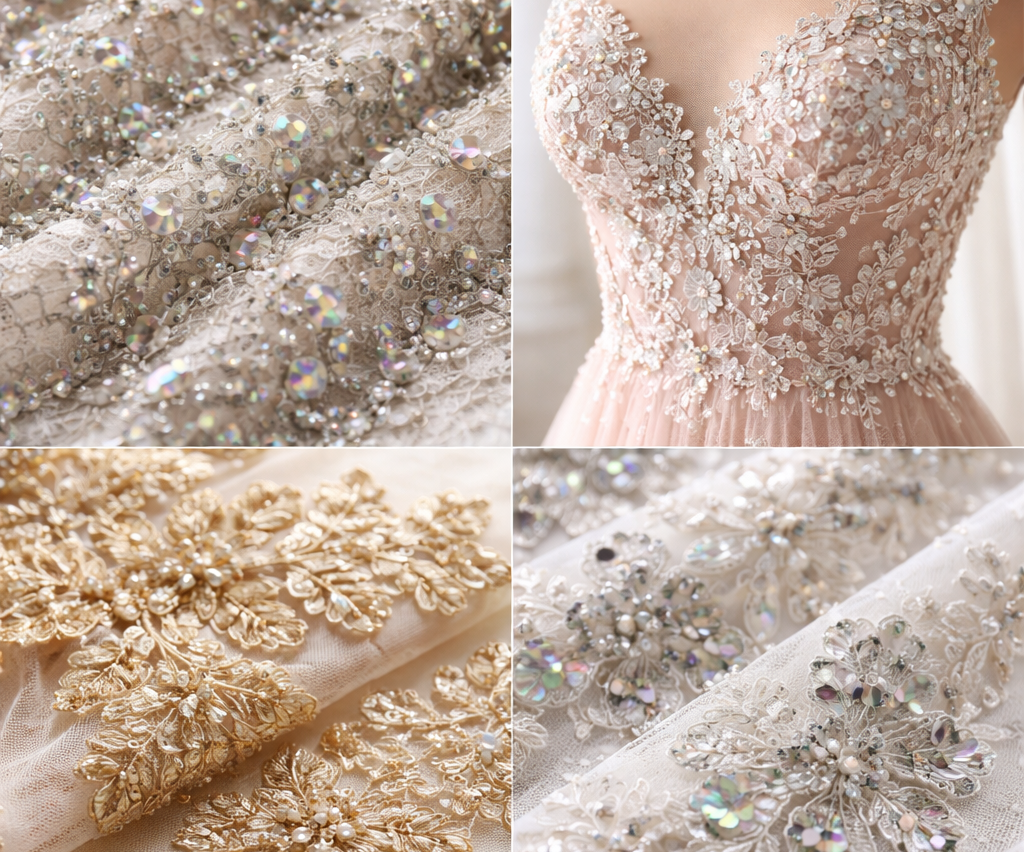
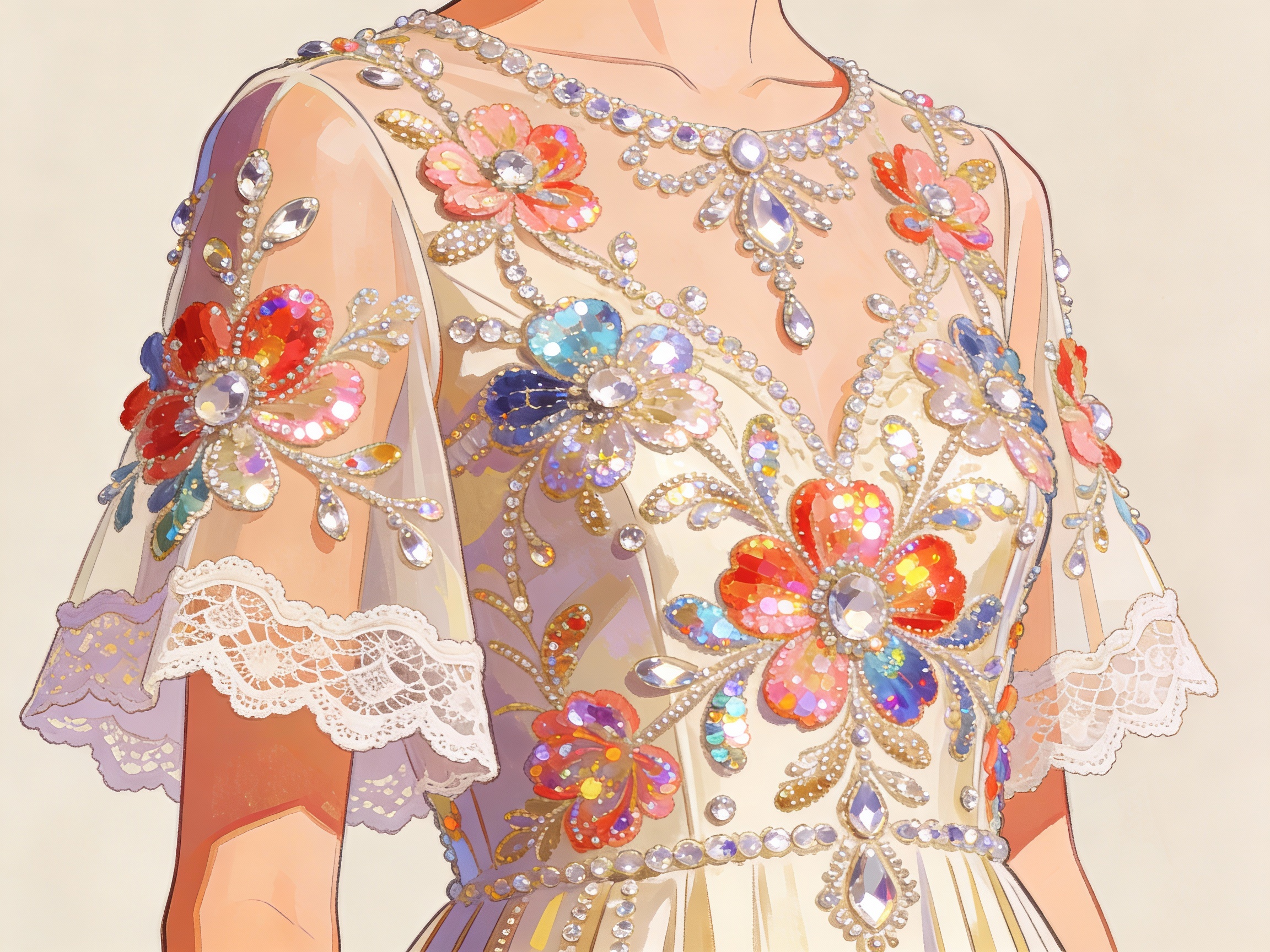
Beaded appliques are small fabric patches decorated with beads and stitched to a base material like mesh, net, or fabric. Rhinestone and sequin appliques use crystals or sequins to add sparkle and brightness.
They can be:
Hand-sewn
Machine-stitched
Heat-fixed (for some rhinestone styles)
These are commonly used on dresses, gowns, lehengas, jackets, blouses, and even footwear.
What Are Lace Borders?
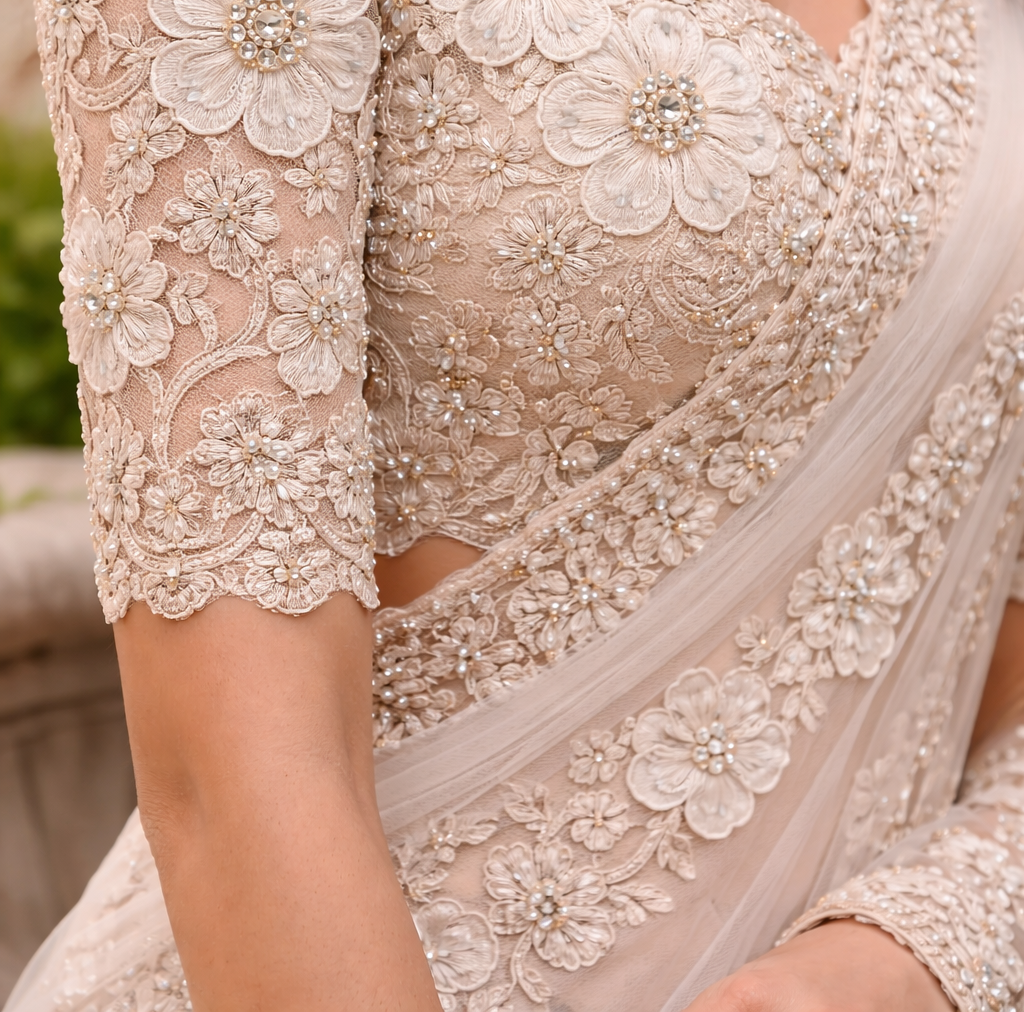
Lace borders are decorative trims that are attached along edges such as sleeves, necklines, hems, dupattas, and veils. They can be made from:
Cotton lace
Nylon lace
Embroidered lace
Beaded lace
Lace borders help shape the look of a garment and add a neat, elegant finish without heavy embroidery.
Features and Benefits
Faster Production
Using ready-made beaded appliques saves many hours of embroidery work. Factories can directly attach them, reducing production time by up to 30–40% according to garment audit studies.Cost Control
Instead of decorating the whole fabric, placing rhinestone and sequin appliques only in selected areas reduces labor costs while keeping a high-end look.Design Flexibility
Appliques and lace borders can be combined in many creative ways. Designers can test different patterns on the same fabric without changing the overall design.Easy Customization
Small brands and boutique labels use appliques to make limited-edition designs. Changing the placement instantly gives a fresh new look.High Visual Impact
Shiny and textured details attract more attention, both online and in stores. Products with decorative details often perform better in photos and videos.Used Across Many Categories
These decorations are used not only in bridalwear but also in:
Party dresses
Ethnic wear
Kids clothing
Dance costumes
Accessories
Less Need for Skilled Workers
Appliques make it possible for less-experienced workers to achieve detailed designs with basic training. This is especially useful in large factories.
Real-World Examples and Industry Use
Example 1: Fast Fashion Eveningwear
A European fast-fashion brand used sequin appliques on simple polyester dresses. The cost per piece rose by less than $1.20, but retail prices went up by 15%. During the holiday season, sales increased by nearly 22%.
Example 2: Bridalwear in South Asia
Many bridal exporters replaced full hand embroidery with beaded appliques. This reduced production times from 8 weeks to 5 weeks, keeping the handcrafted look buyers wanted.
Example 3: Lace Borders in Ethnic Wear
An Indian ethnicwear brand used embroidered lace borders instead of full zari embroidery. Fabric waste went down by 18%, and production became more consistent.
Example 4: Small Boutique Brands
Independent designers often use rhinestone and sequin appliques to upgrade ready-made outfits. It gives them a premium finish without heavy investment in embroidery infrastructure.
How to Choose the Right Appliques and Lace Borders
Match applique weight with fabric strength.
Use soft lace for lightweight fabrics.
Test washing before bulk production.
Check bead and sequin colorfastness.
Ensure durable stitching to prevent bead loss.
FAQs
1. Are beaded appliques durable?
Yes. High-quality appliques are built to handle normal wear and tear. For heavy use, stronger stitching is recommended.
2. Can rhinestone and sequin appliques be washed?
Most are safe for hand washing or dry cleaning. Always test before production and include care instructions.
3. Are lace borders only for traditional wear?
No. Lace borders are now used in western outfits like skirts, tops, and even home items.
4. Do appliques increase garment costs a lot?
Not really. Using them smartly adds value while keeping costs under control.
5. Can appliques be removed or replaced?
Yes. Many designers move or replace appliques during sampling to perfect the final piece.
6. Are these suitable for bulk production?
Yes. Many factories prefer ready-made appliques and lace trims for faster and more accurate results.
Conclusion
In today’s fashion world, details make all the difference. Plain outfits struggle against decorated ones. Beaded appliques, rhinestone and sequin appliques, and lace borders offer simple ways to add value and style.
They help brands save time, control expenses, and make their designs more appealing. From small studios to large manufacturers, these decorations speed up production and improve sales.
Used creatively, appliques and lace borders transform plain fabrics into standout fashion pieces. They are not just accessories — they are smart design tools for modern brands.