Introduction: The Common Craft Problem
Imagine this.
You finish a dress panel or a cushion cover. The base fabric looks fine. The stitching is neat. But something still feels off. The design looks flat. It does not stand out. You add a few beads, but after two washes, some fall off. You try sequins, but the shine looks weak under normal light.
Many crafters face this problem. Flat designs do not sell well. Loose embellishments lead to returns. Customers complain that beads drop or threads break. For small businesses and home crafters, this hurts time, money, and trust.
Textile supplier reports show that nearly 30% of customer complaints in handmade fashion relate to embellishment damage, not fabric issues. That is a big deal.
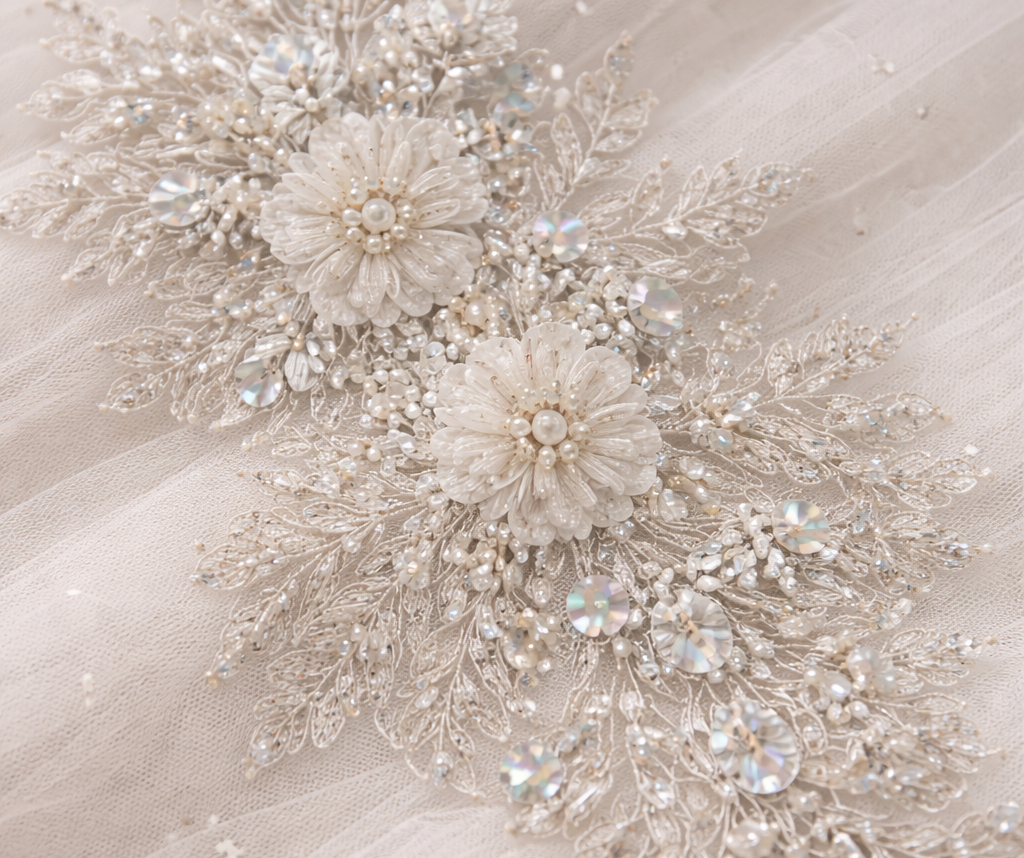
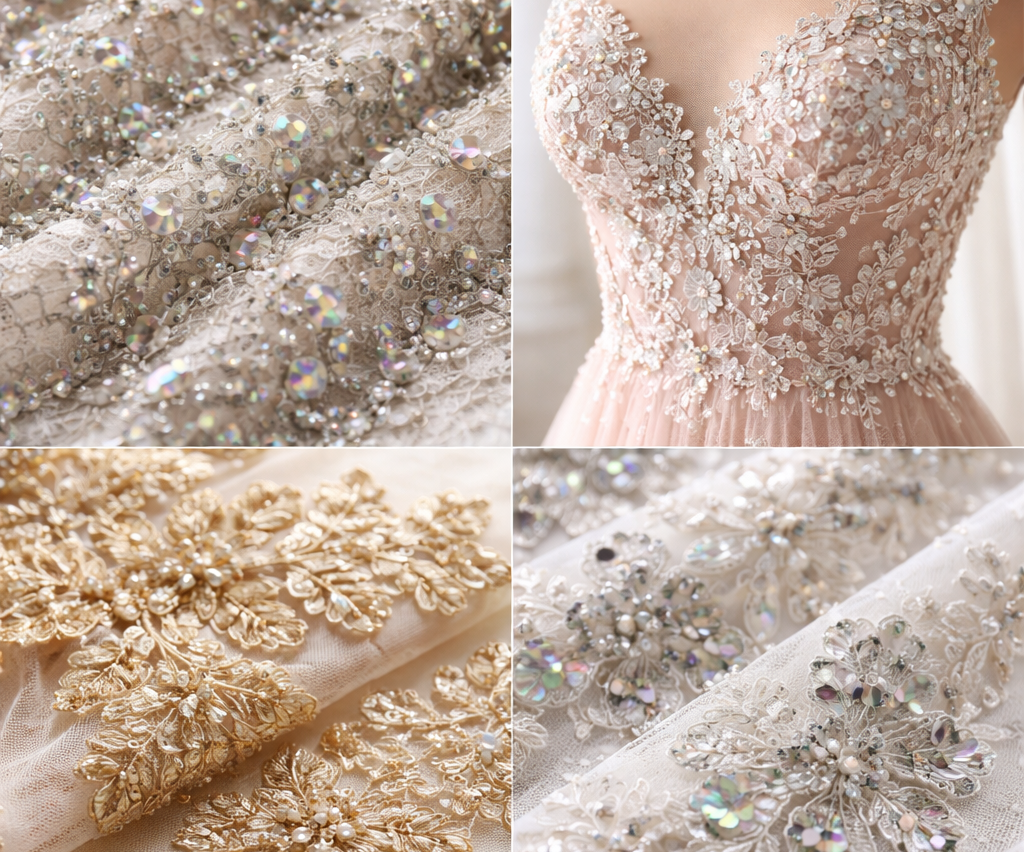
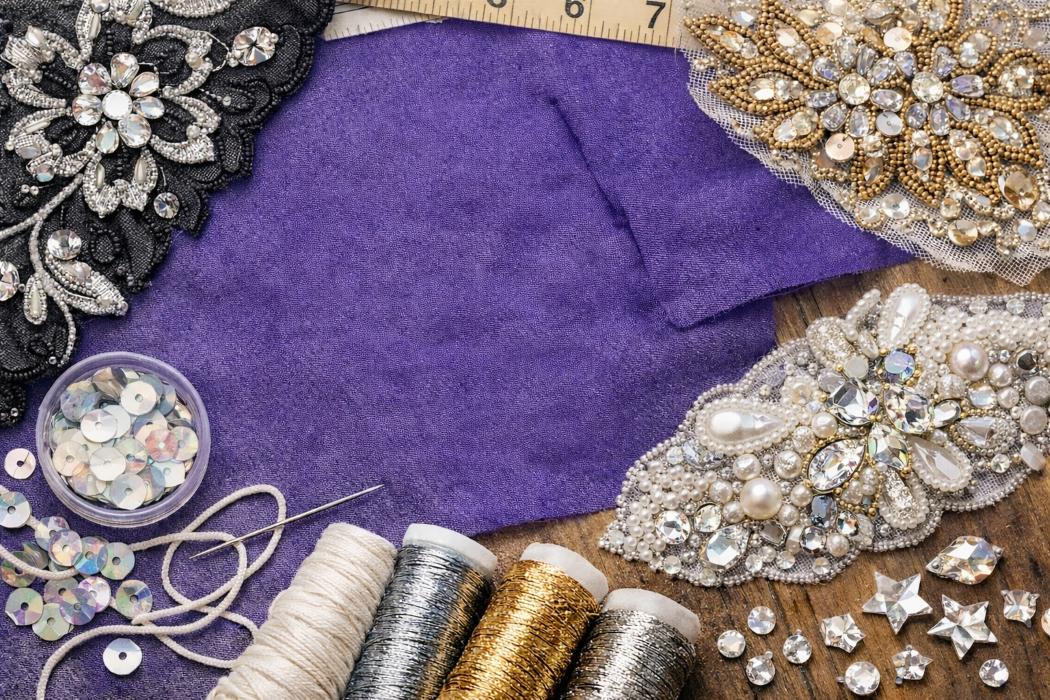
This is where corded embroidery, sequin appliques, beaded appliques, and rhinestone appliques step in. These are not fancy add-ons. They are practical tools that fix real problems. When used right, they add structure, shine, and strength—without making work harder.
Let’s break it down, step by step.
Features: How These Embellishments Solve the Problem (PAS)
The Problem: Flat Designs and Weak Hold
Most basic embroidery uses flat thread. Standard cotton embroidery thread has an average tensile strength of around 2.5–3 kg. That is fine for surface stitching, but not enough to hold beads or heavy sequins for long-term use.
Flat embroidery also absorbs light instead of reflecting it. This makes designs look dull, especially on dark fabrics.
Loose beads happen because many crafters stitch them with single-thread passes. One break, and the bead is gone.
The Agitate: How This Hurts Sales and Projects
Let’s talk real impact.
-
Products look plain next to machine-made items
-
Beads fall off during shipping or washing
-
Customers lose trust and do not reorder
-
Time is wasted on repairs and refunds
A small online seller shared that 1 in 4 returned items were due to embellishment damage. That is lost money and effort.
If your design cannot survive wear, wash, or light pulling, it cannot survive the market.
The Solution: Stronger Structure with Corded, Sequin & Beaded Appliques
Here is how these materials fix the issue.
Corded Embroidery
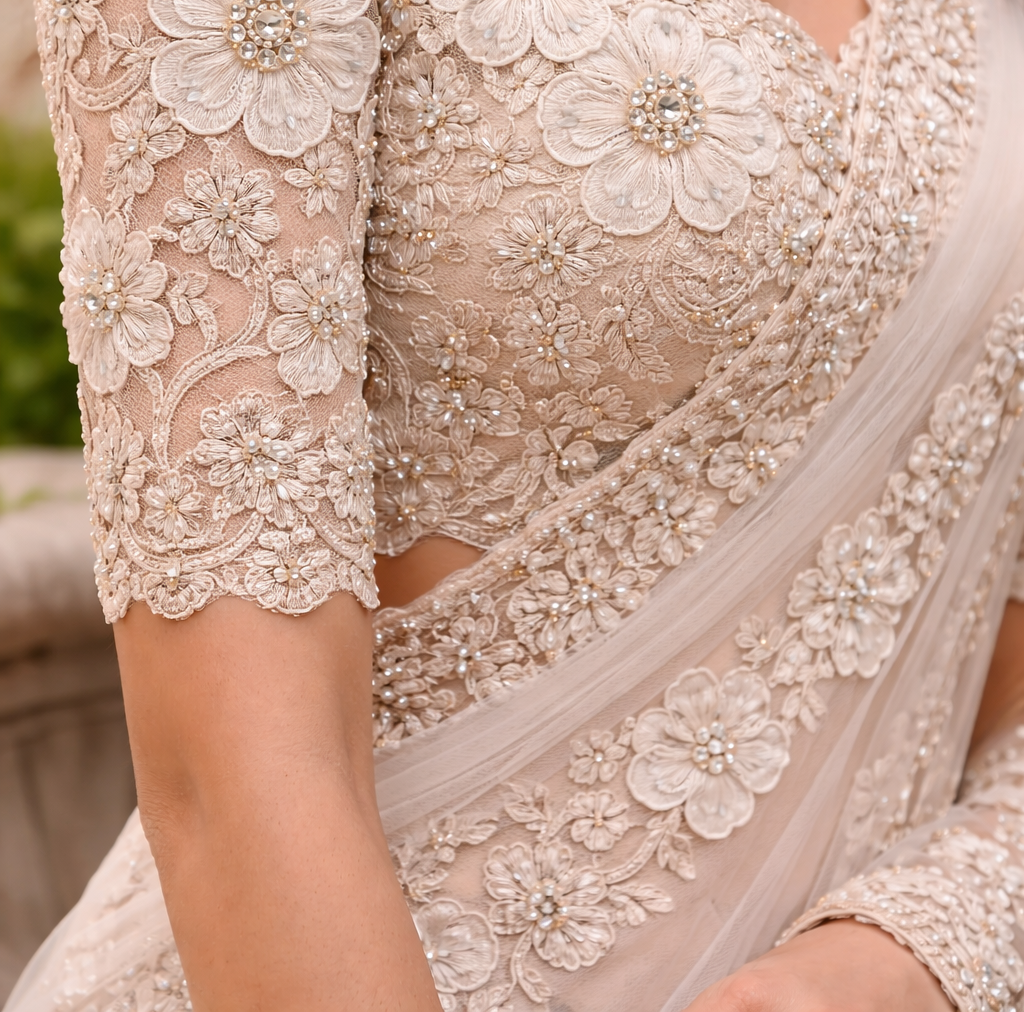
Corded embroidery uses a raised cord stitched onto fabric, then covered or outlined with thread.
Why it works:
-
Polyester or rayon cords have tensile strength of 5–7 kg, more than double regular embroidery thread
-
Raised lines add depth, making patterns visible from distance
-
The cord acts like a backbone for the design
Pros
-
Strong and long-lasting
-
Adds shape without heavy weight
-
Great for borders, florals, and outlines
Cons
-
Needs steady stitching
-
Slightly slower than flat embroidery
Sequin Appliques
Sequin appliques are pre-arranged sequins stitched onto a fabric base.
Why they work:
-
Factory-stitched sequins are often attached with lock stitching, reducing fall-off
-
PET sequins have heat resistance up to 120°C, suitable for regular washing
-
Appliques spread weight across fabric instead of single stitch points
Pros
-
Even shine
-
Faster application
-
More secure than loose sequins
Cons
-
Needs correct placement planning
Beaded Appliques
Beaded appliques combine glass or acrylic beads sewn onto mesh or fabric.
Why they work:
-
Glass beads have high abrasion resistance
-
Applique backing absorbs stress instead of the main fabric
-
Multiple anchor points reduce break risk
Pros
-
Strong hold
-
Rich texture
-
Ideal for high-use items
Cons
-
Slightly heavier
Rhinestone Appliques
Rhinestones add shine without the weight of glass beads.
Why they work:
-
Acrylic rhinestones are 30–40% lighter than glass
-
Hotfix rhinestones bond at molecular level when applied correctly
-
Reflect more light than flat sequins
Pros
-
Lightweight
-
High shine
-
Wash-safe when bonded right
Cons
-
Needs correct heat or adhesive control
Real-World Examples: What Actually Happened
Example 1: Home Crafter Making Cushion Covers
A home-based crafter selling cushion covers online faced frequent complaints. Flat embroidery looked dull in photos.
She switched to corded embroidery for outlines and added small sequin appliques in the center motifs.
Result:
-
Orders increased by 28% in 3 months
-
No embellishment-related returns
-
Better product photos due to raised texture
Example 2: Small Boutique Fashion Seller
A small women’s wear brand used loose beads on kurtas. After washing, beads fell off.
They moved to beaded appliques stitched at stress points and added rhinestone appliques for highlight areas.
Result:
-
Return rate dropped by 35%
-
Repeat customers increased
-
Higher pricing accepted by buyers
Example 3: Craft Fair Jewelry and Accessories Seller
This seller made fabric clutches. Flat thread embroidery did not stand out at stalls.
They added sequin appliques with corded embroidery borders.
Result:
-
Sales per event increased by 40%
-
Faster production time
-
Better durability during handling
FAQs: Common Questions Crafters Ask
1. Are corded embroidery designs washable?
Yes. When stitched properly, they handle regular hand and gentle machine wash.
2. Do sequin appliques fall off easily?
No. Pre-stitched appliques are more secure than loose sequins.
3. Which is stronger: beads or rhinestones?
Beads are stronger for long use. Rhinestones are lighter and shinier.
4. Can beginners use appliques?
Yes. Appliques are beginner-friendly and reduce stitching work.
5. Are rhinestones safe for kids’ clothing?
Only stitched or properly bonded ones should be used.
6. Do these increase product cost?
Yes, slightly. But higher durability allows higher pricing.
7. Can I mix all three in one design?
Yes. Many strong designs use cords for structure, beads for depth, and rhinestones for shine.
Conclusion: What to Do Next
If your designs feel flat, the issue is not your skill. It is the structure.
Corded embroidery gives strength and shape.
Sequin appliques add controlled shine.
Beaded appliques improve durability.
Rhinestone appliques lift visual value without weight.
Start small. Test one design. Add corded outlines. Replace loose beads with appliques. Track customer response.
One crafter tried it and saw the difference in weeks. You can too.
Strong designs last longer. And lasting designs sell better.