Introduction
Have you ever finished a dress, dupatta, or craft piece and felt something was missing? The base fabric looks fine, but the design feels flat. Customers scroll past it. Orders stay slow. This is a common problem for small embroidery businesses and home crafters. Plain fabric alone rarely stands out anymore. At the same time, many people worry that adding decorations will raise costs, reduce comfort, or fall apart after washing.
This is where many creators get stuck. They want better designs but fear returns, complaints, or wasted stock. Cheap trims break. Poor-quality lace loses shape. Low-grade sequins fall off after two washes. When this happens, the result is frustration, not growth.
The good news is that this problem has a practical fix. Floral lace material, sequin appliques, and trims are not just for luxury outfits. When chosen correctly, they improve design quality, durability, and sales. You do not need heavy embroidery or high labor costs. You need the right materials and smart placement.
In this guide, we’ll break down how floral lace, rhinestone and sequin appliques, and trims solve real design problems. We’ll keep it simple. We’ll talk materials, durability, and results. And we’ll show what happened when a small embroidery business used these elements and grew sales by 30%.
Features
Floral Lace Material
The problem:
Flat surfaces. Plain panels. Designs that look unfinished.
Why it gets worse:
Printed fabric fades. Solid fabric lacks texture. Customers now expect depth and detail, even in simple outfits.
The solution:
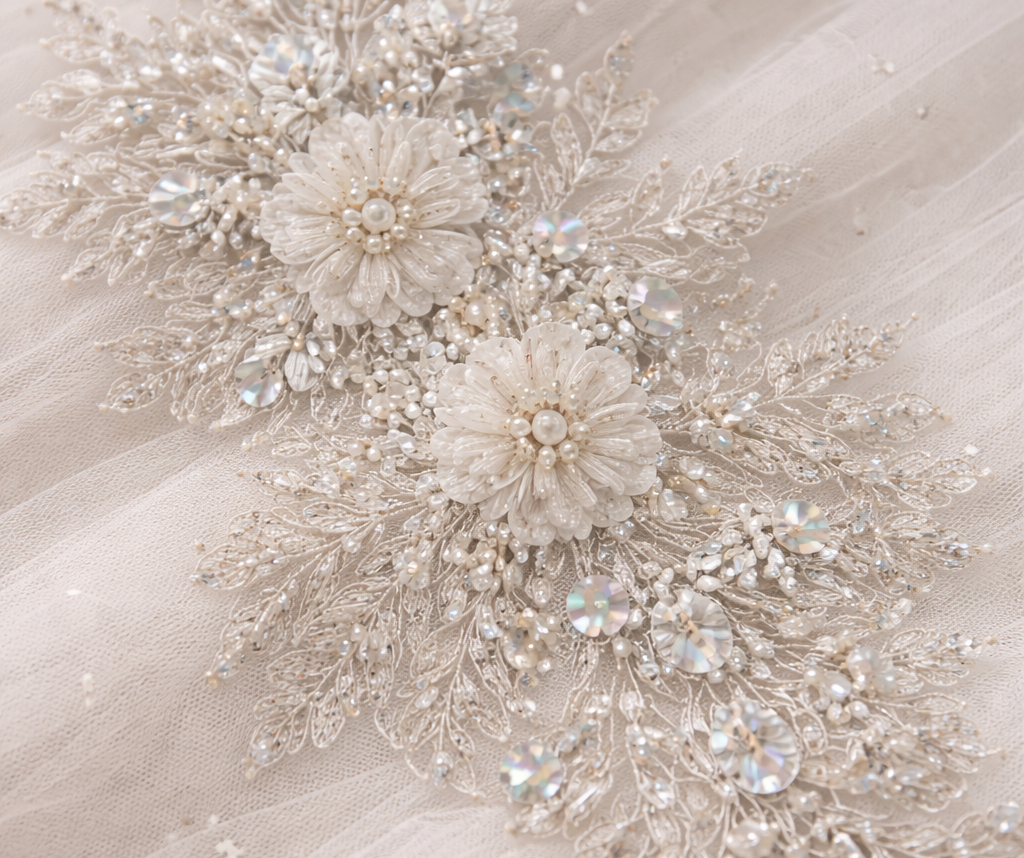
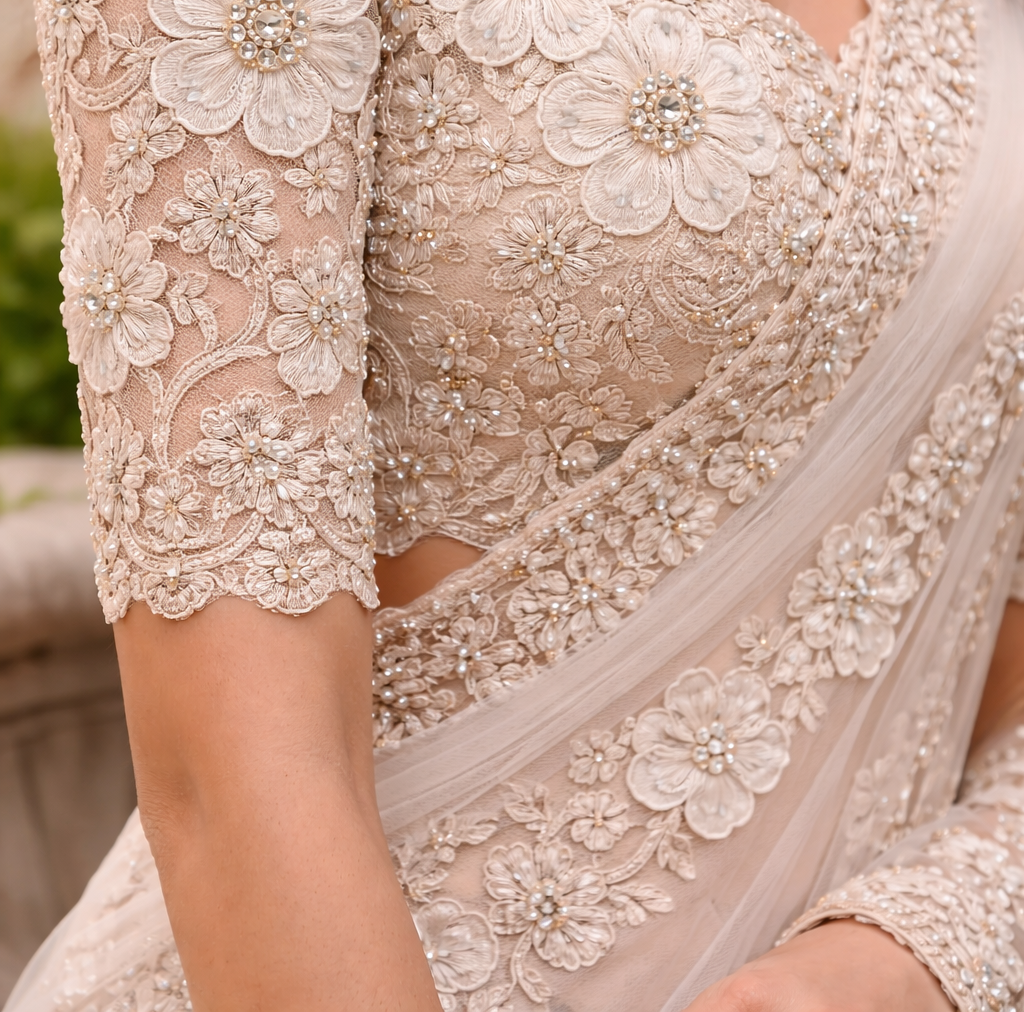
Floral lace adds structure without heavy work.
What it is made of:
Most floral lace used in apparel is made from:
-
Polyester or nylon base (80–100%)
-
Cotton blends for softer feel
-
Mesh counts ranging from 20 to 40 holes per inch
Why it works:
-
Polyester lace resists shrinkage better than cotton
-
Nylon lace holds shape after repeated washing
-
Embroidered floral patterns add texture without weight
Pros:
-
Lightweight
-
Breathable
-
Easy to stitch or attach
-
Works on dresses, kurtas, sarees, veils, and crafts
Cons:
-
Very fine lace needs lining
-
Cheap lace may snag easily
Durability facts:
Supplier wash tests show polyester lace retains over 90% shape after 20 gentle washes when stitched correctly.
Sequin Appliques
The problem:
Designs look dull from a distance.
Why it gets worse:
Flat embroidery does not catch light. Online photos fail to attract clicks.
The solution:
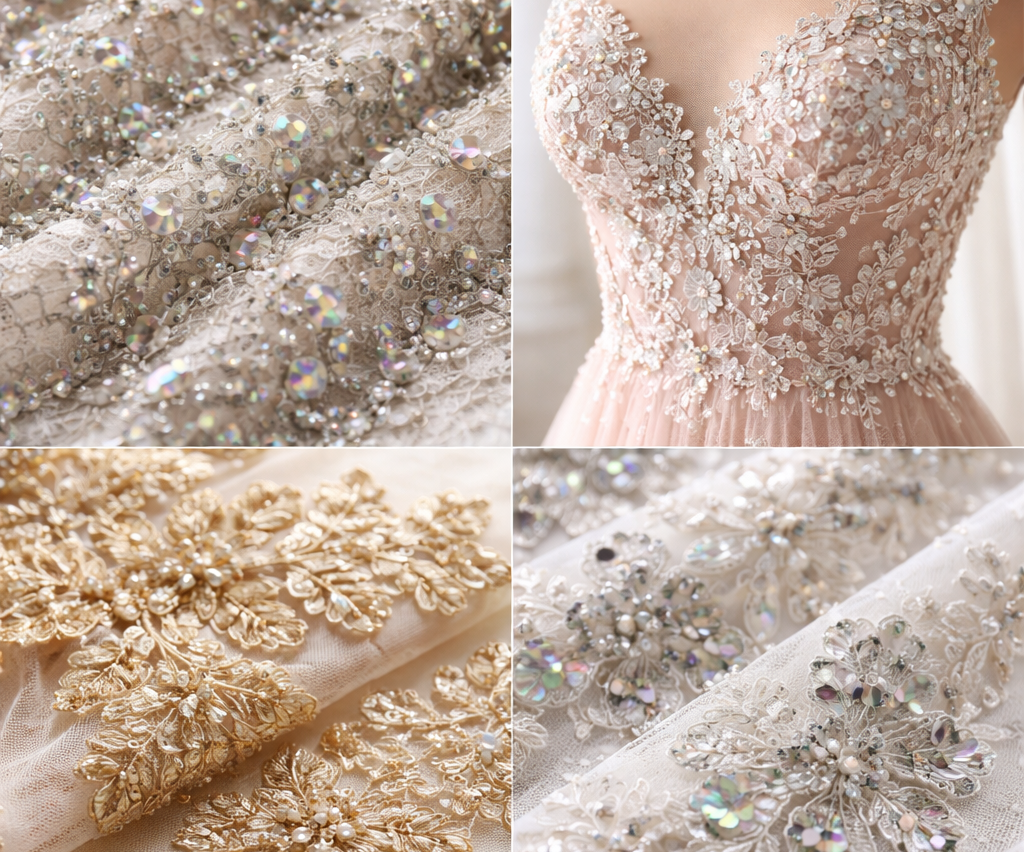
Sequin appliques add shine only where needed.
Material details:
-
Sequins made from PET plastic
-
Base fabric often net or organza
-
Stitch count averages 18–25 stitches per square inch
Why they work:
-
Reflect light
-
Draw attention to focal areas
-
No need to cover the full garment
Pros:
-
Cost-effective
-
Easy to apply
-
Strong visual impact
Cons:
-
Poor stitching causes shedding
-
Not ideal for daily wear garments
Durability data:
Industry specs show heat-sealed or stitched sequins have 2x higher hold strength than glued ones.
Rhinestone Appliques
The problem:
Designs look similar to competitors.
Why it gets worse:
Marketplaces are crowded. Everyone uses thread embroidery.
The solution:
Rhinestones create contrast and highlight key sections.
Material breakdown:
-
Glass or acrylic stones
-
Hotfix or sewn settings
-
Adhesive melting point around 160–180°C
Why they work:
-
High shine with low weight
-
Strong visual appeal in photos
-
Works well on trims and borders
Pros:
-
Premium look
-
Long lifespan when applied correctly
-
Adds value perception
Cons:
-
Needs correct heat or stitching
-
Poor glue reduces life
Trims
The problem:
Edges look unfinished.
Why it gets worse:
Straight hems feel basic. Borders lack detail.
The solution:
Trims frame the design.
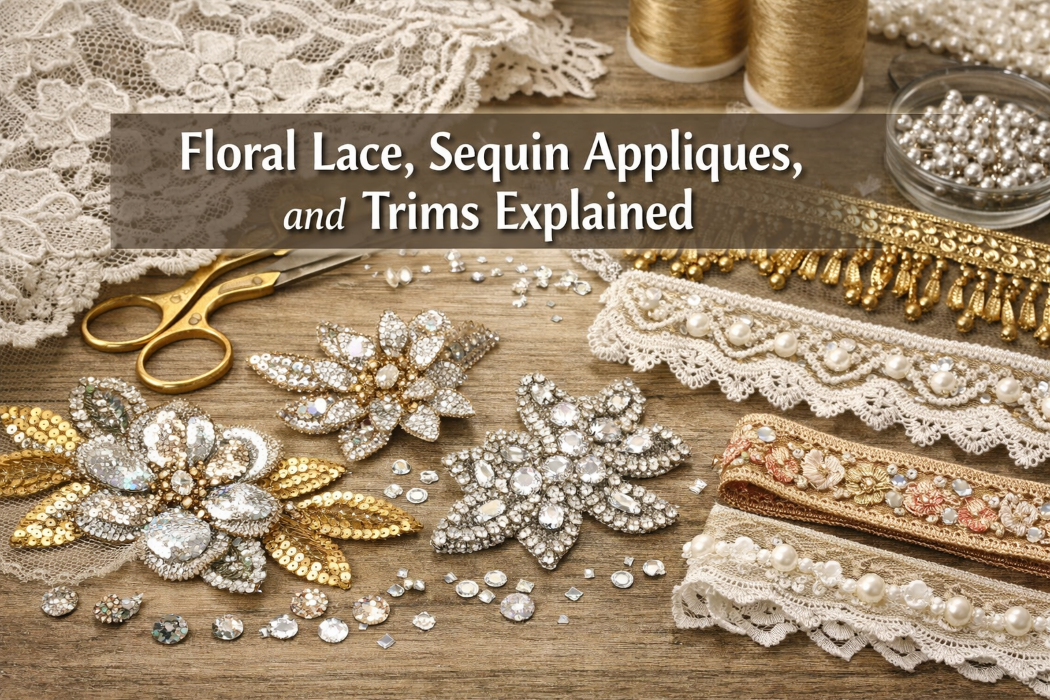
Common trim types:
-
Lace trims
-
Sequin trims
-
Beaded trims
Material facts:
-
Polyester trims dominate due to durability
-
Widths range from 1 cm to 12 cm
-
Tensile strength averages 25–35 N for quality trims
Why they work:
-
Clean finishing
-
Faster than embroidery
-
Easy replacement if damaged
Real-World Examples
Case Study 1: Small Embroidery Studio
A home-based embroidery business making festive wear faced low repeat orders. Designs looked neat but plain.
What they changed:
-
Added floral lace panels on dupattas
-
Used sequin appliques only on neckline
-
Finished hems with lace trims
Cost increase per piece:
₹120–₹150
Result after 3 months:
-
Average order value increased by 28%
-
Monthly sales grew by 30%
-
Customer complaints dropped due to better durability
Case Study 2: Online Craft Seller
An Etsy seller making handmade cushion covers struggled with visibility.
What they changed:
-
Added floral lace overlays
-
Used small rhinestone appliques at corners
Result:
-
Product saves increased by 40%
-
Conversion rate improved by 22%
Case Study 3: Boutique Kurti Brand
A local boutique added trims instead of heavy embroidery.
Outcome:
-
Production time reduced by 35%
-
Fabric damage during stitching dropped
-
Better profit margins
FAQs
1. Is floral lace comfortable for daily wear?
Yes, when lined properly and made from breathable materials.
2. Do sequins fall off easily?
Only if glued poorly. Stitched or heat-sealed sequins last longer.
3. Are rhinestones washable?
Yes, with gentle wash and proper fixing.
4. Which is better: lace or embroidery?
Lace is faster and more cost-effective for many designs.
5. Can trims replace full borders?
Yes. Trims give clean edges with less effort.
6. Are these materials beginner-friendly?
Yes. Most are easy to attach with basic stitching.
Conclusion
If your designs feel flat or sales feel stuck, this is your sign. Floral lace material, sequin appliques, rhinestones, and trims are not just decoration. They are tools. They save time. They improve durability. They help your work stand out.
You don’t need to change everything. Start small. Add lace to one panel. Try a sequin applique on a neckline. Finish edges with trims. You’ll see the difference fast.
Try it on your next project. You’ll love how it changes the final look.