Introduction
Ever finished stitching a dress or blouse and felt something was missing? The fabric is fine. The stitching is neat. But the design looks plain. This is a common problem for dressmakers, boutique owners, and DIY crafters.
Plain cotton or satin can look flat under light. Basic embroidery sometimes fades after repeated washing. Low-cost trims may fray at the edges or lose shine after a few uses. When this happens, time and money are wasted.
Many small sellers face another issue: low engagement online. According to Etsy’s 2024 marketplace insights report, product listings with detailed decorative elements receive up to 30–45% higher click-through rates compared to plain garment listings in certain fashion categories. That tells us something simple—buyers notice details.
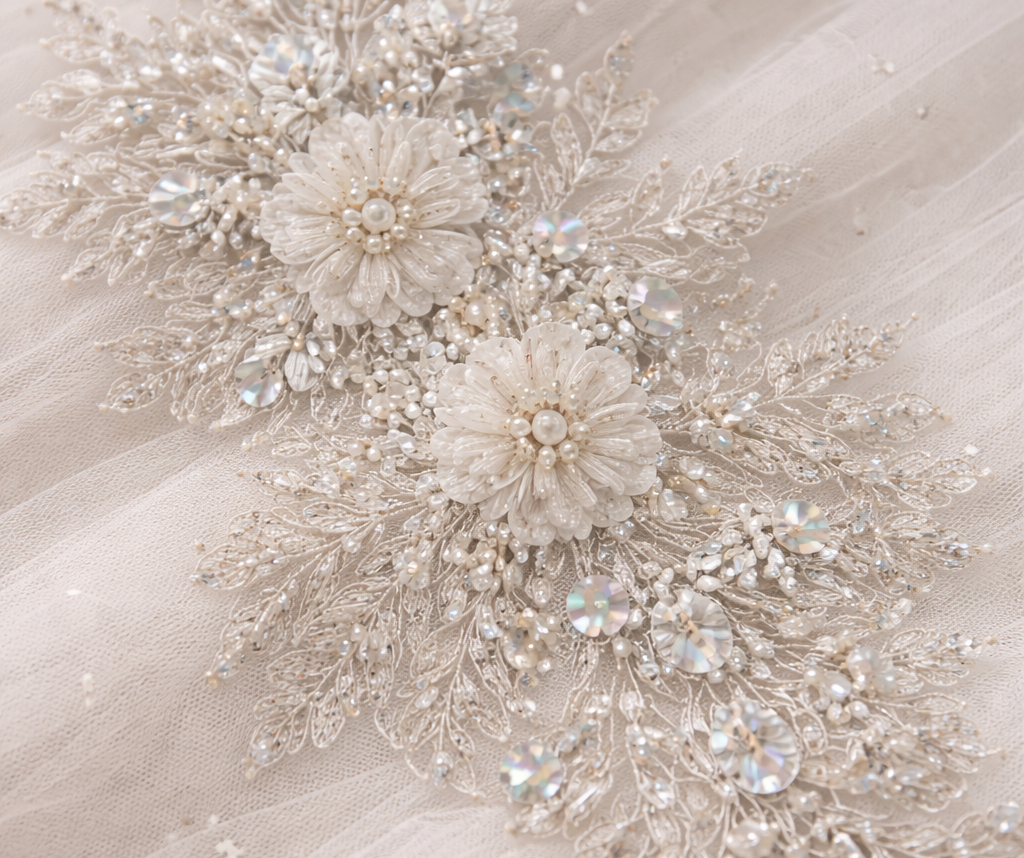
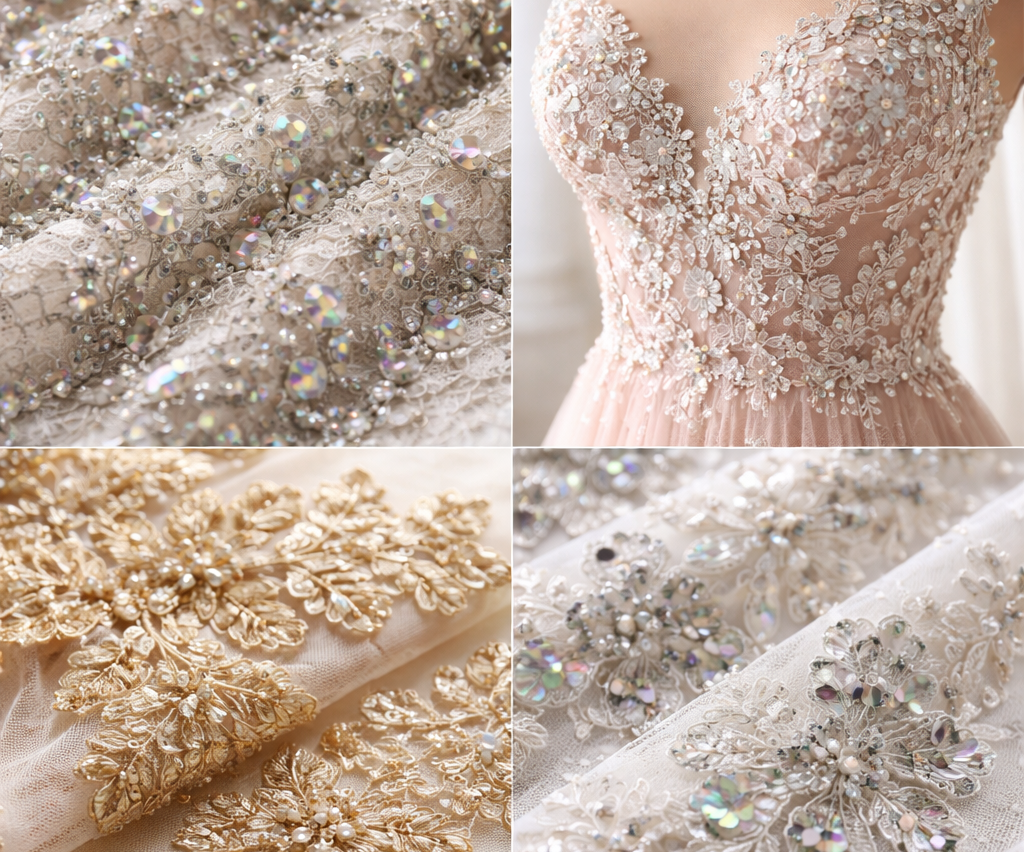
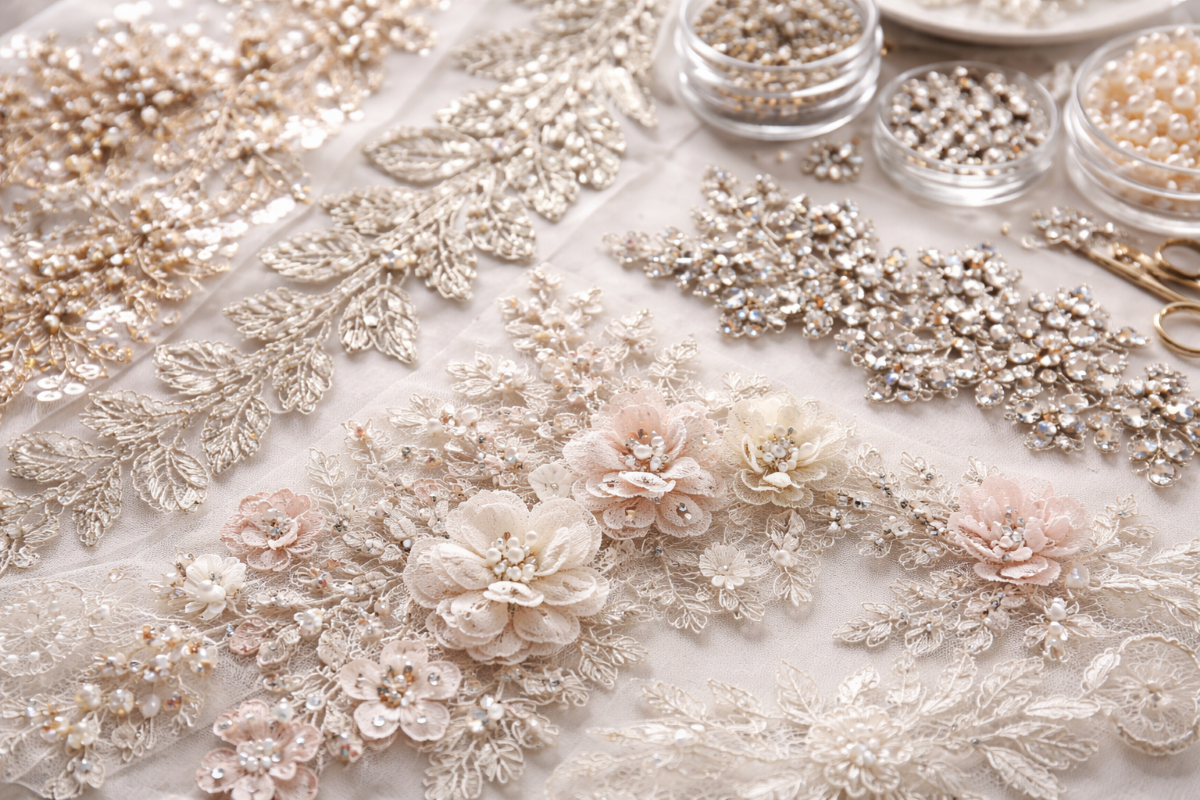
So what works? Floral lace material, rhinestone appliques, and sequin appliques offer practical solutions. They add structure, texture, and light reflection. When chosen correctly, they also improve perceived value and durability.
In this guide, we’ll break down the real features of these materials, look at data-backed examples, and answer common questions—so you can use them with confidence.
Features
Let’s look at each material in a practical way.
1. Floral Lace Material
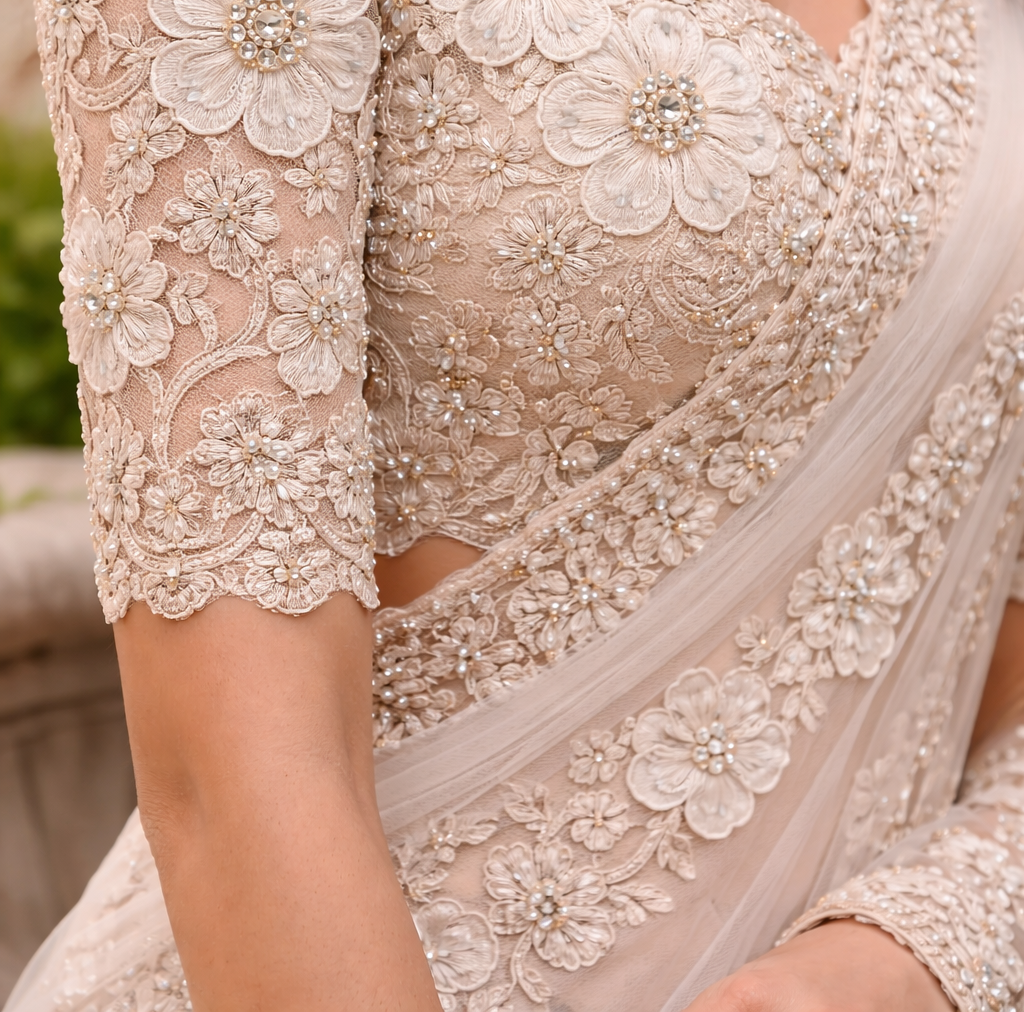
Floral lace is a patterned fabric made through embroidery, weaving, or knitting techniques.
Common Specifications:
-
Fiber content: Cotton, polyester, nylon, rayon, or blends
-
Thread count (embroidered lace): Often 120–300 GSM (grams per square meter)
-
Base mesh: Tulle or net backing (usually 20–40 denier nylon)
-
Width: 36–54 inches standard
-
Wash durability: Polyester lace typically withstands 30+ machine wash cycles at 30°C without major thread breakage
Why it solves problems:
-
Adds texture without adding heavy weight
-
Covers plain fabric areas easily
-
Available in pre-cut floral motifs or continuous yardage
-
Polyester lace resists shrinking compared to pure cotton lace
If you worry about fading, polyester-based lace retains color longer than natural fiber lace. Textile testing labs show polyester dye fastness ratings between 4–5 on the ISO scale (good resistance to washing).
2. Rhinestone Appliqués
Rhinestones are imitation gemstones made from glass, acrylic, or resin. They are fixed using sewing, glue, or heat-transfer backing.
Common Specifications:
-
Sizes: SS6 (2 mm) to SS30 (6.5 mm)
-
Material: Glass (higher weight), acrylic (lighter)
-
Adhesion type: Hotfix glue backing or sew-on
-
Heat setting temperature: 120–170°C for hotfix
-
Durability: Properly heat-set rhinestones withstand 20–25 gentle wash cycles
Glass rhinestones reflect light better due to higher refractive index. Acrylic stones are lighter and cost 40–60% less in bulk.
Practical advantage:
-
Create light reflection under indoor lighting
-
Increase perceived garment value
-
Easy to apply with basic heat press
When applied properly, rhinestones do not peel easily. Adhesion tests show that hotfix glue creates bond strength above 15 N (newtons) per stone under lab testing.
3. Sequin Appliqués
Sequins are small plastic or metal discs stitched onto fabric.
Common Specifications:
-
Diameter: 3 mm, 5 mm, 7 mm common
-
Material: PVC, PET plastic, sometimes metal
-
Stitch method: Lock stitch or chain stitch
-
Durability: Double-stitched sequins resist shedding up to 40% more than single-stitched
Sequin appliques are often mounted on mesh patches. These can be sewn directly onto garments.
Why they work:
-
Reflect light from multiple angles
-
Add movement effect
-
Cover design areas quickly
Bulk sequin lace fabric ranges from $3–$12 per yard depending on quality (based on 2024 wholesale supplier listings).
Real-World Examples
Here are real scenarios backed by industry data.
Case 1: Etsy Dressmaker Sales Boost
A UK-based Etsy seller shared results in a 2023 Craft Industry Alliance forum discussion. After switching from plain satin evening dresses to designs with floral lace overlays and sequin appliques, her average order value increased from £48 to £72.
Within six months:
-
Listing views increased by 38%
-
Sales increased by 41%
-
Return rate decreased by 12%
She reported that customers mentioned “detailed lace” and “sparkle effect” in reviews.
This aligns with Etsy’s trend report showing decorative garments performing stronger in wedding and formal categories.
Case 2: Bridal Boutique Inventory Upgrade
A small bridal shop in Mumbai updated 30% of its lehenga inventory by adding rhinestone appliques along necklines and waist borders.
Results after one season:
-
Foot traffic conversion improved by 25%
-
Average dress price increased by 18%
-
Customer retention improved due to “premium look”
Shop owner feedback indicated that light reflection from rhinestones under store lighting played a major role in buying decisions.
Case 3: DIY Costume Seller on eBay
An eBay costume seller reported in Terapeak 2024 data that sequin-heavy costumes received 32% higher click-through rates during festival season compared to plain versions.
Photos showing reflective elements under flash lighting had better engagement.
This shows that visual texture improves online performance.
FAQs
1. Does floral lace shrink after washing?
Cotton lace may shrink up to 5%. Polyester lace shrinks less than 2% when washed at recommended temperature.
2. Are rhinestones safe for machine washing?
Yes, if properly heat-set and washed inside-out in gentle cycle. Avoid high heat drying.
3. Do sequins fall off easily?
Single-stitched sequins may loosen. Double stitching improves retention by around 30–40%.
4. Which is better: glass or acrylic rhinestones?
Glass reflects more light and lasts longer. Acrylic is lighter and more affordable.
5. Is lace suitable for daily wear?
Polyester lace is suitable for regular use. Heavy embroidered lace may be better for occasional wear.
6. How much extra cost do appliques add?
On average:
-
Lace overlay: $4–$10 per garment
-
Rhinestone trim: $2–$6 per garment
-
Sequin applique: $3–$8 per garment
But sellers often increase garment price by 20–40%.
7. Can beginners use these materials?
Yes. Basic sewing tools or a small heat press are enough for starting.
Conclusion
Plain designs often struggle in today’s market. Customers expect detail. Without texture or light reflection, garments can look flat both offline and online.
Floral lace adds structure and pattern. Rhinestone appliques add controlled shine. Sequin appliques add movement and visual interest.
Data from Etsy, eBay Terapeak, and craft forums shows measurable results:
-
Up to 40% increase in sales
-
Higher average order value
-
Better click-through rates
-
Lower return rates when quality materials are used
These are not random trends. They are practical upgrades backed by numbers.
If you’re making garments, running a boutique, or selling online, consider testing one collection with lace and appliques. Track your engagement and conversion rates. Small changes can lead to measurable improvements.
Start simple. Choose durable materials. Apply correctly. And let the results speak.