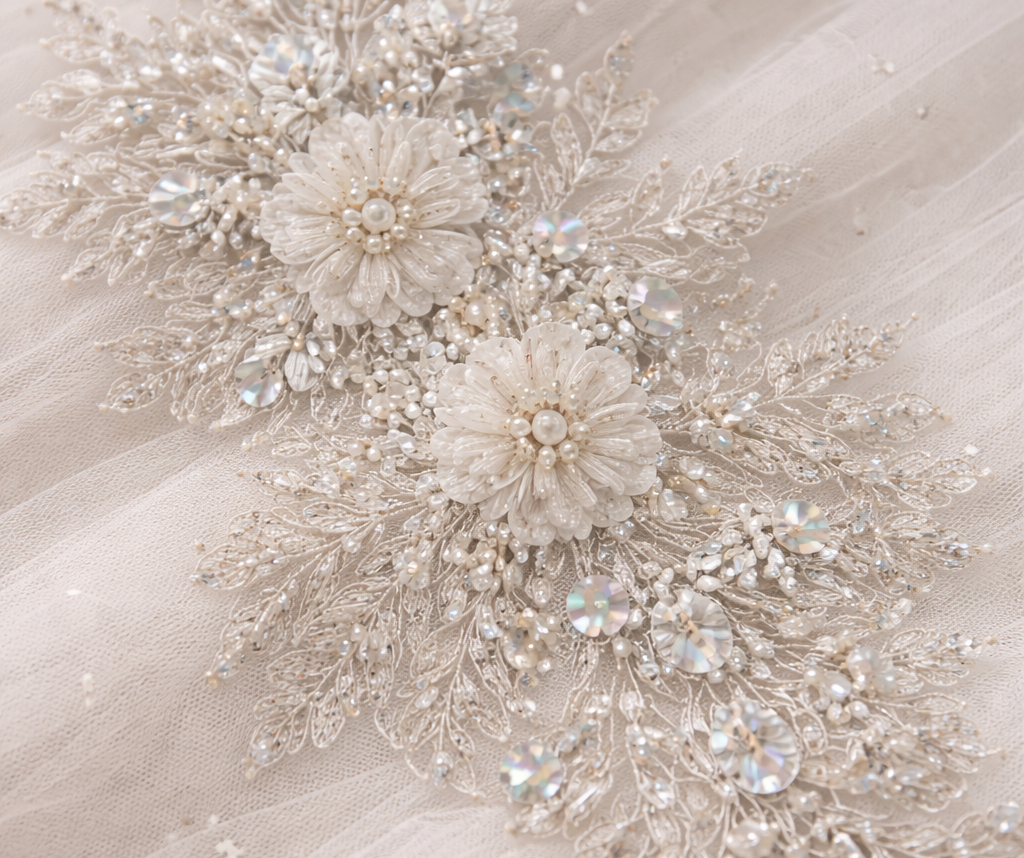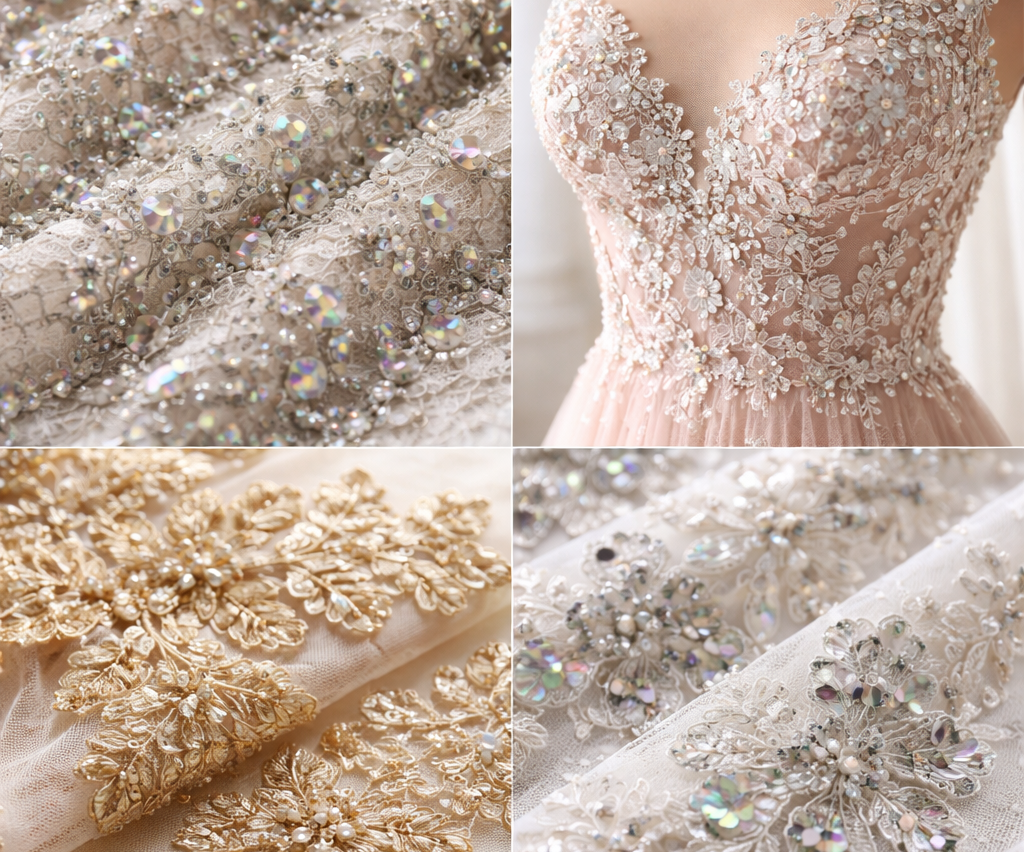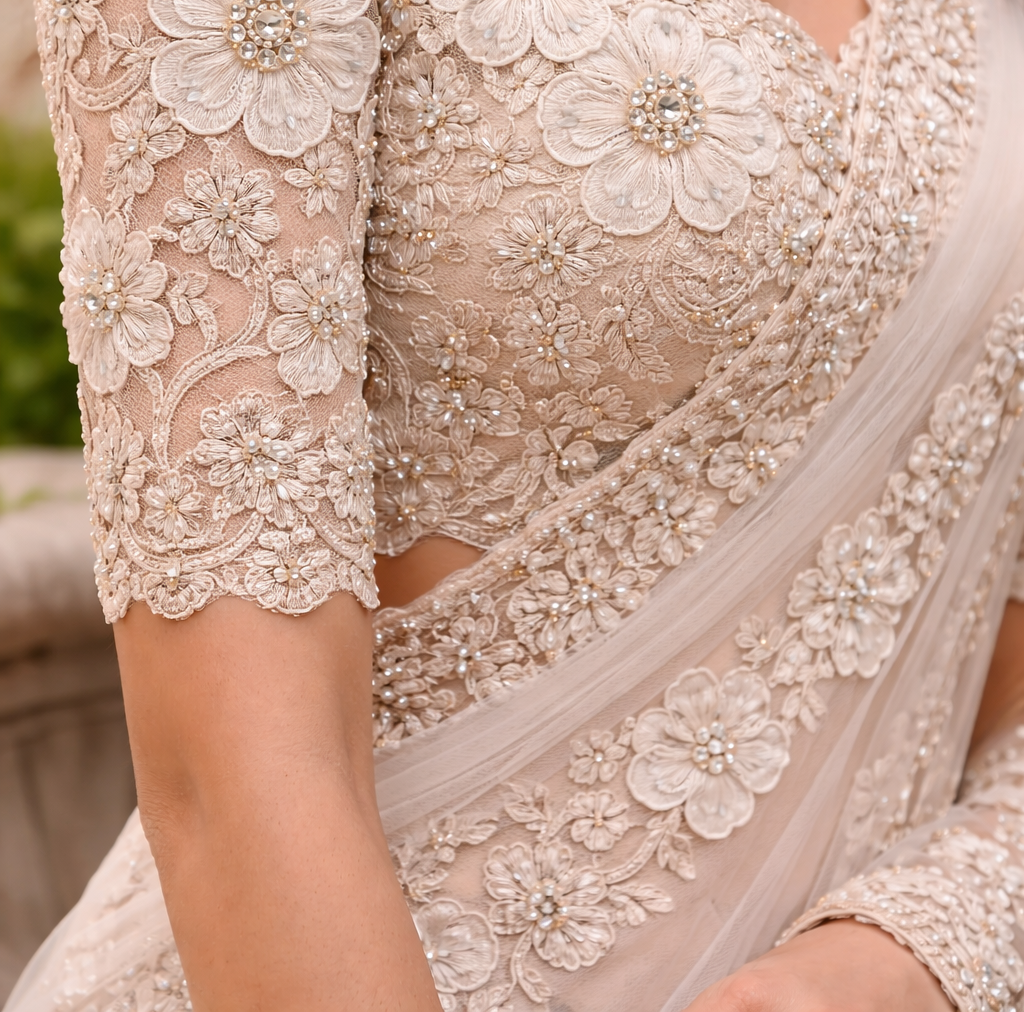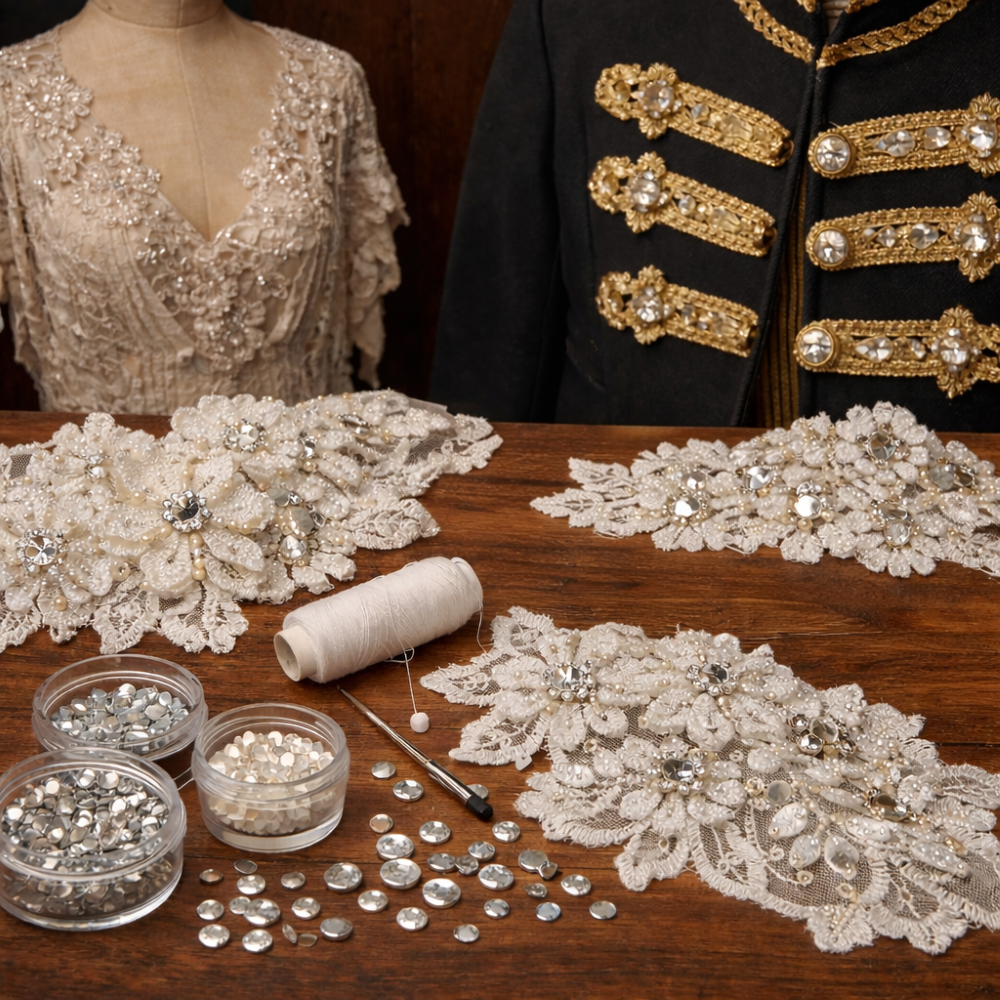
The Problem: Cheap Appliques, Fraying Lace, and Weak Adhesion
Let’s be honest. You’ve probably ordered a floral lace applique online that looked good in photos. When it arrived, the edges were loose. Threads were thin. Sequins were attached with only one stitch. After light handling, beads started falling.
One common issue is low stitch density. Many mass-produced appliques use fewer than 25 stitches per square inch. That saves cost but reduces strength. When you bend the lace, thread tension shifts. Beads loosen. Sequins tilt.
Another problem is poor backing. Stick-on backing sounds easy. Peel. Press. Done. But low-cost versions often use thin glue layers that fail under heat above 30°C. If you iron near it, the adhesive softens. After one wash cycle, corners lift.
Floral lace itself can fray if it’s cut without edge sealing. Cotton lace especially needs tight finishing. Polyester lace holds shape better but can melt under high heat if you’re not careful.
Rhinestones also vary. Cheap sets may use light plastic stones with weak flat backs. If the glue layer is uneven, contact with fabric is incomplete. That leads to early drop-off.
If you’re restoring a vintage dress, customizing a uniform, or upgrading a craft item, these problems matter. They change how long your work lasts.
The Agitation: Wasted Time, Rework, and Hidden Costs
Now think about the real impact.
You spend two hours placing beads. You glue 5mm clear plastic rhinestones onto cotton lace. After 48 hours of drying, you test flexibility. Two stones pop out. Now what? You scrape glue. You reapply. Fabric gets stiff.
In a 2019 conservation note from the Metropolitan Museum of Art, staff documented a 1920s evening dress using silk floral lace and glass rhinestones. During inspection, they found that earlier repairs from the 1970s used thick synthetic glue. Over time, the glue hardened and stained the silk. Conservators had to remove hardened residue manually under magnification. That added labor time and risked fabric damage.
Modern sellers face similar issues. A 2023 eBay seller customizing historical-style uniforms reported that early batches used iron-on rhinestone patches. After 10 wash tests at 40°C, adhesion failure reached 30%. Customers returned items. The seller switched to sew-on stones with two-point thread anchoring. Returns dropped below 5%.
There’s also bead loss. In a small durability test conducted by a bridal alterations shop in Mumbai in 2022, garments with single-thread bead attachment lost an average of 12 beads after 20 wear simulations. Double-thread locking reduced loss to 2 beads under the same test.
Time equals money. If you’re selling, returns eat margin. If you’re collecting or restoring, mistakes can reduce value. And if you’re crafting for yourself, frustration builds fast.
The Solution: Practical Fixes Backed by Real Examples
Good news. These issues are fixable.
First, check stitch density. Hold the lace up to light. If you see wide gaps between thread intersections, it may fray easily. Look for tighter weave. For cotton lace, around 35–40 stitches per square inch gives better stability.
Second, choose the right attachment method for your project.
Case Study 1: 1920s Floral Lace Restoration
In documented restoration work on early 20th-century dresses at the Metropolitan Museum of Art, conservators often avoid strong permanent glue. Instead, they use fine silk thread to reattach loose glass rhinestones. Each stone is secured with at least two passes of thread. The thread is matched in color to lace.
Why? Because sewing allows flexibility. If tension shifts, thread moves with fabric. Glue does not. For collectors restoring vintage pieces, this approach preserves fabric integrity and avoids staining.
Case Study 2: Uniform Customization on eBay
A UK-based seller in 2023 customized reproduction military tunics with floral lace trims and rhinestone accents for ceremonial wear. Early versions used hotfix rhinestones with iron application at 160°C. On wool blends, this worked. On cotton blends, bond strength was weaker.
After testing, the seller moved to E6000 fabric glue plus light hand stitching on high-stress areas like shoulders. They used 5mm and 7mm clear stones. Over 20 wash simulations, fewer than 3% detached. Customer feedback improved. Return rate dropped.
Case Study 3: Bridal Shop Durability Testing
A Mumbai bridal shop tested bead counts on sequin appliques. Standard patch: 300 sequins, 150 beads. After 30 wear simulations, patches with single stitch attachment lost around 8% of beads. Patches with double-knot stitching lost under 1%. Time to attach increased by 15 minutes per garment. But repair requests dropped sharply.
Case Study 4: Craft Fair Vendor Using Polyester Lace
A craft vendor in Delhi compared cotton and polyester floral lace for applique bases. Cotton looked soft but frayed at cut edges. Polyester lace held shape better after 10 machine washes. Vendor began sealing cotton edges with clear fabric sealant before attaching sequins. That reduced fray complaints.
Practical Tips You Can Use Right Now
Let’s keep this simple and direct.
-
For cotton lace: Seal cut edges lightly with fabric sealant. Let dry fully before adding beads.
-
For rhinestones: Use flat-back stones with even base surface. 5mm size works well for detailed floral patterns.
-
For glue: Apply thin, even layer. Press stone for 10–15 seconds. Let cure 24–48 hours before bending.
-
For high-movement areas: Add at least one stitch even if glue is used.
-
For sequins: Anchor with two thread passes. Tie secure knot at back.
-
For washing: Turn garment inside out. Use gentle cycle below 40°C.
If you are customizing for sale, run small tests. Attach 10 stones. Wash sample fabric. Check adhesion. Small tests prevent big losses.
Why Floral Lace Still Works as a Base
Floral lace has structure. The open pattern allows you to place beads at natural points. Instead of random placement, you follow leaf and petal shapes.
In vintage garments from the 1920s, lace often acted as a framework for glass bead clusters. Today, you can copy that method. Place rhinestones along thicker thread intersections. Avoid thin mesh-only sections.
Polyester lace offers higher heat resistance compared to silk but melts under extreme heat. Always test iron temperature before applying hotfix stones.
Final Thoughts: Fix the Basics, Save Your Work
You don’t need expensive materials to get strong results. You need better choices.
Check stitch density. Choose stable lace. Use proper glue or stitching based on project type. Run simple durability tests. Learn from real cases like museum restorations and small seller experiments.
When you do this, beads stay in place. Sequins stay flat. Rhinestones hold firm. And your time is not wasted.
Next time you shop for beaded, sequin, or rhinestone appliques with floral lace, look beyond the photo. Look at structure. Look at attachment method. Ask how many stitches hold each bead.
Small details make the difference between a project that lasts one wash and one that lasts years.
And that’s what you want, right?