Introduction
Have you ever noticed a dress, gown, or fabric with raised flowers, shiny sequins, or sparkling beads? Chances are, you were looking at embroidered flower lace, sequin, or beaded appliques. These are decorative pieces that designers and tailors attach to a base fabric to add texture, detail, and a unique look. In a world where many clothes look the same, appliques help make each piece special and one-of-a-kind.
For fashion designers, wedding dress makers, or even DIY sewing fans, knowing about appliques is helpful. They let you turn plain fabric — like tulle, netting, satin, or cotton — into standout garments. In this post, we’ll cover what these appliques are, what they’re made of, how they’re used, and real examples from fashion and textiles.
Features
What is an appliqué?
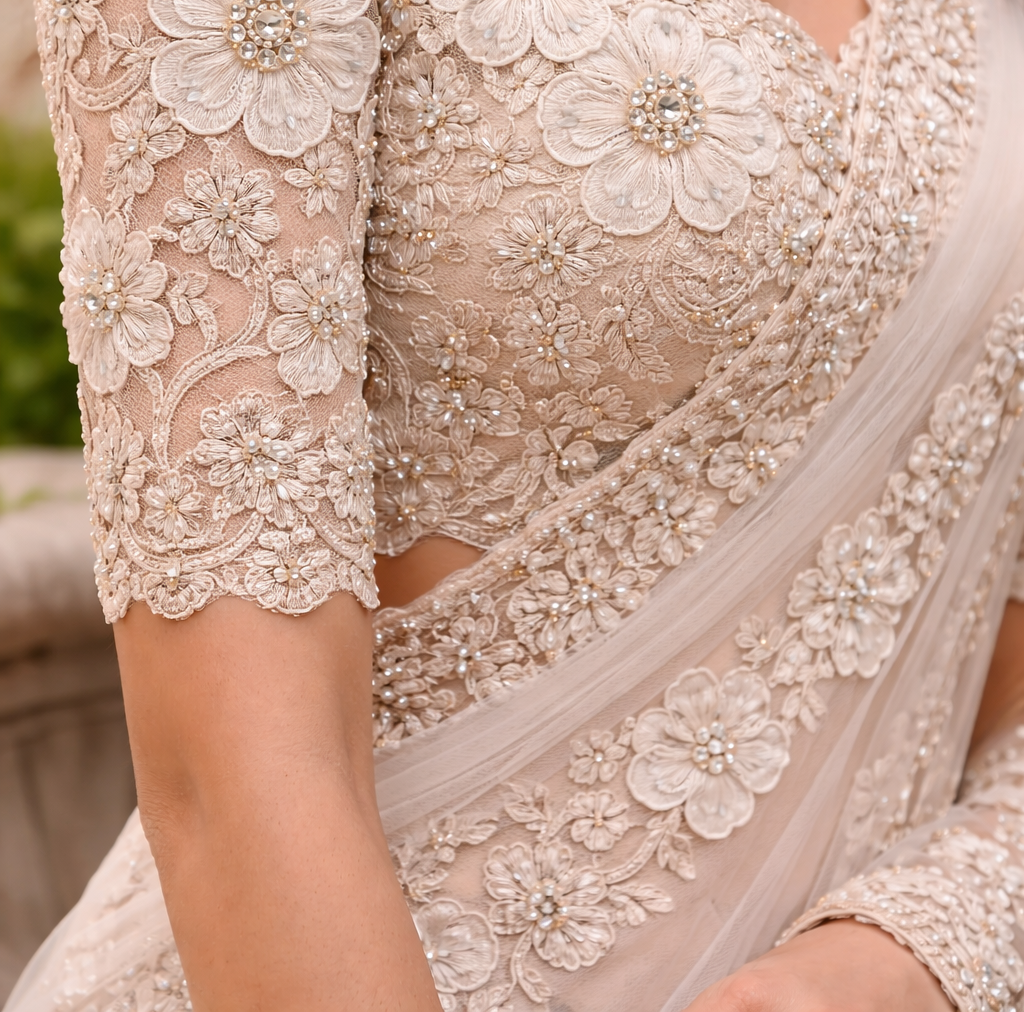
An appliqué is a separate decorative piece, like a flower or pattern, that’s sewn or glued onto a base fabric. The word means “to apply” or “to attach.” With lace appliqué, lace designs — such as flowers, vines, or other shapes — are cut or made separately and then attached to a larger piece of fabric, like tulle or satin.
Materials and techniques
Lace appliqués can be made by hand (using needle or bobbin lace) or with machines. Modern embroidery machines help speed up the process for bigger brands.
Common base fabrics include tulle, netting, muslin, satin, cotton, or other clothing materials.
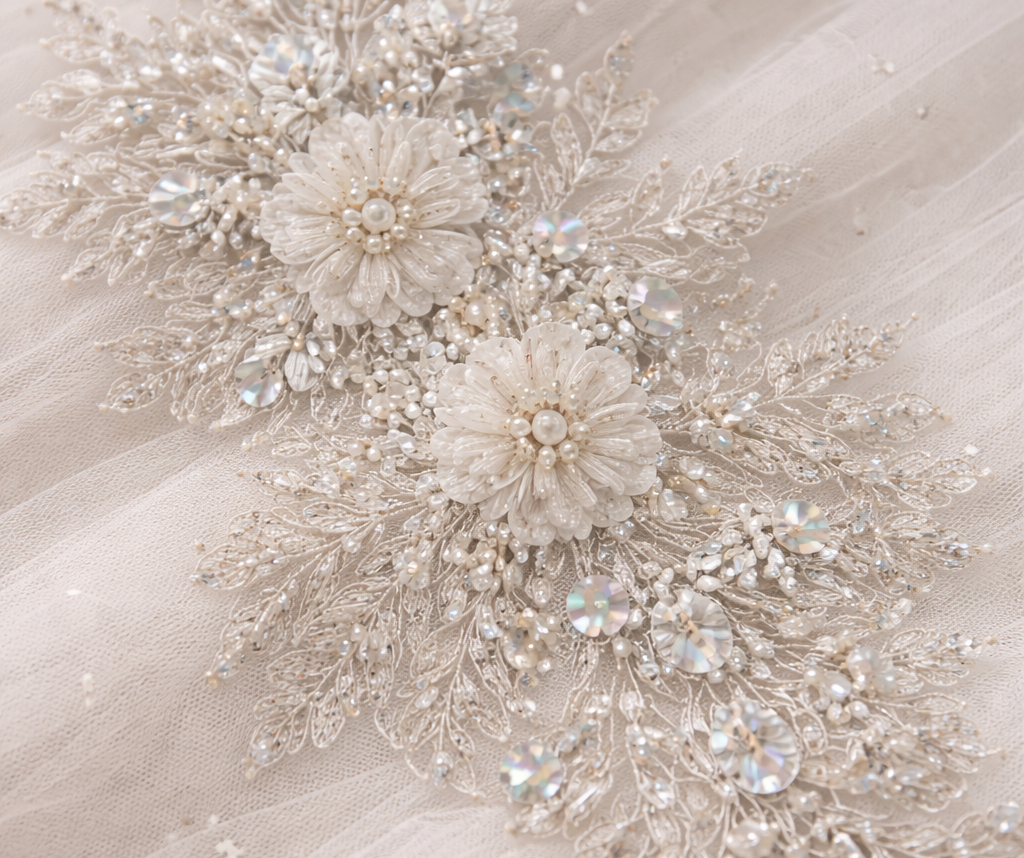
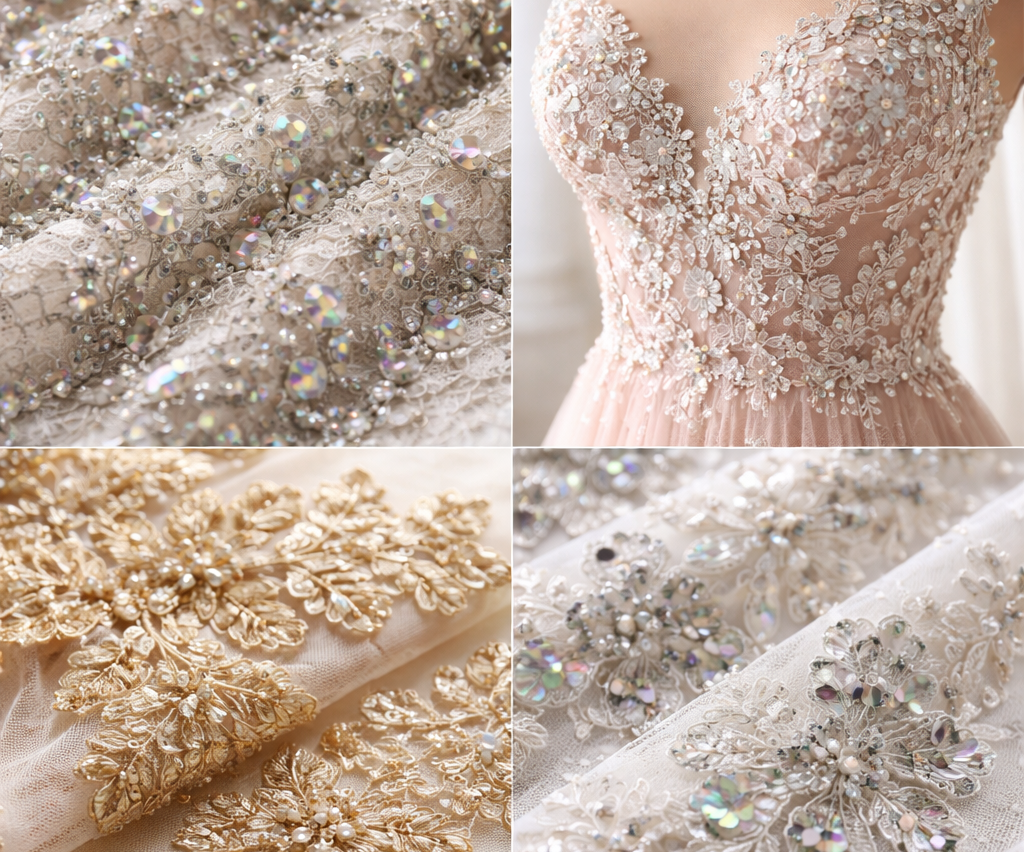
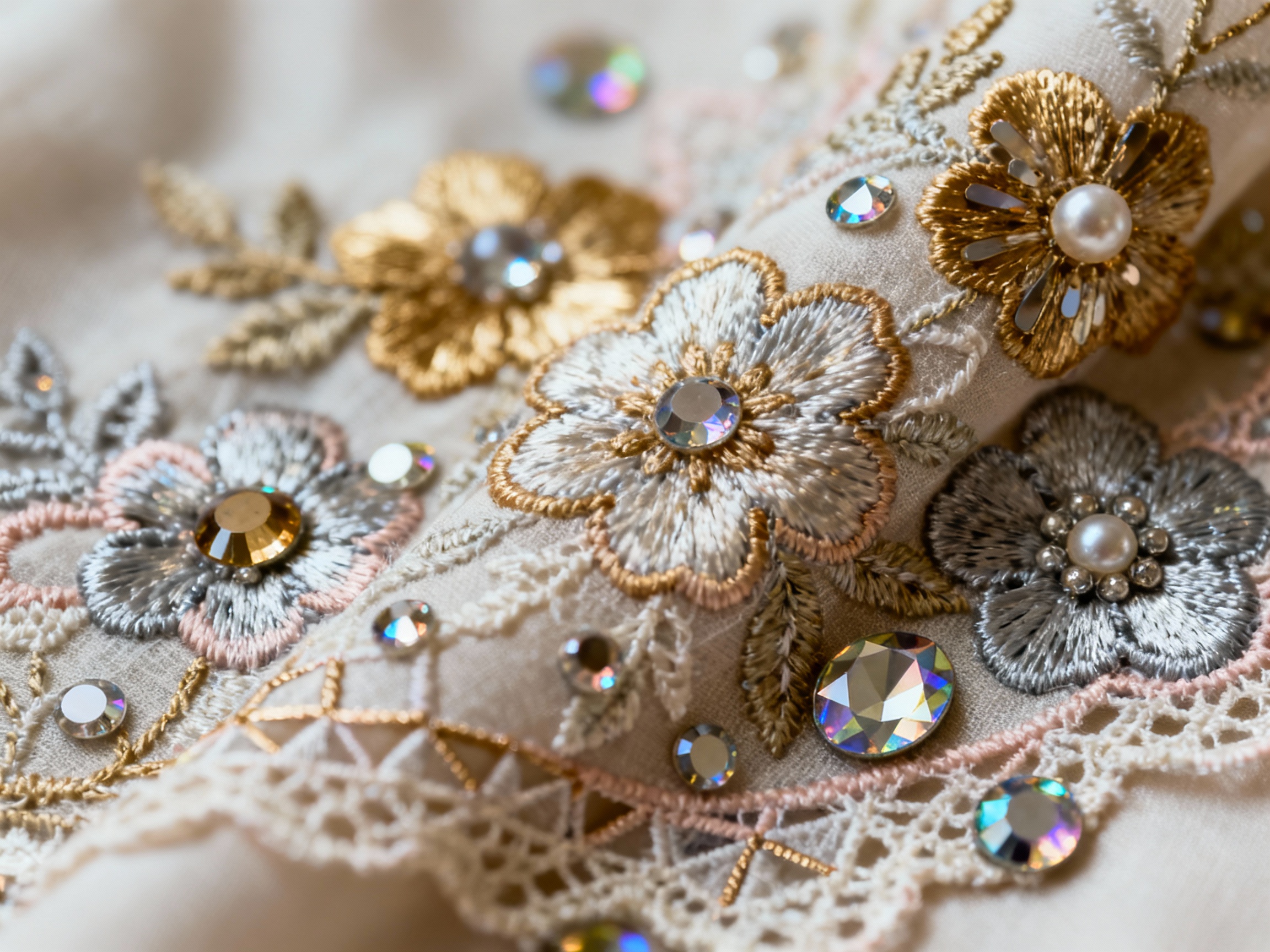
For extra shine or texture, motifs are often decorated with sequins, beads (like seed beads, bugle beads, or crystal beads), or even crystals. This turns simple lace into beaded lace or sequin lace.
Work can be done by hand or machine. Modern machines follow set designs, making appliqués easier to make for large fashion brands.
Design flexibility and use cases
Since appliqués are separate from the base fabric, designers can mix and match shapes, colors, and materials. For example, white lace flowers on colored net, or multicolor beaded flowers on black satin. This gives a lot of creative freedom.
Appliqués add depth and texture, turning flat fabric into something more interesting. With sequins or beads, the fabric catches light and looks more festive or glamorous.
These techniques are used in bridal gowns, evening dresses, traditional clothes, modern fashion, home décor (like curtains or tablecloths), accessories, and quilting.
FAQs
Q: What’s the difference between lace appliqué, embroidered appliqué, and beaded/sequin appliqué?
A: Lace appliqué means lace patterns are attached to a base fabric. Embroidered appliqué uses thread designs as the pattern. Beaded or sequin appliqué means lace or embroidery is decorated with beads or sequins for extra shine and texture.
Q: How are appliqués attached to fabric?
A: Both hand stitching and machine embroidery are used. Hand stitching is common for custom or high-end pieces, while machines are used for faster, large-scale production.
Q: What fabrics work best for appliqués?
A: Light and open fabrics like tulle, netting, muslin, or fine satin work best. They let the lace or embroidery show clearly and attach easily.
Q: Are appliqués only for bridal or party wear?
A: No. While they’re popular in bridal gowns and party dresses, appliqués are also used in everyday fashion, accessories, home décor, and quilting.
Q: Are appliqués expensive or hard to work with?
A: It depends. Handmade, heavily beaded, or sequined appliqués take more time and cost more. Machine-made appliqués are cheaper and easier to use. The design complexity also affects cost and effort.
Real-World Examples
Bridal gowns and couture wear
Many wedding dresses use lace appliqués on tulle or netting. These designs — often flowers or vines — give gowns more depth and a handmade feel.
Some suppliers sell ready-made beaded and laced appliqués that can be sewn onto gowns or veils.
There are lace appliqués with sequin and bead details, made for evening dresses, dance costumes, or party wear. These are often called “3D flower beaded lace” or “sequin embroidery appliqué”.
Fashion beyond bridal wear
In the wider textile and garment industry, surface embellishment — like appliqué, bead embroidery, and sequins — is used to add texture, detail, and uniqueness to jeans, jackets, dresses, and even home textiles.
For example, embroidered jeans or embellished denim pockets use these techniques to stand out.
Global sourcing and fabric supply
Some suppliers offer pre-cut lace or embroidered tulle/mesh with floral appliqués, beads, and sequins. These fabrics can be used for dresses, skirts, tops, bags, upholstery, or quilting.
Beaded lace appliqué is known as one of the most flexible laces in design, used not only in fashion but also in home décor.
Why This Matters (Problem → Agitate → Solution)
Problem
Most clothes today are mass-produced. They often use plain fabrics and basic stitching. While these clothes are affordable and easy to get, they lack uniqueness, depth, and personality. A plain dress might look okay, but it rarely feels special or handmade. For people who want something unique, or for designers aiming for standout pieces, plain fabrics can feel boring.
Agitate
Think about the last time you saw a dress or gown that caught your eye. It’s often not just the cut or color — it’s the small details: shiny edges, floral patterns, raised textures, or beads that catch the light. These details make a garment feel richer, more expensive, and more carefully made. Without these touches, many clothes stay flat and forgettable. Plainness can be a problem.
For small brands, tailors, makers, or DIY fans, making something unique from scratch is hard and often expensive. You might not have the tools or skills for complex tailoring or embroidery. Buying high-end couture dresses is also out of reach. So there’s a gap: a need for beautiful, standout garments at a realistic price.
Solution
This is where embroidered flower lace, sequin, and beaded appliqués come in. They offer a middle ground — affordable (or at least more accessible) ways to add depth, texture, and uniqueness to fabric. By attaching pre-made appliqués to base fabrics, you can turn simple garments into standout pieces.
For designers: You can use lace or beaded appliqués to make your creations more special. By adding a simple base fabric (like net or satin) with decorative motifs, you can create gowns, dresses, or even casual wear with a handmade feel — without the high cost and effort of full couture.
For small makers or hobbyists: Pre-made appliqués give you more choices. You can buy them and sew them onto ready-made clothes or thrifted finds, making them one-of-a-kind.
For the fashion industry: These appliqués help brands and makers produce garments that stand out without making prices too high.
Conclusion & Practical Takeaways
Embroidered flower lace, sequin, and beaded appliqués are powerful tools in fashion and textiles. They give garments elegance, depth, and visual interest without the high cost or effort of haute couture.
Here are some tips:
If you’re designing or customizing clothes, try using lace or beaded appliqués to add texture and uniqueness. Even a small patch can change the look a lot.
Use base fabrics like tulle, netting, satin, or cotton as a foundation — these work well for appliqué.
For a richer look, choose appliqués with beads, sequins, or crystals. For a subtle touch, plain embroidered or lace appliqués work well.
For small-scale or DIY projects: pre-made appliqués are a good start. They save time and let you be creative.
Appliqués aren’t just for bridal wear — they can be used for everyday clothes, party outfits, accessories, and even home décor.
By using appliqués thoughtfully, you can make garments that look handmade and expressive — adding personality, value, and the charm of custom design — without starting from scratch.