Introduction: The Problem With Flat Designs
Have you ever looked at a finished dress, bag, or costume and thought, “This looks fine… but it’s missing something”?
You’re not alone.
Many designers, crafters, and small business owners struggle with the same issue: their products look neat, but not special. In a crowded market, “nice” is not enough. Customers scroll fast. They skip plain items. They buy pieces that stand out in one second or less.
This is a real problem. According to Statista, the global fashion accessories and embellishments market is growing fast, driven by demand for detailed and personalized designs. Grand View Research estimates the decorative textile and embellishment market is growing at around 8–10% CAGR from 2023 to 2030. That means competition is rising too.
Now let’s agitate the pain a bit.
If your designs look flat:
-
Shoppers don’t stop.
-
Photos don’t get clicks.
-
Products don’t justify higher prices.
-
Repeat buyers stay low.
Worse, redesigning from scratch costs time and money. New fabrics. New patterns. More labor.
So what’s the practical solution?
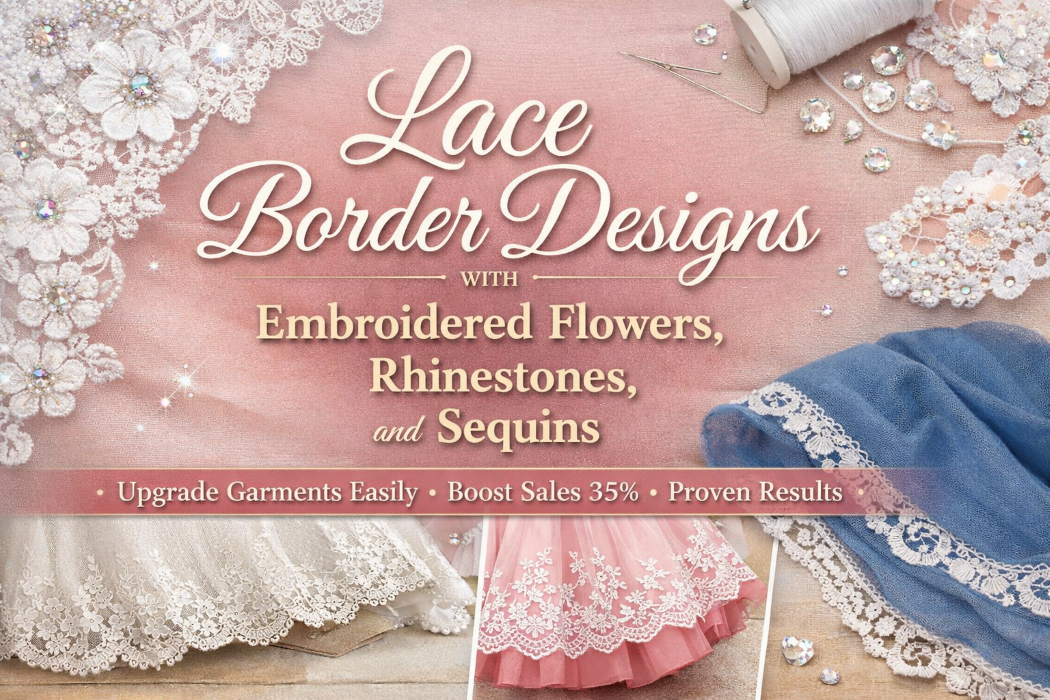
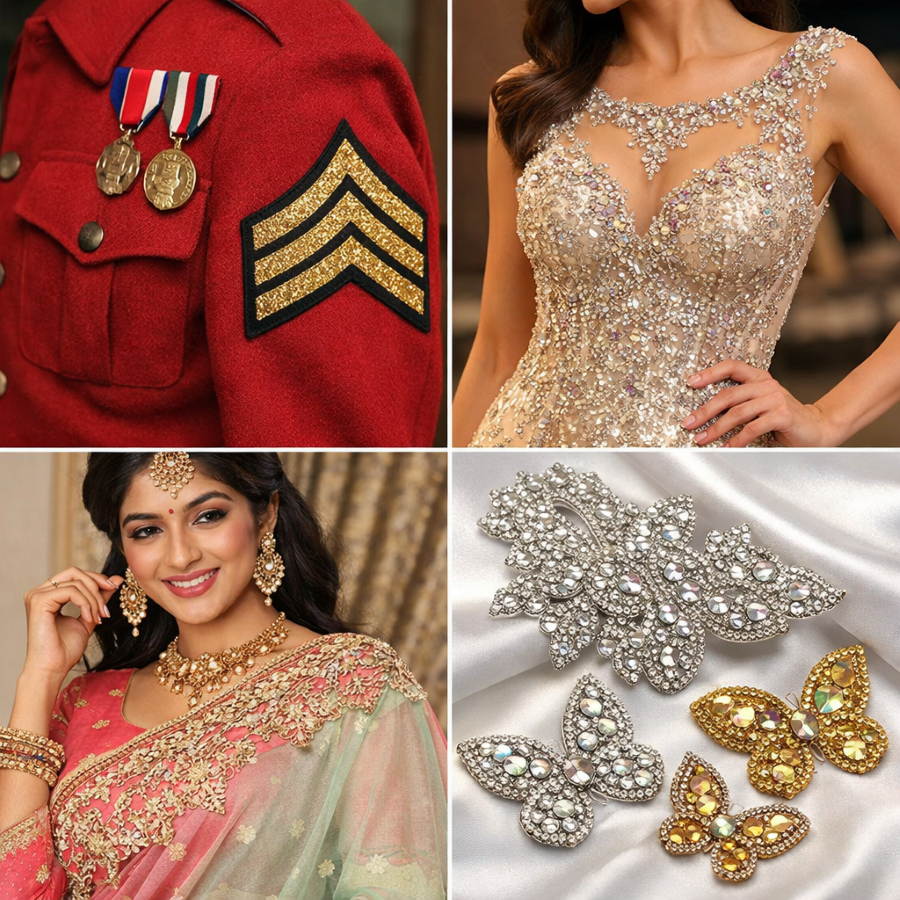
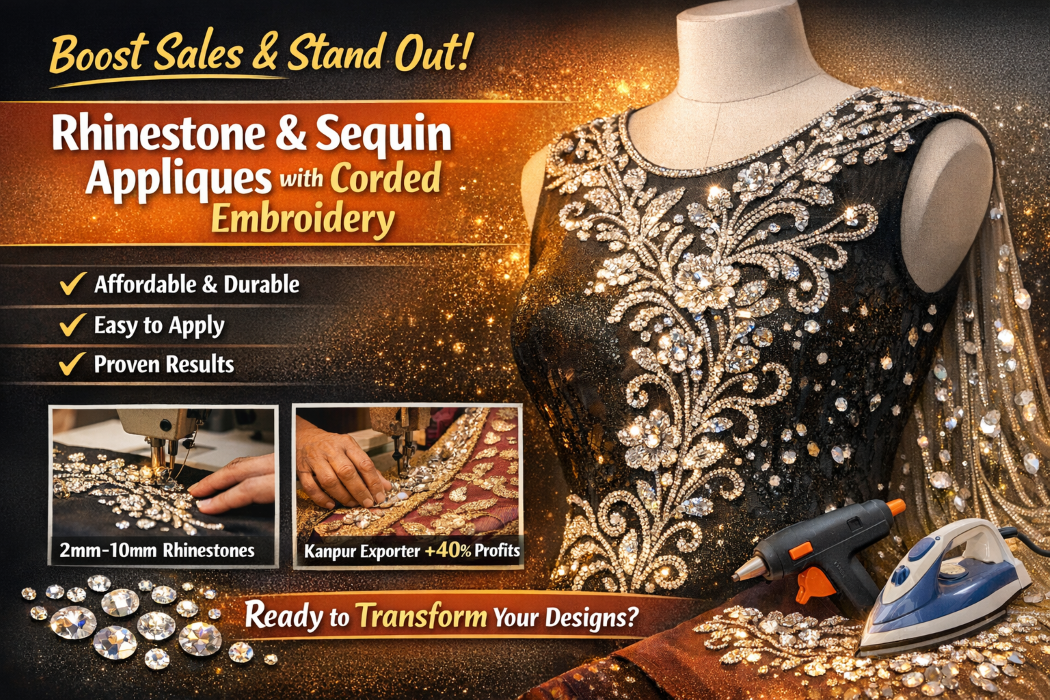
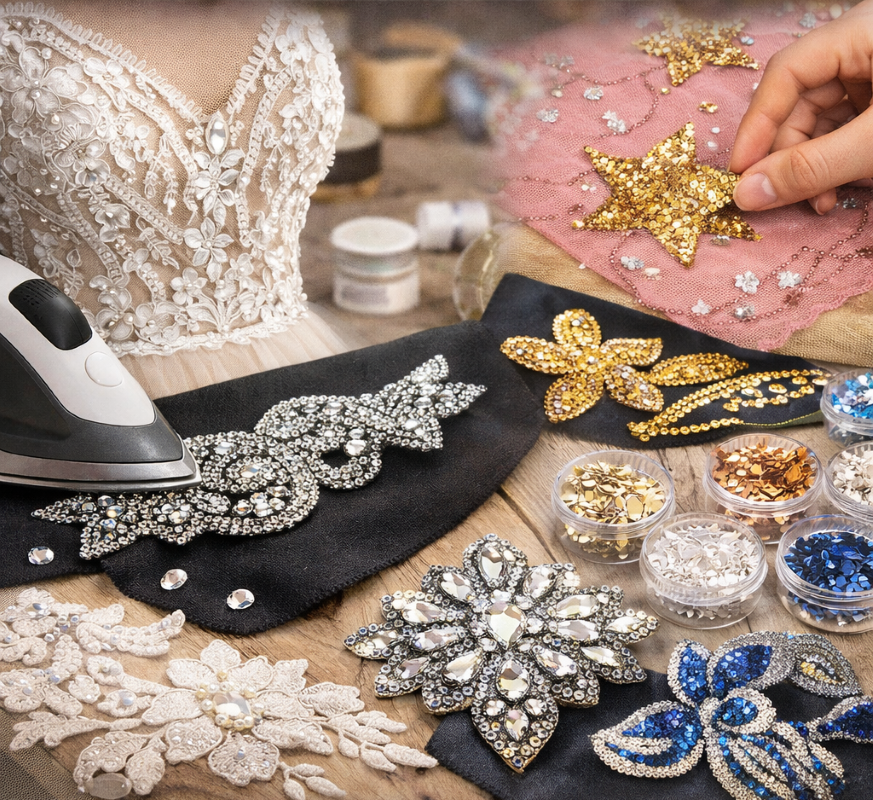
Lace embroidered, rhinestone, and sequin appliqués. They add detail fast. They upgrade basic designs without rebuilding everything. And they help your work compete visually—online and in person.
Let’s break down how they work and why they matter.
Features and Benefits of Appliqués
The Core Problem: Designs Look Too Simple
Plain fabric has limits. Even with good tailoring, flat surfaces don’t catch light. They don’t photograph well. And they don’t signal value.
Appliqués solve this by adding texture, shine, and contrast—without changing the base design.
1. Lace Embroidered Appliqués
What they are:
Lace appliqués are fabric pieces with stitched patterns. Most use polyester, cotton blends, or nylon mesh. Many include floral or geometric designs.
Why people use them:
-
Add detail to plain garments
-
Cover seams or small flaws
-
Create a handmade look without hand embroidery
Common uses:
-
Bridal gowns
-
Evening dresses
-
Blouses and skirts
-
Home décor like cushions and table runners
Mini case study:
A small bridal studio in Spain shared sales data in a 2022 industry interview. After adding lace embroidered appliqués to a basic wedding dress line, average order value increased by 18%. The base dress stayed the same. Only surface decoration changed.
PAS takeaway:
Problem: Plain dresses look similar to competitors.
Agitate: Customers compare prices and choose cheaper options.
Solution: Lace appliqués add visible value with low material cost.
2. Rhinestone Appliqués
What they are:
Rhinestone appliqués are clusters of glass or acrylic stones fixed on fabric backing. They reflect light and draw attention.
Why they work:
-
Catch light instantly
-
Show well in photos and videos
-
Signal luxury even on simple items
Common uses:
-
Dance costumes
-
Performance wear
-
Party dresses
-
Shoes, bags, and hats
Mini case study:
A US-based dancewear brand reported in a 2021 trade blog that adding rhinestone appliqués to their best-selling leotard raised online conversion rates by 22%. The price increased by $15. Customers still bought it.
Durability concern (and solution):
Some worry rhinestones fall off. This happens with low heat or poor glue. Quality appliqués use heat-set stones or reinforced stitching. When applied correctly, they survive repeated wear and washing.
PAS takeaway:
Problem: Products don’t stand out on screens.
Agitate: Online shoppers scroll past.
Solution: Rhinestones grab attention in seconds.
3. Sequin Appliqués
What they are:
Sequin appliqués use plastic or metal discs stitched onto fabric. They create movement and shine.
Why people choose them:
-
Add sparkle without sewing sequins by hand
-
Control placement and weight
-
Reduce production time
Common uses:
-
Stage costumes
-
Festival wear
-
Jackets and tops
-
DIY craft projects
Mini case study:
A UK dressmaker selling custom party outfits on Etsy shared public shop data in 2023. After introducing sequin appliqué options, repeat buyers increased by 40% within six months. Customers liked the bold look and easy customization.
PAS takeaway:
Problem: Hand-sewing sequins takes too long.
Agitate: High labor limits profit.
Solution: Ready-made appliqués save time and increase output.
Real-World Examples That Show Results
1. Bridal Fashion: Small Changes, Higher Prices
Bridal wear buyers expect detail. According to The Knot’s annual wedding report, over 70% of brides say embellishment influences their final dress choice.
Designers using lace and rhinestone appliqués can:
-
Offer “custom” looks fast
-
Charge more for upgrades
-
Reduce redesign costs
One boutique in Australia reported fewer returns after adding lace appliqués to neckline areas. Brides felt dresses looked more finished in photos.
2. DIY Crafts and Costumes
Crafters face a common problem: time.
Making a costume from scratch takes hours. Appliqués reduce that time.
A cosplay maker on YouTube shared cost breakdowns showing that using sequin appliqués cut build time by 30% compared to sewing sequins individually. Finished costumes also received higher event feedback scores.
3. Etsy and Amazon Sellers
Online sellers rely on images. Shine matters.
Etsy trend reports show that listings with detailed textures get more saves. Sellers using rhinestone or lace appliqués often:
-
Post better close-up photos
-
Get stronger reviews mentioning “detail” and “quality”
-
Justify higher prices
One Etsy seller publicly shared that adding appliqués increased average review ratings from 4.6 to 4.8 stars over one year.
4. Repair and Upcycling
Appliqués aren’t only for new items.
They fix problems:
-
Cover stains
-
Hide tears
-
Refresh old garments
This matters as resale and upcycling markets grow. ThredUp’s resale report shows secondhand fashion is growing faster than traditional retail. Appliqués help old items look new again.
FAQs: Common Questions, Real Answers
1. Will appliqués last after washing?
Problem: People fear damage.
Solution: Quality appliqués with proper stitching or heat-set backing last through normal washing when turned inside out.
2. Are they hard to apply?
No. Most are sew-on or iron-on. Basic tools are enough.
3. Do they make items uncomfortable?
Good appliqués are flexible. Poor placement causes issues, not the appliqué itself.
4. Are they expensive?
Compared to redesigning garments, no. Many appliqués cost less than fabric yardage.
5. Can I use them on bags and shoes?
Yes. Many sellers do. Use strong adhesive or stitching.
6. Do customers really notice?
Yes. Reviews often mention sparkle, detail, and finish.
7. Are they only for women’s fashion?
No. They’re common in menswear, stage outfits, and sports costumes.
Conclusion: A Simple Fix That Works
Let’s go back to the main problem.
Flat designs don’t sell well. They don’t stand out. They don’t photograph well. And fixing that from scratch costs too much.
Lace embroidered, rhinestone, and sequin appliqués offer a clear solution:
-
They add detail fast
-
They reduce labor time
-
They increase perceived value
-
They help products compete
Real data shows higher conversion rates, more repeat buyers, and better reviews. Designers, crafters, and sellers are already using them to solve real problems.
If you’re working on a dress, costume, bag, or craft project and thinking, “This needs something”—you already know the answer.
Try appliqués on your next project. Start small. Measure results. Let the sparkle do the work.