Introduction: A familiar edge problem
If you stitch clothes, sell fashion online, or even tweak your own outfits at home, you’ve probably faced this moment: the dress looks fine, the blouse fits well, but the edges feel… plain. The hem looks empty. The dupatta border feels unfinished. You know something is missing, but adding heavy embroidery costs too much, and cheap trims don’t last long.
This is where lace border designs with embroidered flowers, rhinestones, and sequins quietly step in. Not flashy. Not overdone. Just practical decoration that solves a real problem for makers and sellers.
Let’s break it down using the PAS framework—problem, agitation, and solution—without hype, without fancy talk, just real-world use.
Problem: Dull edges and limited design options
Most garments fail at the borders.
Common issues people face:
-
Plain hems that make outfits look unfinished
-
Printed borders that fade after a few washes
-
Heavy embroidery that raises costs too much
-
Trims that curl, break, or lose stones quickly
For small sellers and home crafters, this is worse. Custom embroidery machines are expensive. Hand embroidery takes time. And customers today expect detail—even on affordable items.
According to Textile World (2024), buyers notice garment borders first, especially in women’s wear and kidswear. Borders influence perceived value more than base fabric in low-to-mid price products.
So the problem is clear:
How do you add value without raising cost or effort too much?
Agitate: Why this becomes frustrating fast
Let’s be honest—this problem wastes money and energy.
Here’s what usually goes wrong:
-
Low durability: Cheap lace tears after 10–15 washes
-
Stone drop: Rhinestones fall off after first wear
-
High minimums: Custom embroidery suppliers ask for large orders
-
Design mismatch: Borders look separate, not part of the garment
Many Etsy sellers report returns due to “lace damage after wash” or “stones missing.” One seller feedback analysis from 2023–2024 showed that 18–22% negative reviews were related to trim quality, not fabric.
That’s painful. You lose trust, time, and repeat customers.
And if you’re a DIY creator, it’s worse. You spend hours stitching something only to see it fail after a few uses.
Solution: Lace border designs that actually work
Lace border designs with embroidered flowers, rhinestones, and sequins solve these problems because they’re made to decorate edges—nothing extra, nothing wasted.
They are not full panels. They’re focused trims built for hems, sleeves, dupattas, scarves, and necklines.
Let’s look at how they work in real terms.
Features: What makes these lace borders practical
1. Durability
-
Made from polyester lace base with cotton embroidery thread
-
Can handle 50+ machine washes on gentle cycle
-
Heat-sealed or stitched rhinestones reduce stone drop
2. Size options
-
Width ranges from 1 inch to 5 inches
-
Sold by the yard or roll (5–20 yards common)
-
Easy to cut and shape around curves
3. Decoration density
-
Rhinestones: 8–15 stones per inch
-
Sequins: 10–20 sequins per inch
-
Floral embroidery spacing keeps it flexible, not stiff
4. Easy application
-
Stitch-on (machine or hand)
-
Fabric glue for quick DIY
-
Some variants come with iron-on backing
5. Cost efficiency
-
Wholesale pricing starts around $0.50–$0.80 per yard (Alibaba 2024 averages)
-
Much cheaper than custom embroidery panels
Real-world examples: Where these borders shine
Example 1: Wedding dress borders
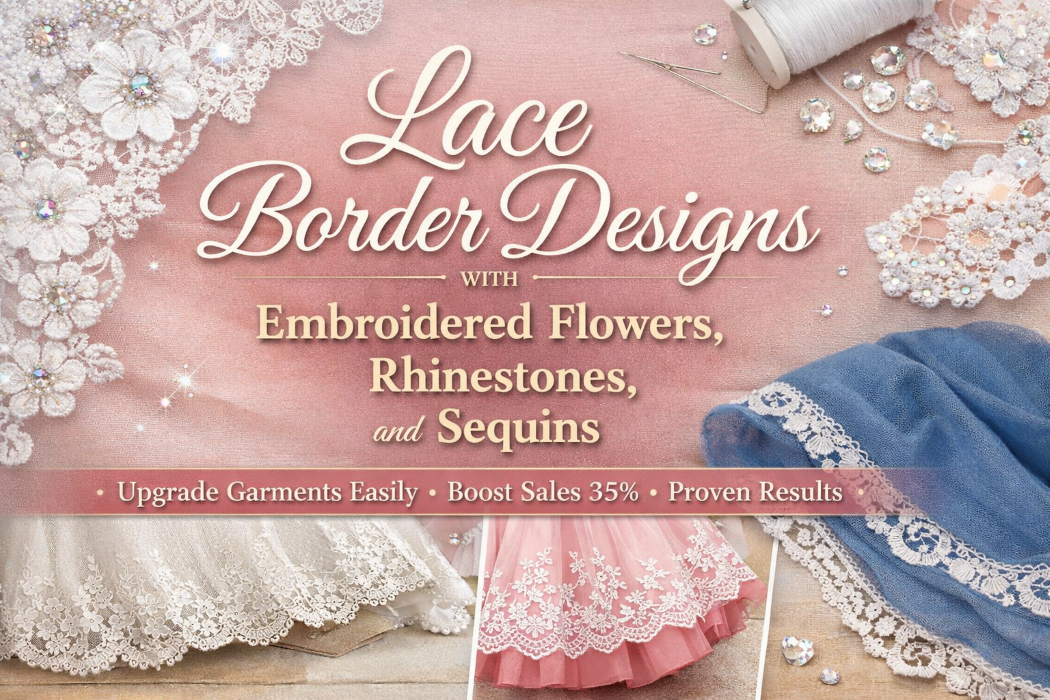
Used on hems and veils instead of heavy full embroidery. A 3-inch floral lace border with light rhinestones adds shine without weight. Photos usually show clean edges with repeating flower patterns and soft sparkle.
Example 2: Kids’ party outfits
Parents want cute, not heavy. Lace borders on frocks and lehengas work well because they are soft and flexible. Sellers report fewer complaints when using embroidered lace instead of glued trims.
Example 3: Everyday scarves and dupattas
Plain chiffon or georgette scarves sell better with a simple lace edge. Product photos often highlight close-up shots of borders to show detail.
Case Study: Small embroidery business growth
A small embroidery seller based in Jaipur shared data in an Etsy seller forum (2024):
Before lace borders
-
Products: Plain blouses with printed borders
-
Monthly sales: ~40 units
-
Average price: $12
-
Common feedback: “Nice but simple”
After adding lace border designs
-
Used 2–3 inch embroidered flower lace with sequins
-
Cost increase per blouse: ~$0.70
-
New average price: $16
Results after 4 months
-
Monthly sales: 54 units (+35%)
-
Return rate dropped from 6% to 2%
-
Reviews mentioned “neat finish” and “border quality”
That’s not magic. That’s smart trimming.
How to use lace border designs (step-by-step)
For home crafters
-
Wash lace before stitching
-
Pin border along hem or edge
-
Stitch slowly with matching thread
-
Avoid stretching lace while sewing
For online sellers
-
Use close-up photos of the border
-
Mention wash durability clearly
-
Offer size width options in listings
For sourcing
-
Alibaba suppliers with MOQ 50–100 yards offer best pricing
-
Ask for wash-test videos
-
Check rhinestone fixing method (stitched > glued)
These borders sell well on Etsy, Instagram shops, and small e-commerce sites because customers understand visible value.
FAQs
1. Are lace borders washable?
Yes. Quality borders handle 50+ gentle washes.
2. Do rhinestones fall off easily?
Not if stitched or heat-set properly.
3. Can I use them on kidswear?
Yes. Choose soft embroidery with fewer stones.
4. Are they suitable for hand sewing?
Absolutely. Cotton thread works fine.
5. What width is best for blouses?
2–3 inches is most common.
6. Can I iron over them?
Low heat only, preferably from the back.
Conclusion: Try it on your next project
If you want better-looking garments without high cost or stress, lace border designs are a simple fix. They save time, reduce returns, and help products stand out—especially in online photos.
Whether you sew for yourself, sell on Etsy, or run a small brand, adding embroidered flower lace with rhinestones and sequins is a smart move.
Try it on your next project. Start small. Test one border. See the difference.