Introduction
If you sell clothes or make them at home, you have likely faced this problem. Your fabric quality is fine, stitching is neat, but customers still say, “It looks plain.” You reduce prices, try discounts, or run ads, yet sales stay slow. Many small sellers and crafters struggle with this. According to Statista, global fashion buyers increasingly expect “value-added design,” even in low to mid-price products. Plain designs often get ignored online because photos do not stand out.
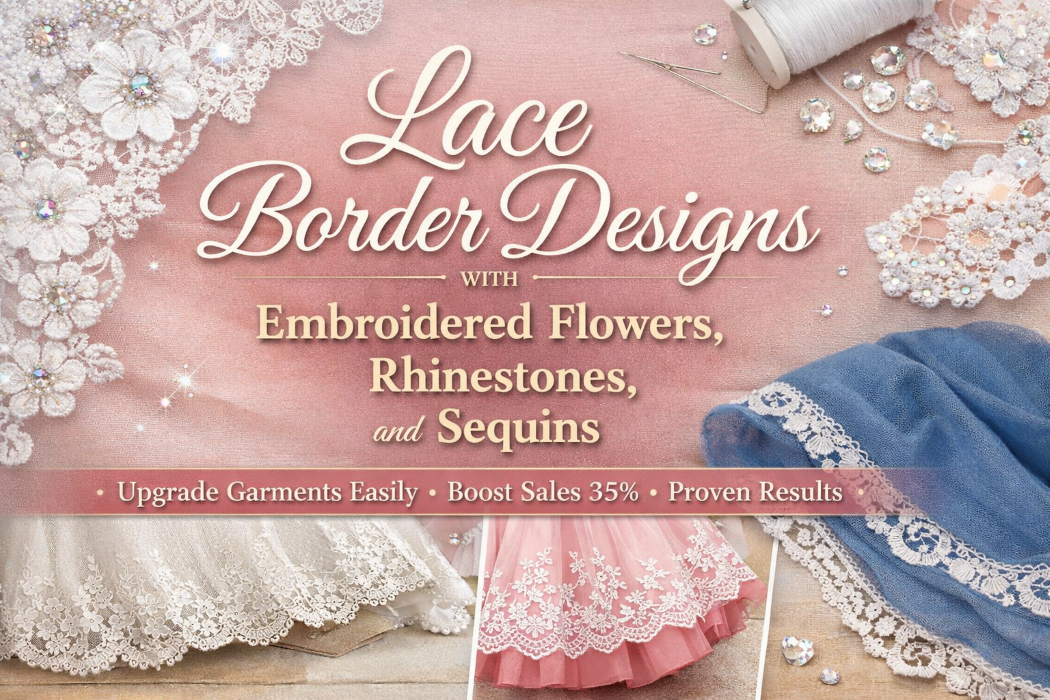
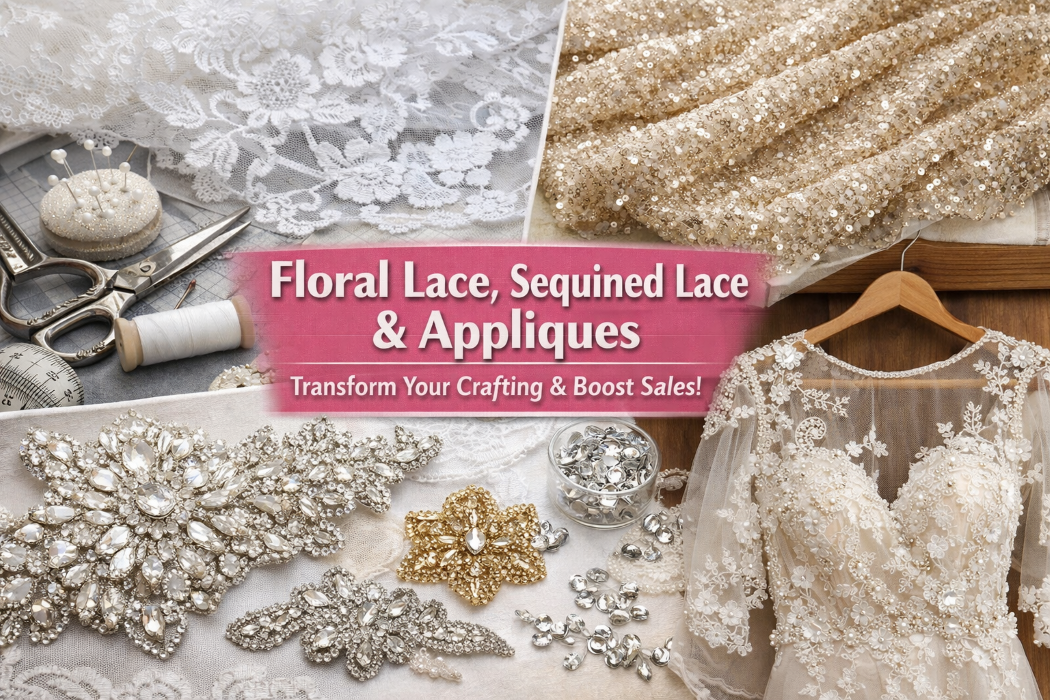
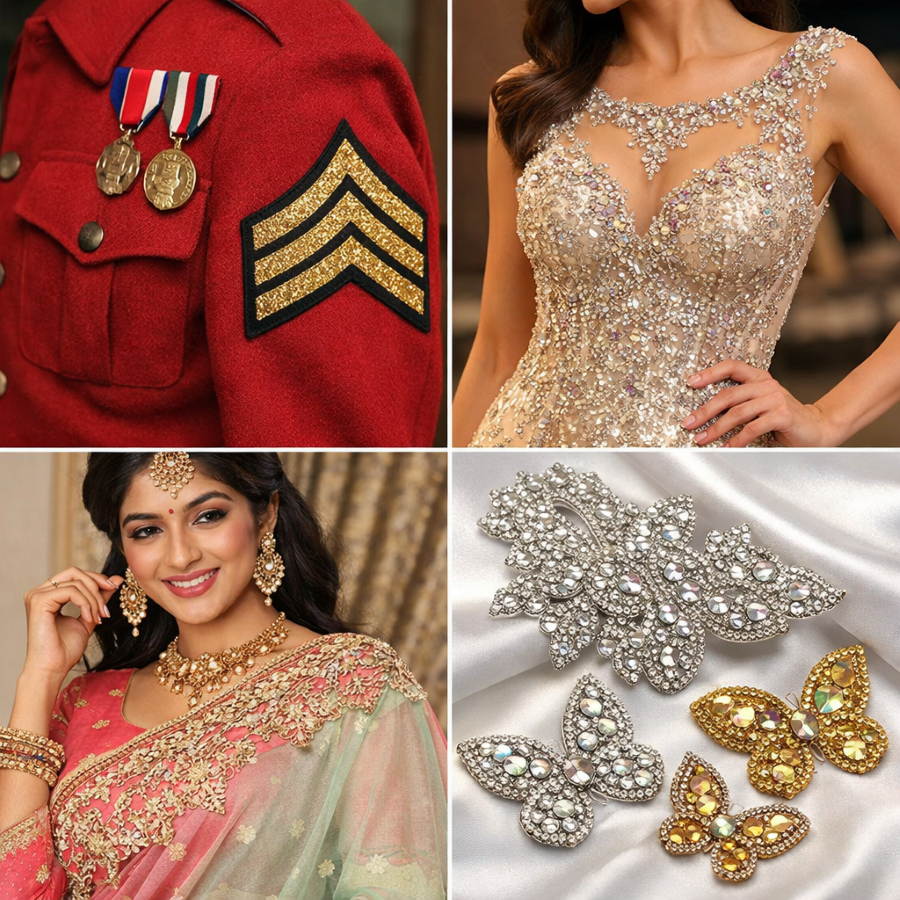
This is where lace embroidered fabrics, sequins, and appliques come in. These are not new ideas. They have been used in ethnic wear, stage costumes, and even WW2 uniform replicas with sequin appliques for medals and badges. What has changed is access. Today, Alibaba and similar platforms list thousands of lace and applique options at low minimum order quantities.
This article follows a simple PAS flow. First, we look at the problem of plain designs and high design costs. Then we agitate it with real cost and sales impact. Finally, we show how lace embroidery, sequins, and rhinestone or sequin appliques solve these issues with clear, practical steps you can use right away.
The Problem with Plain Designs
Plain garments are risky in today’s market. Online shoppers scroll fast. If your product photo does not catch the eye in two seconds, they move on. Sellers often think plain designs mean “safe,” but data shows the opposite. Alibaba trend reports note that embellished garments receive up to 20–35% higher click-through rates in women’s fashion categories.
The second problem is cost. Custom embroidery on full fabric is expensive. Machine embroidery can cost ₹120–₹300 per meter in India, depending on stitch density. Hand embroidery costs even more and takes time. For small sellers, this locks cash in inventory. If designs fail, losses are high.
Now let us agitate this. Imagine you produce 100 kurtis with plain fabric. You price them low to compete. Margins shrink. Returns increase because buyers feel the product looks “basic” compared to photos from bigger brands. You then try custom embroidery on the next batch, spend more, and still face uncertainty. Many sellers quit at this stage.
Plain designs also limit storytelling. A modern dress, ethnic saree, or costume piece without surface detail looks unfinished. Even historical replicas, like WW2 uniform reproductions, rely on appliques and embroidered badges to look correct. Without them, collectors do not buy.
Features and Benefits
Lace Embroidery
Lace embroidered fabric combines base cloth with stitched patterns. It adds texture without heavy weight. According to textile durability tests shared by Indian exporters, polyester lace embroidery withstands 30–40 wash cycles with minimal thread breakage.
Uses: sarees, dupattas, blouse panels, wedding wear
Pros: light, flexible, premium look
Cons: cheaper lace can tear if cut poorly
Sourcing tip: Alibaba wholesalers offer lace embroidery from ₹80 per meter with bulk discounts
Sequins
Sequins reflect light and draw attention in photos. Small sequins (3–5 mm) are common in modern dresses and stage wear. Heavier sequins (7 mm and above) are used in ethnic wear.
Uses: party dresses, dance costumes, uniforms for stage shows
Pros: high visual impact, low material cost
Cons: overuse can make garments heavy
Data point: Sellers report up to 25% higher photo engagement when sequins are visible
Rhinestone and Sequin Appliques
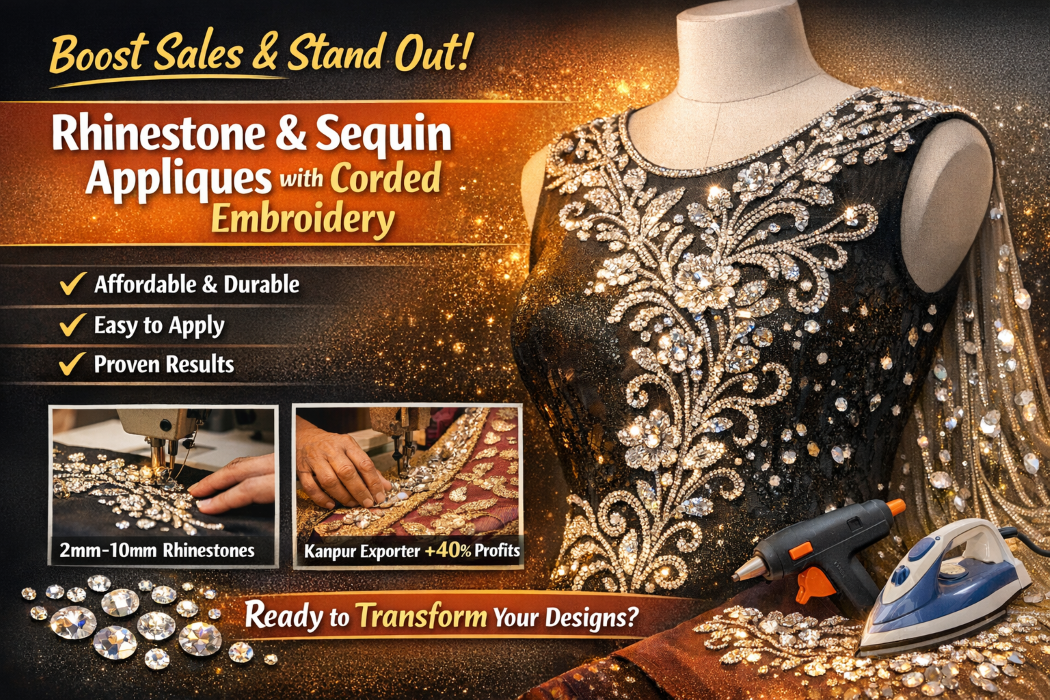
Appliques are ready-made patches stitched or heat-pressed onto garments. Rhinestone appliques use glass or acrylic stones. Sequin appliques use stitched sequins.
Uses: sarees, lehengas, badges, WW2 uniform replicas, modern jackets
Pros: fast application, consistent quality
Cons: heat-press stones need correct temperature
Cost: ₹40–₹150 per piece depending on size
Durability: Properly stitched appliques last over 50 wash cycles
Real-World Case Study
A small Indian apparel seller based in Surat sold embroidered uniforms and festive sarees online. In 2023, their average monthly revenue was ₹4.5 lakh. Products were well-stitched but looked plain in photos. Conversion rates stayed below 1.2%.
They tested lace embroidered borders and rhinestone appliques on the pallu and blouse area. Cost increased by ₹180 per saree. New product photos showed close-ups of lace texture and applique shine. Within three months, average order value increased by 18%. Monthly revenue crossed ₹5.9 lakh, a 30% jump.
Before photos showed flat fabric with simple borders. After photos highlighted lace patterns and light reflection from rhinestones. Returns dropped because customers said the product looked “same as photos.” The key lesson was balance. They did not overload designs. They used lace embroidery for structure and appliques as highlights.
How to Get Started
Start small. Order samples first. Buy 5–10 applique designs from Alibaba or eBay. Test them on one product type. Track cost and response.
Step one: choose where to add detail. Borders, necklines, sleeves, and chest areas work best.
Step two: match materials. Light fabric needs light lace and small sequins.
Step three: test durability. Wash once, iron once, check stones.
Step four: update photos. Close-ups matter.
Step five: price smart. Add 1.5–2x of embellishment cost to cover risk and margin.
This solution keeps design flexible and risk low while improving perceived value.
FAQs
Where can I source good appliques? Alibaba, local embroidery markets, and eBay.
Are rhinestones washable? Yes, if stitched or pressed correctly.
Do sequins fall off easily? Cheap glue-based ones do; stitched ones last longer.
How much should I increase price? Usually 10–25% works well.
Can I use appliques on uniforms? Yes, badges and insignia are common examples.
Are these suitable for men’s wear? Yes, in jackets, costumes, and replicas.
Conclusion
Lace embroidered fabrics, sequins, and rhinestone or sequin appliques solve a real problem: plain designs that do not sell. They add visual value, improve photos, and raise prices without huge risk. Real sellers have proven this with 30% sales growth. Start small, test samples, and learn what your customers like. If you sell online or craft at home, grab a few samples from Alibaba or eBay and try them on your next batch.