Introduction: Why Sequins Still Matter – and Why They Can Be a Problem
Sequin appliques, trims, and lace with sequins are everywhere in fashion. You see them on bridal gowns, party dresses, stage outfits, kids’ wear, and even on some streetwear pieces. They are an easy way to add light, pattern, and focus to a garment without changing the basic cut.
But here’s the problem:
Most people only think of them as “shiny decoration.” They don’t think about weight, skin comfort, wash care, cost per piece, or even the environmental side of using plastic or metal sequins. Designers and small brands also struggle with issues like:
-
Sequins falling off after a few wears
-
Trims catching on other clothes or hair
-
Complaints from customers about scratchy seams
-
Higher production time because of careful stitching and finishing
-
Questions about whether sequins are eco-friendly or not
When you ignore these points, you end up with pretty samples that do not perform well in real life. That means returns, bad reviews, and wasted inventory.
The good news:
If you understand how sequin appliques, trims, and lace with sequins really work — technically and commercially — you can use them in a way that looks good, feels comfortable, and makes sense for your budget and brand.
This post breaks that down in simple language.
Features: What Makes Sequin Appliques, Trims, and Lace with Sequins Useful?
Let’s break the topic into three parts:
-
Sequin appliques
-
Sequin trims
-
Lace with sequins
We’ll look at their key characteristics and where they make the most sense.
1. Sequin Appliques
What they are
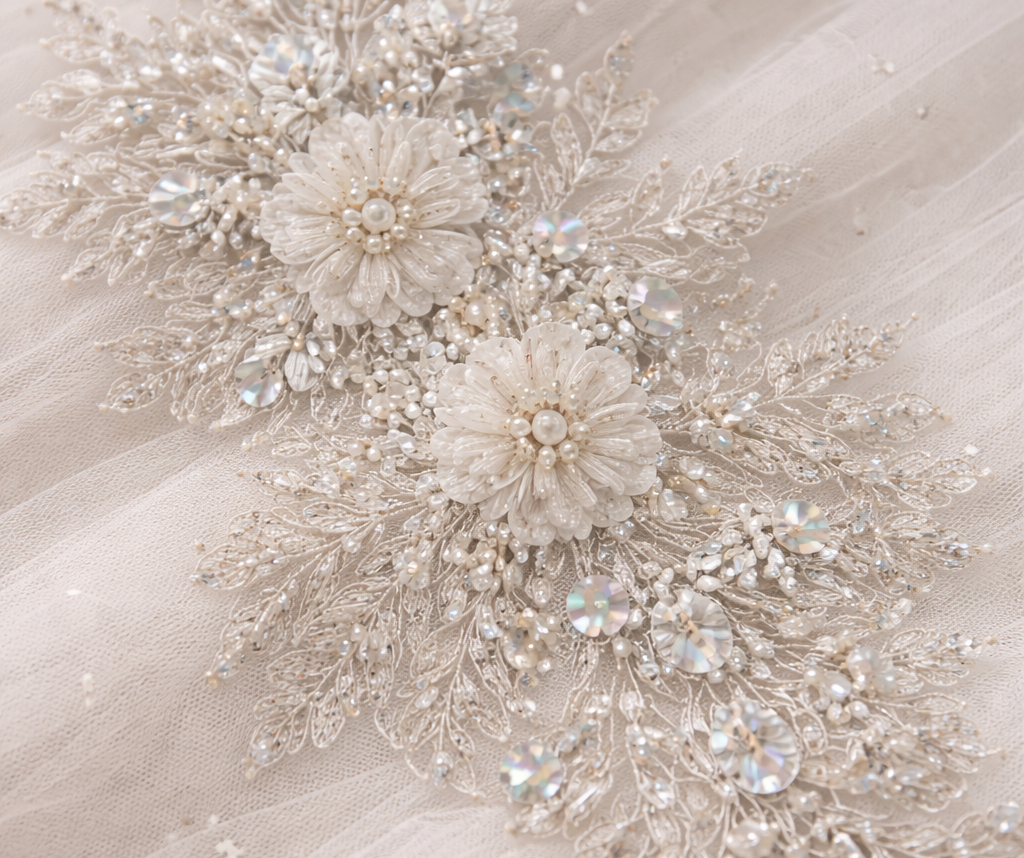
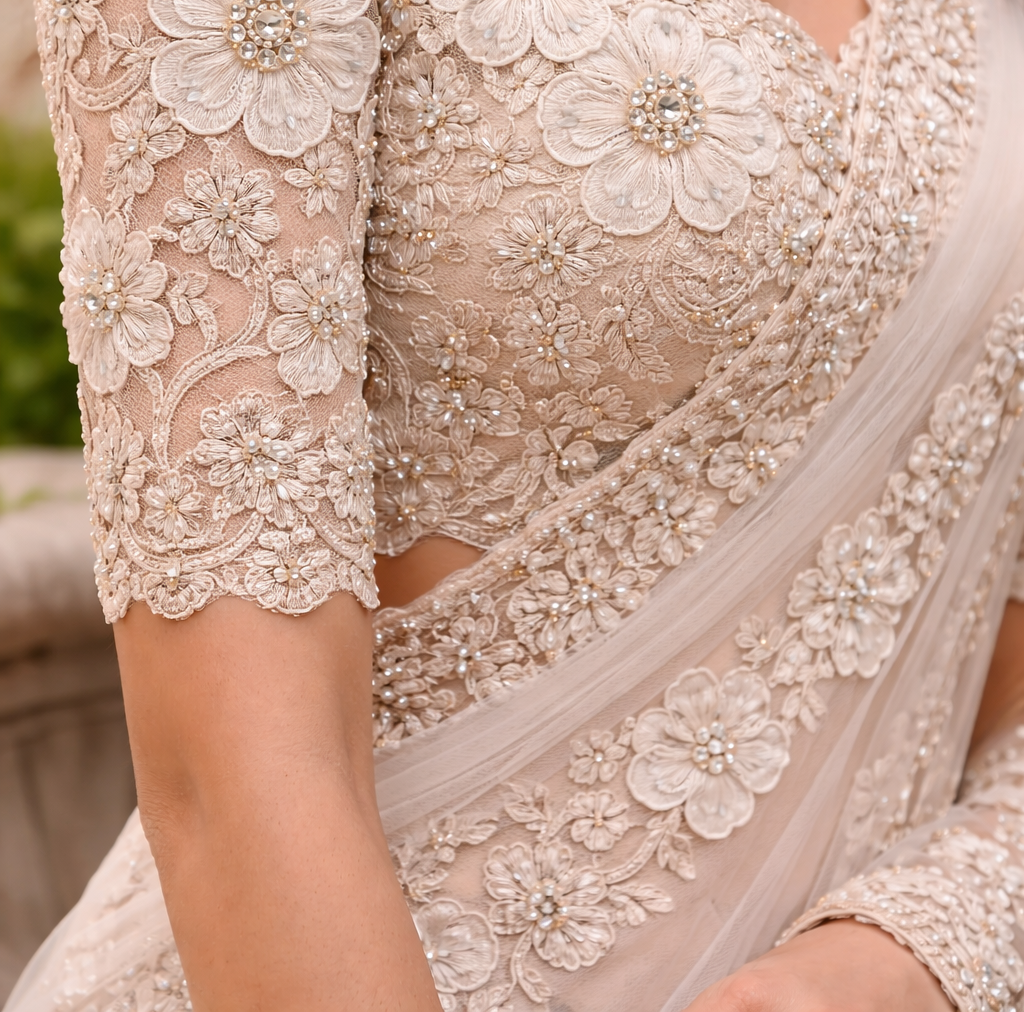
Sequin appliques are pre-assembled motifs made from sequins, threads, sometimes beads, and a backing fabric or net. They are stitched or fused onto a base garment or accessory.
Key characteristics
-
Placement control: You can place them exactly where you want focus — neckline, shoulder, hip, sleeve cuff, veil corner, etc.
-
Modular use: You can use a single applique on a simple dress or repeat several on a gown or long veil.
-
Time-saving vs hand-beading: Instead of hand-stitching every sequin onto the main fabric, workers attach one finished motif. This can reduce labor time per garment, especially for small brands.
Typical uses
-
Bridal blouses and bodices
-
Veils and dupattas with corner or border motifs
-
Occasionwear tops and jackets
-
Kids’ party dresses (characters, florals, simple shapes)
2. Sequin Trims
What they are
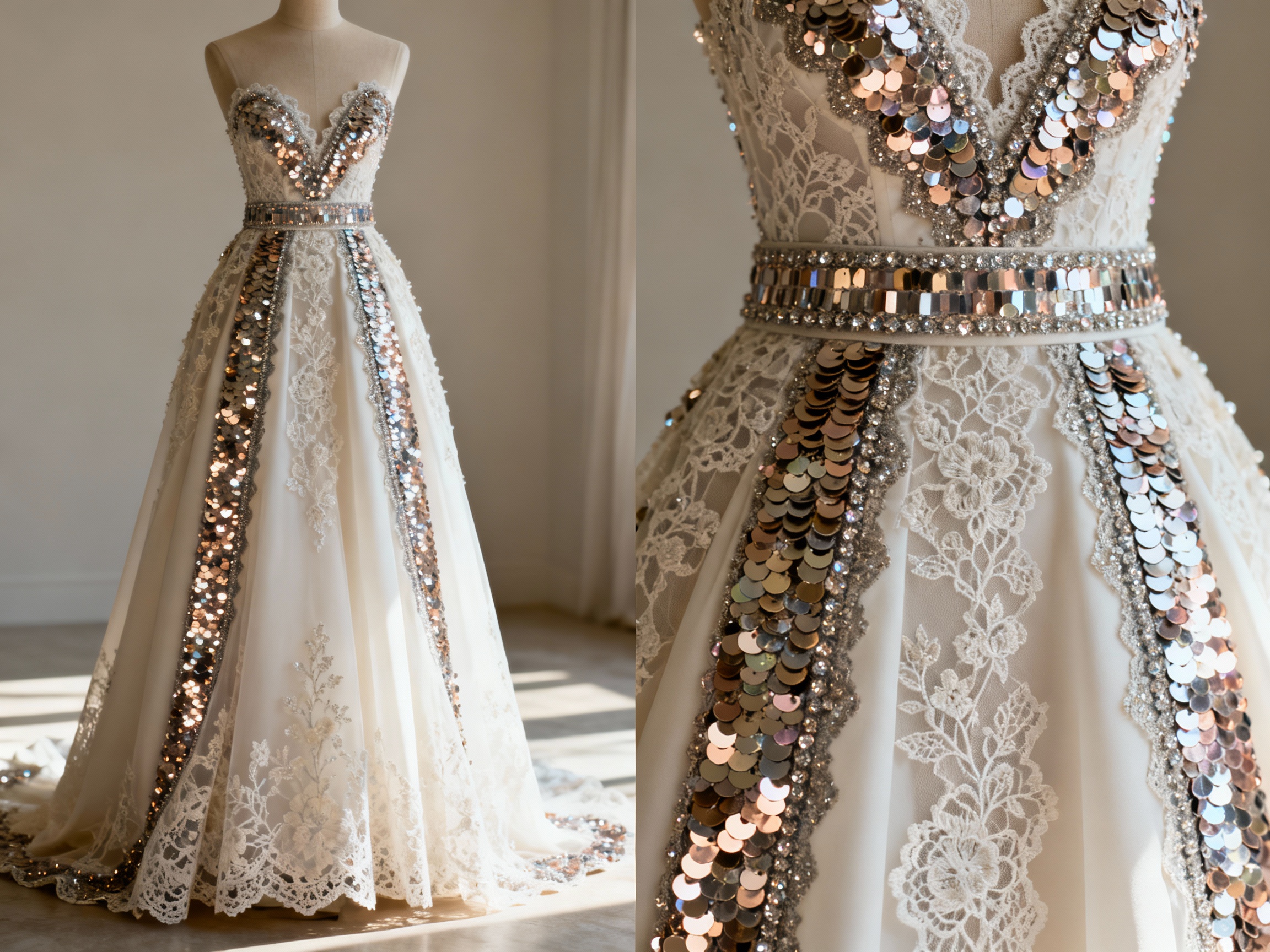
Sequin trims are continuous strips — they can be straight borders, scallop designs, or repeated motifs on a tape or mesh base.
Key characteristics
-
Consistent look: Using a single trim around the hem, neckline, or waist gives a clean, repeated pattern.
-
Speed in production: For factories, running a sequin trim along a hem is more efficient than placing individual appliques.
-
Width options: Narrow trims (0.5–1 cm) are used for outlines; wider trims (2–5 cm) for heavier borders.
Typical uses
-
Bridal hems and sleeve edges
-
Sari and dupatta borders
-
Costume wear and stage outfits
-
Bags, belts, hairbands, headpieces
3. Lace with Sequins
What it is
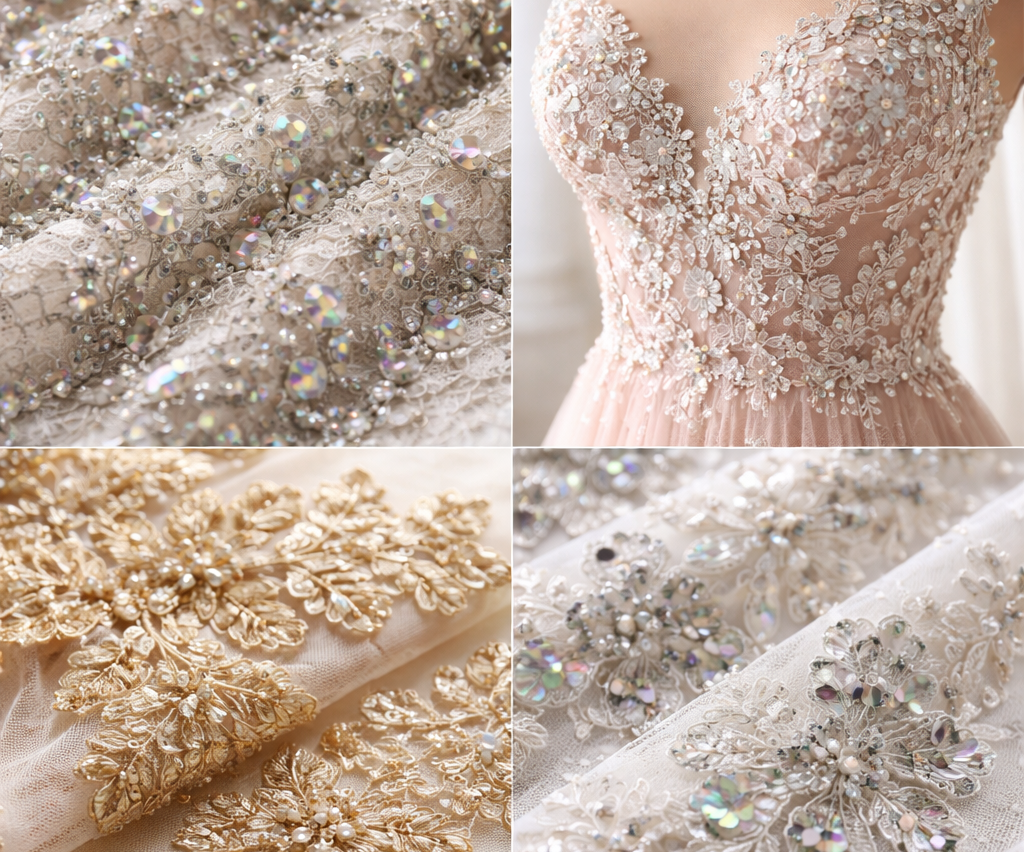
This is lace fabric (often tulle, net, or Raschel lace) with sequins stitched or embroidered into the pattern. Sometimes sequins are attached by machine embroidery, sometimes by hand for high-end couture.
Key characteristics
-
All-over effect: Instead of a few motifs, the whole surface carries a pattern with sequins.
-
Flexible cutting: You can cut panels, godets, sleeves, or appliqué parts out of the same lace.
-
Layering potential: Often used as a top layer over a plain lining, which controls comfort and opacity.
Typical uses
-
Bridal gowns and reception dresses
-
Evening gowns, prom dresses, and long skirts
-
Cocktail dresses and jackets
-
Ready-to-wear tops for festive or occasionwear lines
Practical Considerations and Benefits
When you choose sequin appliques, trims, or lace with sequins, you are not just choosing “sparkle.” You are making decisions that affect:
-
Comfort
-
Sequins can scratch skin if the backing or seam is not covered.
-
Good practice: use soft linings, tape up the inside seams, and avoid heavy sequins near the armhole and underarm area.
-
-
Weight and movement
-
Dense sequin coverage makes garments heavier. For long dresses, this affects how the wearer walks and stands.
-
Test a full-size sample on a real person, not just a mannequin.
-
-
Durability and wash care
-
Many sequins are plastic or gel-based and may not tolerate high heat or harsh chemicals.
-
Dry cleaning is still common for bridal and heavy occasionwear. For ready-to-wear, brands need clear wash labels and tests.
-
-
Cost and labor
-
Sequin lace is more expensive per meter than plain lace; appliques cost more per piece than plain fabric but can reduce stitching time.
-
You must balance fabric cost with tailoring time. Sometimes a costlier applique reduces overall labor.
-
-
Sustainability
-
Traditional sequins are petroleum-based plastic. Some brands are now experimenting with recycled or bio-based sequins, and with better collection of offcuts.
-
If you are selling to eco-conscious customers, this is not a small detail — it becomes part of your brand story.
-
FAQs: Straight Answers to Common Questions
Q1. Are sequin appliques and lace with sequins uncomfortable to wear?
They can be, if the inside is not finished well. The trick is not to avoid sequins, but to protect the skin. Use lining, cover seams with bias tape, and avoid placing dense sequins close to underarms, neck edges, or areas that rub a lot.
Q2. Can sequin lace be used in everyday wear, or is it only for bridal and party outfits?
You can use it in everyday wear, but in controlled amounts. For example, a top with sequin lace sleeves or a small sequin lace panel is easier to maintain than a full sequin dress. Many brands use “day-to-night” pieces with limited sequin zones.
Q3. How should garments with sequins be washed?
Heavy bridal or occasionwear with dense sequins is usually dry cleaned. For lighter ready-to-wear, gentle hand wash or delicate cycle in a wash bag, cold water, and low spin is safer. Always test before setting care labels.
Q4. Do sequins fall off easily?
They can, if the thread tension is poor or knots are not secured. Good factories and ateliers secure threads at both ends and sometimes use extra back-stitching at stress points. Also, avoid cutting across sequin embroidery lines without re-securing the thread.
Q5. Are sequins bad for the environment?
Most standard sequins are plastic-based and do add to microplastic and waste issues if not managed. However, some mills and brands are testing recycled PET sequins, biodegradable bases, and better waste handling. Using sequins in targeted areas rather than full coverage can also reduce material quantity.
Q6. Is lace with sequins suitable for plus-size garments?
Yes, as long as you manage weight, seam placement, and stretch. It is better to use structured lining and paneling that supports the body and spreads the weight evenly instead of one heavy panel pulling downward.
Real-World Examples: How Brands Use Sequin Appliques and Lace with Sequins
To understand how this works in real business, let’s look at some real-world patterns and brand approaches (without focusing on hype, just on what actually happens).
Case Study 1: Bridalwear – Strategic Use of Sequin Lace
Many bridal brands use sequin lace not over the entire dress but in targeted zones: bodices, sleeves, and upper skirts. The lower part of the dress might switch to simpler tulle or satin with less sequin density.
Why this works in practice:
-
Comfort: The bride feels lighter and can move more freely, especially during long ceremonies and dancing.
-
Cost control: Using dense sequin lace only where it shows the most in photos (top half, around the face and torso) keeps fabric cost in check.
-
Alterations: Tailors can more easily adjust the plain lower skirt than a fully embellished one.
Some ateliers also order lace with sequins on a mesh base that can be cut into appliques. They cut out small motif clusters and stitch them onto veils, belts, or sleeves. This allows a unified look across multiple pieces without using full meters of expensive lace.
Case Study 2: Occasionwear and Party Brands – Off-the-Rack Gowns
Fast-fashion and mid-tier occasionwear brands often use sequin trims and panels to create impact with limited labor.
Common strategies:
-
A simple base dress pattern repeated in multiple fabrics, with one version using a sequin lace overlay only on the front panel.
-
Sequin trims used around necklines and hemlines instead of full all-over embroidery.
-
Pre-made sequin appliques used on plain chiffon or georgette dresses to create a “collection look” from a few base patterns.
In sales data from such brands (as reported in trade articles and buyer feedback), styles with clear focal embellishment zones often perform better than those with random or scattered sequins. Customers respond more to a defined pattern — like a strong neckline or waist detail — than to a noisy full-surface sparkle that doesn’t photograph cleanly.
Case Study 3: Sustainable and Conscious Fashion – Smarter Sequins, Not Just More
Some sustainable and conscious labels do not avoid sequins entirely but use them in a more controlled way:
-
Lower density: Instead of full sequin coverage, they use sparse patterns or appliques, which reduces the total number of plastic pieces.
-
Recycled or reclaimed sequins: Some studios upcycle sequins from deadstock garments or old samples, re-attaching them onto new designs.
-
Design for longevity: They focus on classic shapes and careful stitching so that the garment lasts longer, spreading the environmental cost over more years of use.
This approach shows that you can still sell “special occasion” pieces with sparkle, but with a clearer story. For customers who care about sustainability, the conversation shifts from “no sequins ever” to “we use sequins in a careful, measured way and build garments that last.”
Conclusion: How to Use Sequin Appliques and Lace with Sequins the Smart Way
Sequin appliques, trims, and lace with sequins are not just about decoration. They affect comfort, production time, cost, and even your sustainability story. When used thoughtlessly, they create issues: scratchy seams, heavy dresses, missing sequins, unhappy customers, and stock that gets returned or discounted.
But when used with planning, they become powerful tools:
-
Use appliques for focused impact and quicker embellishment.
-
Use trims to define edges and shapes efficiently.
-
Use lace with sequins when you want a strong overall look, but control where and how dense the coverage is.
-
Always think about lining, weight, wash care, and environmental impact from the start — not at the end when labels are being printed.
Whether you are a designer, a small brand owner, a merchandiser, or a student planning a collection, the goal is simple:
Make garments that look good, feel good, and stand up to real use.