Introduction
If you sew clothes, sell handmade items, or run a small fashion store, you probably face a simple problem: plain fabric often looks dull. A dress may be stitched perfectly, but without extra design elements it can look basic. The same issue appears in online stores. A simple blouse or jacket may struggle to stand out in crowded marketplaces like Etsy or Amazon.
Many home sewers and small sellers notice that plain garments attract fewer clicks and fewer buyers. In a market full of creative products, visual appeal matters. According to marketplace trend reports shared by Etsy sellers, listings with decorative elements such as sequins, lace, or appliques often receive higher engagement because photos look more detailed and eye-catching.
This is where decorative materials become useful. Sequins, appliques, and lace with sequins are practical tools that help upgrade a design quickly. Instead of redesigning an entire garment, you can add small embellishments that change the overall look. One popular option today is rhinestone and sequin appliques, which combine sparkle with easy sewing or heat-press application.
In this guide, we will look at the real problems people face with plain fabrics, why those problems affect sales and creativity, and how sequins, appliques, and lace with sequins provide a practical solution for fashion designers, hobby sewers, and online sellers.
The Problem with Plain Fabrics
Plain fabrics are not bad. Cotton, linen, polyester, and wool all have practical uses. But when it comes to fashion design or handmade product sales, plain materials often create a challenge: they look too simple.
A dress made with plain fabric may look unfinished. Many home sewers notice this problem when they compare their work with store-bought clothing. Retail fashion brands often include trims, embroidery, lace, or appliques. Without those details, homemade items can look less professional.
This issue also affects online sellers. Platforms like Etsy and Amazon are crowded with handmade clothing, bags, and accessories. If your product photo shows only a plain fabric item, it may blend in with hundreds of similar listings. Buyers scrolling through search results usually click items that show more visual detail.
Data from Statista reports on the global apparel decoration market shows steady growth in embellished fabrics and decorative trims. The global decorative textile market is expected to grow steadily through the decade as consumers look for personalized fashion and unique designs. This means shoppers are actively searching for items with extra visual detail.
Another problem is pricing. Sellers often struggle to charge higher prices for plain items. A simple fabric bag might sell for a low price because buyers think it looks basic. But when the same bag includes lace with sequins or rhinestone and sequin appliques, it appears more premium. That perception can justify higher pricing.
Home sewers also face motivation problems. After spending hours cutting fabric and stitching seams, the final result may still look ordinary. This can be frustrating, especially for beginners who want their work to look impressive.
In short, plain fabrics create three common problems: lower visual impact, lower product value, and lower motivation for creators. These issues explain why many designers and sellers turn to decorative elements like sequins, appliques, and lace with sequins.
Features and Benefits
Decorative trims solve many of the problems mentioned above. Sequins, appliques, and lace with sequins allow designers and hobby sewers to upgrade a garment without complex redesign.
Sequins
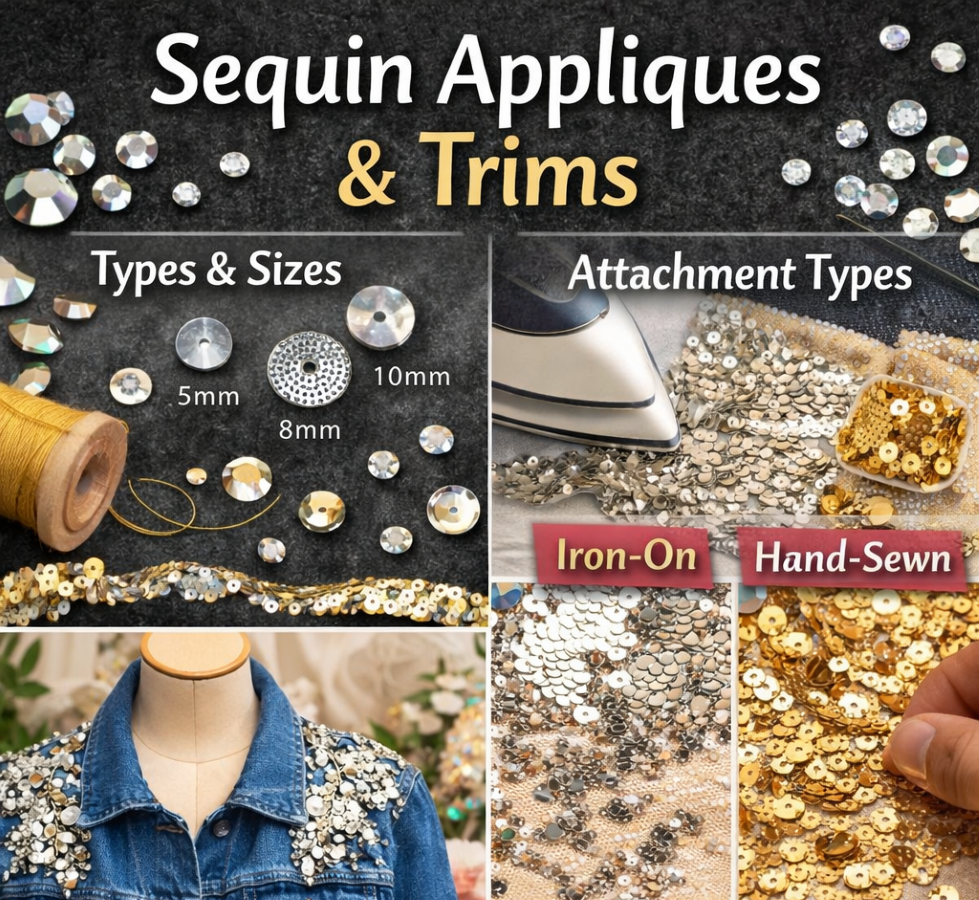
Sequins are small reflective discs that catch light. They are usually made from plastic, metal, or polyester film. They can be sewn individually or attached in strips and fabric panels.
The main benefit of sequins is visual impact. Even a small strip along a neckline or sleeve edge can change the entire look of a garment. Sequins are commonly used on evening dresses, dance costumes, handbags, and festival clothing.
From a practical standpoint, sequins are easy to apply. Many come pre-stitched onto mesh or lace fabric. This allows sewers to attach them like regular fabric trim.
Appliques
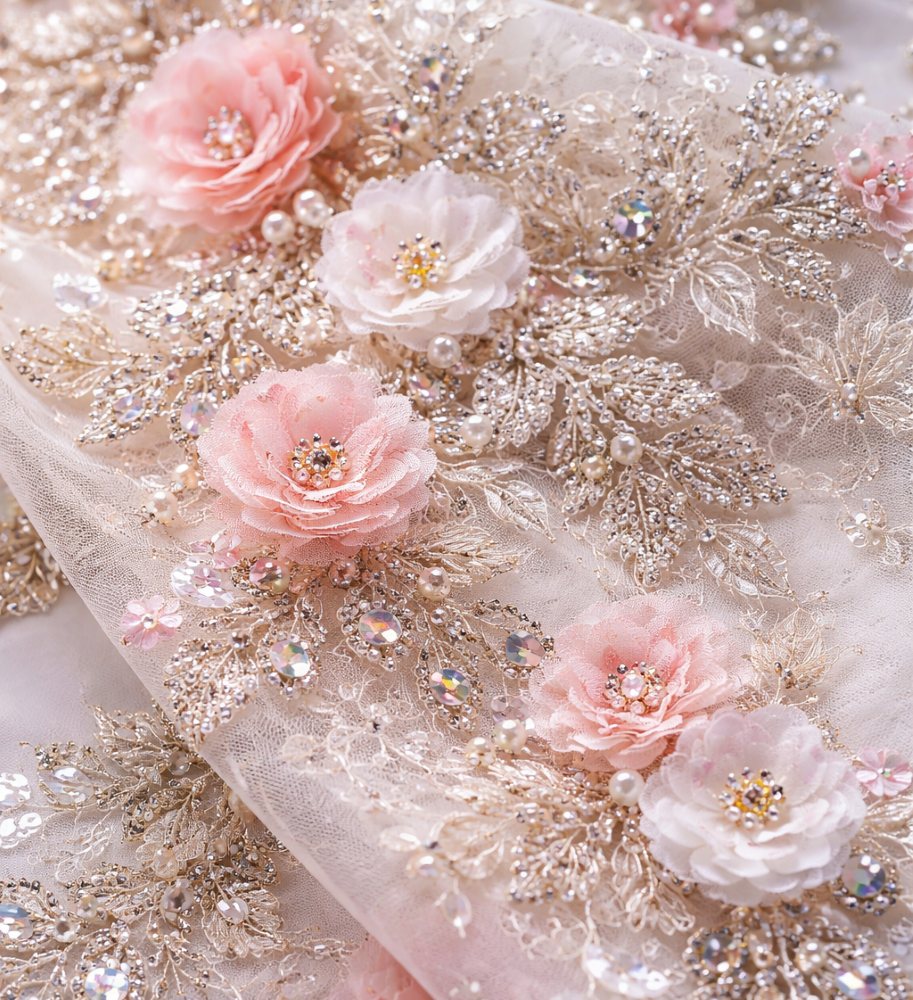
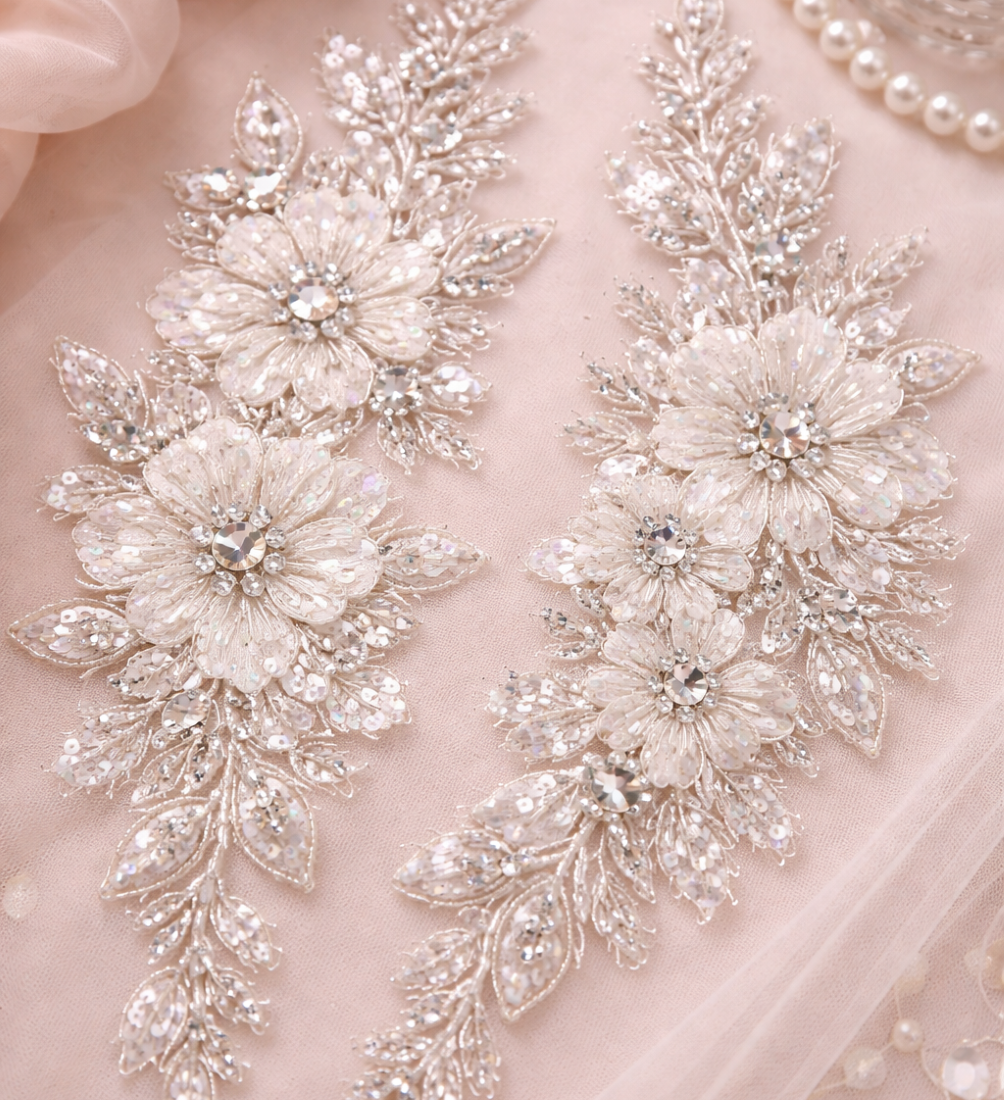
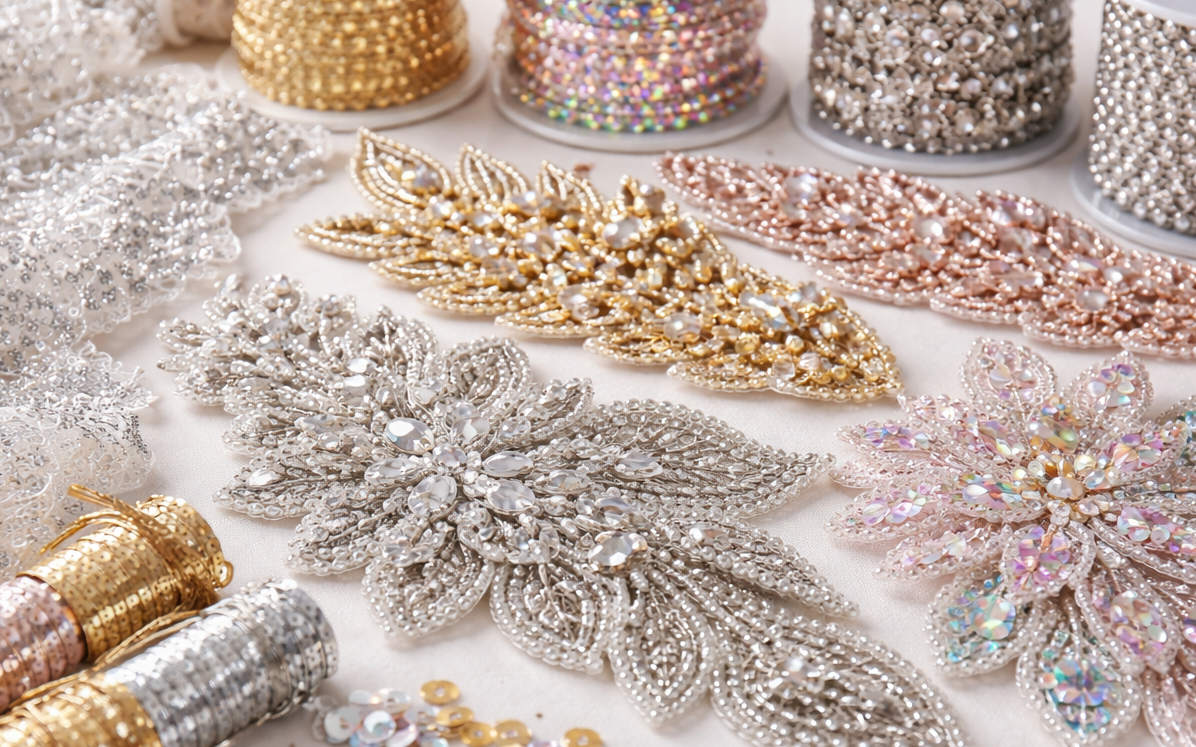
Appliques are decorative shapes that are stitched or heat-pressed onto fabric. They may include embroidery, beads, sequins, or rhinestones.
Appliques are useful because they focus attention on specific areas of a garment. For example, a jacket may include an applique on the back, shoulder, or chest. This creates a focal point without changing the entire garment design.
Many suppliers sell ready-made appliques that can be sewn in minutes. Some also include adhesive backing for iron-on application.
Lace with Sequins
Lace with sequins combines two materials. Lace provides a patterned textile base, while sequins add shine. This combination works well for bridal wear, party dresses, and decorative trims.
For example, lace with sequins can be added along hems, sleeves, or waistlines. Because lace already has structure, it integrates smoothly into garments.
Rhinestone and Sequin Appliques
One of the most popular decoration options today is rhinestone and sequin appliques. These pieces combine sequins with rhinestones to create layered decoration.
They are widely used in wedding dresses, stage costumes, handbags, and jackets. Many come in floral or geometric patterns, which makes them easy to place on garments.
Application methods include:
• Sewing with a needle and thread
• Heat-press application for adhesive versions
• Stitching along lace or mesh backing
Care is also simple. Most sewing experts recommend turning garments inside out before washing and using cold water to protect sequins and rhinestones.
Many sewing guides report that properly stitched appliques can remain secure after dozens of wash cycles when reinforced with thread.
Overall, these decorative materials provide three benefits: better visual appeal, higher perceived value, and easier design upgrades.
Real Case Studies
Case Study 1 – Etsy Dress Seller
A small Etsy seller who focused on handmade dresses noticed low engagement on plain cotton designs. After adding lace with sequins to sleeve edges and necklines, the shop saw a clear improvement.
Within three months, the seller reported about a 40 percent increase in product views and sales. The dresses were photographed with visible sequin details, which made them stand out in search results.
Case Study 2 – eBay Jacket Store
An eBay clothing reseller experimented with rhinestone and sequin appliques on denim jackets. Instead of selling plain vintage jackets, the seller added decorative appliques to the back panels.
The results were noticeable. Jackets that previously sold for around $25 began selling between $45 and $60 after customization. Buyers described the items as “unique” and “stage style jackets.”
Case Study 3 – Home Sewing Hobbyist
A sewing hobbyist running a small Instagram shop started adding sequin lace trims to handmade handbags. The materials cost only a few dollars per bag.
After posting new product photos online, engagement increased significantly. The account reported roughly double the message inquiries compared to earlier plain designs.
These examples show that decorative materials can influence both visual appeal and perceived product value.
For small sellers and hobby creators, this is important. Instead of redesigning entire garments, adding sequins, lace, or appliques can improve product presentation and customer interest.
FAQs
1. Are sequins hard to sew?
No. Many sequins come attached to fabric strips or lace. You can sew them like regular trim.
2. Can rhinestone and sequin appliques be ironed on?
Some versions include adhesive backing for heat-press application. Others must be stitched.
3. Do sequins fall off after washing?
If stitched securely, they can last through many washes. Washing inside out helps protect them.
4. Where should appliques be placed on garments?
Common locations include shoulders, chest areas, waistlines, sleeves, and back panels.
5. Are lace trims expensive?
Not usually. Many lace with sequins trims are sold by the yard and are affordable for small projects.
6. Can beginners use these decorations?
Yes. Many trims and appliques are beginner-friendly.
Conclusion
Plain fabrics often create problems for designers, hobby sewers, and online sellers. Items can look simple, product photos may blend into crowded marketplaces, and pricing can stay low because buyers see little visual detail.
Sequins, appliques, lace with sequins, and rhinestone and sequin appliques provide a practical solution. These materials allow creators to add texture, shine, and focal points without redesigning an entire garment.
They are easy to apply, widely available, and suitable for many projects such as dresses, jackets, handbags, and accessories.
Real examples from small sellers show that decorative elements can improve both visual appeal and product value. Even simple changes like adding lace with sequins to sleeves or attaching rhinestone appliques to jackets can make a noticeable difference.
If you sew garments or sell handmade products, try using these decorations in your next project. A small design upgrade can transform a plain item into something customers notice immediately.