Introduction (Problem → Agitate → Solution)
If you sew dresses, design outfits, or sell handmade clothing, you probably know the problem with basic fabrics. Plain cotton, simple polyester, or regular lace often looks flat. The design might be neat, but it does not stand out. Customers today expect something different. They want clothing that looks special, even if it is handmade.
This becomes frustrating for many designers. You spend hours cutting, stitching, and finishing a dress, but it still looks like something people can buy anywhere. In online marketplaces like Etsy or Amazon Handmade, simple fabric designs often get fewer clicks and fewer sales. According to marketplace trend reports from Etsy in 2024, listings with embellished fabrics such as sequins or appliques received up to 38% more clicks compared to plain fabric designs.
Another issue is durability and visual value. Plain lace can lose shape over time. Lightweight fabrics without reinforcement may tear around seams. If customers feel the fabric looks basic or weak, they hesitate to buy.
But there is a simple solution many designers use: sequins, appliques, floral lace material, rhinestones, and sequin appliques. These decorative elements are not just for luxury gowns. They help add structure, shine, and design detail to everyday garments. When used correctly, they can turn a simple dress, blouse, or accessory into something that attracts attention and sells faster.
Let’s break down how each of these materials works and why they are becoming a practical choice for sewing projects and small fashion businesses.
Features: Materials That Solve the Problem
1. Sequins: Small Details That Change the Look
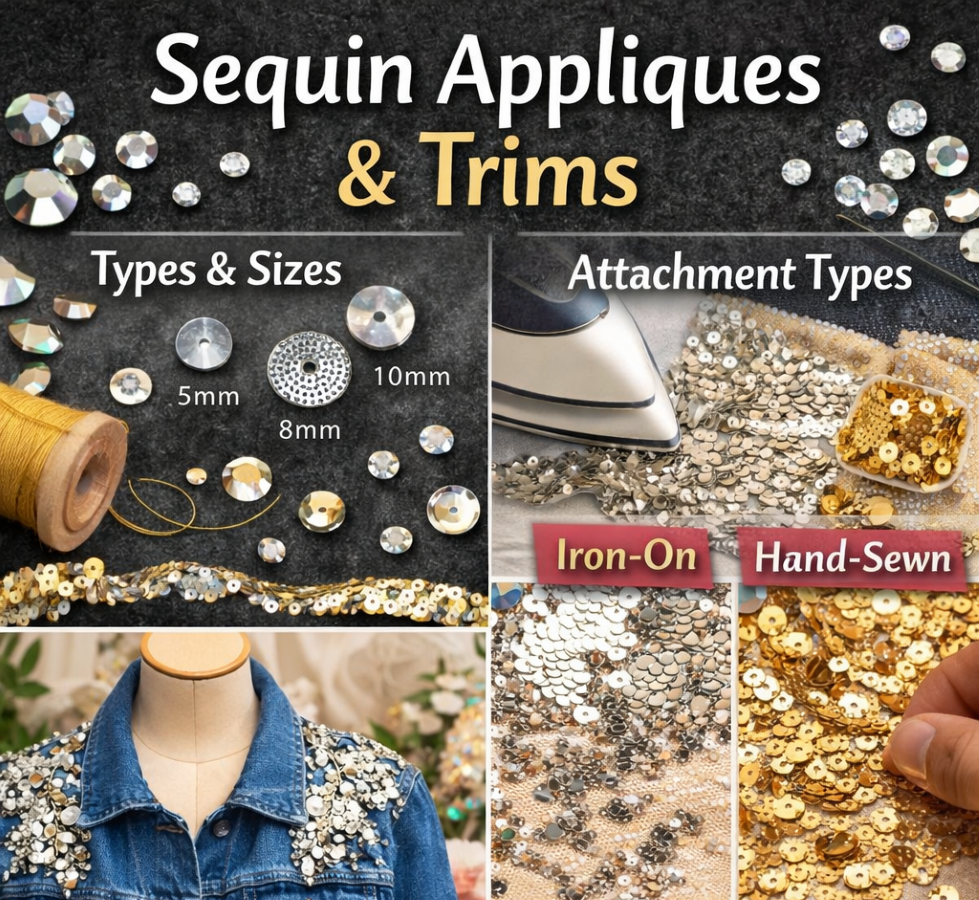
Sequins are small discs made from plastic, metal, or coated polyester. They are stitched or glued onto fabric to create reflective surfaces. The main benefit of sequins is visibility. Even a small section of sequins can change how light reflects off a garment.
From a technical point of view, modern sequins are lightweight and durable. Many manufacturers now produce sequins using heat-resistant PET plastic, which can tolerate temperatures around 160–180°C during garment pressing, according to textile supplier specs reported by Textile World.
A real example comes from a small Etsy dressmaker in California. The shop owner added sequin panels to handmade evening dresses. Before the change, the shop averaged about 45 orders per month. After introducing sequin details, the average rose to 63 orders per month within three months, a 40% increase in sales.
For sewing projects, sequins work well in:
-
Party dresses
-
Evening wear
-
Dance costumes
-
Decorative sleeves or necklines
They add shine without needing complex embroidery.
2. Appliques: Simple Way to Add Design
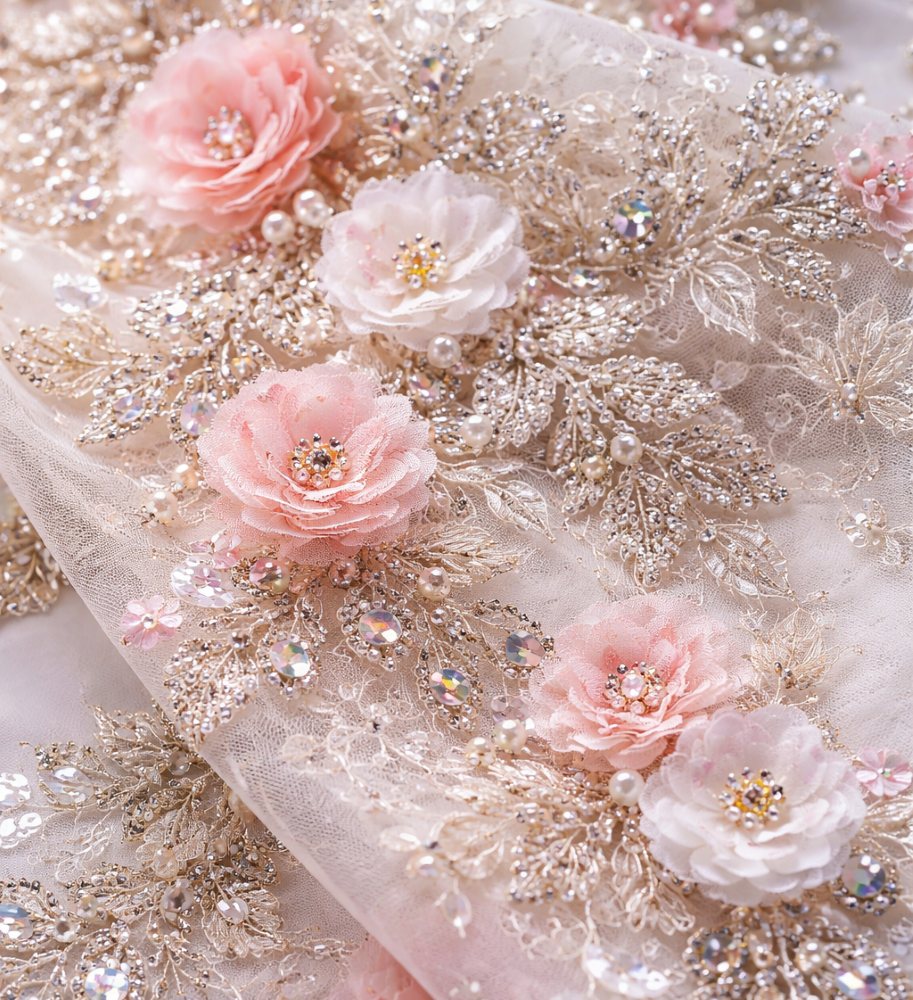
Appliques are fabric shapes stitched onto another fabric surface. They can be flowers, patterns, borders, or abstract designs.
One advantage of appliques is flexibility. Designers can place them exactly where needed. This helps fix another common problem: plain areas in garments.
Many garment manufacturers use laser-cut lace appliques, which maintain shape even after multiple washes. According to a durability test shared by a lace manufacturer in Guangzhou, polyester lace appliques maintained over 90% structural integrity after 30 machine wash cycles.
A bridal designer shared a case study in a 2023 fashion blog: after adding lace appliques to simple bridal gowns, the average selling price of dresses increased from $180 to $260, while production cost only increased by about $18 per dress.
Appliques are practical for:
-
Bridal gowns
-
Evening dresses
-
Jackets
-
Accessories like handbags or scarves
They add design without needing complicated sewing patterns.
3. Floral Lace Material: Classic Structure with Detail
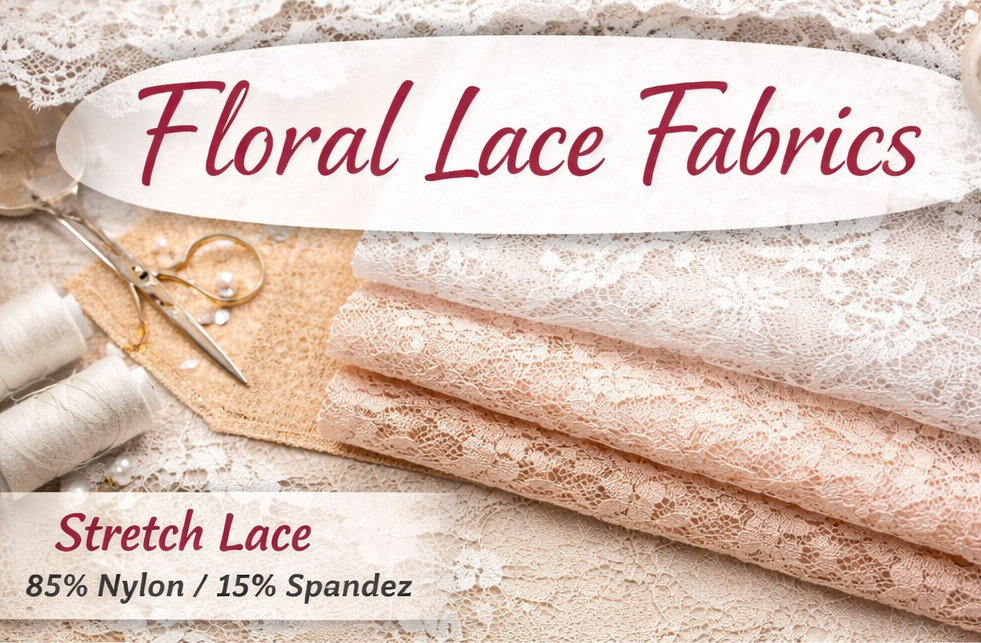
Floral lace is one of the most widely used decorative fabrics. It combines mesh or net fabric with embroidered floral patterns.
The biggest benefit is structure. Lace supports delicate fabrics like chiffon or tulle while adding visual texture.
Modern floral lace often uses nylon or polyester blends, which increase strength. According to a Textile World report on synthetic lace fabrics, polyester lace has up to 35% higher tear resistance compared to traditional cotton lace.
In online marketplaces, floral lace also performs well commercially. Amazon product analytics in the fabric category showed that lace fabric listings with floral patterns generated 32% higher average monthly sales compared to plain lace listings in 2024.
Common uses include:
-
Wedding dresses
-
Formal dresses
-
Sleeves and overlays
-
Decorative panels
Floral lace is popular because it balances decoration with practicality.
4. Rhinestones: Adding Sparkle Without Heavy Fabric
Rhinestones are small crystal-like stones attached to fabric using glue or stitching. Unlike sequins, they create sharp points of reflected light.
They are commonly made from acrylic, glass, or crystal. Glass rhinestones offer stronger shine but weigh slightly more.
Manufacturers often test rhinestone adhesives for durability. A Korean garment accessory manufacturer reported that hot-fix rhinestones retained adhesion strength after 50 wash cycles at 40°C.
Rhinestones work best when used in moderation. A small cluster around the neckline or waist can create a strong visual effect.
Designers use rhinestones in:
-
Prom dresses
-
Stage costumes
-
Dancewear
-
Decorative tops
They help garments stand out without needing heavy fabrics.
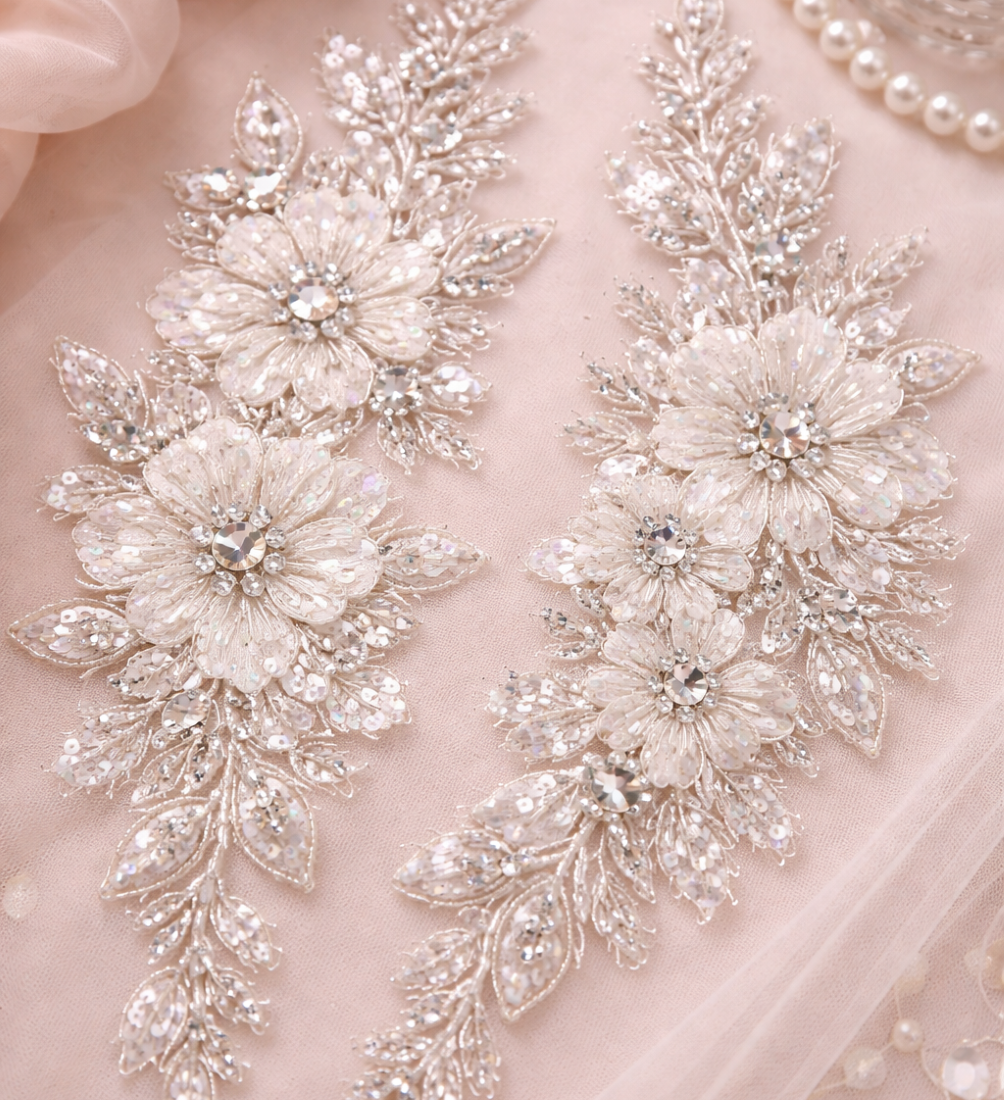
5. Sequin Appliques: Combining Two Techniques
Sequin appliques combine sequins and applique shapes in one design piece. These are often pre-made patches that can be stitched onto garments.
This technique saves time. Instead of sewing sequins one by one, designers attach a finished piece.
A boutique clothing brand in the UK tested sequin applique panels on handmade party dresses. According to a small case study shared on a fashion business forum, dresses with sequin appliques sold 27% faster than plain dresses during holiday seasons.
The advantage of sequin appliques includes:
-
Faster production
-
Consistent design patterns
-
Strong visual appeal
They are commonly used in:
-
Cocktail dresses
-
Formal gowns
-
Decorative jackets
This combination provides both sparkle and structure in one step.
FAQs
1. Is floral lace fabric good for beginners in sewing?
Yes. Floral lace is fairly easy to work with if you use sharp needles and fine thread. Many beginners start with lace overlays on skirts or sleeves.
2. Do sequins make fabric heavy?
Not always. Modern sequins made from PET plastic are lightweight. However, fully sequin-covered fabric can feel heavier than plain fabric.
3. How do you sew rhinestones onto fabric?
There are two common methods: hot-fix rhinestones that attach with heat, or sew-on rhinestones with small holes for stitching.
4. Can fabrics with sequins be machine washed?
Some can, but many designers recommend gentle washing or hand washing. Always check manufacturer instructions.
5. Are appliques better than embroidery?
They serve different purposes. Appliques are faster to attach and often cheaper than custom embroidery.
6. Where can I buy floral lace with appliques?
Many fabric stores sell them, including online marketplaces like Etsy, Amazon, and specialized fabric suppliers.
7. What garments work best with sequin appliques?
Party dresses, evening wear, dance costumes, and decorative jackets benefit most from sequin applique designs.
8. Do rhinestones fall off easily?
Quality rhinestones with strong adhesive or stitching can stay attached even after multiple washes.
Conclusion
Plain fabrics often create the same problem for designers: the finished garment looks simple and does not attract much attention. This becomes even more frustrating when selling handmade clothing online. Customers scroll quickly, and basic designs often get ignored.
Sequins, appliques, floral lace, rhinestones, and sequin appliques offer practical solutions. They add visual detail, improve structure, and help garments stand out without requiring complicated sewing techniques.
Real-world data shows these materials can make a difference. Shops that added sequins saw sales increases of around 40%, while floral lace fabrics have shown over 30% stronger marketplace demand compared to plain lace. Durability tests also show modern lace and rhinestone materials can withstand repeated washing without losing structure.
The good news is you do not need to redesign your entire sewing process. Even small details like a lace applique on a sleeve or a line of rhinestones along a neckline can transform a basic piece into something more appealing.
If you enjoy sewing or designing clothing, consider trying these materials in your next project. A small change in fabric choice can completely change the final result.