Introduction
Have you ever looked at a shirt, bag, or dress and thought, “This looks plain”? Many craft lovers face the same problem. A piece of fabric or clothing may be well-made, but the design feels boring. It lacks sparkle, texture, or visual interest.
People often try to solve this by adding decorative pieces like sequins, rhinestones, trims, or embroidered lace. At first, the craft looks exciting. But sometimes the decorations do not last. Cheap appliques peel off after a few washes. Rhinestones fall off during use. Sequins fade or threads break.
This is where quality materials make a big difference.
Sequin appliques, trims, rhinestone patches, and embroidered lace are widely used in fashion and crafts because they add decoration without requiring complex sewing skills. These materials are used on dresses, jackets, bags, shoes, stage costumes, and home décor projects.
Good decorative materials follow clear manufacturing standards. Suppliers often measure quality using factors like sequin size, stitch density, fabric weight (gsm), and durability tests.
For example, embroidered lace fabrics may contain 150–250 stitches per inch, and high-quality trims are often stitched with polyester thread tested for repeated washing.
In this guide, we will explore how sequin appliques, trims, rhinestone decorations, and embroidered lace work. You will also see real examples, benefits, limitations, and practical tips for using these materials in craft projects.
Sequin Appliques and Trims: Key Features
Sequin appliques and trims are decorative materials designed to add shine and texture to clothing or craft items. They are commonly used in fashion design, costume making, and DIY projects.
A sequin applique is a decorative patch made from sequins attached to a base fabric such as mesh, tulle, or organza. The patch can be sewn or glued onto another fabric.
A sequin trim is a narrow strip of fabric with sequins stitched along its length. These trims are often used to decorate hems, sleeves, collars, and accessories.
Most sequin trims are produced using embroidery machines that stitch sequins onto a narrow tape or ribbon.
Typical supplier specifications include:
-
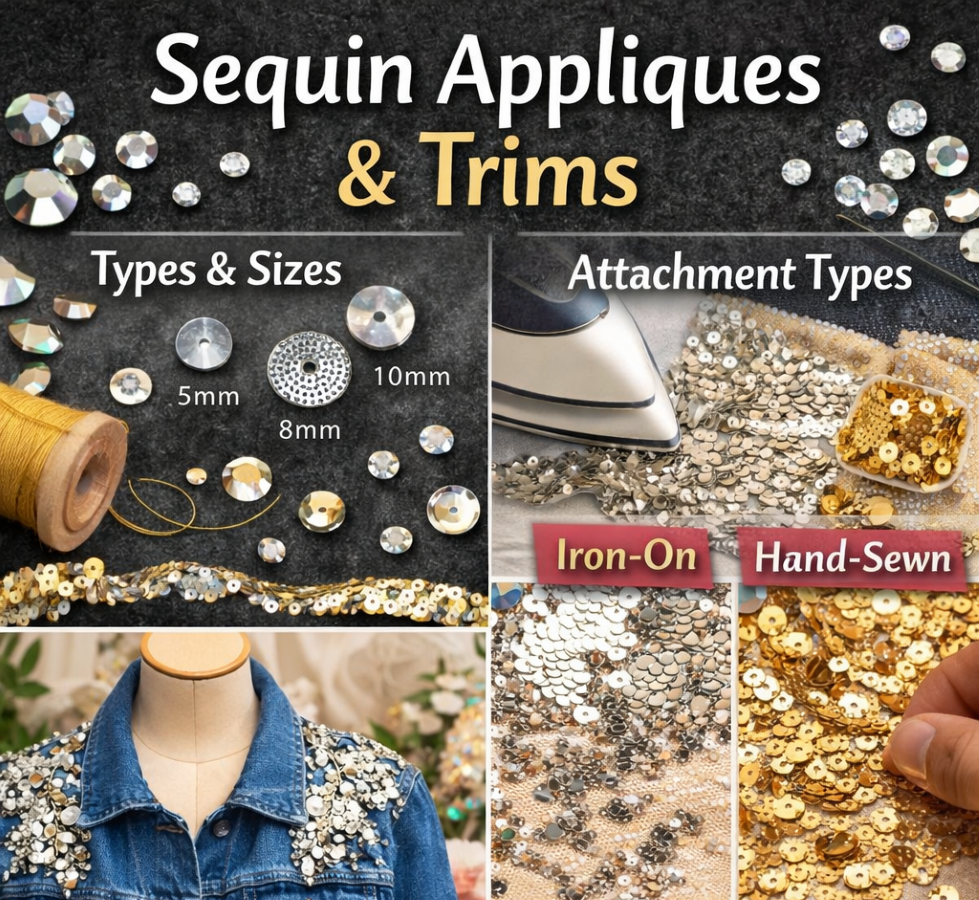
Sequin size: 5 mm to 10 mm
-
Base fabric weight: 80–120 gsm
-
Thread type: polyester filament
-
Sequin spacing: 3–6 mm between stitches
These small technical details help determine durability.
Sequins are usually made from polyester film, which reflects light and resists fading under normal conditions. Polyester sequins are preferred because they withstand washing temperatures up to 40°C.
Another advantage is flexibility. Sequin trims can easily bend along curved edges, which makes them useful for decorating necklines, pockets, or bag straps.
Many DIY designers use sequin trims to upgrade simple clothing. For example, adding two rows of 8 mm sequin trim along the sleeves of a denim jacket can change the look of the garment without altering the pattern.
Types and Attachment Methods
There are several ways to attach sequin appliques and trims to fabric.
Iron-on appliques
These appliques include a heat-activated adhesive layer.
Typical supplier specs:
-
Adhesive temperature: 140–160°C
-
Press time: 10–15 seconds
Iron-on appliques are popular for beginners because they are fast to apply.
Hand-sewn appliques
These are attached using needle and thread.
Advantages:
-
Strong attachment
-
Suitable for heavy fabrics
Disadvantages:
-
Takes more time
Machine-sewn trims
Sequin trims are usually attached using sewing machines with zigzag stitching. This method keeps the trim secure even during frequent washing.
Rhinestone Appliques and Embroidered Lace
Rhinestone appliques and embroidered lace provide a different type of decoration compared with sequins. Instead of small reflective discs, they rely on crystals or thread embroidery to create patterns.
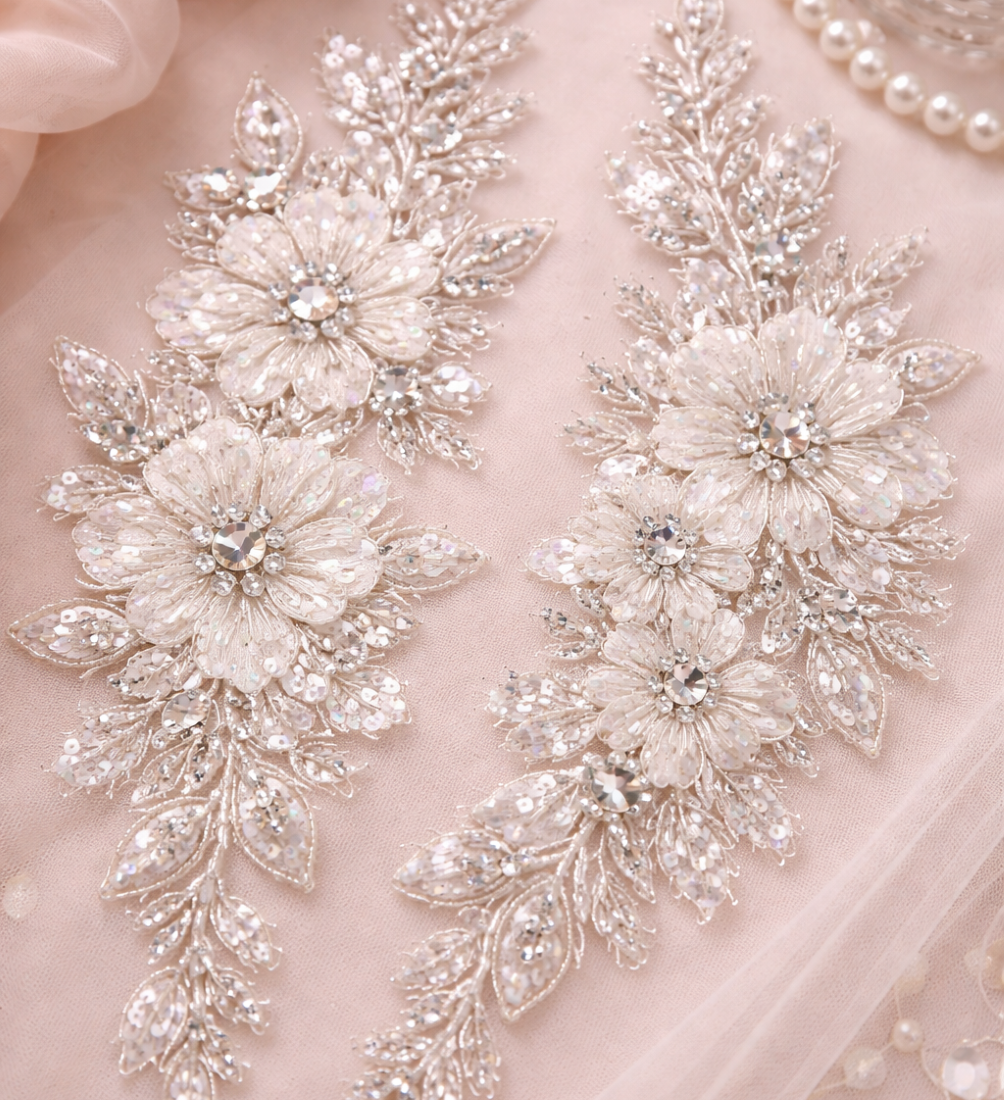
Rhinestone appliques consist of small crystals mounted on fabric patches or metal settings.
Common rhinestone sizes include:
| Size | Diameter | Use |
|---|---|---|
| SS12 | ~3 mm | detailed designs |
| SS16 | ~4 mm | clothing decoration |
| SS20 | ~5 mm | dance costumes |
| 10–20 mm | large stones | statement pieces |
Rhinestones may be sew-on or glue-on.
Sew-on rhinestones have small holes or metal claws that hold the crystal. This method is common for stage costumes because it provides stronger attachment.
Glue-on rhinestones rely on adhesive backing.
Supplier durability tests often show:
-
Sew-on rhinestones: up to 500 wash cycles
-
Heat-fix rhinestones: 200–300 cycles
-
Basic adhesive stones: 50–100 cycles
Now let’s look at embroidered lace.
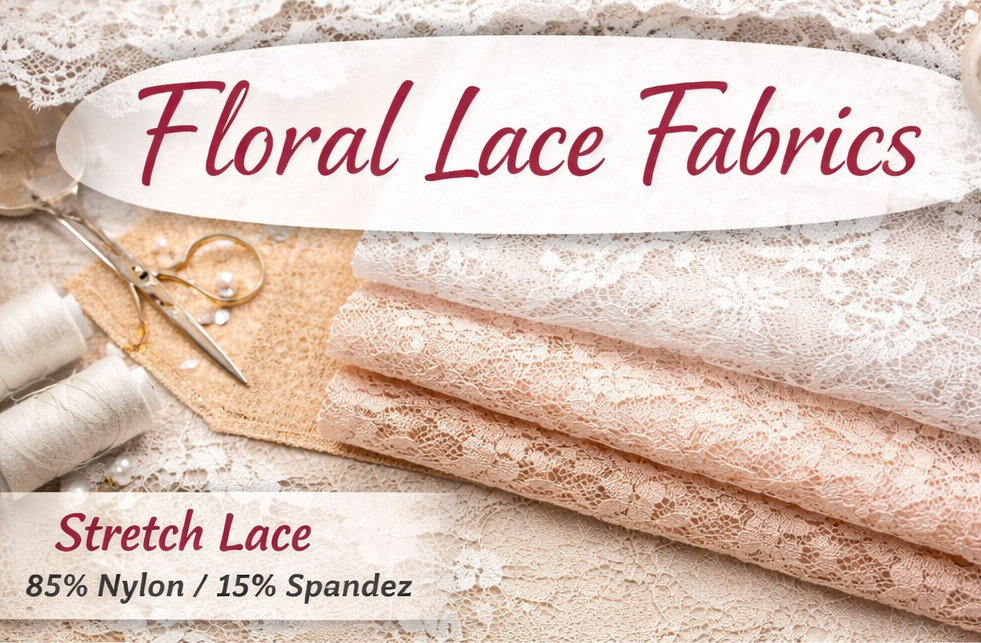
Embroidered lace is produced using embroidery machines that stitch decorative patterns onto mesh or tulle fabric.
Typical specifications include:
-
Stitch density: 150–250 stitches per inch
-
Fabric composition: polyester or nylon blends
-
Fabric weight: 100–180 gsm
Higher stitch density creates stronger lace with more detailed patterns.
Embroidered lace is widely used in:
-
wedding dresses
-
bridal veils
-
evening gowns
-
decorative table runners
-
craft accessories
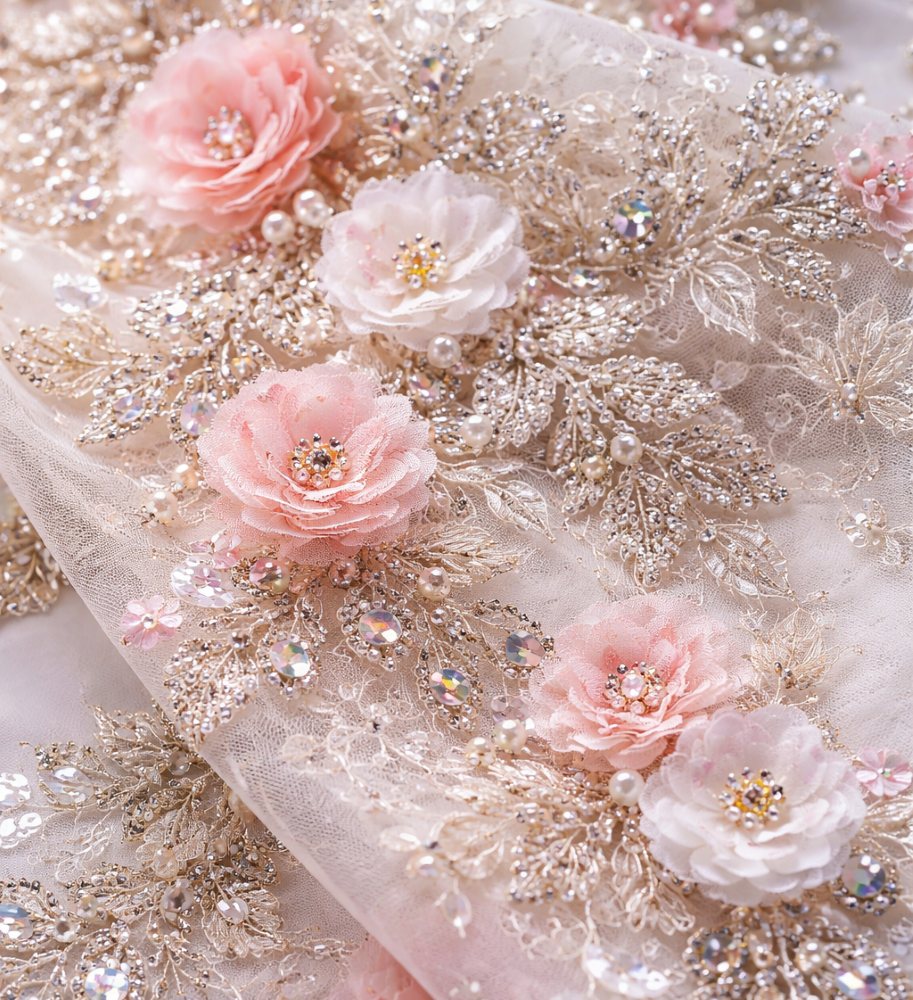
Many designers combine rhinestones and embroidered lace to create layered decorative effects.
Pros, Cons, and Case Studies
Decorative materials can greatly improve craft designs, but they also have limitations.
Advantages
1. Quick visual upgrade
Decorative trims and appliques can transform simple clothing without changing the garment structure.
A craft report from a fabric supplier showed that adding 3–4 decorative patches increased the perceived value of garments during consumer surveys.
2. Low-cost customization
Average supplier prices:
-
Sequin trims: $3–$8 per yard
-
Rhinestone appliques: $5–$20 each
-
Embroidered lace: $10–$25 per yard
These materials allow small craft businesses to create custom products with limited budgets.
3. Wide design flexibility
Appliques can be placed on almost any surface, including:
-
denim jackets
-
handbags
-
shoes
-
hats
-
wedding accessories
Limitations
1. Added weight
Heavy rhinestone patches may add 50–150 grams to a garment.
This can affect lightweight fabrics.
2. Maintenance requirements
Decorated garments may require gentle washing or hand washing.
3. Adhesive durability
Iron-on appliques may weaken after repeated washing if heat bonding is not applied correctly.
Case Study: Online Craft Seller
An Etsy seller specializing in decorated denim jackets shared sales data in a craft business report.
Process used:
-
Add sequin trims along sleeves
-
Attach two rhinestone appliques on the back panel
Material cost per jacket:
-
trims: $6
-
appliques: $12
Total cost increase: $18
Average selling price increased from $40 to $95 after decoration.
This example shows how decorative materials can significantly raise product value.
Real-World Craft Examples
Decorative appliques and lace are widely used in craft markets and DIY fashion communities.
Festival clothing
Festival outfits often use sequin trims and rhinestone patches. These materials reflect light under stage lighting and create noticeable patterns.
A typical festival top may include 20–30 rhinestones and two rows of sequin trim.
Bridal veils
Bridal accessory makers often use embroidered lace trims along veil edges.
Typical veil materials include:
-
120 gsm lace
-
polyester embroidery thread
These trims create decorative borders without making the veil heavy.
Handbags
Craft sellers often decorate canvas bags with small sequin patches. This approach is popular because it allows mass-produced bags to appear customized.
Dance costumes
Dancewear designers prefer sew-on rhinestones because costumes experience frequent movement and washing.
FAQs
What is the best glue for rhinestone trims?
Fabric adhesives like E6000 or textile glue are commonly used because they remain flexible after drying.
Are sequin trims washable?
Yes, most polyester sequin trims can withstand gentle washing at 30–40°C.
How do you attach embroidered lace?
Lace can be attached using sewing machines, hand stitching, or fabric adhesive.
Are rhinestone appliques reusable?
Sew-on rhinestones may be removed and reused if the fabric is carefully unstitched.
Which fabric works best with sequin appliques?
Medium-weight fabrics such as denim, cotton, and polyester blends hold appliques well.
How many appliques should be used on one garment?
Most designers use 2–6 decorative patches, depending on garment size and design.
Conclusion
Plain clothing and crafts do not need to stay plain. Decorative materials like sequin appliques, trims, rhinestone patches, and embroidered lace can quickly improve design.
The key is choosing materials with good stitch density, strong adhesives, and durable fabrics.
When used properly, these decorations can transform simple items into unique products. Many small craft businesses and DIY designers rely on these materials to create products that stand out.
If you want to upgrade your crafts, start experimenting with trims, rhinestones, and lace. A few small decorative pieces can make a big difference.