Sequin Appliqués, Trims, and Lace with Sequins: The Ultimate Guide for Designers, Tailors, and DIY Fashion Enthusiasts
When it comes to adding instant glamour and sparkle to fashion and home décor, sequin appliqués, trims, and lace with sequins have become popular embellishments. Whether you’re designing a bridal gown, a saree, or working on a DIY fashion project, these stunning embellishments elevate any piece, giving it a touch of luxury and excitement.
In this article, we will explore the world of sequin appliqués, trims, and sequin lace fabric. We’ll cover their types, design and styling ideas, sewing tips, and care instructions. Whether you're a professional designer or an enthusiastic DIYer, this guide will inspire and equip you to work with these beautiful embellishments.
What Are Sequin Appliqués, Sequin Trims, and Sequin Lace?
Sequin Appliqués
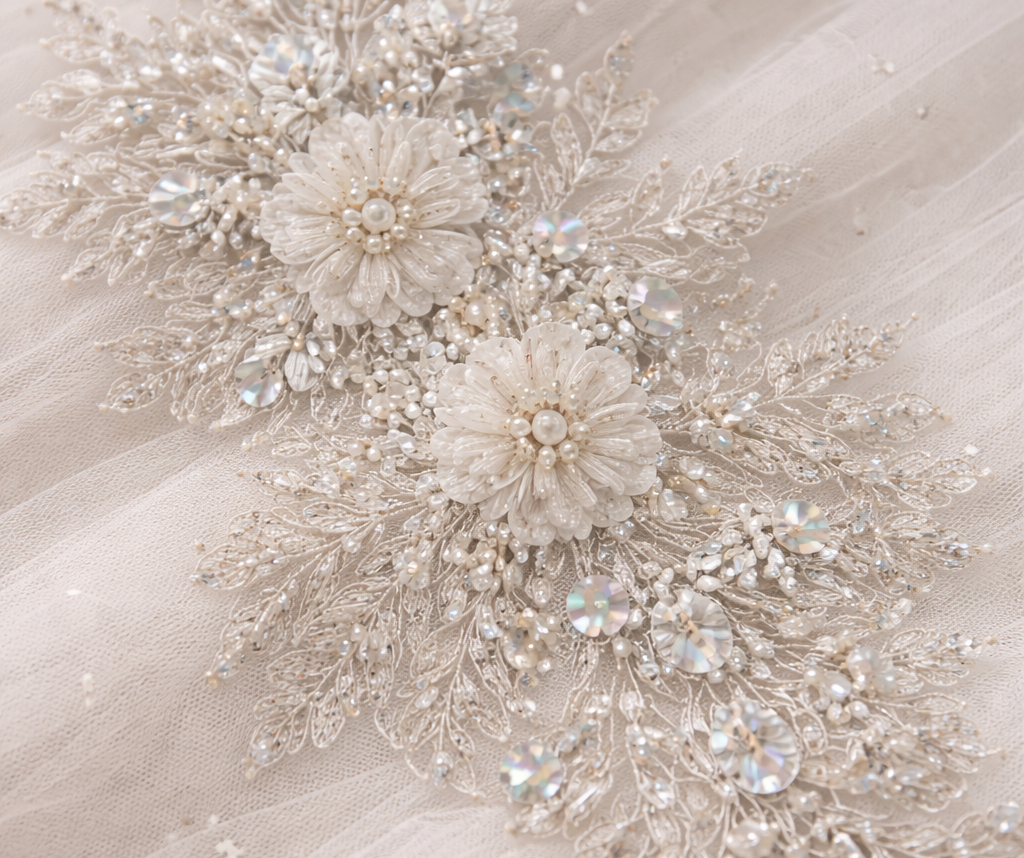
Sequin appliqués are pre-made decorative elements sewn onto fabric, typically formed in shapes like flowers, leaves, geometric patterns, or motifs. These appliqués feature sequins stitched onto a fabric base, creating an instant sparkle effect. They can be used as focal points on garments or accessories, such as bridal wear, evening gowns, or party wear dresses.
Sequin Trims
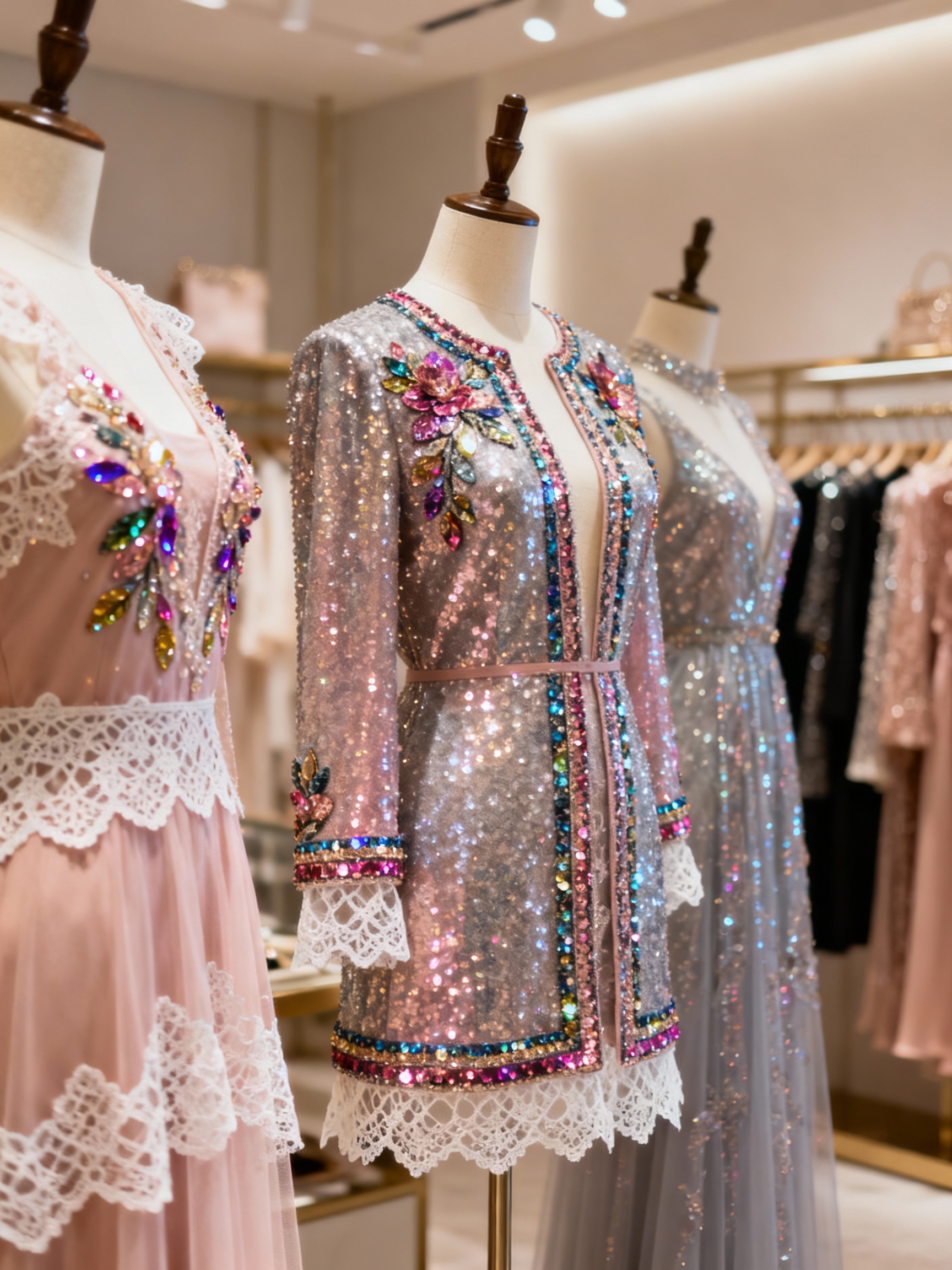
Sequin trims are narrow strips of fabric adorned with sequins, beads, or other embellishments along the edges. These trims are typically sewn onto the hemlines, borders, and edges of garments or home décor items like curtains or table runners. They can be purchased in continuous rolls, making them easy to apply and customize.
Sequin Lace
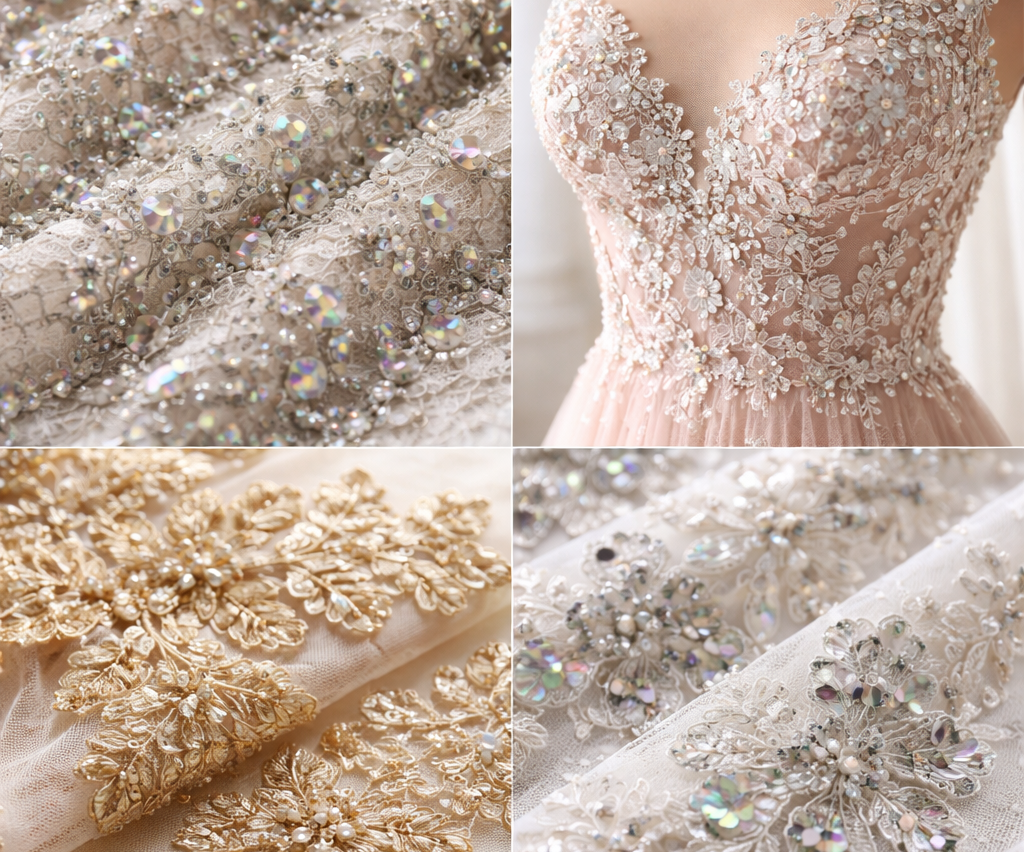
Sequin lace is a delicate fabric that incorporates sequins into lace or mesh. This fabric may have sequins scattered throughout the lace design or embroidered onto the lace. Sequin lace is commonly used in bridal wear, evening gowns, lehengas, and saree borders. It brings a perfect balance of intricate lacework with the added glamour of sequins.
Together, these elements serve as the ultimate embellishments to enhance the beauty of garments and décor items, making them perfect for occasions that require a little extra sparkle.
Types of Sequin Appliqués and Trims
Motif Appliqués
Motif appliqués are often intricate, designed with specific patterns or themes. These may include:
-
Floral motifs: Perfect for adding a soft, feminine touch to bridal gowns, lehengas, or blouses.
-
Geometric designs: Ideal for contemporary or edgy fashion pieces like evening gowns and party wear dresses.
-
Bridal motifs: Romantic motifs such as hearts, vines, and floral designs are commonly used for bridal wear.
-
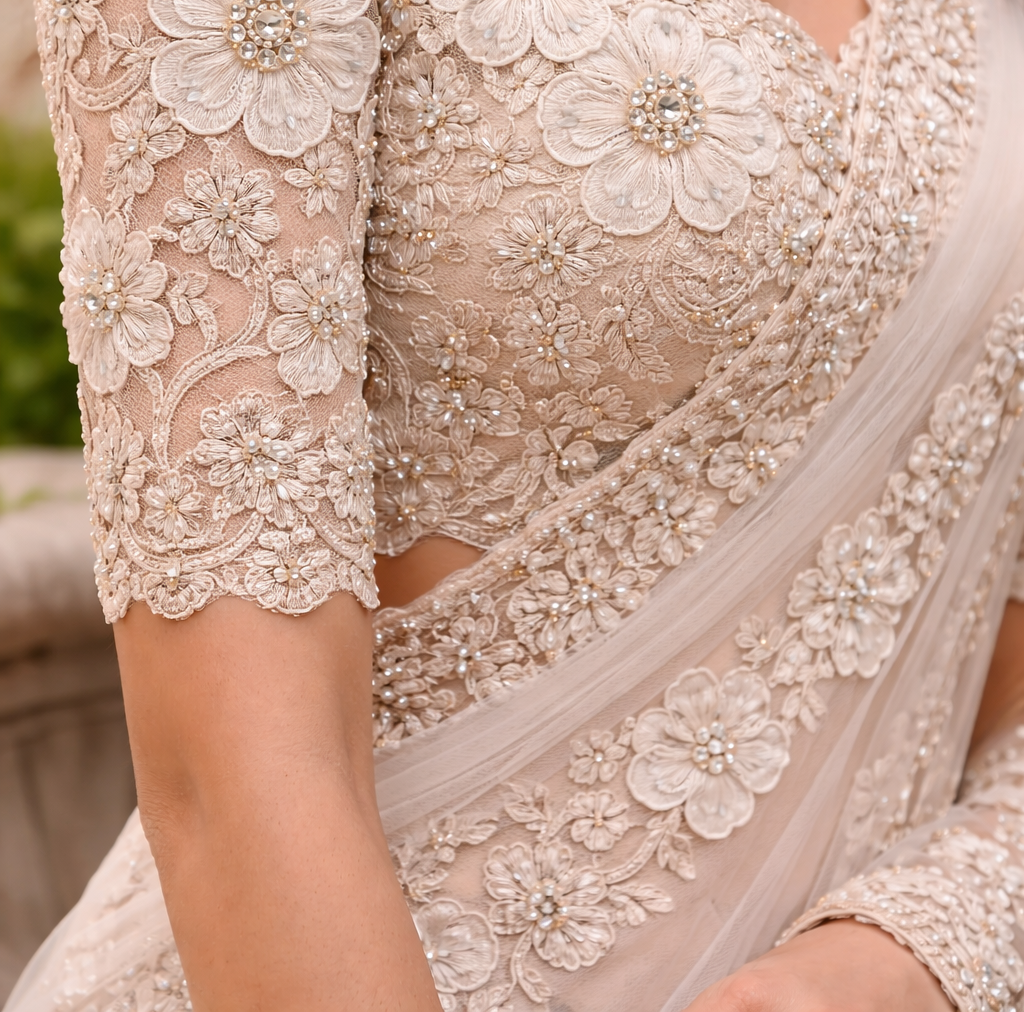
Neckline and sleeve motifs: These appliqués are used to create visual interest and draw attention to specific parts of a garment, like the neckline or sleeves.
Continuous Sequin Trims
Continuous sequin trims are strips of sequined fabric that are sewn onto the edges of garments. These trims can be applied to various parts of a design:
-
Borders for hemlines: Sequin trims can be sewn along the hem of a saree, lehenga, or gown for a chic and glamorous finish.
-
Dupatta edges: Adding sequin trims along the borders of a dupatta elevates its appearance, making it look more festive and elegant.
-
Blouse and sleeve borders: Whether you're designing a traditional or contemporary outfit, sequin trims add sparkle to the blouse or sleeves.
-
Lehenga waistbands: Sequin trims along the waistband of a lehenga can help to define the waistline and add a touch of luxury.
Beaded and Mixed-Media Trims
For a more opulent look, beaded and mixed-media trims combine sequins with other embellishments:
-
Sequins with beads and pearls: This combination creates a sophisticated texture and works beautifully on wedding or evening dresses.
-
Sequins and stones: Adding stones to the trim enhances the shine and adds an element of glamour, perfect for evening wear and high-fashion garments.
-
Zari and mirrorwork: This combination brings in traditional Indian embroidery techniques, often used on bridal wear, sarees, and lehengas.
Sequin Lace: A Sparkling Twist on Classic Lace
Sequin lace is a luxurious fabric that combines traditional lace with sparkling sequins. It adds a unique texture and sheen, making it an excellent choice for special occasions. Here are the two main types of sequin lace:
Embroidered Lace with Sequins
This type of lace features sequins that are embroidered into the lace fabric. The sequins are carefully stitched in patterns, often creating a delicate yet eye-catching effect. Embroidered lace with sequins is commonly used in:
-
Bridal gowns: It adds a soft, romantic element to the gown while maintaining an elegant, sophisticated appearance.
-
Evening gowns: Perfect for creating high-fashion evening gowns that need that extra touch of glamour.
-
Lehenga and saree borders: A luxurious addition to traditional wear, enhancing the overall look of the garment.
Tulle/Mesh Lace with Sequins
This type of lace uses a tulle or mesh base with scattered or all-over sequins. The sequins are sewn into the fabric in a way that maintains the light, airy feel of lace while adding sparkle. This type of lace is popular for:
-
Bridal veils: Adding sequin lace to a veil creates an ethereal, magical effect, ideal for brides who want to shimmer on their big day.
-
Dupattas and saree pallus: Scattered sequin lace along the edge of a dupatta or saree pallu can make these traditional pieces stand out.
-
Couture dresses: Fashion-forward designers often use sequin lace for a statement-making, couture-quality finish.
Design and Styling Ideas
Sequin Appliqués as Focal Motifs
Sequin appliqués can be used to create striking focal points on different parts of a garment. Some ideas include:
-
Necklines: Apply sequin motifs along the neckline for a touch of glamour that draws attention to the face.
-
Yokes and waistlines: These areas of a garment benefit from the elegance of sequin appliqués, making the garment more eye-catching.
-
Back designs: A large sequin motif on the back of a gown or dress can create a dramatic and elegant effect.
Sequin Trims for Borders and Edges
Sequin trims are perfect for adding sparkle to various parts of your garment:
-
Saree borders: Adding a thin sequin trim to a saree border or pallu enhances the richness of the garment.
-
Dupatta edges: Use sequin trims to frame a dupatta for a stunning, festive look.
-
Lehenga hems and sleeve edges: Sequin trims on lehengas or sleeves create a regal and celebratory look.
-
Kids’ dresses: Sequin trims work beautifully on children’s dresses, adding sparkle to special occasions like birthdays and weddings.
Combining Sequin Lace with Plain Fabrics
Sequin lace looks stunning when paired with simple, luxurious fabrics like silk, georgette, velvet, or satin. For a balanced, elegant look:
-
Silk and satin: Pair sequin lace with a silk or satin base for a refined, soft shine.
-
Georgette and net: These lightweight fabrics complement the weight of sequin lace, creating a beautiful flowy effect.
-
Velvet: Pair sequin lace with velvet for an opulent, textured contrast.
DIY Accessories and Décor
Sequin embellishments aren’t limited to clothing. They can be used to create glamorous accessories and home décor:
-
Hairbands and clutches: Add sequin appliqués or trims to hairbands and clutches for an instant party look.
-
Sandal straps: Embellish sandal straps with sequin trims to make your footwear more festive.
-
Cushion covers and table runners: Use sequin lace or trims to make home décor items shine with luxury during special events or festivals.
Practical Sewing and Application Tips
Positioning and Securing Appliqués
When working with sequin appliqués, it’s important to carefully position them:
-
Pinning: Pin the appliqué in place before stitching to avoid shifting during the process.
-
Stitching: Use a hand-stitch or machine-stitch depending on your preference and the weight of the appliqué. Hand-stitching offers more precision, while machine-stitching is faster for large areas.
-
Transparent thread: For a seamless finish, use transparent or nylon thread to sew on sequin appliqués and trims.
Considerations for Different Fabrics
Different base fabrics require different techniques for handling sequins:
-
Delicate fabrics like chiffon or net: Support the weight of the sequins by using lightweight backing fabrics.
-
Velvet and heavy satin: These fabrics are heavier, so ensure you use a strong stitch to hold the sequins securely.
Skin Protection
To avoid irritation, ensure that sequin trims and appliqués are not placed in high-friction areas:
-
Lining: Use a soft lining to cover the back of the sequins, especially in areas that touch the skin.
-
Facing: Apply a facing or underlining in areas where sequins are sewn near the body to prevent discomfort.
Care and Maintenance
Washing and Storing
When caring for garments with sequin appliqués, trims, or sequin lace:
-
Hand wash: Always hand wash these delicate garments to prevent damage.
-
Garment bags: Use a garment bag to protect garments when washing or storing.
-
Spot cleaning: For minor stains, use spot cleaning to avoid washing the entire garment.
-
Avoid high heat: Do not use hot water or an iron directly on sequins; it can damage the sequins.
Repairing Loose Sequins
If sequins start to loosen, carefully sew them back into place using a fine needle and thread.
Conclusion
Sequin appliqués, trims, and sequin lace fabric can transform any piece into a glamorous, couture-worthy creation. Whether you're designing a wedding dress, a party gown, or enhancing home décor, these sparkling embellishments offer endless possibilities. Start with small DIY projects like adding a sequin trim to a dupatta or an appliqué to a blouse to experiment with these dazzling details. With a bit of practice, you’ll soon be able to create designer-level pieces with ease.