Introduction
In the fashion and textile world, small details often make the biggest difference. Whether it's a designer gown gracing a red carpet or a handcrafted bridal veil sold in a boutique, decorative elements like sequin appliques, trims, and corded embroidery quietly define a garment’s value and aesthetic. Yet, despite their importance, many designers and consumers overlook how these components work together to create striking, durable, and market-ready pieces.
The problem is not the lack of creativity—it’s the gap in understanding how to use these materials effectively. Sequin and rhinestone appliques, trims, and corded embroidery aren’t just about sparkle; they’re about balance, craftsmanship, and application precision. When used incorrectly, designs can appear overdone or fragile. But when used with knowledge, these embellishments can elevate a simple fabric into a masterpiece.
That’s where today’s insight steps in—bridging craft and clarity to show how these classic techniques still lead the modern embellishment world.
Understanding the Problem (P)
Fashion labels and embroidery artisans often face a dilemma: how to make designs stand out without overwhelming the garment. Adding sequin appliques might seem like an easy solution, but the results can vary. Overcrowded designs crack during washing or lose their shimmer after production. Inconsistent trim alignment makes an outfit look unrefined.
Likewise, corded embroidery, though elegant, often suffers from technical inconsistency. Improper tension control, incompatible fabric choice, or lack of stability during stitching can ruin an entire batch. These issues not only waste time but also escalate production costs — a significant setback for small workshops or startups in fashion manufacturing.
Agitating the Problem (A)
Imagine investing weeks in perfecting a bridal collection where rhinestone appliques are hand-placed, only to find that half the motifs fall off after a single dry clean. Or launching a line of festival wear where the trims twist and dull after a few wears. These real frustrations have haunted many designers who underestimated how detail-oriented embroidery actually is.
The real challenge isn’t just sourcing good materials; it’s understanding how these embellishments interact—how sequins behave under heat press, how cords stretch under tension, or how different trims react to washing. Factories that ignore these interactions often face high rejection rates during quality checks.
In a 2023 report by the Textile Value Chain India, about 27% of garment rejects in decorative apparel were due to embellishment failure—either color fading, detachment, or surface deformity. This proves the value of developing a systematic approach where design meets durability.
Presenting the Solution (S)
The modern solution isn’t more glitter; it’s smarter application. Using sequin appliques, trims, and corded embroidery effectively means blending design depth with production accuracy. Let’s break it down section by section.
Features & Benefits
1. Sequin and Rhinestone Appliques
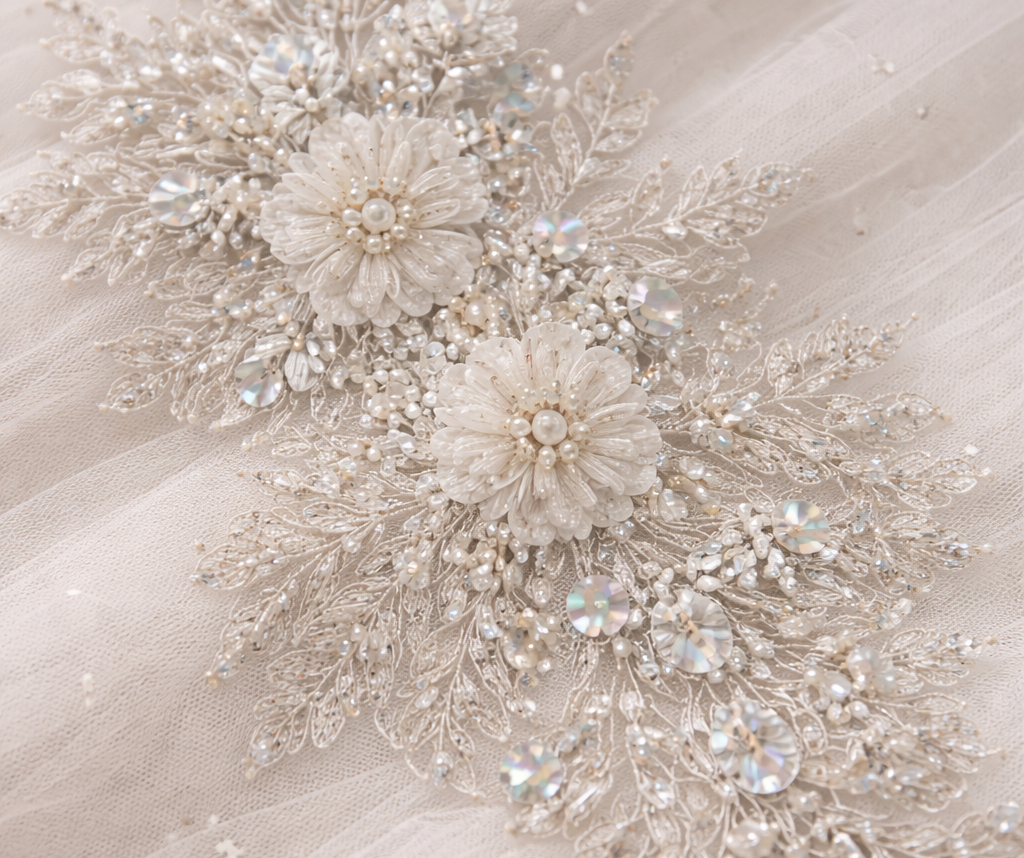
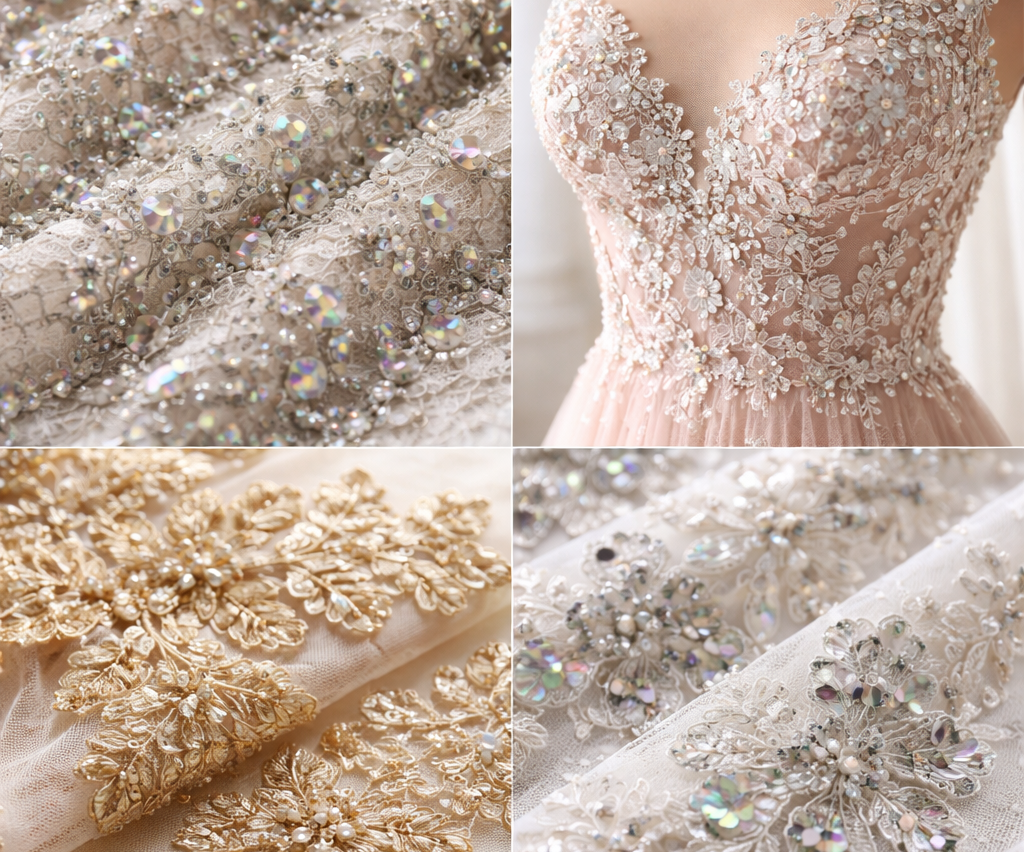
These embellishments reflect light beautifully while creating rich textural contrast. Designers use them to highlight motifs or borders.
Material Variety: From PVC to metallic-coated sequins and glass rhinestones—each serves a unique purpose in fashion detailing.
Ease of Customization: Pre-designed appliques save time in mass production while offering repeatable quality.
Application Techniques: Can be sewn, glued, or heat-pressed, depending on the base fabric. Vinyl-based adhesives now allow flexible application even on stretch fabrics.
A practical advantage lies in their tactile value—85% of bridal couture pieces from Indian manufacturers (as per a 2024 FIEO trade report) include some form of sequin or rhinestone applique, highlighting ongoing consumer demand for hand-embellished luxury.
2. Trims in Decorative Embroidery
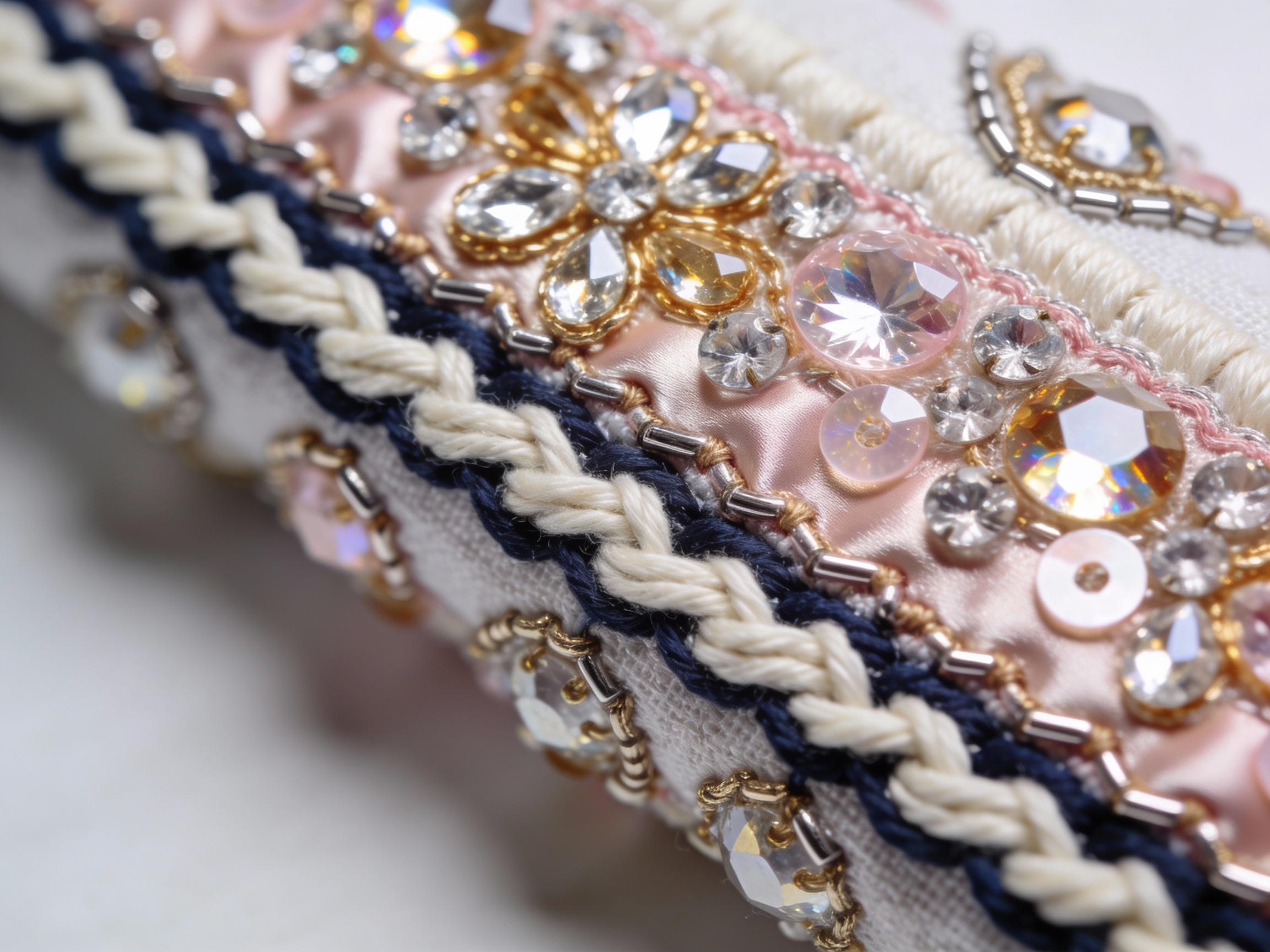
Trims serve both function and fashion. Whether lace trims for couture gowns or corded trims for uniforms, they act as clean finishers.
Stability & Structure: Help maintain edge control during stitching.
Design Purpose: Add metallic, velvet, or embroidered accents without overcrowding the design.
Modern Use Case: Machine-made trims now adapt traditional zari and beaded aesthetics for mass-market products, ensuring consistency and lower defect rates.
Even in eco-conscious production, recycled trims from PET sequins or organic cotton lace are making waves, proving beauty can align with sustainability.
3. Corded Embroidery
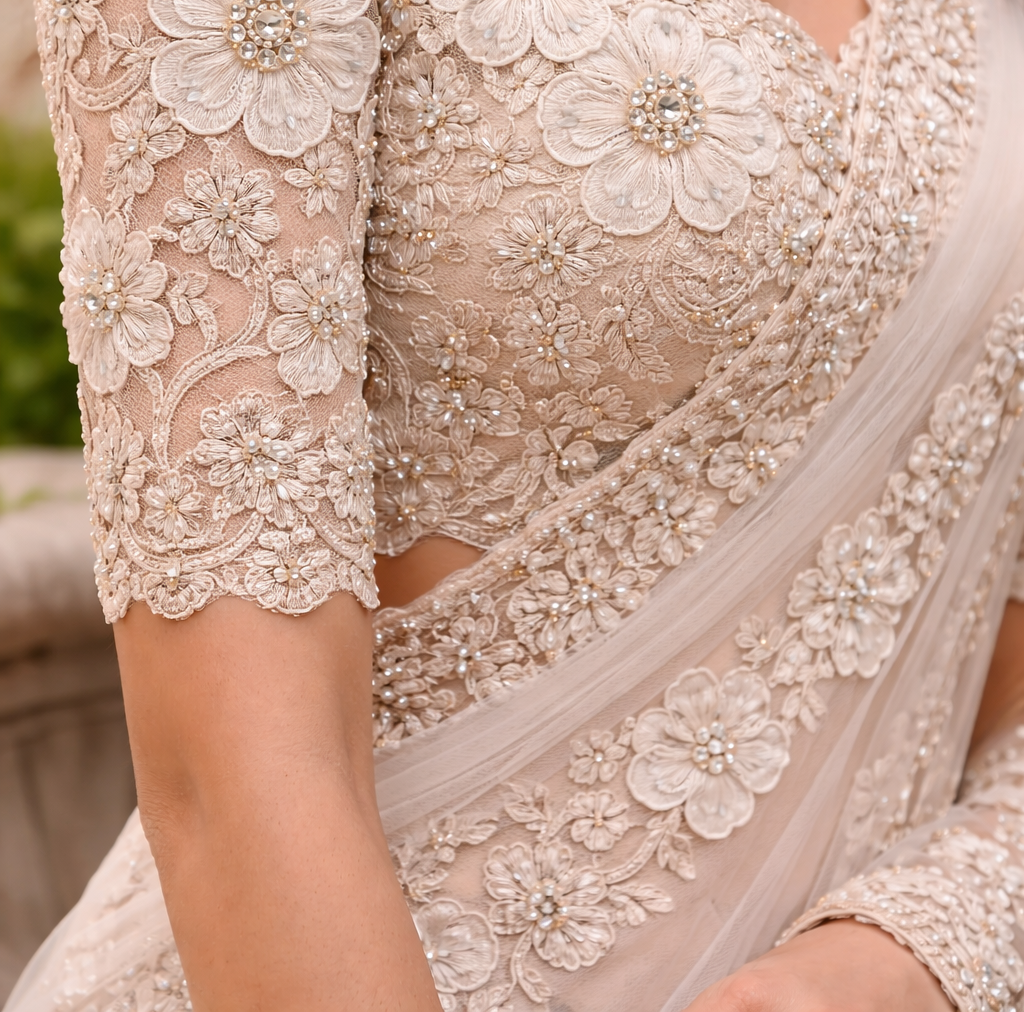
Corded embroidery refers to the technique where cords (silk, rayon, cotton, or metallic threads) outline shapes or fill designs by forming raised lines.
Textural Impact: Adds dimensional appeal, giving embroidery a sculpted look.
Durability: When paired with solid foundation fabrics like tulle or satin, corded stitching resists wear effectively.
Machinery Application: High-speed Schiffli or multi-head machines have automated corded embroidery, making it commercially scalable without losing hand-crafted quality.
A 2022 case from a Surat-based manufacturer showed 30% faster turnaround by integrating corded embroidery lines into their regular production schedule compared to manual zari work.
Real-world Examples / Case Study Insights
1. Bridal Couture Integration
Take Elan Embroidery Works (Mumbai)—a workshop specializing in luxury bridal wear. By combining corded embroidery with rhinestone appliques, they achieved high durability with stunning depth in visual texture. Their challenge was adhesive failure; by switching from solvent-based to heat-activated film bonding, rejection rates dropped from 18% to just 4%.
2. Costume Design for Entertainment
Bollywood costume designers frequently rely on sequin appliques on stretch fabrics like lycra or mesh. Instead of using rigid heat-based adhesives, many shifted to flexible PU-based glues to handle continuous movement during dance sequences. The result? No cracking and consistent shine under stage lighting.
3. Export-focused Apparel Houses
A Tiruppur-based export manufacturer introduced corded embroidery trims in swimwear cover-ups using resilient poly-rayon threads. After 50 wash tests, thread retention remained above 92%, proving that decorative details can meet international washing standards with process optimization.
These examples signal one thing clearly: combining art and technology smartly can future-proof traditional embroidery crafts.
FAQs
Q1. What’s the best way to apply sequin appliques for long-lasting results?
Use compatible adhesives or machine-sewn techniques that match the fabric’s elasticity. Always test heat resistance and washing durability before bulk production.
Q2. Are corded embroidery designs suitable for machine production?
Yes. Modern embroidery machines with cord feeders can replicate hand-corded effects efficiently without losing design intricacy.
Q3. How do trims complement applique or embroidery work?
Trims define edges, create separation between design zones, and add symmetry. They’re common in cuffs, collars, and hemlines for both strength and style balance.
Q4. Is there market demand for handwork embellishments in 2025?
Absolutely. Luxury fashion, home textiles, and event apparel markets continue to value handcrafted or semi-handcrafted embellishments as markers of premium quality.
Q5. What precautions ensure colorfastness in embellished garments?
Use colorfast sequins and pre-tested adhesives. Dry clean or spot-clean sensitive pieces to maintain sheen and prevent oxidation.
Conclusion
Decorative techniques like sequin appliques, trims, and corded embroidery may seem traditional, but their relevance in contemporary design is stronger than ever. They are interactive surfaces that capture light, texture, and brand identity all at once. From haute couture to daily wear, their transformative power lies in understanding material compatibility and application methods.
Fashion is no longer about excess—it’s about precision. And knowing how to blend embellishment art with technical control is what defines success in modern embroidery production.