Introduction
Sequin appliques, trims, and lace border designs are not just “extra decoration” anymore. They’re now a common tool for designers, tailors, and craft enthusiasts who want a clean finish without rebuilding a whole garment.
Here’s how these pieces usually work:
-
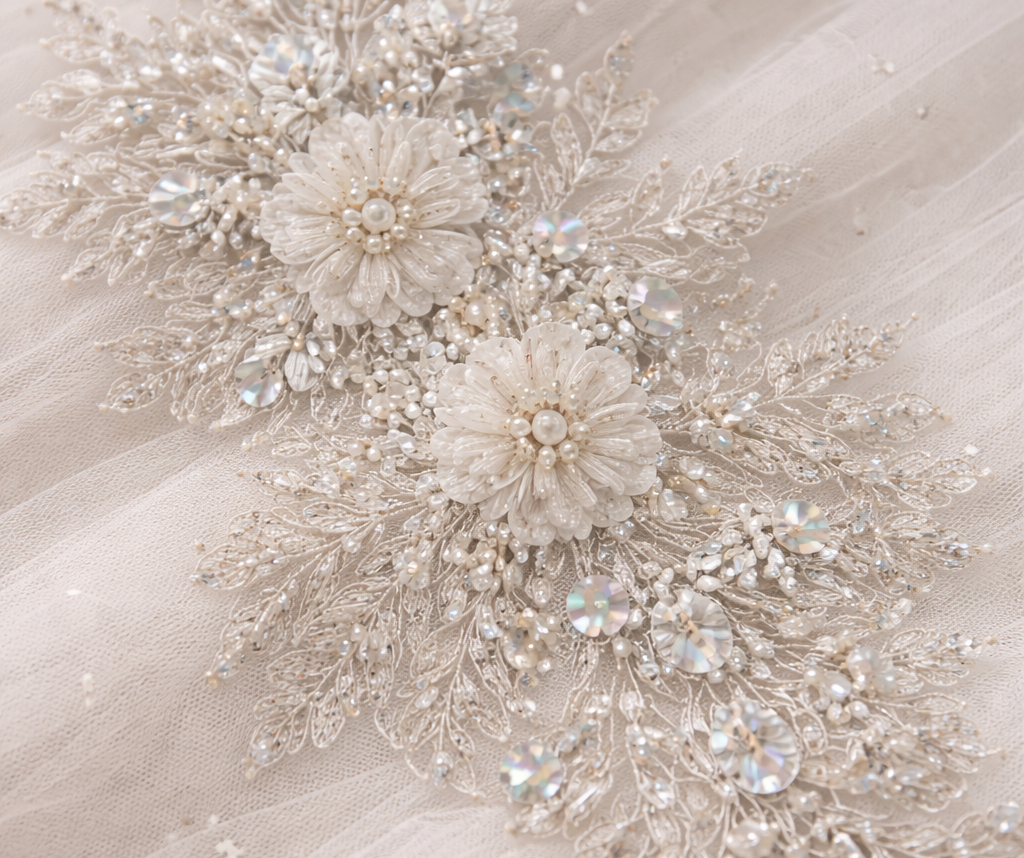
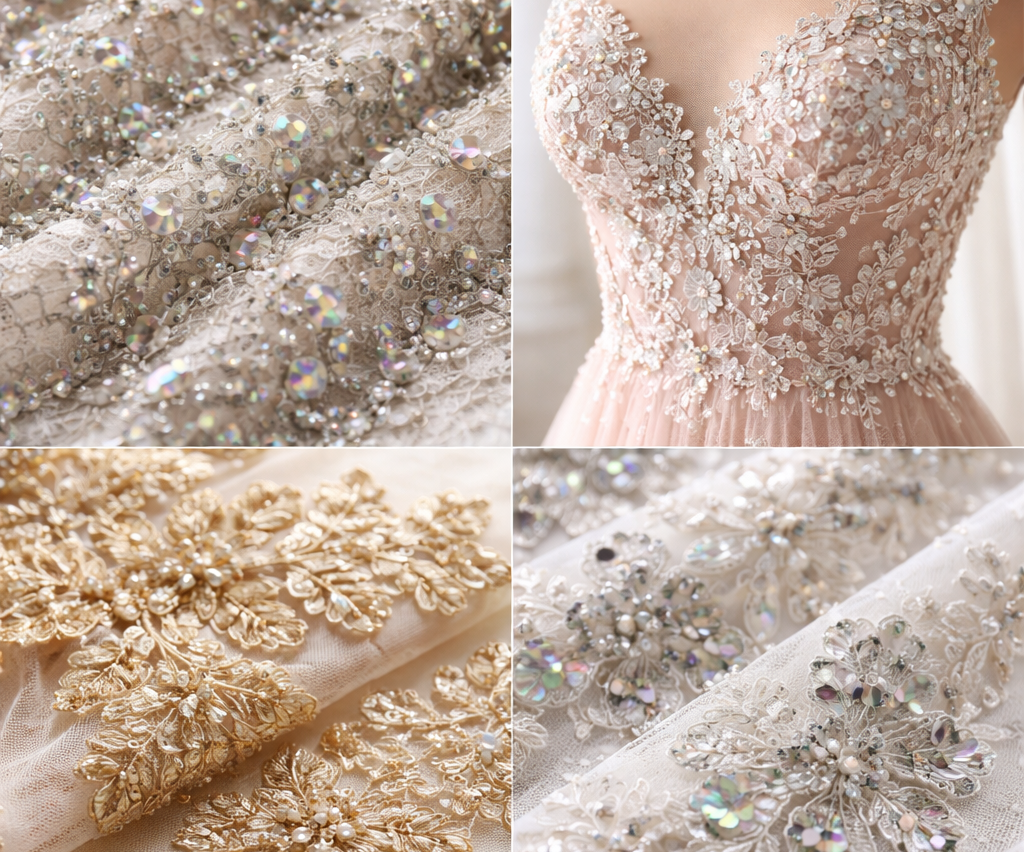
Sequin appliques are motifs or patches. You place them where you want a focal point, like a neckline, shoulder, waist, or back.
-
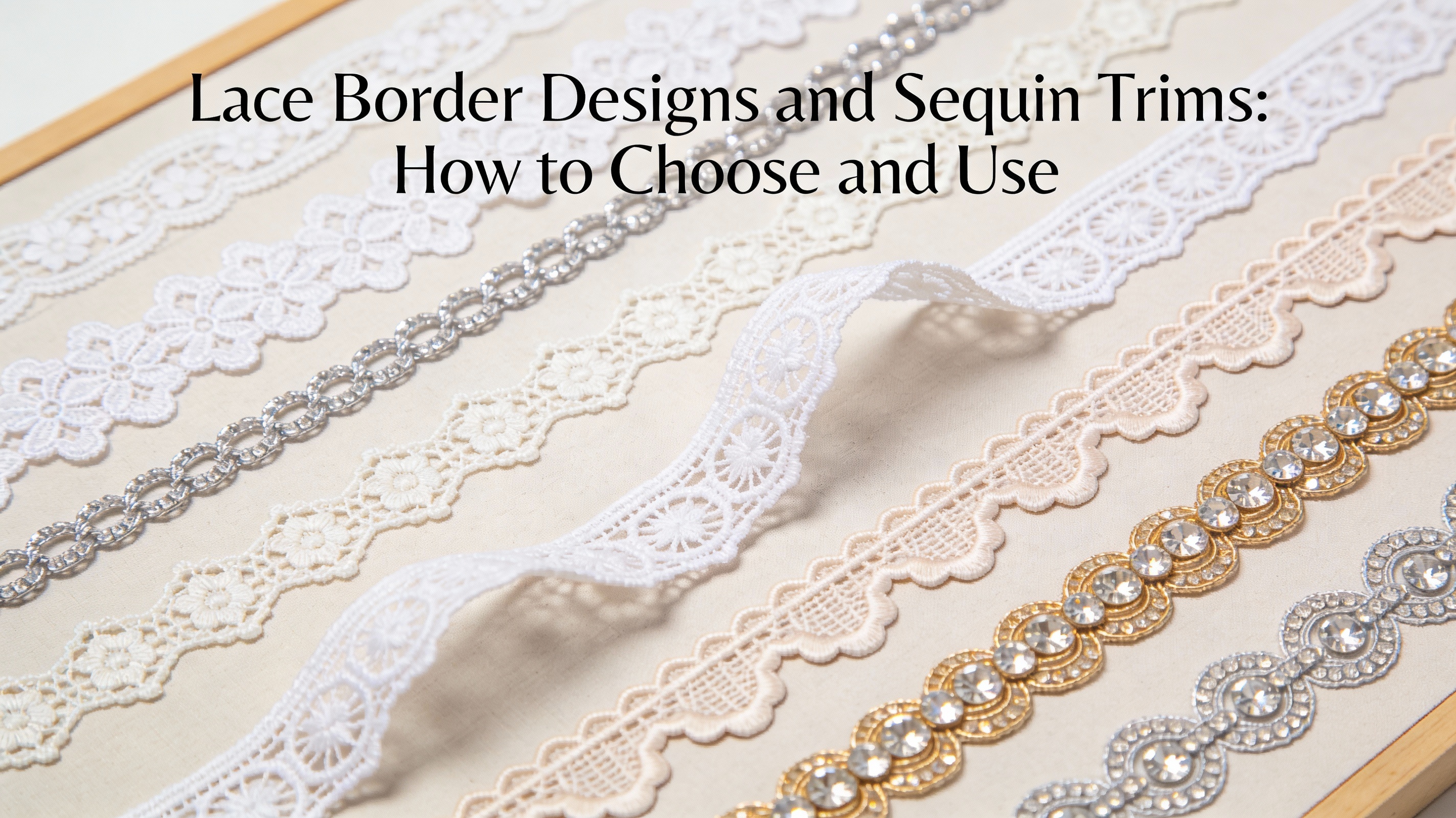
Sequin trims are long strips. You use them on edges, like hems, sleeves, dupattas, saree borders, curtain edges, or table runners.
-
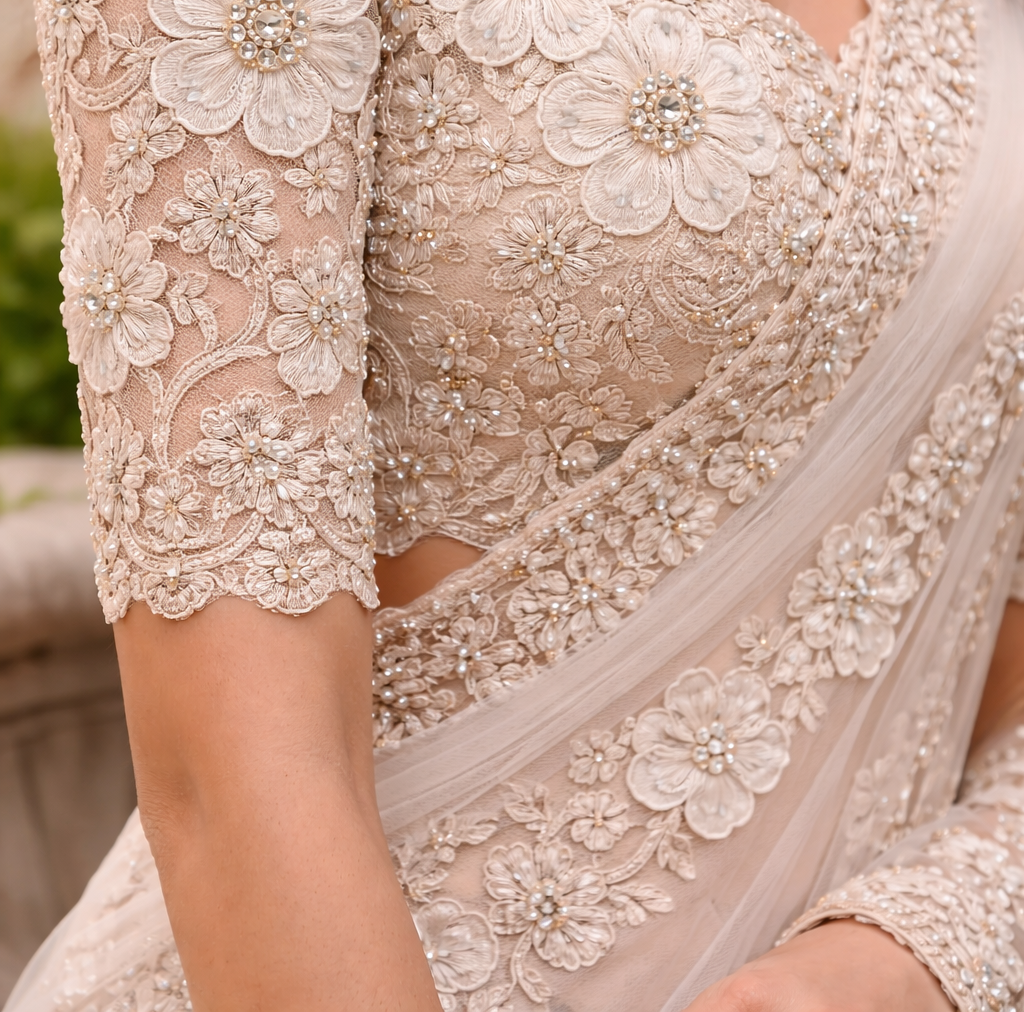
Lace border designs are lace trims made for edges. Many have scalloped or repeated patterns so the border looks continuous.
And you’ll often see rhinestone and sequin appliques used alongside these. Rhinestones help when you need sparkle that shows under indoor lighting or on camera. Sequins give a softer shine, while rhinestones give sharper points of light. Together, they’re popular for partywear, stage outfits, wedding looks, and festive home decor.
These materials can save time and boost the final look. But they also come with a set of issues that can surprise you if you’re new—or even if you’ve been working with trims for years.
Problem (PAS): What goes wrong when working with appliques and lace borders
Most problems fall into three areas: sourcing, handling, and durability.
1) Sourcing problems
-
Quality varies a lot. Two trims that look similar can behave very differently once you stitch them.
-
Color and tone mismatch. “Gold” can mean warm yellow gold, muted antique gold, or cool champagne. Lace can lean ivory, cream, or off-white.
-
Unclear backing details. Some borders have scratchy net or stiff mesh that’s uncomfortable on skin.
-
Repeat pattern issues. Lace border designs often depend on a repeating motif. If the repeat isn’t clean, joins look obvious.
2) Handling and application problems
-
Borders ripple on curves. Armholes, rounded hems, and necklines are not straight lines. A stiff border can fight the curve.
-
Trims twist while sewing. A sequin trim can flip and stitch down unevenly, creating patchy shine.
-
Bulk at seams. Layering a border at the hem can create thickness that’s hard to press and can change drape.
-
Placement doubts. A sequin applique may look great in your hand but sit awkwardly once the garment is worn.
3) Durability problems (especially with rhinestones)
-
Weak attachment in high-movement zones. Waistlines, underarms, and shoulders rub and bend. If stones are only lightly fixed, they can lift.
-
Wrong method for the material. Some rhinestone and sequin appliques are sew-on, some are heat-fix, some are glue-on. Using the wrong method leads to early failure.
-
Care problems. Washing, rubbing, and heat can loosen glue, snag threads, or dull shine.
So the “problem” isn’t that sequin appliques and lace borders are difficult by nature. The problem is that many people expect them to behave like basic fabric, and they don’t.
Agitation (PAS): Why these problems hurt creativity and business results
When these materials go wrong, the impact is bigger than most people expect.
How it affects your work
-
Creativity gets limited. If you’ve had a border ripple badly once, you start avoiding borders—even when they would be the best design choice.
-
You lose time fast. Fixing a wavy lace border takes longer than attaching it the first time.
-
The finish looks cheaper than it should. Loose sequins, lifted stones, and messy joins make the whole piece look rushed.
-
Comfort issues show up quickly. Scratchy trims near the neckline or sleeves can make a garment unwearable.
How it affects a small business
If you sell clothing or decor:
-
Returns and repairs increase. A single weak trim can lead to complaints after the first wear.
-
Deadlines get stressful. Repairs usually happen right before delivery, not early in the process.
-
Costs rise quietly. You may not notice it, but rework eats profit and energy.
Mini scenario 1: The “perfect border” that ruined a hemline
A tailor finishes a party dress hem with a heavy sequin trim. On the hanger, it looks fine. On the client, the hem pulls down in a few spots and swings unevenly because the trim weight isn’t balanced across the fabric. The fix is not quick. It often means:
-
opening the hem,
-
reducing trim weight or changing placement,
-
adding support stitches,
-
and re-pressing the whole edge.
Mini scenario 2: Rhinestones look great… until the first event
A craft seller adds rhinestone and sequin appliques to a stretch top for an event order. The stones are fixed only with adhesive. The customer dances, the fabric stretches, and stones start lifting at the bust and shoulder. Now the seller has:
-
a disappointed customer,
-
a rushed repair request,
-
and a product that may not be wearable again without reinforcement.
This is why the “agitation” step matters. These are not small cosmetic issues. They affect the whole project outcome.
Solution (PAS): How to get consistent results with appliques, rhinestones, and lace borders
The solution is a mix of smarter selection and better technique. You don’t need special equipment for most projects. You just need a reliable process.
Step 1: Choose trims and borders that match the job
Use a simple checklist before you buy or cut:
-
Check stitching strength. Gently flex the trim. If sequins shift too easily or threads look loose, expect repairs later.
-
Match weight to fabric. Light fabrics need lighter trims. Heavier borders need stable fabric or extra support.
-
Check the backing feel. If it touches skin, choose softer net, or plan a lining barrier.
-
Check the border repeat. Hold the trim end-to-end and imagine the join. If the pattern breaks sharply, the join will show.
Step 2: Pick the right attachment method for rhinestone and sequin appliques
For rhinestone and sequin appliques, choose based on movement and care:
-
Sew-on (most reliable): best for garments, costumes, and high-movement areas.
-
Heat-fix (fast when done well): works best on stable fabrics and flatter surfaces.
-
Glue-on (use carefully): better for accessories and decor items, or when stitching is impossible.
A practical rule: if the item stretches or rubs a lot, add stitches somewhere, even if you also use heat-fix or glue.
Step 3: Use techniques that prevent ripples and weak joins
-
Baste first on curved edges. A quick hand baste can prevent a lot of rework.
-
Ease the border slowly. Don’t stretch lace borders hard; it can distort the pattern.
-
Plan your join points. For lace border designs, join where the motif repeats naturally.
-
Secure stress points. Add extra hand tacks at corners, side seams, and places that bend.
Features and Applications
This is where sequin trims and lace borders become a real design tool.
Practical features that designers and tailors rely on
-
Speed with control: trims give fast results, and appliques let you place detail exactly where you want it.
-
Consistency: borders repeat cleanly along hems and edges, which helps a design look finished.
-
Easy updates: you can refresh an old garment by adding a border or applique instead of reworking the whole piece.
-
Photo and lighting impact: rhinestone and sequin appliques are useful when you need detail to show at a distance.
Materials you’ll commonly see
-
Lace bases: net lace, tulle lace, embroidered lace, and heavier lace borders that hold shape.
-
Sequins: often stitched onto mesh or ribbon trims; the quality depends on stitching density and thread strength.
-
Rhinestones: commonly glass-like or acrylic stones, applied as sew-on pieces or fixed with heat or adhesive.
-
Beads (sometimes mixed): add texture but increase snag risk and weight, so placement matters.
Common uses (fashion and home decor)
Fashion
-
Neckline and shoulder appliques to create a focal area
-
Lace border designs on sleeves and hems
-
Sequin trims on dupattas, saree borders, lehenga hems, and evening dresses
-
Rhinestone and sequin appliques on stagewear and partywear for strong light reflection
Home decor
-
Border trims on table runners for festive styling
-
Sequin applique motifs on cushion corners
-
Decorative trims on curtains for event backdrops
-
Small rhinestone and sequin appliques on holiday decor items that aren’t washed often
Real-World Examples / Case Study Data
Below are short, practical scenarios that reflect how these materials are used in real work settings.
Case study 1: Bridal alterations using lace borders to “blend” changes
In bridal alterations, changes often create visible transitions—like adding a modesty panel, resizing a bodice, or adjusting a neckline. A common solution is using lace border designs and small sequin appliques to hide seams and keep the lace pattern looking continuous.
What typically works well:
-
placing matching motifs along the new seam line,
-
using lace border pieces to recreate an edge finish,
-
and hand-tacking key areas so the lace sits flat on curved bodice sections.
Outcome in practice: the garment looks more “original,” and the changes are less noticeable in photos.
Case study 2: Stage costume team using rhinestone and sequin appliques for visibility
Stagewear is judged under strong lights and from a distance. Costume teams often combine sequin trims (for broad shine) with rhinestone and sequin appliques (for sharper sparkle).
A typical approach:
-
use sequin trim to outline edges and silhouettes,
-
add rhinestone appliques at focal points like the neckline or shoulder,
-
reinforce high-movement areas with extra stitching,
-
and do a short wear test to check rubbing and lifting.
Outcome in practice: the design reads clearly on stage, and reinforcement reduces last-minute repairs.
Case study 3: Small decor maker using border trims for repeatable product lines
A home decor maker producing cushion covers for festive seasons often needs speed and consistency. Lace border designs help create a “finished” look without heavy labor. Sequin trims add shine that feels special for holiday decor.
A common workflow:
-
standardize one or two border widths for a product line,
-
stitch borders with clean corners and hidden joins,
-
and keep rhinestone and sequin appliques for items that will be handled less (like wall hangings) to reduce care risks.
Outcome in practice: products look consistent across batches, and production stays manageable during busy seasons.
FAQs
1) What’s the difference between sequin appliques and sequin trims?
Appliques are motifs placed in one area. Trims are long strips used along edges like hems, sleeves, and borders.
2) How do I stop a lace border from rippling on a curved hem?
Baste first, ease the lace slowly, and avoid pulling it tight. On tighter curves, small adjustments and extra hand tacks help it sit flat.
3) Are rhinestone and sequin appliques better sewn or glued?
Sewing is more reliable for wearables and movement-heavy areas. Glue can work for decor and accessories, but it may fail faster on stretch fabrics or high-friction zones.
4) Can I wash garments with sequin trims and rhinestone appliques?
Yes, but be gentle. Turn the item inside out, avoid rough rubbing, and consider hand washing if the stones or sequins are delicate.
5) How do I join lace border designs without an obvious seam?
Match the repeat pattern and join where the motif naturally repeats. Overlap slightly if needed, then hand stitch to blend the join.
6) What’s the best way to place sequin appliques on a bodice?
Pin, try it on (or place on a dress form), and check symmetry from a distance. Then baste first before final stitching so you can adjust easily.
Conclusion
Sequin appliques, trims, and lace border designs are popular because they add finish and detail quickly, and they work across fashion and home decor. But the same things that make them eye-catching—shine, texture, layered materials—also create problems when quality is low or application is rushed.
If you want consistent results, keep it simple: match trim weight to fabric, check stitching and backing before you commit, baste on curves, and reinforce stress points. And when you use rhinestone and sequin appliques, choose the attachment method based on movement and care needs, not just speed. Do that, and these materials become a reliable part of your design toolkit instead of a last-minute risk.