Introduction: Why embroidered flower lace and corded embroidery matter
Walk into any bridal boutique, saree shop, or high-end dress store and you’ll see one recurring theme on the racks: floral lace with raised, corded embroidery.
Designers love these fabrics because they add texture, depth, and clear floral shapes without adding a lot of bulk. At the same time, buyers often feel lost:
-
What’s the difference between embroidered lace, corded lace, and guipure?
-
Why do some laces feel soft and strong, while others snag in a week?
-
How do you wash or store them without destroying the embroidery?
The confusion is understandable. Modern lace is no longer just handmade cotton; manufacturers now mix cotton, linen, silk, polyester, nylon, and rayon to balance softness, durability, and cost.
Meanwhile, demand is growing. One global report estimates the lace fabric market at about USD 2.5 billion in 2023, with a projection to reach around USD 4.1 billion by 2032, mainly because of fashion and home textile usage.Cotton lace is a leading segment thanks to its breathable, biodegradable nature, which fits the sustainability trend.
So the problem is simple: people see lace everywhere, but don’t really understand what they’re paying for or how to use and care for it.
That confusion gets worse when you’re choosing fabric for a wedding dress, couture outfit, or custom home décor. Pick badly and you might end up with:
-
A lace that stretches out of shape after a few wears
-
Embroidery that catches on jewelry and frays
-
Yellowing or damage because it was washed or stored the wrong way
The solution is to understand the basics: what embroidered flower lace and corded embroidery actually are, how they’re built, and what that means for texture, strength, care, and price. Once you know that, you can choose with confidence—whether you’re a designer, a small brand owner, or just someone who loves detailed fabrics.
Features: What makes embroidered flower lace and corded embroidery special?
1. What is embroidered flower lace?
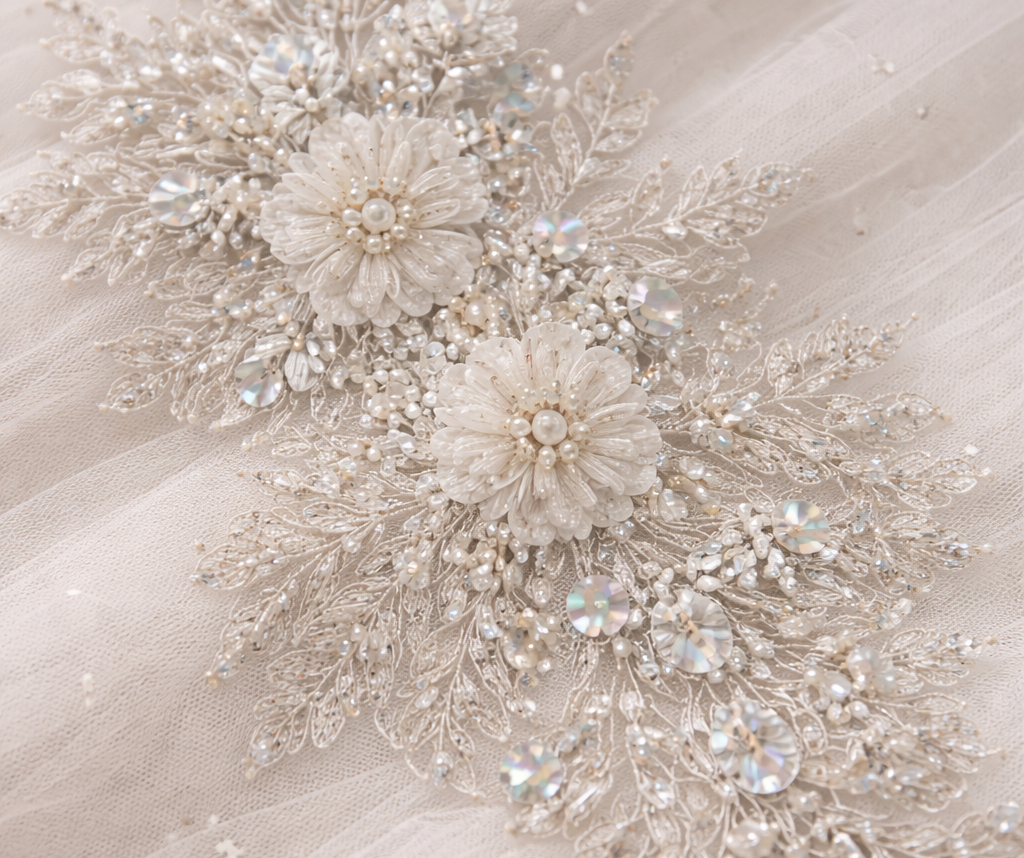
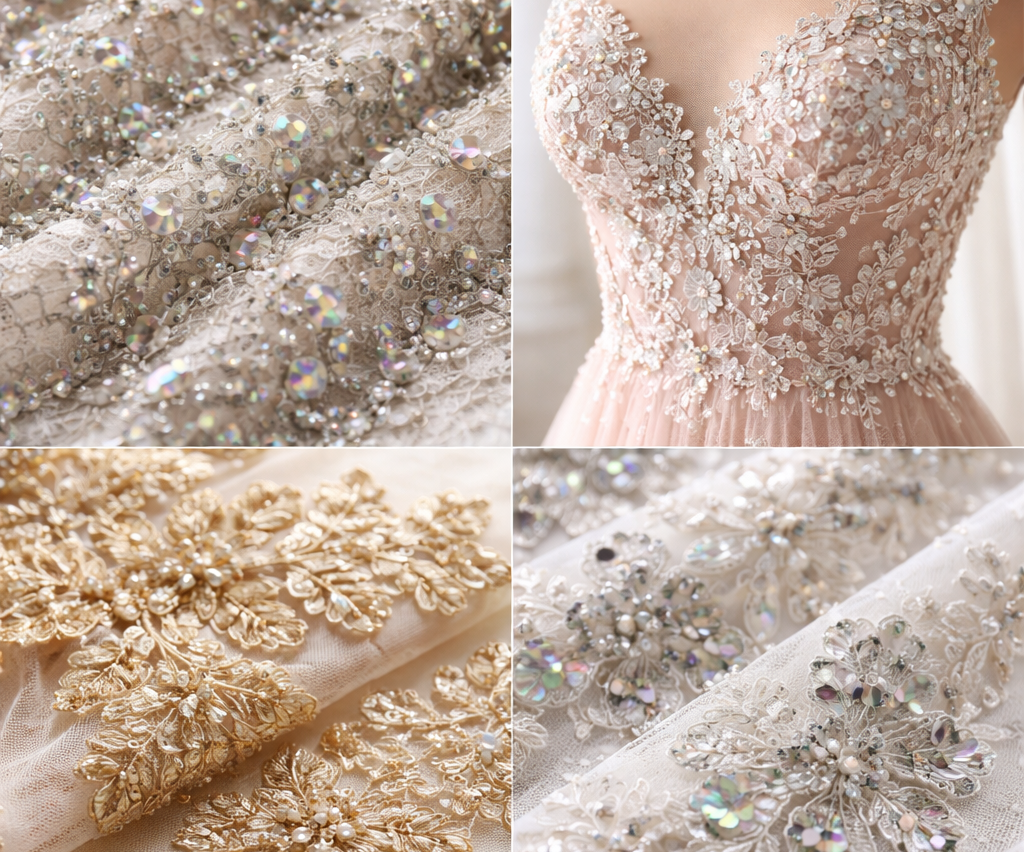
Embroidered lace is essentially a sheer or semi-sheer base (like tulle, mesh, net, organza, or cotton) that has decorative stitching worked on top. The embroidery often forms floral motifs, vines, and leaves, sometimes combined with beads or sequins for extra detail. French and European lace houses frequently use embroidery to add dimension to their lace collections.
Modern embroidered lace can be:
-
Allover fabric – full-width pieces (often around 120–150 cm wide) used for dresses, skirts, and curtains
-
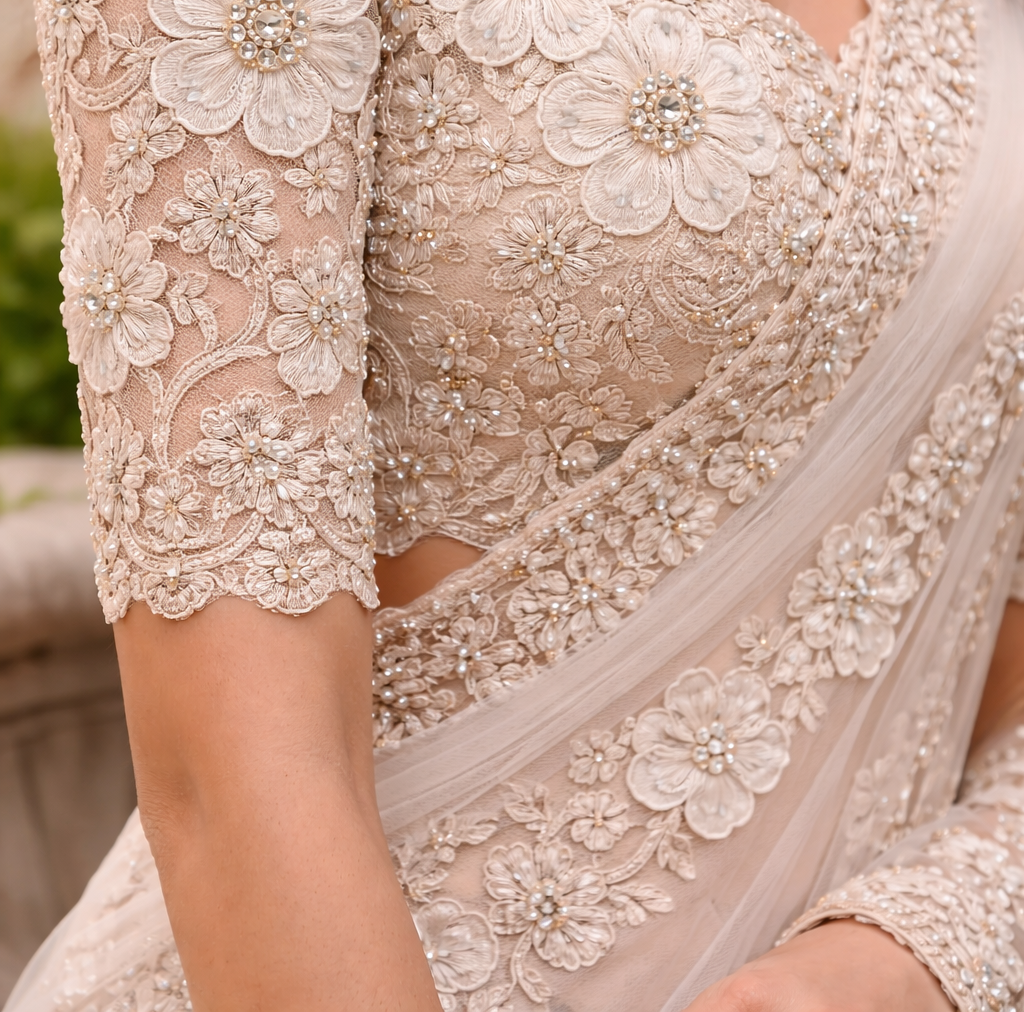
Trims and borders – narrower strips used along hems, veils, blouse sleeves, saree edges, or cushion borders, commonly in the 5–20 cm range
Typical materials include:
-
Base fabric: nylon, polyester, cotton, or blended mesh / net
-
Embroidery threads: cotton, rayon, polyester, or viscose
-
Additional elements (optional): beads, sequins, rhinestones, or 3D appliqués
Some laces are made using “chemical” or water-soluble embroidery: the pattern is embroidered on a sacrificial base that’s later dissolved, leaving only the lace pattern (often called guipure lace)
2. What is corded embroidery?
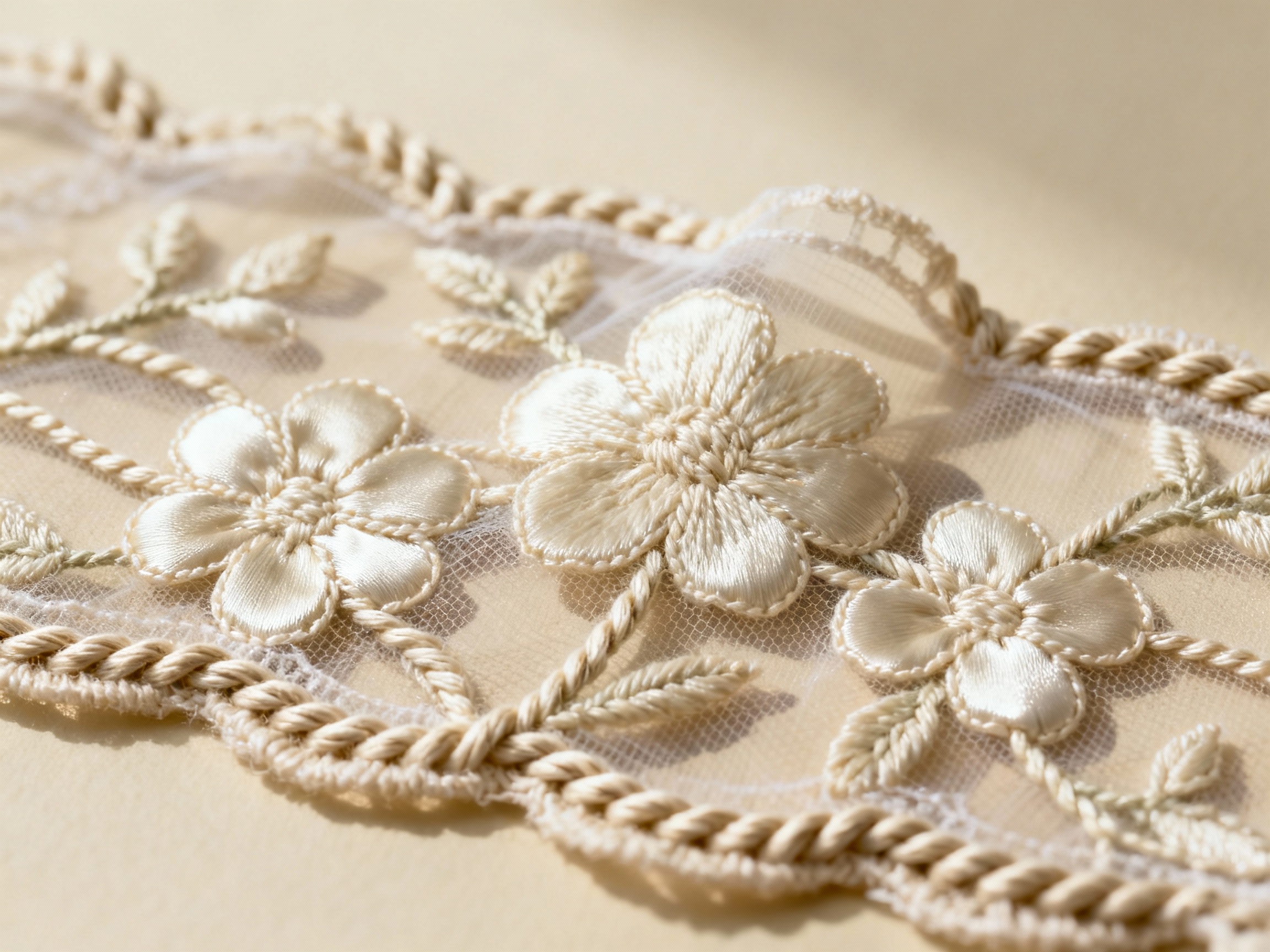
Corded embroidery (or corded lace) adds an extra raised outline around the motifs. A thicker cord—often rayon or cotton—is stitched along the edges of flowers or scrolls to create a 3D effect.
Key points:
-
The cord may sit on top of the embroidery or be partially covered by it
-
It is commonly used with floral designs, especially in French and bridal lace, sometimes described as lace “outlined in soutache cord for extra texture.”
-
Corded trims are popular for veils, necklines, sleeves, and hems; many bridal suppliers offer corded lace trims ranging roughly 8–16 cm wide.
This corded structure is what makes certain lace look “sculpted” and stand out clearly in photos and under stage or wedding lighting.
3. Texture and drape
Because of the embroidery and cording, these laces give a noticeably textured surface:
-
Allover embroidered lace can range from lightweight (around 100 g/m²) to much heavier fabrics depending on thread density and add-ons.
-
Corded lace feels firmer than plain tulle or net, which helps it hold shape in bodices, sleeves, and structured skirts.
For buyers and designers, that means:
-
Great for definition around necklines, waistbands, and borders
-
Slightly less ideal where you need a fluid, clingy drape (like jersey dresses) unless used only as an overlay
4. Durability: cotton vs synthetic vs blends
The durability of embroidered and corded lace depends heavily on fiber content.
-
Traditional lace used cotton, linen, or silk.
-
Many modern products use polyester, nylon, or rayon to increase strength, elasticity, and affordability.
-
Some commercial laces list blends like 53% nylon, 42% cotton, 5% spandex for stretch, or 90% polyester, 10% cotton for trims.
In practice:
-
Cotton-rich lace is breathable and comfortable, often preferred for bridal and daywear.
-
Polyester/nylon blends are more resistant to wrinkles and generally more durable in everyday use, though they can melt under very high heat.
-
Guipure / chemical lace (often polyester or cotton) builds strength through dense embroidery and connecting bars; it’s considered quite durable for bridal gowns and evening dresses if cared for correctly.
5. Width and usage in fashion and decor
Real product listings show just how flexible embroidered and corded lace can be:
-
Full-width embroidered lace fabrics commonly come in 130–150 cm widths, used for dresses, skirts, and home textiles like curtains and tablecloths.
-
Narrow trims in 5–20 cm widths are sold for DIY dress edging, lingerie, saree borders, and home accents.
Applications include:
-
Fashion: bridal gowns, evening dresses, cocktail wear, sarees, lehengas, blouses, lingerie, and veils.
-
Home décor: cushion covers, curtains, table runners, and even luxury bedding and interior textiles.
In other words, the same embroidered flower lace can frame a bridal veil, edge a blouse sleeve, or sit as a border on a sheer curtain.
FAQs: Care, cost, sourcing, and application
Q1. How should I wash embroidered or corded lace?
Most experts agree on one rule: treat lace gently.
Common recommendations from textile and laundry guides include:
-
Prefer handwashing with cool or lukewarm water and a mild detergent.
-
If machine washing is unavoidable, use a mesh laundry bag, delicate cycle, and cold water.
-
Avoid bleach and harsh chemicals; these can weaken fibers or damage dyes and metallic threads.
-
Do not wring; instead press water out gently and lay flat or hang carefully to dry.
For ironing:
-
Use low heat or steam, and place a thin cotton cloth between the iron and lace to avoid shine or melting on synthetic fibers.
For long-term storage:
-
Roll trims instead of folding to avoid creases, and store lace in breathable bags or wrapped in acid-free tissue rather than plastic, which can trap moisture and cause yellowing.
Q2. Is corded lace more fragile?
Corded lace actually tends to be sturdier along the motif outlines because of the extra cord, but it’s also more prone to snagging on jewelry, zippers, or rough surfaces.
Guipure and dense corded laces used in bridal fashion are often described as durable when properly cared for, especially when stored and cleaned by specialists.
In simple terms: strong fabric, but handle the raised areas carefully.
Q3. Why does some lace feel expensive while other pieces are cheap?
Several factors drive cost:
-
Fiber content: cotton, silk, and high-quality viscose usually cost more than basic polyester.
-
Density of embroidery and cording: more stitches and more cord = more machine time and sometimes handwork.
-
Origin: French and European corded laces can be priced higher than mass-produced versions.
-
Finishes: dyeable white/ivory vs custom colors, beading, or rhinestones will also change cost.
Online listings show everything from budget polyester embroidered lace trims a few centimeters wide to premium French embroidered tulle trims and full-width fabrics at much higher price points.
Q4. Where can I source embroidered flower lace and corded embroidery?
You can source these fabrics from:
-
Wholesale and B2B platforms (e.g., large lace suppliers and exporters, often offering 125–150 cm wide fabrics for apparel and bridal wear).
-
Retail fabric shops and bridal fabric specialists, including dedicated lace stores that stock French corded trims, guipure, and embroidered tulle.
-
Online marketplaces like Etsy or Amazon, which are popular for DIY crafters and small brands buying shorter lengths or unique designs.
Q5. Any tips for sewing and applying corded or embroidered lace?
Practical tips that dressmakers and hobbyists often follow:
-
Use a fine, sharp needle and polyester or cotton thread to match the fabric.
-
When cutting allover lace, follow the pattern motifs for cleaner edges, especially on scalloped borders.
-
For trims, baste (temporary stitch) them first to check placement on veils, sleeves, or hem edges.
-
Consider lining or backing where skin contact is high so the embroidery and cording don’t irritate.
Real-world examples: How brands and designers use corded and embroidered lace
Case study 1: Couture bridal designers
Couture designers like Elie Saab and Zuhair Murad are known for using lace with floral embroidery, beading, and sometimes cording in their bridal and evening collections. A report on Saab’s bridal dresses notes how his gowns feature floral designs, crystals, and lace to build layered, detailed surfaces.
Zuhair Murad’s eveningwear and bridal lines similarly rely on intricate embellishment—lace, embroidery, and hand-applied details—to create high-impact red carpet looks
For buyers, this shows how:
-
Corded and embroidered lace can hold their own in high-end couture, not just mass fashion.
-
Raised floral motifs photograph well, which matters for wedding and event wear.
Case study 2: Iconic luxury brands and lace identity
A 2025 blog on world-class fashion brands highlights Chanel as a house that regularly works with French Chantilly and guipure lace in its haute couture collections, using them as a signature element in jackets, dresses, and evening outfits.
Here, lace is part of the brand identity:
-
Floral lace patterns give recognizable texture to core pieces
-
Corded and embroidered elements allow a classic fabric to feel modern each season
This is a useful reminder that for labels, choosing a specific lace type is often a strategic brand decision.
Case study 3: Lace moving into interiors
Lace isn’t limited to clothing. At Copenhagen’s “3 Days of Design,” Danish textile brand Tekla recently launched a Broderie Anglaise bedding collection, using a traditional embroidery-and-cutwork lace style on organic cotton duvet covers, pillow shams, and cushions.
The collection shows that:
-
Embroidered lace techniques translate smoothly from fashion to home textiles
-
Textured, embroidered surfaces can add character to minimalist interiors
-
There’s a growing appetite for decorative detail even in everyday items like bedding
You also see lace-inspired looks in collaborations like fashion-influenced rugs and other patterned home textiles, where florals and embroidery-style motifs move from runway to living room.
Case study 4: Street style and boho lace
At Paris Fashion Week for Spring/Summer 2026, fashion media noted boho lace as a standout street style trend, especially around Chloé’s show. Attendees and muses styled vintage-inspired lace with ruffles, layered jewelry, and modern accessories, showing how lace can be both relaxed and fashion-forward.
For small brands and designers, this is a reminder that embroidered flower lace isn’t just for formal gowns—corded and embroidered trims can easily anchor boho tops, festival dresses, and casual outfits too.
Conclusion: Why embroidered flower lace and corded embroidery stay relevant
Embroidered flower lace and corded embroidery keep coming back in every fashion cycle for a reason:
-
They offer clear, visible motifs—especially florals—that look good both in person and on camera.
-
Their construction, from fiber blends to corded outlines, can be tuned for durability or softness depending on the end use.
-
They work across price levels: from mass-produced trims for DIY projects to high-end French corded lace for couture.
-
They fit both fashion and interiors, from bridal gowns and saree borders to curtains and bedding.
If you’re a buyer, maker, or designer, the practical takeaway is simple:
-
Check the fiber content to understand breathability, feel, and care needs.
-
Look at the structure—is it allover embroidered, guipure, or corded trim? That affects drape and strength.
-
Plan for care from day one: gentle washing, low heat, and proper storage.
-
Match the lace to the job—heavy corded lace for statement bridal pieces, lighter embroidered tulle for sleeves or overlays, and durable blends for everyday wear or home décor.
Once you understand these basics, embroidered flower lace and corded embroidery stop being “mystery fabrics” and become reliable tools you can use to create pieces that are both beautiful and practical.