Introduction: Why These Details Matter Today
You’ve probably seen a dress, saree, or costume covered in tiny shiny pieces and raised lines of thread. You might wonder, “What’s going on here?”
Words like sequin appliques, beaded appliques, and corded embroidery are common in bridal wear, party gowns, dance costumes, and even everyday clothes. But many buyers, new designers, and small brands get confused:
What’s the difference between sequins and beads?
Why do some fancy clothes feel soft and stay in place, while others are scratchy or fall apart after a few wears?
How can you tell good quality without being an expert?
This confusion is a real problem. Because of it, people often:
Spend money on clothes that look great in photos but are uncomfortable to wear
End up with cheap appliques that lose beads and sequins quickly
Have trouble explaining their needs to tailors or suppliers
That’s frustrating—wasting money, time, and effort.
The solution is not to memorize every technical word. Instead, learn the main techniques and materials behind these embellishments. Once you know what sequin and beaded appliques and corded embroidery are, you can:
Ask the right questions when buying or making clothes
Spot quality in seconds
Design clothes that look great and are easy to wear
This article explains these techniques in simple terms, with real examples and a case study from the fashion industry.
What Are Sequin & Beaded Appliques and Corded Embroidery?
Before we look at the details, let’s start with the basics.
Sequin Appliques
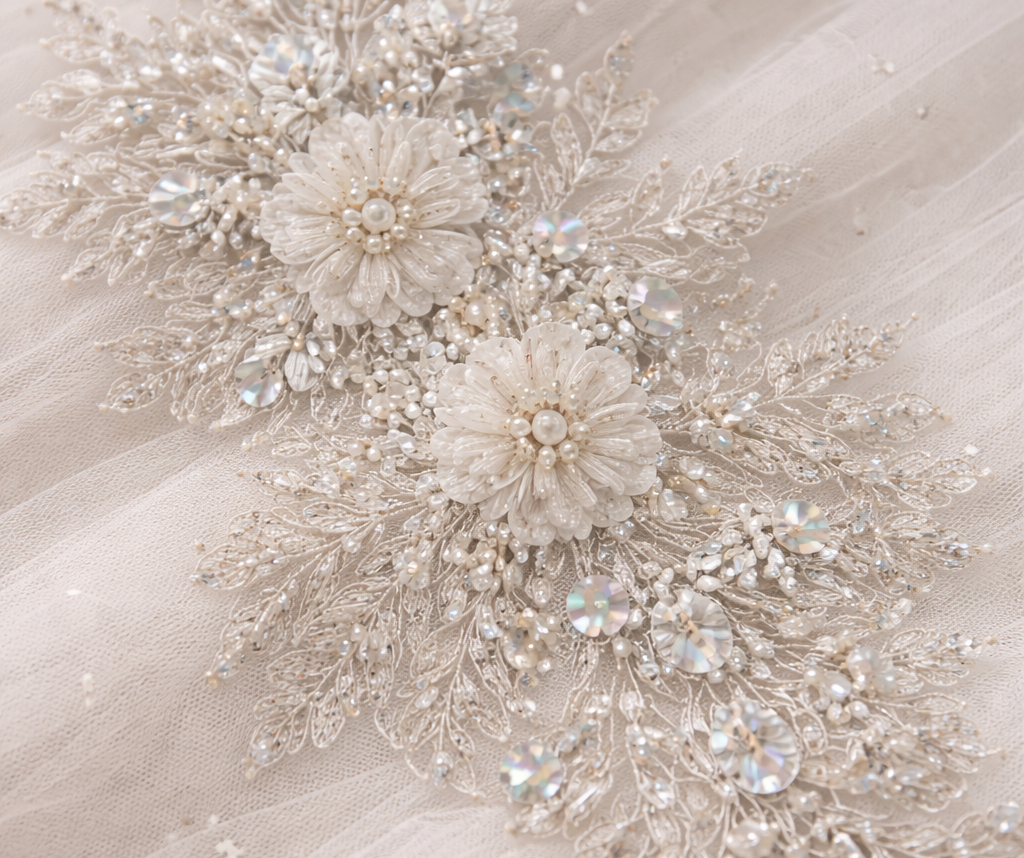
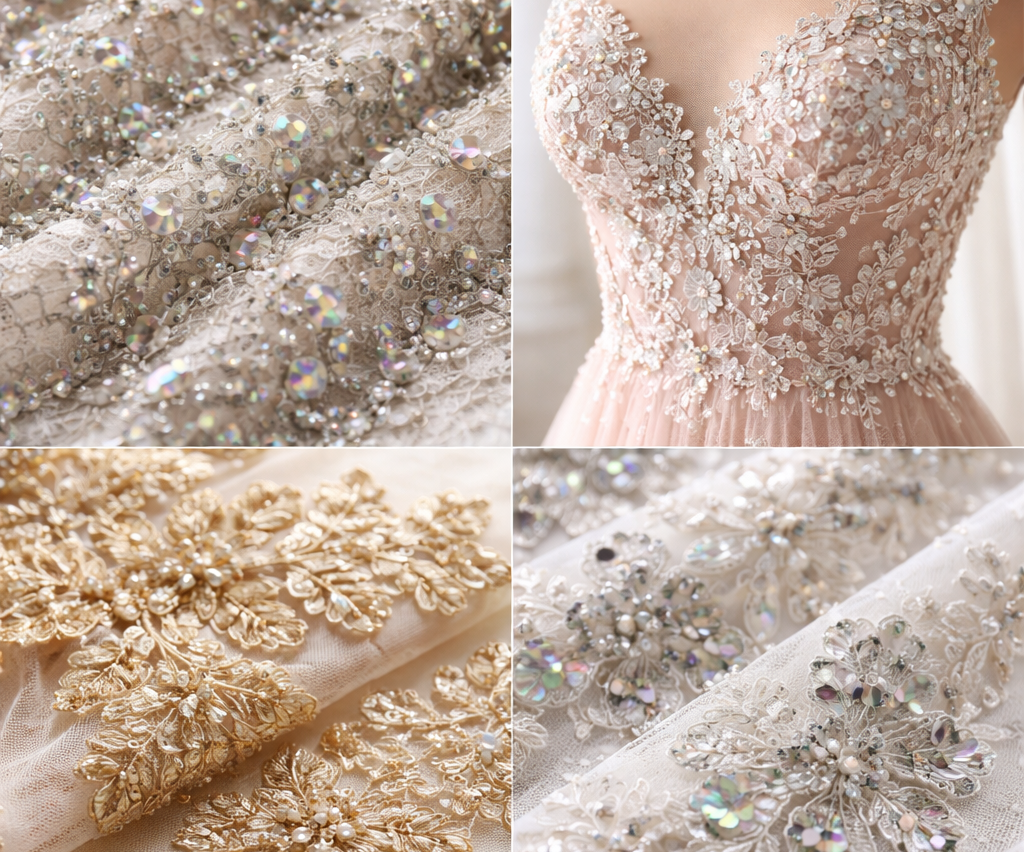
These are ready-made pieces covered in sequins (small, flat or slightly curved discs with a hole in the center) attached to fabric.
They’re sewn or stuck onto bigger clothes—like designs for the neckline, sleeve borders, or patches for bodices and skirts.
Why are they popular?
They save time compared to stitching each sequin by hand.
They give a strong shine or pattern in one spot.
Beaded Appliques
Similar to sequin appliques, but with beads—like seed beads, bugle beads, crystals, or pearls—often mixed with sequins.
Used for bridal wear, party gowns, veils, blouses, dance costumes, bags, and headpieces.
Beaded appliques are usually heavier than sequin-only pieces. The weight and strength of the thread matter for quality.
Corded Embroidery
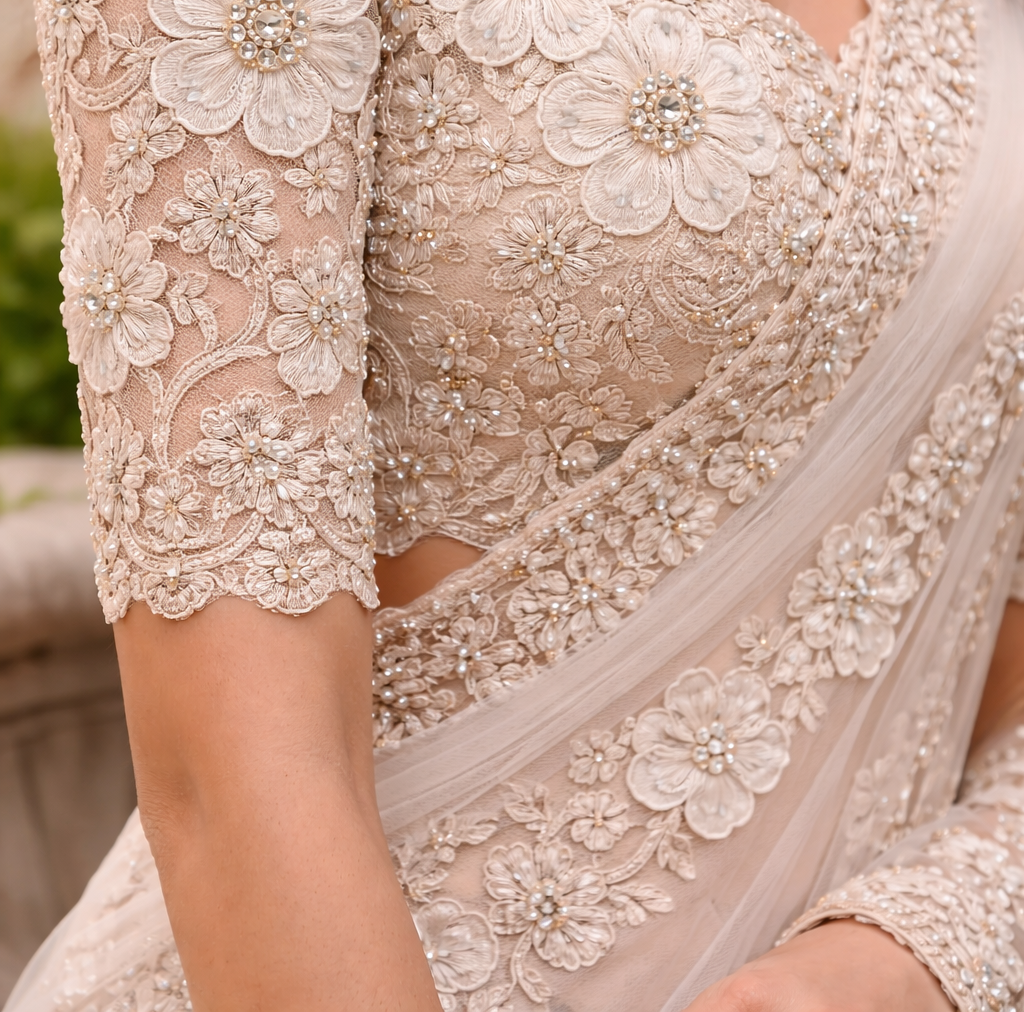
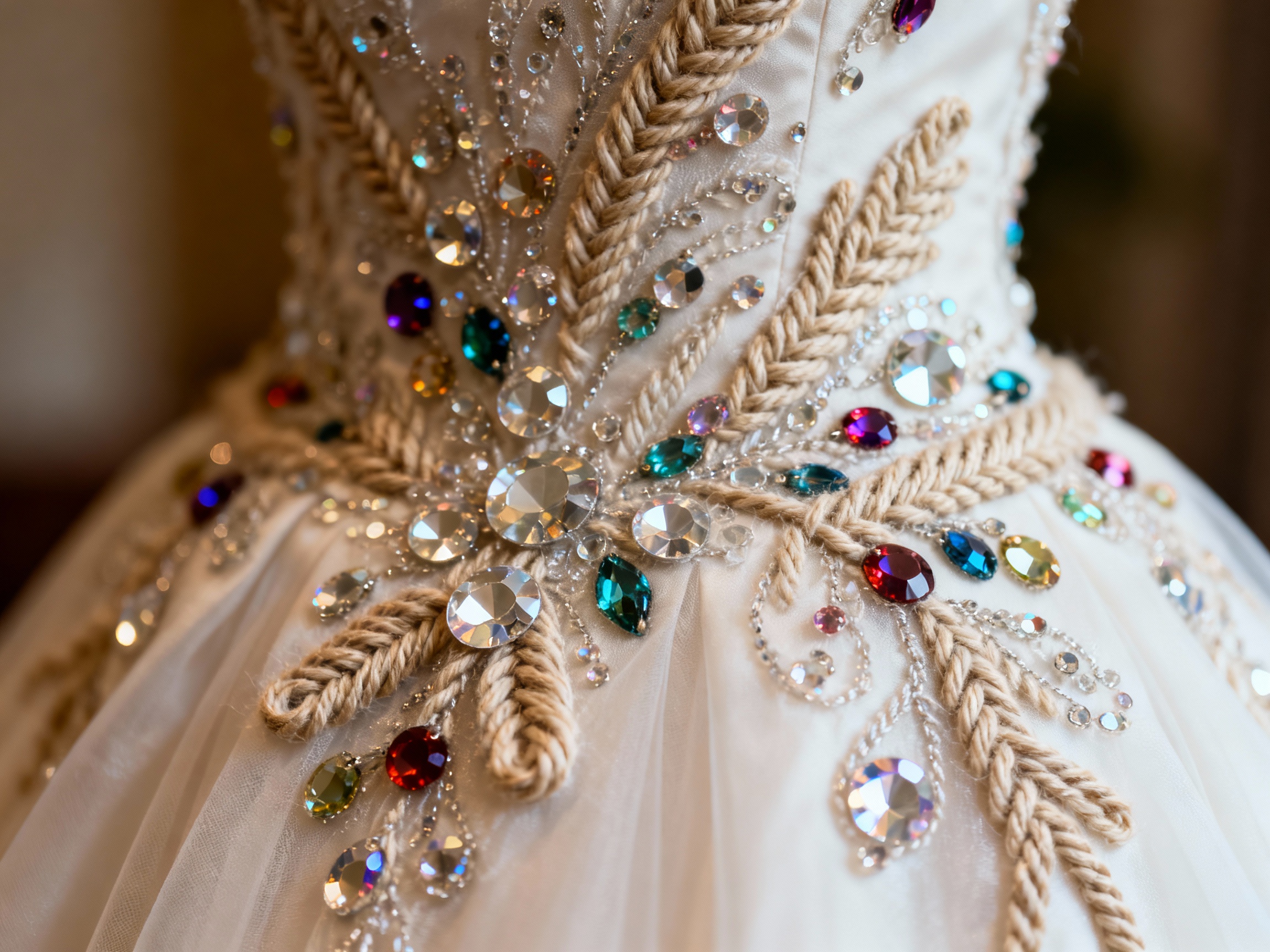
This is a raised embroidery style where cords (often cotton, rayon, silk, or polyester) are laid on the fabric and held in place with stitches.
The outlines of flowers, vines, scrolls, and borders look slightly raised, giving a structured, clear pattern.
Used on lace fabrics to highlight designs, on bridal gowns, formal dresses, abayas, and high-end pieces.
Often combined with beads and sequins for extra texture. Corded embroidery is used under or around beads and sequins, making the shiny parts stand out and keeping the design neat.
Features: Techniques, Materials & What to Look For
Let’s break down the main points so you can spot quality quickly.
Materials Used
For Sequin & Beaded Appliques
Base fabric: Tulle, organza, net, mesh, or light woven fabric. Should be strong enough to hold weight without tearing.
Sequins: Usually plastic or metal-coated plastic. Shapes: round, cup, flat, flower, leaf, etc.
Beads: Seed beads, bugle beads, cut beads, glass beads, plastic beads, pearls. Glass beads are heavier but give a clearer shine.
Thread: Polyester or nylon thread for strength. Sometimes metallic thread for a soft shine.
Backing: Some appliques have a soft backing or mesh to protect skin. Others are raw and can feel scratchy if not lined properly.
For Corded Embroidery
Cords: Cotton, viscose, polyester, rayon, or metallic cords. Should be smooth and even, with no fraying.
Embroidery thread: Polyester, cotton, or rayon thread used to hold the cord in place.
Ground fabric: Lace, tulle, organza, satin, crepe, etc. Must be stable to avoid distortion when stitching the cord.
Techniques
Sequin & Beaded Appliques: How They’re Made
Hand-stitched appliques: Each sequin and bead is stitched by hand. Slight spacing differences are normal and often show handwork. Better for high-end bridal wear.
Machine-stitched appliques: Used for mass production and more uniform patterns. Usually faster and cheaper.
Attachment methods:
Sew-on: Stitch the applique onto the final garment.
Heat-seal (iron-on): Uses adhesive; faster but may not last on high-stress areas or with repeated washing.
Glue-based: Less common for quality garments; often used for costumes or craft projects.
Corded Embroidery: How It’s Done
Couching method: The cord is laid on the surface and held with small stitches at regular intervals. The cord stays on top, giving a raised effect.
Combination with lace: Many corded laces are made by machine and then further decorated. The cord follows the shape of flowers or motifs, making the design stand out.
Layering with beads and sequins: Beads and sequins are added on or around the cord. The cord gives structure; beads and sequins add shine and depth.
Quality Checklist: Quick Things to Inspect
When buying or sourcing:
Back side: Are threads neatly finished or are there loose ends? Are knots tied well or are beads hanging by a single thread?
Feel: Does it feel smooth or scratchy? Will it touch the skin directly, or will it be covered with lining?
Weight vs. fabric: Heavy applique on very light fabric can cause sagging or tearing.
Pattern: Are flowers, leaves, or motifs clear? Or does everything look messy and shapeless?
Durability: Gently rub with your hand—do beads or sequins feel loose? Lightly bend the area—does the embroidery crack, or does it move with the fabric?
Real-World Case Study: Bridal Wear & Export Embroidery
Let’s look at a real-world example from the fashion industry.
Case Study: A Bridal Brand and Its Embroidery Supply Chain
A mid-sized bridal brand in Europe wanted:
Detailed, hand-embellished gowns
Reasonable production cost
Reliable quality for repeated wear (pre-wedding shoot, wedding day, and later changes)
The Problem
Their first supplier used heavy, fully beaded appliques with:
Weak thread
No backing
Poor tension control
The dresses looked fancy on the hanger, but:Beads fell off easily during fittings
Brides complained about itching around the neckline and armholes
Repairs took too much time at the boutique
The Agitation
The brand faced:
Extra tailoring work for every dress
Bad customer feedback
Returns and complaints from stores
The Solution: Switching to Better-Engineered Embroidery
They moved to a specialist embroidery unit in India that focused on:
Corded base + beaded highlights
Corded embroidery outlined the floral designs.
Beads and sequins were added only on important areas.
This reduced weight while keeping the visual impact.
Backed appliques
Delicate tulle backing was used behind heavy designs.
This backing was later placed between the dress and lining, so nothing scratched the skin.
Quality control on threads and knots
Strong polyester thread
Double-knotting on both ends
Random pull tests on samples
Result
Dresses survived multiple fittings without major bead loss.
Brides reported better comfort.
The brand used the same applique designs across gowns, veils, and belts, creating a consistent look.
This case shows how smart choices in sequin and beaded appliques and corded embroidery directly affect comfort, durability, and brand reputation.
FAQs: Common Questions About Sequin, Beaded Appliques & Corded Embroidery
What’s the main difference between sequins and beads?
Sequins are flat or slightly curved discs that reflect light over a wider area. Beads are three-dimensional pieces (round, tube-like, or shaped) that add texture, depth, and often more weight. Many designs use both: sequins for shine, beads for structure and detail.Are sequin and beaded appliques suitable for everyday wear?
They can be, but it depends on:Placement: Small designs on pockets, collars, or cuffs are more practical than fully covered garments.
Weight: Lighter, less dense designs are better for daily use.
Care: Everyday clothes should be easy to wash or at least resistant to gentle hand-washing. For heavy bridal or party wear, hand-wash or dry-clean is usually best.
How should I care for clothes with corded embroidery and beaded appliques?
Washing: Follow the care label. When in doubt, choose gentle hand-wash or professional dry-cleaning.
Handling: Turn the garment inside out if washing at home. Avoid twisting or wringing.
Storage: Store flat or on padded hangers. Keep heavier embellished areas supported (e.g., folded with tissue paper) to reduce strain.
Can these techniques be used on stretch fabrics?
Yes, but with care. Appliques that don’t stretch can distort or pop stitches when the fabric is pulled. For stretch garments:Use smaller, well-placed appliques.
Choose soft backing and flexible stitch techniques.
Test the stretch after attaching the applique to check comfort.
How can I tell if embroidery is hand-made or machine-made?
Hand embroidery: Slight spacing differences, knots or thread ends visible on the back. Often used in couture, bridal, and high-end ethnic wear.
Machine embroidery: Uniform stitches and spacing, back usually looks neat and consistent. Common in mass-produced garments.
Both can be high quality; it depends on design and execution.
Conclusion: Craftsmanship and Modern Relevance
Sequin and beaded appliques and corded embroidery aren’t just decoration. They’re smart techniques that decide how a garment looks, feels, and holds up in real life.