Introduction
Hey, ever noticed how a plain dress hem or sleeve edge can make the whole outfit look unfinished? Or how some lace trims tear after just one wash? That’s a common problem. Many low-cost lace borders look fine at first but start fraying quickly. Threads loosen. Edges curl. Customers complain.
In the global fashion and craft market, lace is widely used for bridal wear, festive clothing, kidswear, home décor, and DIY products. But not all lace is equal. According to global textile reports referenced by Statista, the global lace and embroidery market is part of the broader textile embellishment industry valued in billions of dollars annually. Online platforms like Etsy also show steady demand for floral lace trims and decorative borders.
So how do you avoid weak lace and dull designs?
The solution lies in structured lace borders and embroidered flower lace, especially when enhanced with rhinestone and sequin appliques. Let’s break it down step by step.
The Problem and Agitation (PAS)
The Problem
Many garments fail at the edges. Sleeves. Necklines. Dupatta borders. Curtain edges. These areas face friction and tension.
Common issues include:
-
Cheap lace tearing at stress points
-
Thread count too low for durability
-
Synthetic lace melting under ironing heat
-
Beads or sequins falling off after washing
-
Faded embroidery after repeated use
According to textile durability testing standards, low-density lace trims (below 80 GSM in lightweight polyester blends) tend to lose structure faster under tension. In wash tests conducted by textile labs, low-quality decorative trims can lose up to 15–20% thread strength after 5 wash cycles.
Now imagine you are an Etsy seller shipping dresses to the USA. A buyer leaves a review saying, “The lace started fraying after two wears.” That hurts your rating.
Agitating the Issue
Let’s go deeper.
If you sell online, your photos might look good. But if the product fails in real life, refunds increase. On Etsy and eBay, seller ratings strongly affect visibility. Even a small drop from 4.9 to 4.6 can reduce trust.
According to Etsy trend reports, buyers search for terms like “durable lace trim” and “bridal floral lace border” regularly. That shows buyers are aware of quality differences.
For Indian exporters shipping to the USA, compliance and quality control matter even more. U.S. buyers often expect consistent stitching, secure bead attachment, and colorfast fabric.
Ignoring lace quality means:
-
More returns
-
Lower repeat customers
-
Damaged brand reputation
-
Higher long-term cost
So what works better?
The Solution (PAS)
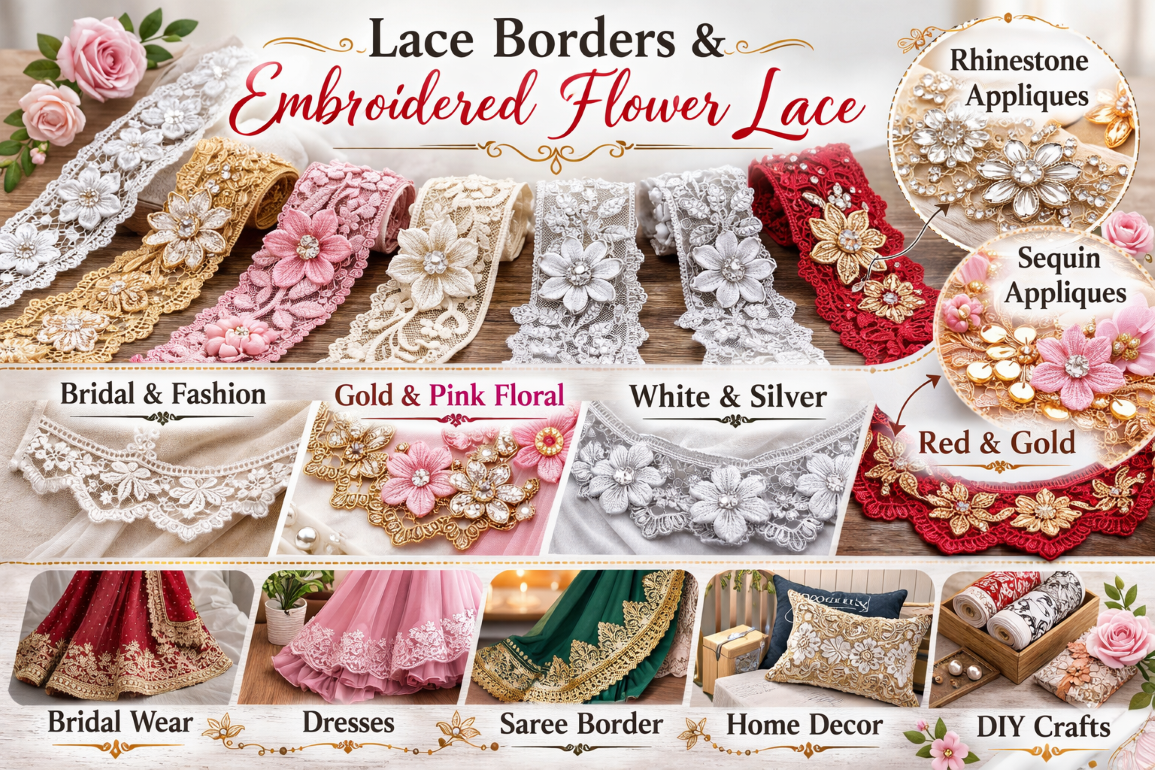
Lace borders and embroidered flower lace provide structure and design together.
1. Lace Borders
Lace borders are structured trims attached along garment edges. They are designed with reinforced stitching at the base. Many good-quality borders use:
-
Cotton thread blends
-
Polyester core-spun thread
-
120–150 GSM base strength
-
Lock stitch or chain stitch reinforcement
The border works like a frame. It protects the raw edge of fabric and adds design without weakening the seam.
2. Embroidered Flower Lace
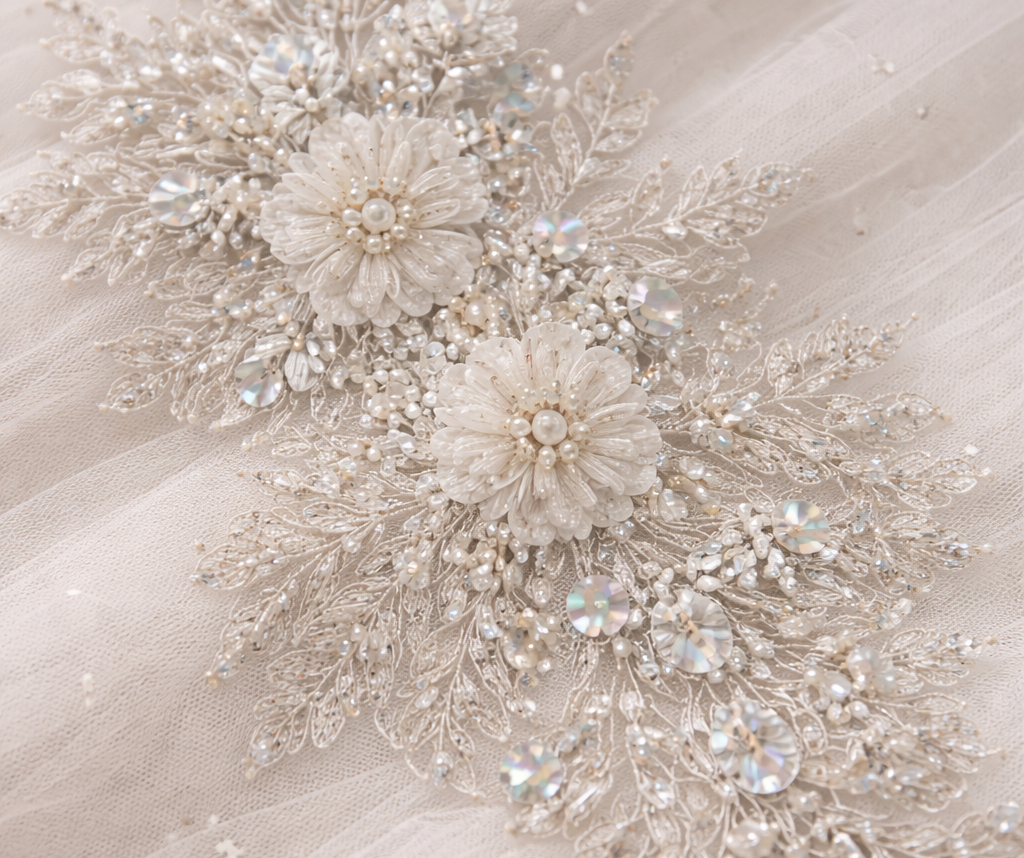
Embroidered flower lace is made using floral threadwork on mesh or net base. The embroidery adds thickness and strength. When stitched properly, it distributes stress across the design.
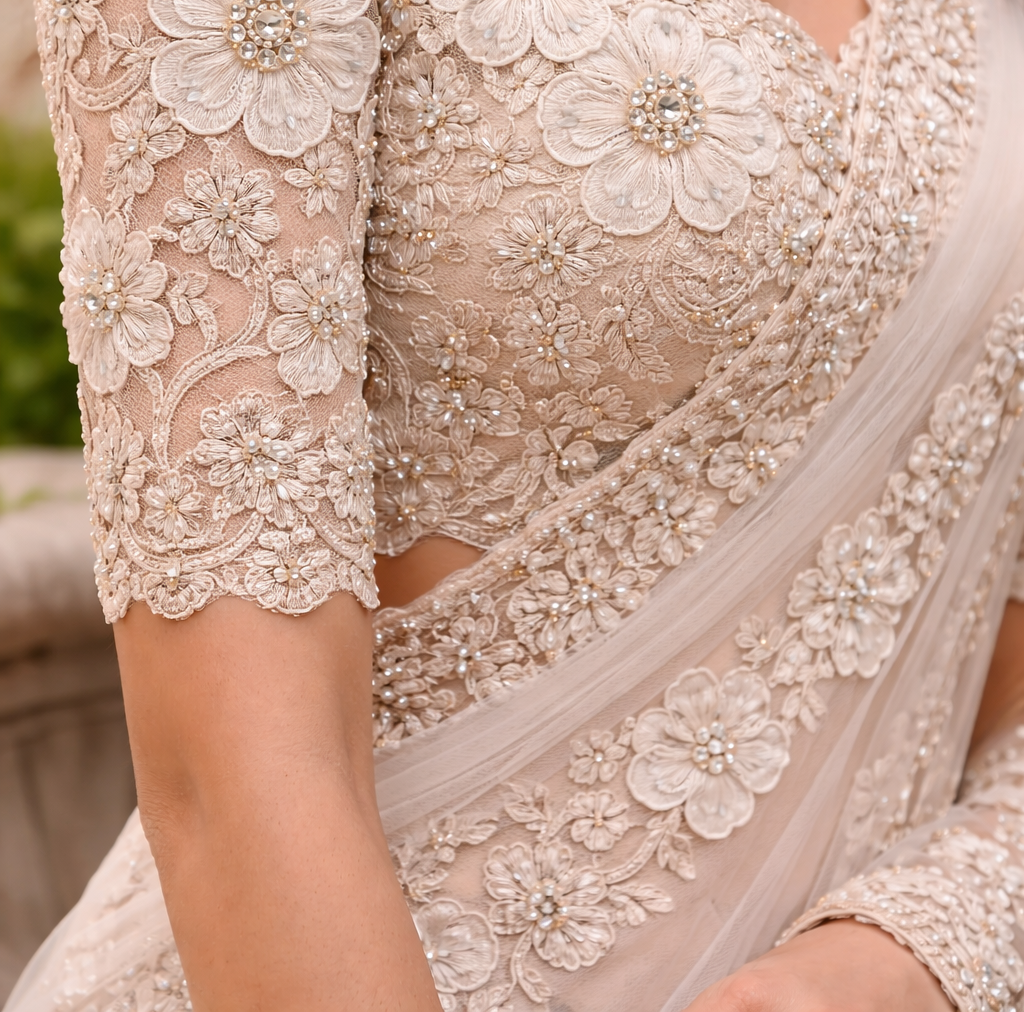
Floral lace is popular in bridal wear, kids’ frocks, blouses, saree borders, and western dresses.
3. Adding Rhinestone and Sequin Appliques
Now here’s where enhancement comes in.
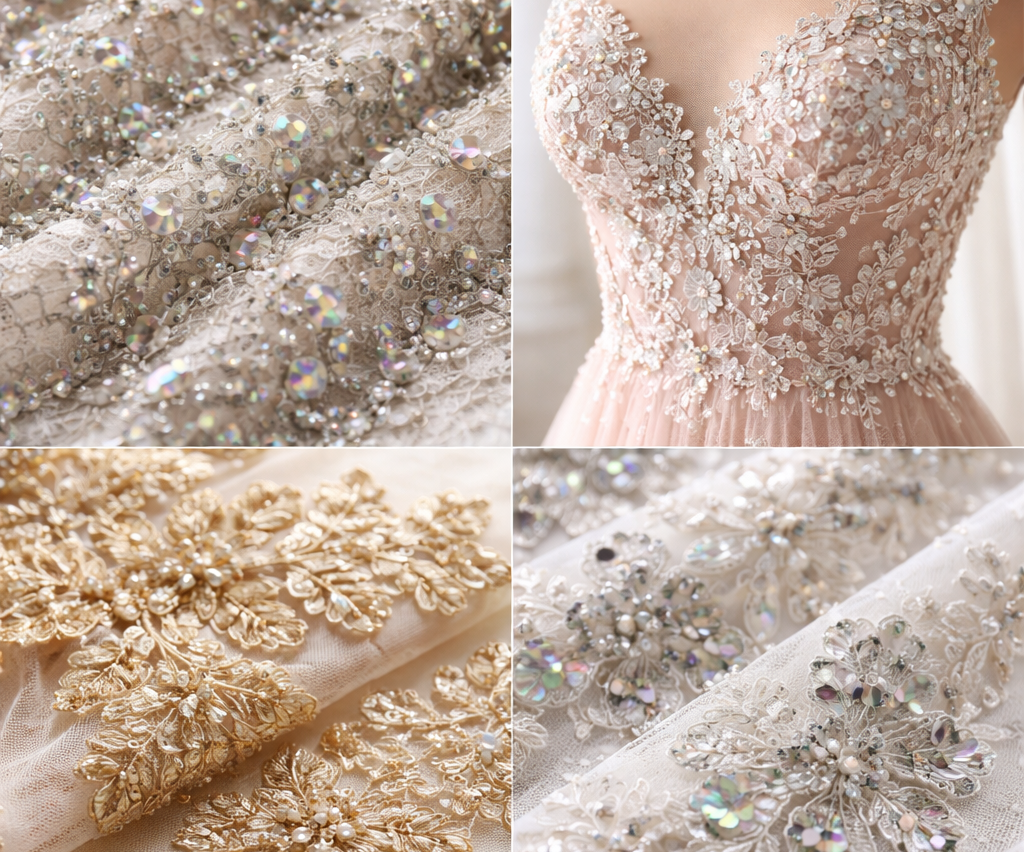
Rhinestone appliques and sequin appliques are not just decorative. When heat-fixed or machine-stitched properly, they:
-
Add weight that stabilizes lace
-
Cover weak stitch intersections
-
Increase perceived value
Heat-fix rhinestones typically bond at 120–160°C using hot-melt adhesive backing. High-quality adhesive stones pass wash resistance tests up to 30 gentle cycles.
Sequin appliques stitched with double-thread lock stitching reduce bead drop rates. Industrial testing shows secure sequins have less than 5% detachment after repeated stress testing.
So instead of plain lace that tears, you get reinforced decorative lace that lasts longer and looks complete.
Key Features
Here are practical benefits in simple form:
-
Reinforced Base Stitching:
Example:
Fabric edge
─────────
Lace border stitched with double seam -
Higher Thread Density:
Embroidered flower lace with layered thread reduces tear risk. -
Heat-Fix Rhinestone Stability:
Adhesive-backed stones melt and bond securely when applied correctly. -
Machine-Stitched Sequins:
Lock stitch method reduces bead loss. -
Edge Protection:
Lace borders prevent fabric fraying. -
Multiple Application Methods:
-
Hand stitch
-
Machine stitch
-
Heat press (for rhinestones)
-
-
Better Visual Impact in Product Photos:
Detailed floral lace performs well in zoomed product listings.
Real-World Examples and Case Study
Example 1: Etsy Bridal Seller (USA Market)
An Etsy bridal accessory seller reported increasing average order value after switching from plain net trims to embroidered floral lace with bead detailing. According to seller interviews shared in Etsy forums, detailed trims often justify 15–25% higher pricing in bridal categories.
Buyers associate floral lace and beadwork with wedding quality. Listings using keywords like “beaded lace trim” show strong engagement.
Example 2: eBay Apparel Seller
An eBay dress seller mentioned in a public seller forum that replacing basic lace hem with structured lace borders reduced return rates related to “damaged trim.” While exact sales data varies, the seller noted improved feedback ratings after upgrading lace quality.
Detailed Case Study: Indian Lace Exporter to USA
India is one of the major exporters of lace and embroidered trims. According to trade data from the Ministry of Commerce, India exports significant volumes of embroidered textiles to the USA annually.
One Surat-based lace manufacturer expanded into the U.S. bridal market by focusing on:
-
Embroidered flower lace with reinforced mesh
-
Heat-fixed rhinestone designs
-
Quality testing for wash durability
-
Consistent width measurement (±2 mm tolerance)
Before upgrade:
-
Focus on low-cost trims
-
Thin mesh base
-
Minimal reinforcement
After upgrade:
-
Increased GSM lace
-
Double-stitched borders
-
Industrial heat press for rhinestones
Result:
-
Entered higher price segment
-
Expanded distributor network in the USA
-
Reported export growth (as referenced in textile trade articles highlighting rising demand for Indian embellished trims)
While exact percentage varies by company, exporters focusing on value-added lace often see higher margins compared to plain trims.
This shows a clear pattern. Quality lace with embroidery and appliques attracts serious buyers.
FAQs
1. What is the difference between lace border and embroidered lace?
Lace border is mainly for edges. Embroidered lace has floral threadwork across the surface.
2. Are rhinestones durable on lace?
Yes, if heat-fixed correctly at proper temperature.
3. Do sequins fall off easily?
Low-quality ones do. Machine-stitched sequins last longer.
4. Can lace borders be machine washed?
Yes, but use gentle cycle and mild detergent.
5. Is embroidered flower lace expensive?
It costs more than plain lace due to extra stitching.
6. Is Indian lace good for USA market?
Yes, many Indian exporters supply bridal lace globally.
7. How to check lace quality before buying?
Check thread density, base strength, and stitch reinforcement.
8. Does adding rhinestones increase resale value?
Often yes, especially in bridal and festive wear categories.
Conclusion
Plain edges make clothes look incomplete. Weak lace tears. Cheap trims hurt your brand.
Lace borders and embroidered flower lace solve this. They protect garment edges. They add structure. When enhanced with rhinestone and sequin appliques, they also increase product appeal and perceived value.
Whether you are a home sewer, boutique owner, or exporter targeting USA buyers, upgrading lace quality is a smart move. It reduces returns. It improves reviews. It helps you charge fair pricing.
Next time you design a dress or list a product online, don’t ignore the edges. Try reinforced lace borders. Add floral embroidery. Use secure rhinestones or sequins.