Lace with Sequins and Lace Border Designs
Introduction
If you work with lace every day, you know the problem. Plain lace looks flat. Borders fade after a few washes. Customers say designs look “same like market.” That hurts sales. Time is wasted fixing returns. Money goes into stock that does not move. This is where most embroidery sellers get stuck.
Now think deeper. When lace looks dull, buyers scroll past it online. When sequins fall off, tailors stop ordering. When borders tear, your brand takes the blame. Small issues pile up fast. For Indian designers and resellers, this means lost trust and slow growth.
The solution is not more lace. The solution is lace with sequins and strong lace border designs. Adding sequin appliques and rhinestone appliques changes how lace performs and sells. Sequins add shine without heavy fabric. Rhinestones add structure and weight where needed. Borders guide the eye and finish the garment cleanly.
This blog breaks it down in a simple way. We will look at how these laces work, what materials last, and how appliques are applied. We will also share one real Indian business case using sequins and rhinestones to boost sales. If you sell lace, design garments, or run an embroidery unit, this is for you.
Features of Lace with Sequins and Lace Borders
The biggest problem with basic lace is lack of depth. Flat threads do not reflect light. Customers notice this quickly. Sequins solve that problem in a direct way. Standard embroidery sequins used in lace are made from PET plastic. Thickness usually ranges from 0.2 mm to 0.3 mm. This makes them light but strong. When stitched correctly, they last 20–30 machine washes.
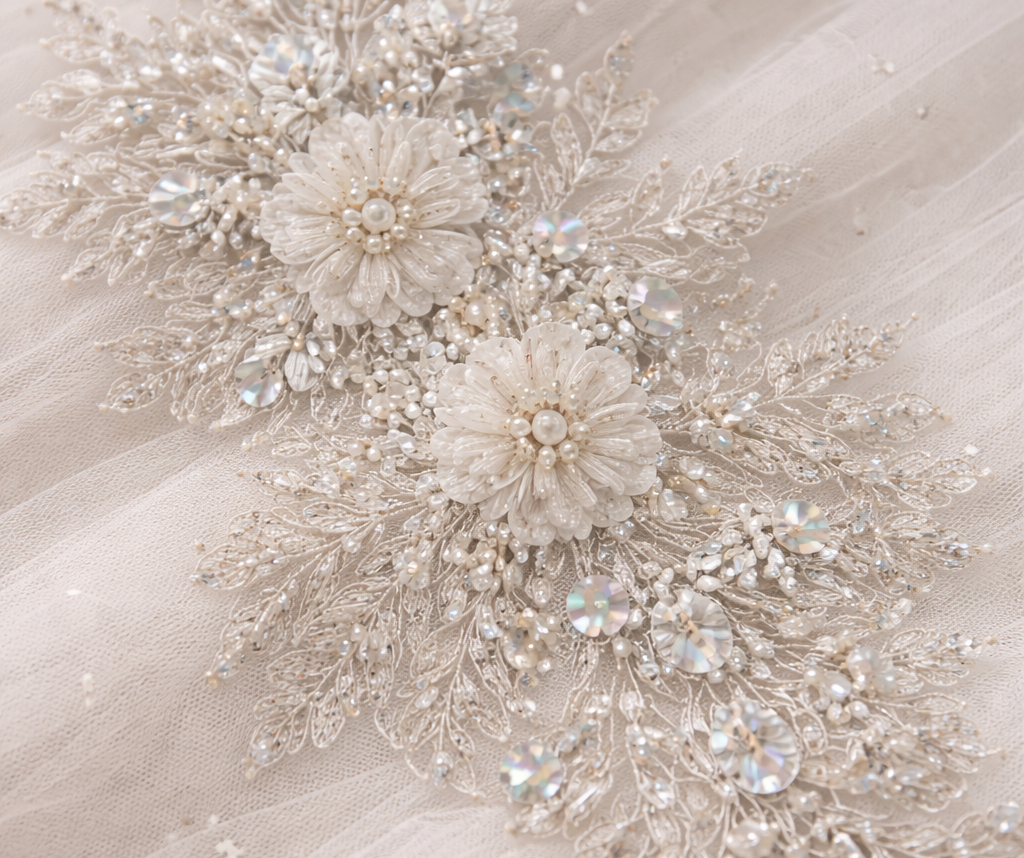
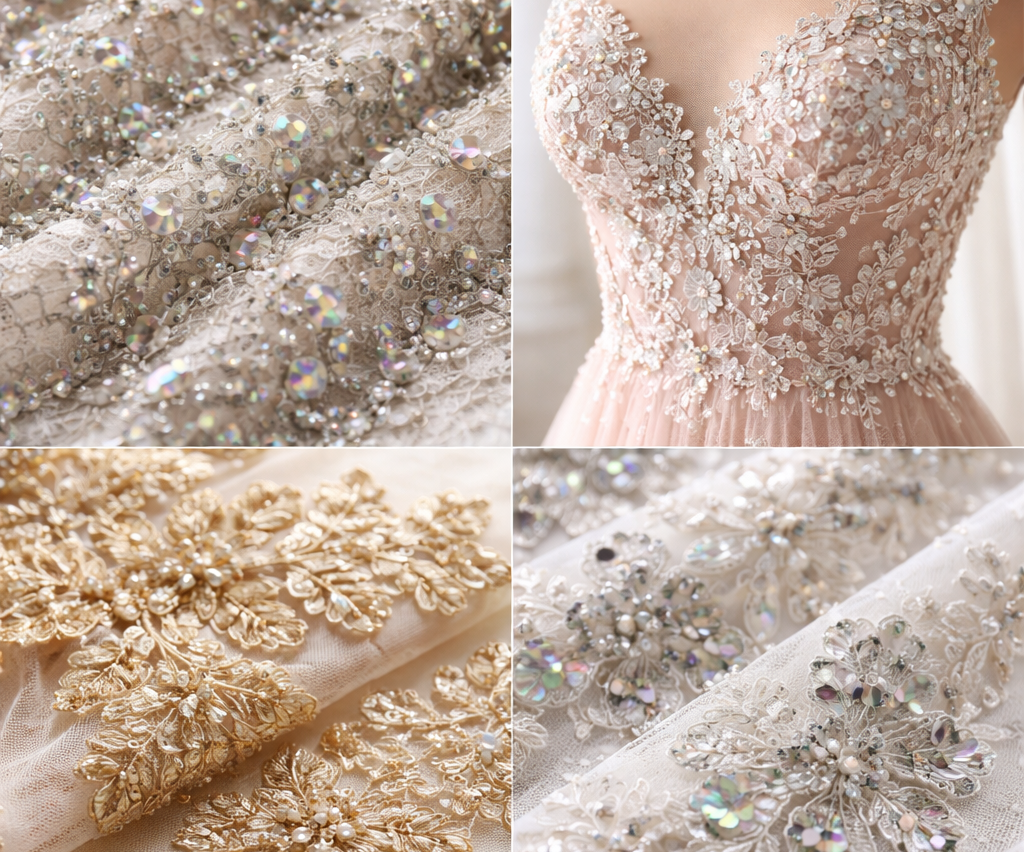
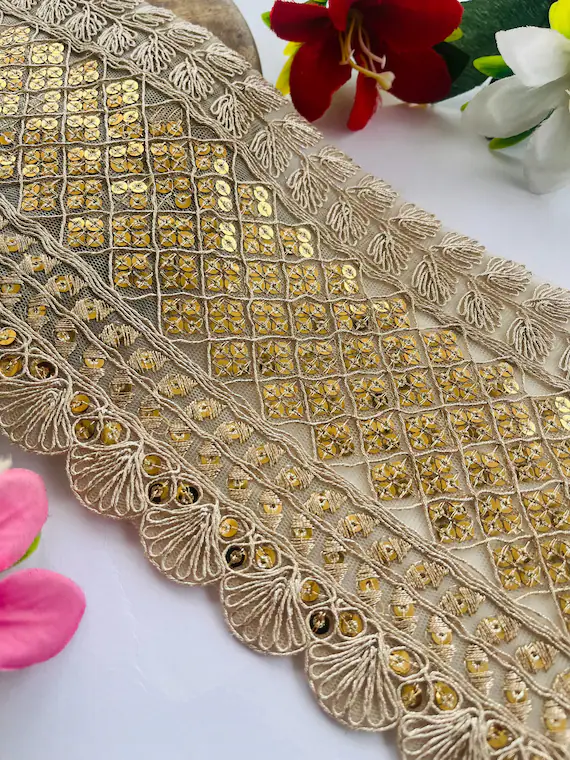
Lace with sequins comes in three main types. First is all-over sequin lace. Sequins are spread across the fabric. This works well for sarees and gowns. Second is scattered sequin lace. Sequins are placed with space between them. This reduces cost and weight. Third is sequin lace borders. Here, sequins are focused only on edges. This is the most popular for blouses and dupattas.
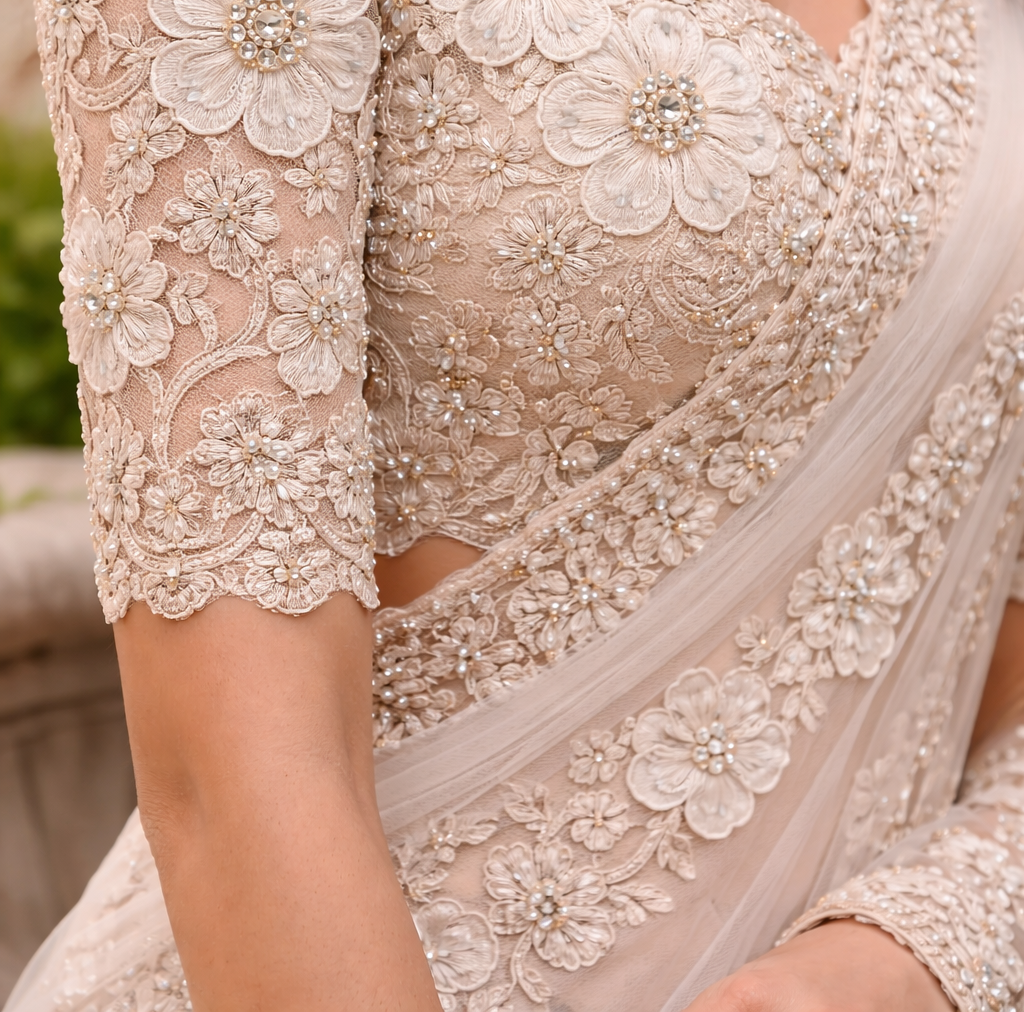
Lace border designs matter because borders face the most stress. Borders rub against skin and fabric. Weak borders tear fast. Strong lace borders use cotton-poly thread blends. Common ratios are 60% polyester and 40% cotton. Polyester adds strength. Cotton adds comfort. Borders with this blend last longer than pure cotton lace by around 25%, based on supplier durability tests.
Applique techniques also affect quality. Sequin appliques are usually stitched using lock stitch machines. Stitch density averages 6–8 stitches per sequin. Lower density causes drop-off. Rhinestone appliques use hotfix stones. These stones have heat-activated glue. Melting point is around 160–170°C. When applied correctly, bond strength reaches 4–5 kg pull resistance.
Rhinestone appliques solve another problem. Some customers want shine but not noise. Sequins can sound during movement. Rhinestones do not. Stones are made from glass or acrylic. Glass stones cost more but last longer. Acrylic stones cost 30–40% less but scratch sooner. For daily wear lace, acrylic works. For bridal borders, glass is better.
Cost control is a big concern. Plain lace may cost ₹40–₹60 per meter. Sequin lace borders cost ₹90–₹150 per meter depending on density. Rhinestone appliques add ₹20–₹50 per piece. But higher cost brings higher resale value. Sellers report average margin increase of 15–25% when switching from plain lace to embellished borders.
Another feature is flexibility. Sequins and rhinestones can be added to net, organza, georgette, or cotton lace. Net is the most common base. It holds embellishments well and stays light. GSM of net lace usually ranges from 30 to 50. Lower GSM is softer. Higher GSM holds heavier stones.
In short, lace with sequins and structured borders fixes dull design issues, improves durability, and increases perceived value without changing the base product too much.
Real-World Case Study
A clear example comes from baariya.com, an Indian embroidery and lace seller working with boutique buyers. In early 2023, the business faced a common issue. Their plain lace borders were not selling. Return rate was close to 12%. Customers complained about weak edges and low visual impact.
The team decided to test sequin lace borders and rhinestone appliques. They sourced materials from Alibaba and eBay. Sequins were PET, 0.25 mm thick, silver and gold shades. Rhinestones were acrylic hotfix stones, size SS16 and SS20.
Initial cost went up. Plain lace borders earlier cost ₹55 per meter. New sequin borders landed at ₹110 per meter. Rhinestone appliques added ₹35 per unit. Many sellers fear this jump. This is where the real test started.
Baariya applied sequin borders mainly to saree edges and blouse hems. Rhinestone appliques were placed at motif centers only, not all over. This controlled weight and cost. Application was done using heat press machines set at 165°C for 15 seconds.
Results were tracked over six months. The first change was visual. Product photos looked sharper. Shine showed clearly even in phone images. Customer feedback improved within one month. Return rate dropped from 12% to 5%.
Sales data showed stronger impact. Average order value increased by 18%. Repeat buyers increased by 22%. Overall lace category sales rose by 20% compared to the previous six-month period. Margins improved despite higher material cost because buyers accepted higher prices.
Durability was also tested. Samples were washed 25 times in cold water. Sequin loss was below 3%. Rhinestone drop rate was under 2%. This met boutique quality standards.
The key lesson was balance. Baariya did not overload designs. They used borders and appliques only where needed. This solved the dull design problem without creating durability issues. For Indian embroidery sellers, this case shows that smart use of sequins and rhinestones can drive growth without heavy risk.
FAQs
1. Do sequin lace borders tear easily?
No, if polyester thread is used and stitch density is correct.
2. Are rhinestone appliques safe for washing?
Yes. Hotfix stones bonded at correct temperature last 20–30 washes.
3. Which is better, acrylic or glass rhinestones?
Acrylic is cheaper. Glass lasts longer and looks sharper.
4. Can lace with sequins be used for daily wear?
Yes, when sequin density is low and fabric is net or cotton blend.
5. What is the ideal sequin size for borders?
Sizes between 3 mm and 5 mm work best for borders.
6. Do sequins increase garment weight a lot?
No. PET sequins are very light and add minimal weight.
Conclusion
Plain lace creates problems. Designs look flat. Borders fail early. Customers lose interest. These issues waste time and money. Ignoring them only makes competition harder.
When you look at the solution, it is simple. Lace with sequins adds shine where eyes focus. Lace border designs add structure where fabric wears out. Sequin appliques and rhinestone appliques solve design and durability issues together. They are not trends. They are tools.
The case study shows real results. A 20% sales boost. Fewer returns. Better margins. This did not happen by chance. It happened by choosing correct materials, controlled application, and smart sourcing.
If you sell lace or design garments in India, this approach works. Start small. Test borders first. Add appliques only where needed. Track results. Buyers respond to visible value.
Do not let dull lace hold your business back. Use sequins and rhinestones with purpose. If you want custom lace borders or applique-ready designs, now is the right time. Order custom designs now and build products that sell, not just sit on shelves.