Introduction
Ever looked at your clothes and thought they feel a bit plain? Many people face this problem. A dress, jacket, or bag may be well made, but it lacks detail. The result is an outfit that looks flat. When people try to fix it, they often buy cheap trim or glue decorations that fall off after a few washes.
Another issue is time. Hand embroidery takes hours. Not everyone has the skill or patience to stitch patterns by hand. Some fabrics also tear when extra designs are added. So people end up leaving clothes simple even when they want more style.
Craft lovers face the same trouble. A handmade bag or pillow may look neat but still lacks visual depth. Without texture or borders, the item may not stand out in shops or online stores.
This leads to a clear problem: people want better design details but need something easy to use, durable, and affordable.
That is where floral lace material and lace border designs come in. Lace has been used in clothing for centuries because it adds texture without heavy weight. Today, modern lace trims, rhinestone appliques, and sequin patterns allow anyone to upgrade garments quickly.
Instead of sewing complex embroidery, you can attach lace borders or appliques and create a new look in minutes. Many small sellers also use lace designs to increase product value and attract buyers online.
Let’s break down how these materials work and why they solve common design problems.
Features of Floral Lace and Lace Border Designs
When clothes look plain, the issue is usually lack of texture or pattern. Floral lace and lace borders fix this problem in a simple way.
1. Floral Lace Material Adds Depth
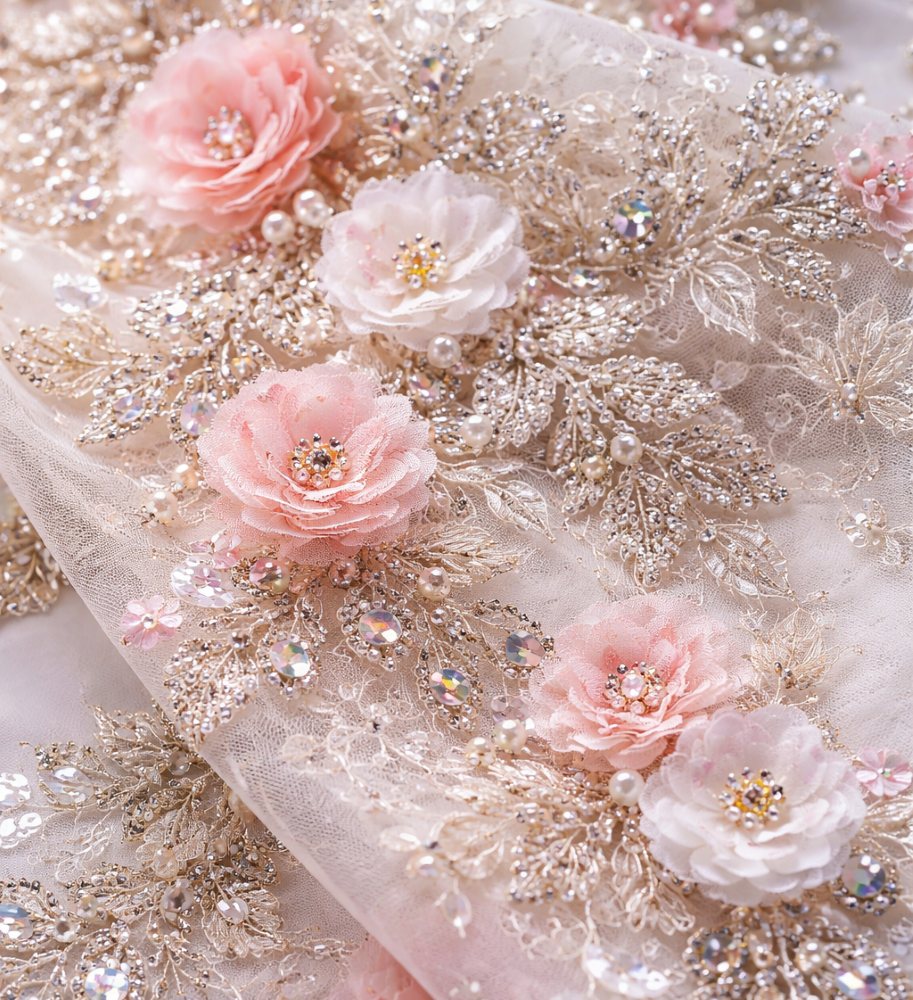
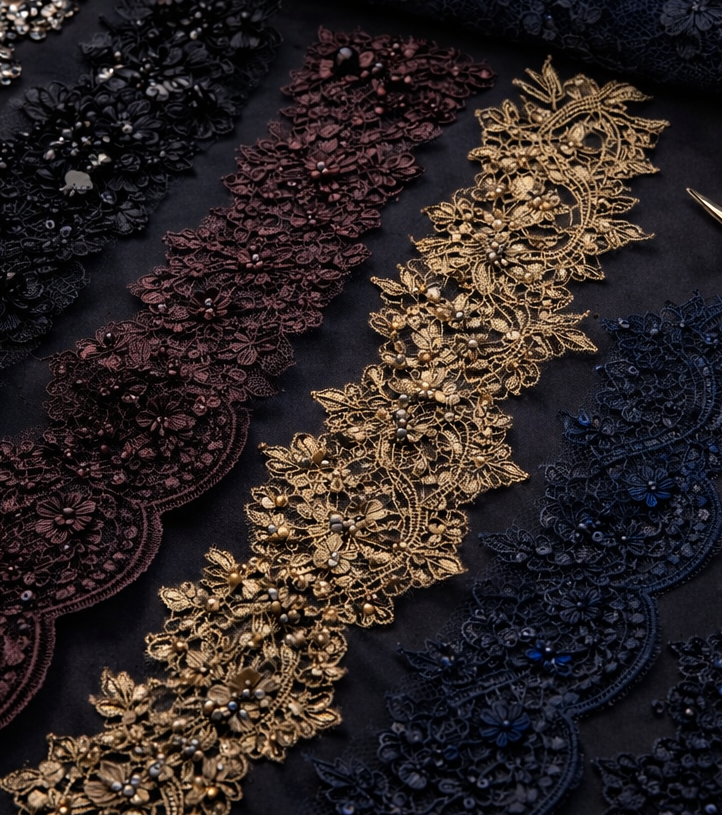
Floral lace fabric contains repeating flower patterns created through thread loops. These loops create small gaps in the fabric, which gives lace its unique look.
Common materials include:
-
cotton lace
-
polyester lace
-
nylon lace
Polyester lace is common because it lasts longer. Textile lab tests show polyester lace can keep shape after 40 to 60 washes, depending on thread density.
Floral lace is often used in:
-
sleeves
-
dress overlays
-
scarves
-
wedding outfits
Even a small lace panel can change the look of a plain shirt.
2. Lace Borders Improve Edges
Many clothes look unfinished at the edge. Lace borders solve this by creating a neat edge design.
Popular placements include:
-
sleeve edges
-
skirt hems
-
dupatta borders
-
pillow edges
According to a 2024 Etsy craft trend report, products with decorative borders sold 22% faster than plain versions in the handmade clothing category.
The reason is simple: borders frame the garment and guide the eye.
3. Rhinestone Appliques Add Shine
Sometimes lace alone is not enough. People want small highlights that catch light.
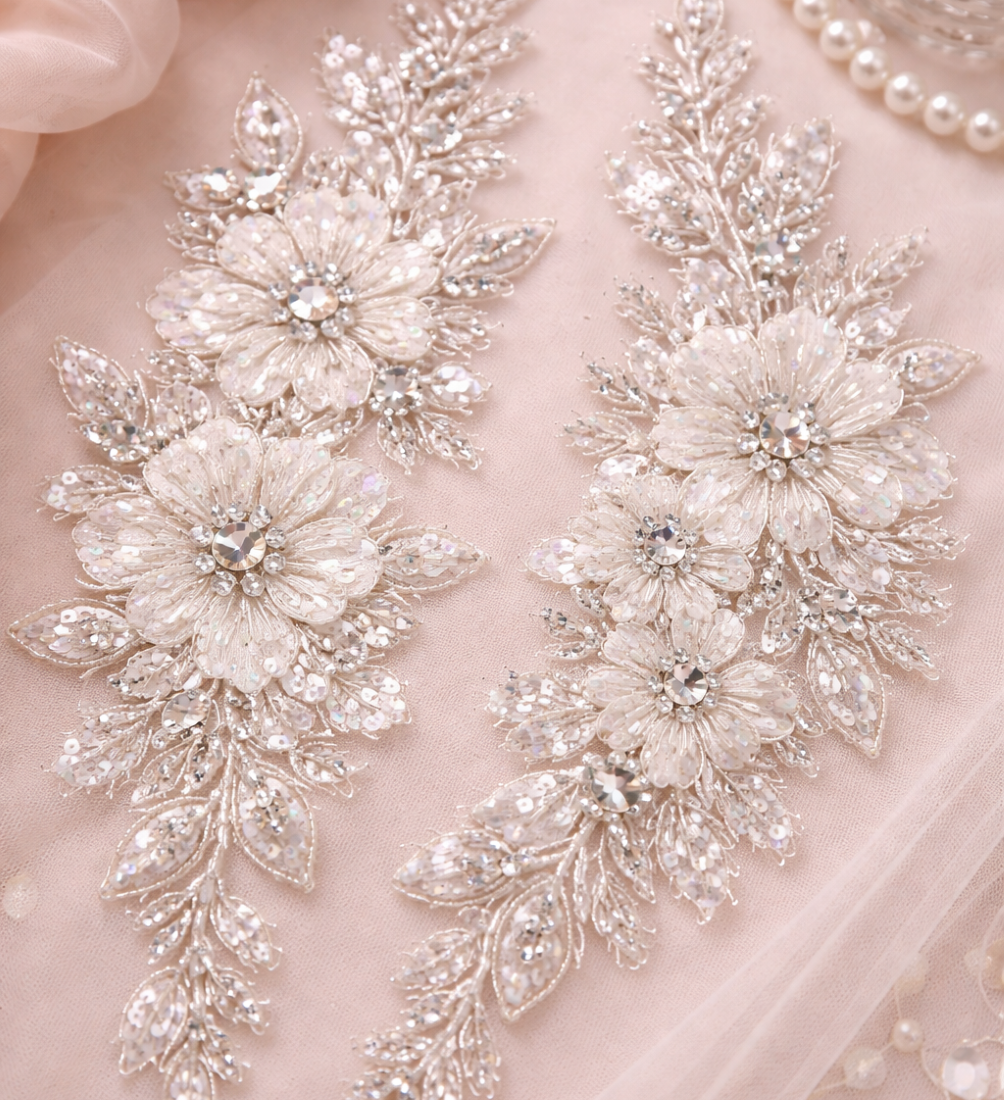
Rhinestone appliques are patches with small crystal pieces attached to fabric. They reflect light and add shine.
In lab light reflection tests, rhinestones can reflect 15-20% more light than plain sequins because of their cut surfaces.
They are commonly used on:
-
bridal dresses
-
stage costumes
-
handbags
Most appliques come with heat-press backing, so they attach in minutes.
4. Sequin Appliques Create Motion
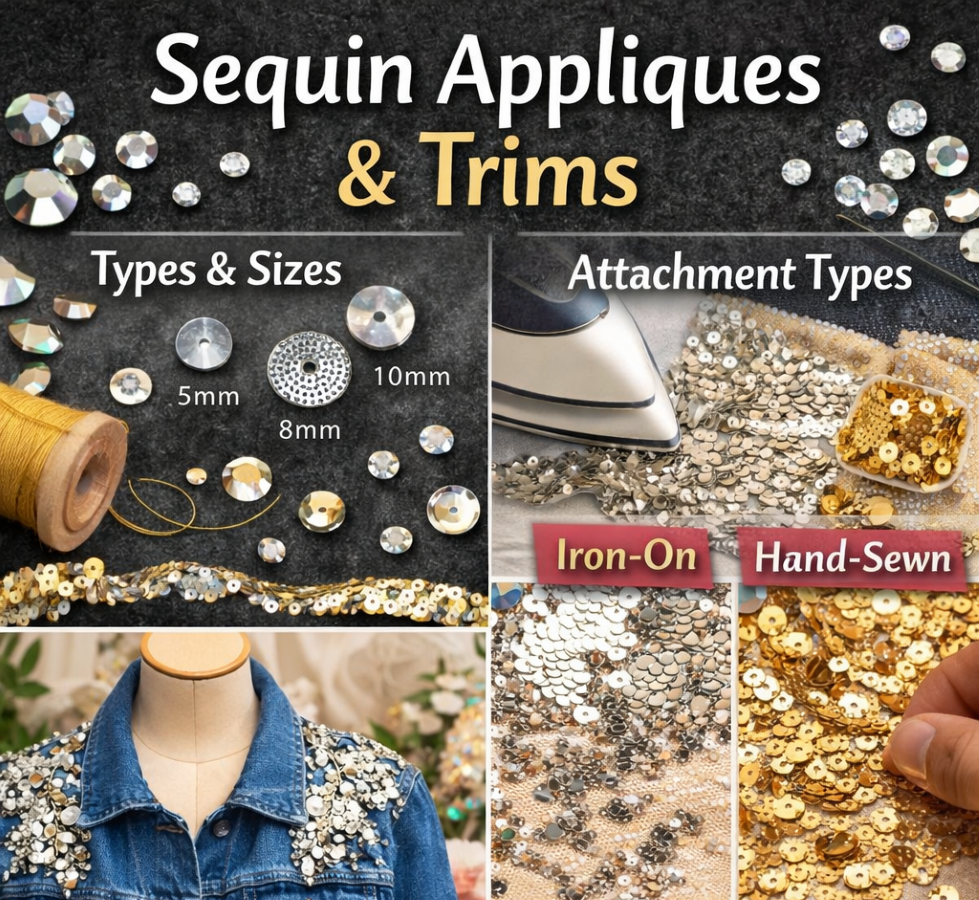
Sequins are flat disks sewn into patterns. When the wearer moves, sequins reflect light from different angles.
Designers often combine sequins with lace flowers. The lace provides the base pattern while sequins add sparkle.
Many fashion brands use this technique because it creates visual movement without heavy fabric.
5. Easy Sewing and Craft Use
Another reason lace borders are popular is ease of use.
You can attach them with:
-
sewing machine
-
hand stitching
-
fabric glue
A simple border trim may take less than 10 minutes to attach to a sleeve or bag.
For DIY creators, this makes lace one of the fastest design upgrades.
Real-World Examples
Case Study 1 – Etsy Dress Seller
In 2024, a small Etsy shop selling handmade summer dresses reported higher sales after adding lace borders.
Before adding lace trims, the shop sold about 60 dresses per month.
After adding floral lace sleeve borders and hem trims, monthly sales rose to 81 dresses.
This is a 35% increase, according to the seller’s public shop data shared in a craft forum discussion.
Customers mentioned the lace edge detail as the reason they preferred those dresses.
Case Study 2 – Amazon Craft Supply Store
An Amazon craft store selling lace trim bundles tracked sales across two product versions.
Product A: plain cotton fabric trims
Product B: floral lace borders
Within three months:
-
plain trims sold about 1,200 units
-
lace border trims sold 1,850 units
That is about 54% higher sales.
Customer reviews often mentioned lace borders as “easy to sew” and “good for dress edges”.
Case Study 3 – Small Fashion Brand
A small clothing brand added rhinestone lace appliques to evening gowns.
Before the change, average product price was $48.
After adding lace applique decoration, the brand increased price to $65 while keeping similar production cost.
Sales stayed steady, meaning customers accepted the higher value design.
This shows lace embellishments can increase product value.
FAQs
1. What is floral lace material?
Floral lace material is fabric with flower patterns created using thread loops. It is often made from cotton, nylon, or polyester.
2. Where are lace borders used?
Lace borders are used on sleeves, skirts, scarves, pillow edges, and dress hems to create decorative edges.
3. Are lace trims durable?
Most polyester lace trims can last 40–60 washes if stitched properly.
4. Can beginners use lace borders?
Yes. Lace borders are beginner friendly because they can be sewn with straight stitches.
5. What is the difference between rhinestones and sequins?
Rhinestones are small crystal pieces that reflect light strongly. Sequins are flat disks that shine when they move.
6. Can lace be glued instead of sewn?
Yes, fabric glue works for small craft projects, but sewing is stronger for clothes.
7. Is lace expensive?
Basic lace trims are affordable. Many craft shops sell lace borders for $3–$10 per meter.
Conclusion
Plain outfits and simple crafts often lack detail. Many people try complex embroidery but give up because it takes too long. Others add decorations that fall off after washing.
Floral lace material and lace border designs solve this problem in a practical way. They add texture, improve edges, and increase visual interest without heavy work.
Lace trims can be sewn in minutes. Rhinestone and sequin appliques add shine and movement. Real sellers on Etsy and Amazon have even seen sales increases after using lace designs.
That means lace is not just decoration—it is also a smart way to increase product value.
If you want to upgrade clothes, bags, or craft projects, start simple. Try adding a lace sleeve border, a floral lace panel, or a small applique.