Introduction
When designers, DIY makers, or fashion brands look for special fabrics or trims, they often find terms like “embroidered flower lace” or “lace embroidered.” At first, these sound lovely—delicate floral designs, open patterns, and a touch of style. But picking and using these fabrics correctly can be tricky.
Problem
The problem is many people choose lace or embroidered fabrics without fully knowing what they’re getting—how they’re made, if they work well for the project, how strong they are, the price, and how to care for them. This can lead to problems like the fabric not hanging right, being too fragile, costing too much, or not looking as expected. For example, the lace market is growing worldwide, but not all lace fabrics are the same when it comes to embroidery or floral designs.
Agitation
Imagine ordering a beautiful floral lace embroidered fabric for a wedding dress, expecting top quality. But when it arrives, the embroidery is unclear, the lace stretches out, or it doesn’t sit well on the body. Or you choose an embroidered lace trim for home decoration but it snags easily, tears, or doesn’t fit your design’s size. Many designers in India and other countries face hard-to-predict markets for embroidery and lace, making it tough to find good quality at a fair price. The Indian embroidery sector is growing about 20% a year but is still partly unorganized.
You feel frustrated because you want that elegant embroidered lace look, but don’t want to risk weak fabric, surprise costs, or a design that doesn’t match your vision. This can mean lost time, extra costs, and unhappy clients.
Solution
This is where embroidered flower lace (lace with floral embroidery) and lace-embroidered fabrics/trims (lace with built-in embroidery) become a smart choice—if you know what to look for. Below, we explain the features and benefits, answer common questions, and share real examples and case studies, so you can use these fabrics confidently and get great results.
Features and Benefits of Embroidered Flower Lace and Lace Embroidery
Key Features
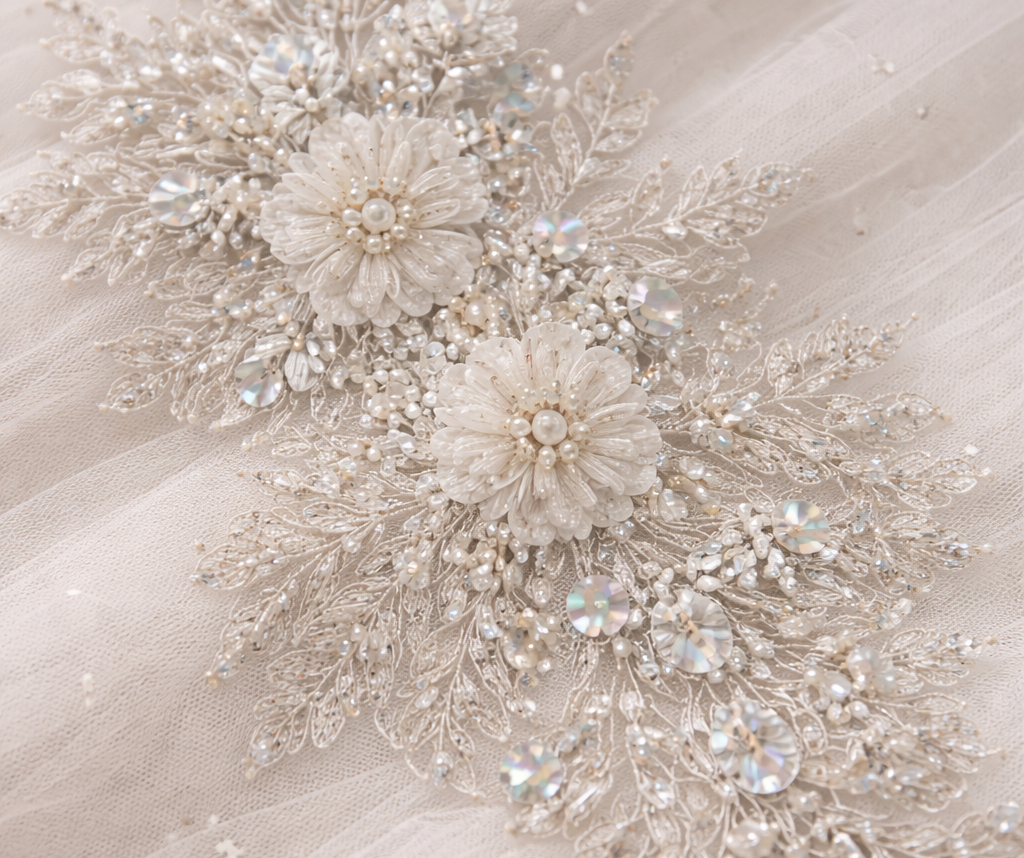
Openwork or net-like fabric with floral embroidery or patterns. Lace is made by joining threads in a way that leaves open spaces. When it’s “flower lace” or “flower embroidered lace,” floral shapes like petals and leaves are added either by lace-making or embroidery.
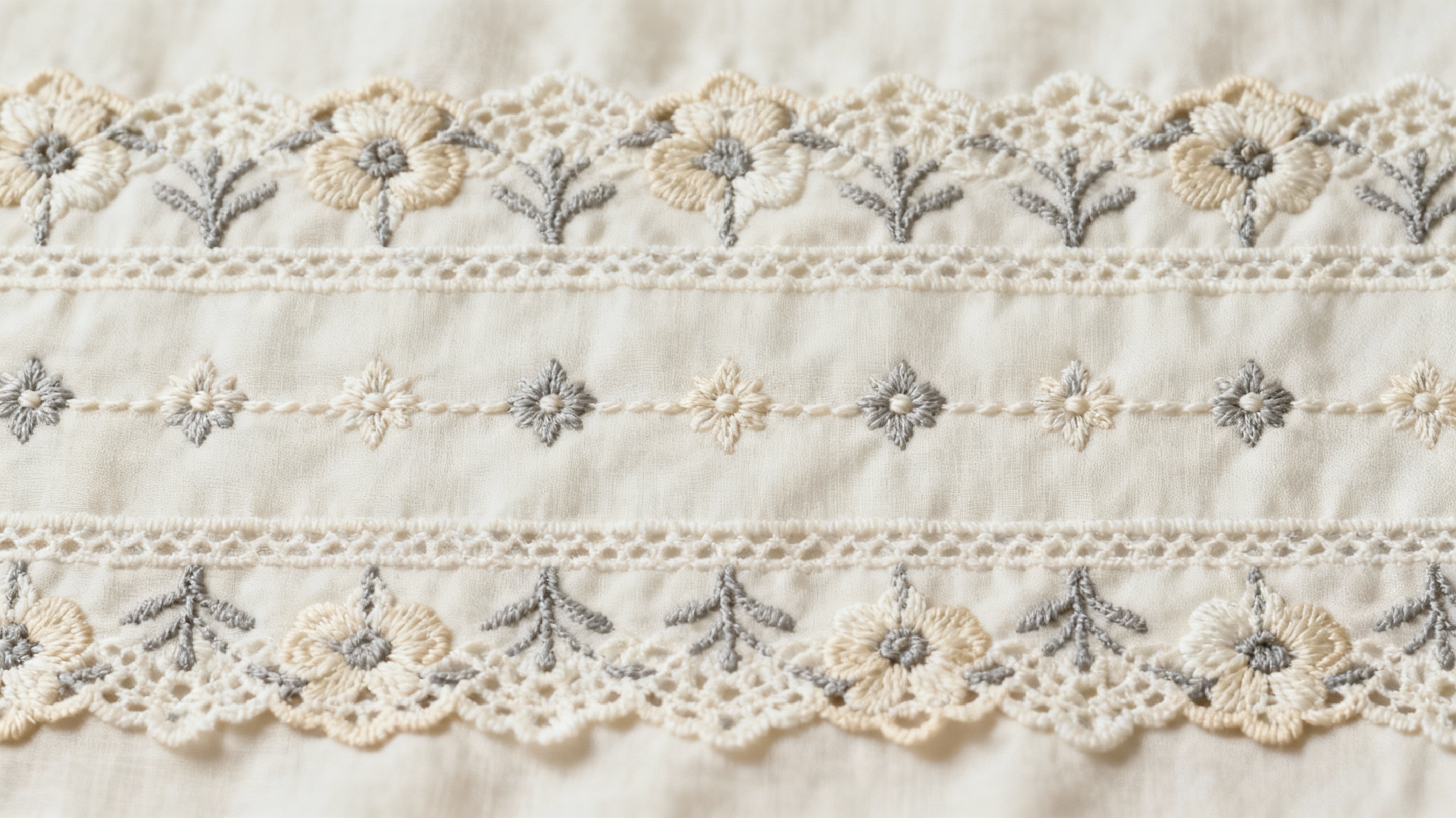
A blend of lace fabric and embroidery thread work. Sometimes embroidery is stitched onto lace, or lace is made with embroidered floral details, giving extra texture and depth.
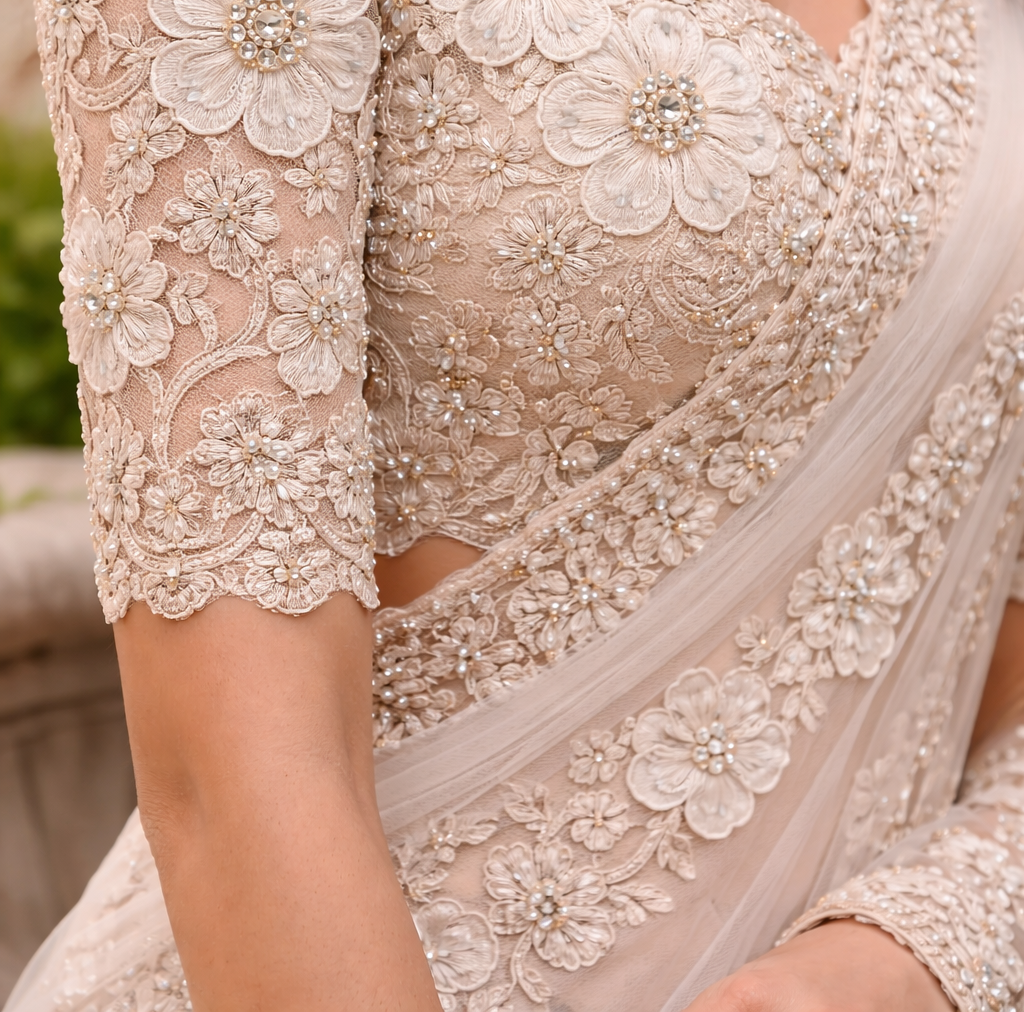
Versatile uses. This fabric is used in clothing (wedding dresses, overlays), trims, home décor (curtains, table edges), and accessories (bags, veils). In India, embroidered lace trims are popular borders on sarees and dresses.
Craft tradition and design value. Both lace and embroidery involve skilled handiwork and have historical and fashion significance. For example, traditional lace styles like Guipure lace focus on open patterns with floral designs.
Strong market growth. The global lace market is growing fast, expected to nearly double from 2022 to 2032. India’s lace and trim markets are also growing quickly.
Benefits
Visual appeal: Floral embroidery adds interest, texture, and a rich look beyond plain lace or fabric, perfect for bridal wear or luxury garments.
Flexibility: Works as trims or full fabrics, so you only need one material for many projects.
Higher value: Using embroidered flower lace can make an item look more special and expensive.
Craft appeal: For those who appreciate handmade work and cultural textiles, this fabric hits the mark. India is known for its detailed embroidery and beadwork in trims.
Market advantage: Learning about embroidered lace now helps you prepare for growing demand in fashion, bridal, and luxury segments.
Custom options: Embroidery styles, colors, and base fabrics can be changed to fit your project perfectly.
Important Things to Check
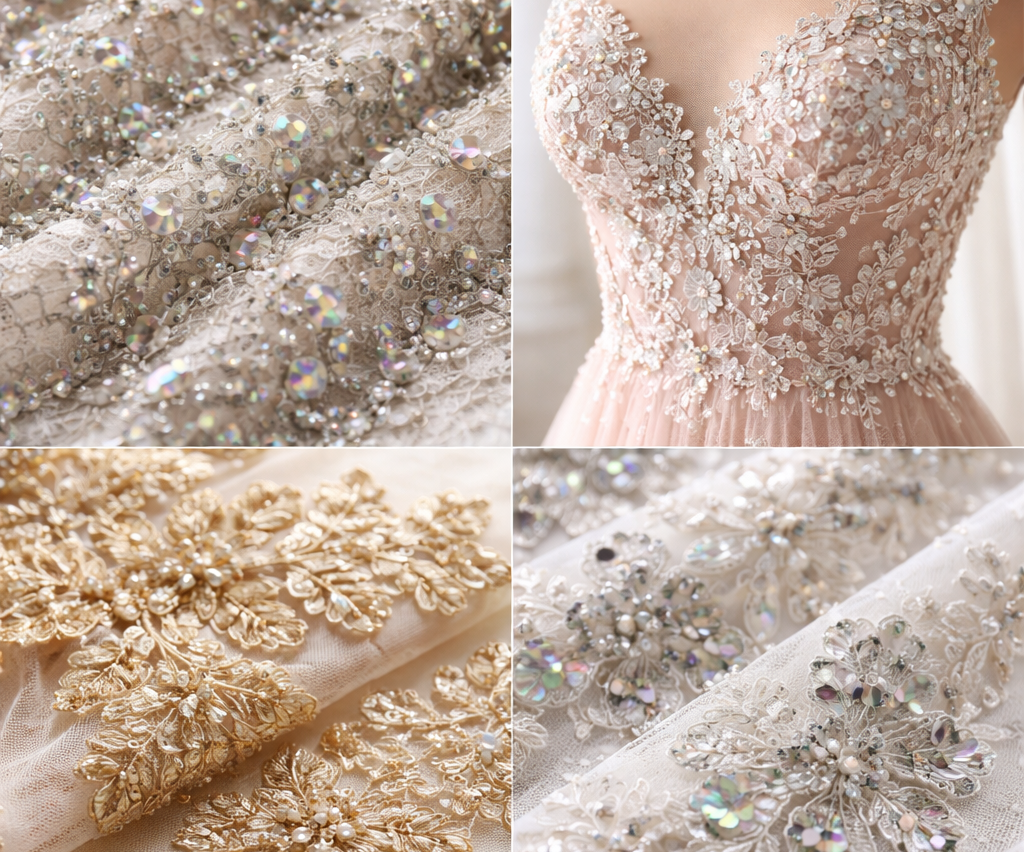
To get these benefits, ensure good quality: the lace should be steady, embroidery firmly stitched, patterns clear, and fabric weight and drape suitable. For bridal gowns, good-quality lace helps the dress fall nicely and flatter the wearer.
Frequently Asked Questions (FAQs)
Q1: What’s the difference between “embroidery on lace” and “embroidered lace”?
Embroidery on lace means adding stitched designs on a lace base. Embroidered lace means the lace is made with embroidery as part of its structure. The terms often overlap but knowing this helps when buying.
Q2: How do I pick embroidered flower lace for a dress vs. trim?
For a dress, choose wider, stable lace with repeating clear patterns and good flow. For trims, narrower widths and smaller repeats work better, and consider how you will attach them.
Q3: Can embroidered flower lace be used for everyday clothes?
Though mainly for special occasions, embroidered lace trims are also used in everyday fashion and home décor if cared for properly and within budget.
Q4: How do I care for embroidered flower lace?
It’s delicate. Check thread type and backing. Hand wash gently or get professional cleaning. Use linings so lace doesn’t irritate skin or snag.
Q5: Is embroidered flower lace more expensive?
Yes, price depends on lace type, thread, embroidery amount, and finishes. Higher-quality lace, like for bridal gowns, costs more due to the skill needed.
Q6: Where is this lace made and how is the supply?
Lace is made worldwide. India produces many types and is growing fast. Embroidery can be done in-house or outsourced. Check supplier quality and certifications before buying.
Q7: What are the current design trends?
Floral patterns like roses, leaves, vines remain popular. Trends include contrasting embroidery and raised 3D embroidery.
Real-world Examples
1. Bridal Fashion
Lace is a key part of bridal gowns. More lace often means a more complex and beautiful dress. Embroidered lace fabrics like tulle and cord embroidery are popular for adding extra value and style.
2. Indian Lace & Trim Market
India’s lace market is growing fast due to demand for traditional fashion and increasing incomes. The embroidery market in India grows about 20% yearly, making embroidered flower lace more available and affordable.
3. Use in Garments
Embroidered lace trims are widely used for formal female wear like sarees, evening gowns, and upscale accessories, maintaining their strong place in fashion.
4. Heritage Crafts
Traditional laces such as Honiton lace from the UK and Bruges lace from Belgium feature floral patterns and hold important cultural value, showing the long heritage behind floral lace.
Conclusion
If you work in fashion, bridal wear, accessories, or home décor and want to add floral embroidery to lace, embroidered flower lace and lace-embroidered fabrics offer a smart choice. The risk of choosing lace without knowing the details can cause problems, but knowing what to look for helps you avoid wasted effort and extra cost. Using data and real examples, this post has shown how to confidently use these materials to get the best results.