Introduction
In fashion and textile design, lace has always carried a sense of beauty and craftsmanship. Yet many designers and buyers struggle to choose between lace styles that look good on paper but fail in real garments. Some lace fabrics lack structure, others look flat, and many do not hold embellishments well. This is where floral lace material combined with corded embroidery stands out.
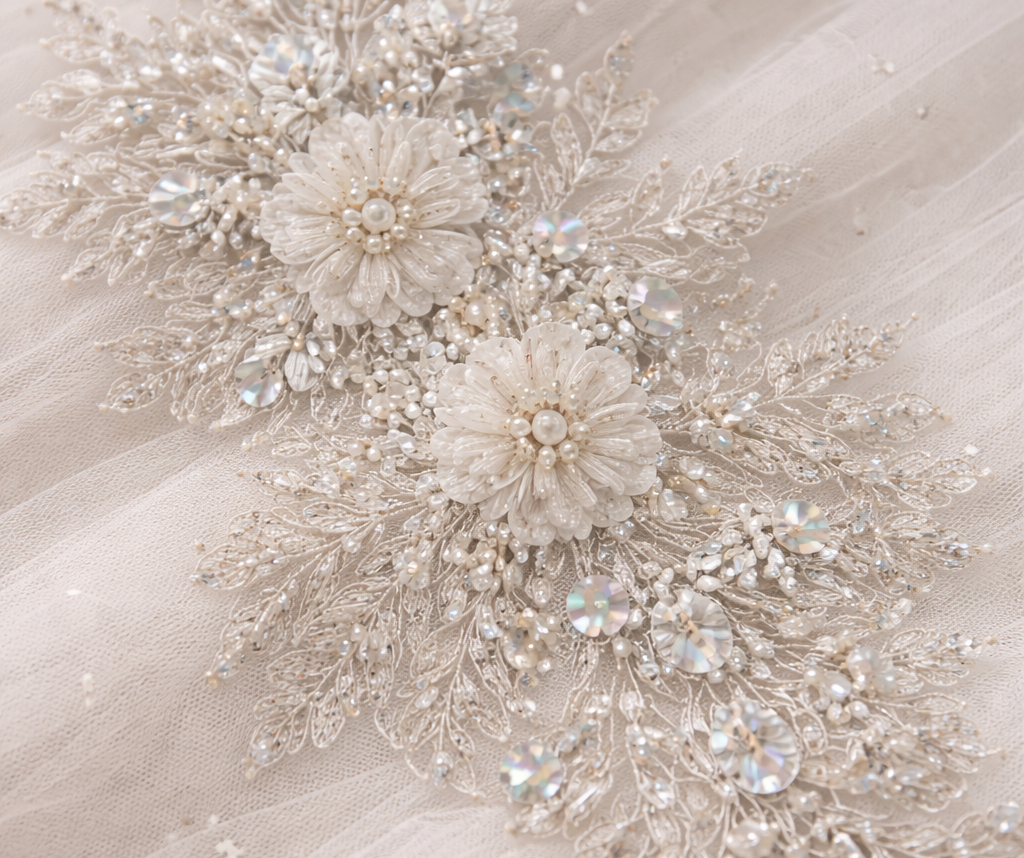
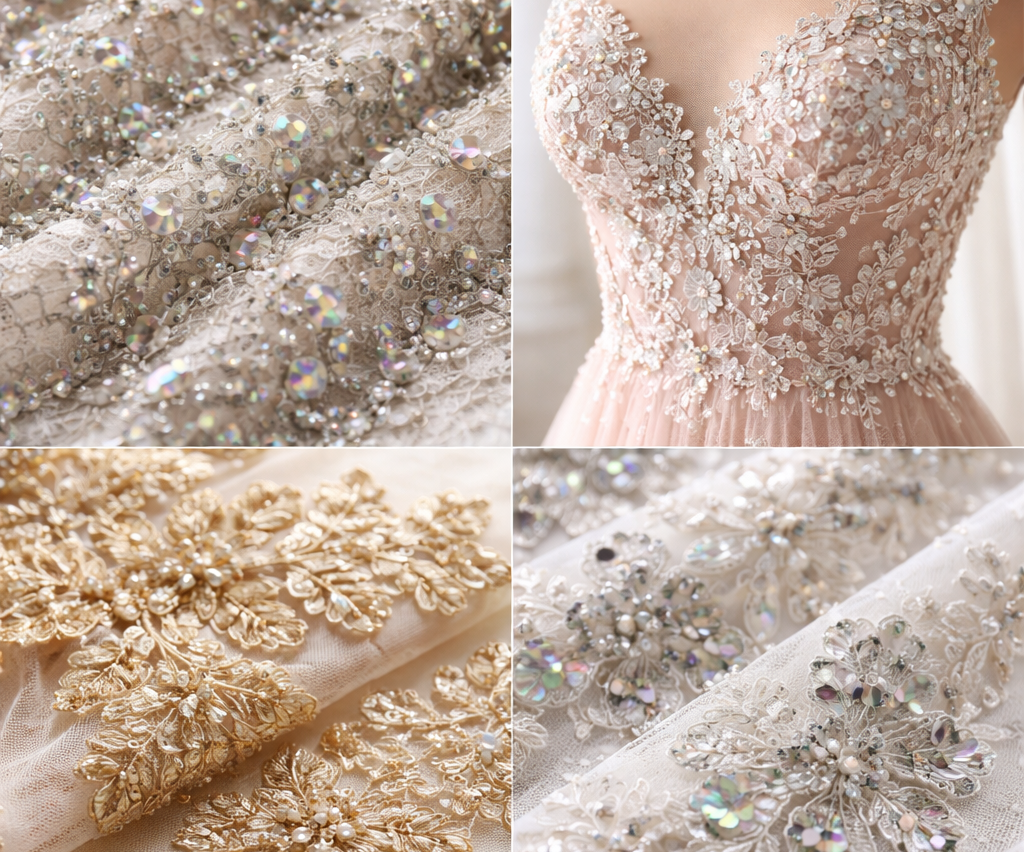
Floral lace offers softness and pattern, while corded embroidery adds dimension, strength, and clarity to the design. When enhanced with rhinestone and sequin appliqués, these fabrics move from decorative to truly luxurious. From bridal gowns to eveningwear and couture-ready fabrics, this combination continues to grow in demand.
In this article, we will explore the problems designers face with ordinary lace, why flat embroidery can fall short, and how floral lace material with corded embroidery offers a practical and stylish solution for modern fashion.
Features & Key Characteristics
The Problem: Lace That Looks Good but Performs Poorly
Many lace fabrics appear attractive at first glance but fail once applied to garments. Common issues include weak motifs, lack of depth, and poor durability during cutting or sewing. Flat embroidery often blends into the base fabric, causing patterns to disappear from a distance or under lighting.
This can be especially frustrating for designers creating bridal dresses, luxury eveningwear, or embellished garments that must look rich both up close and on the runway.
Why Floral Lace Material Matters
Floral lace material is defined by nature-inspired motifs such as flowers, vines, and leaves. These organic patterns appeal across cultures and seasons, making them a staple in women’s fashion.
Key characteristics include:
-
Soft mesh or net bases that drape well
-
Repeating or scattered floral motifs
-
Breathability and comfort
-
Versatility for dresses, blouses, overlays, and panels
Floral lace works well for romantic and elegant designs, but on its own, it can sometimes lack visual strength or structure.
The Role of Corded Embroidery
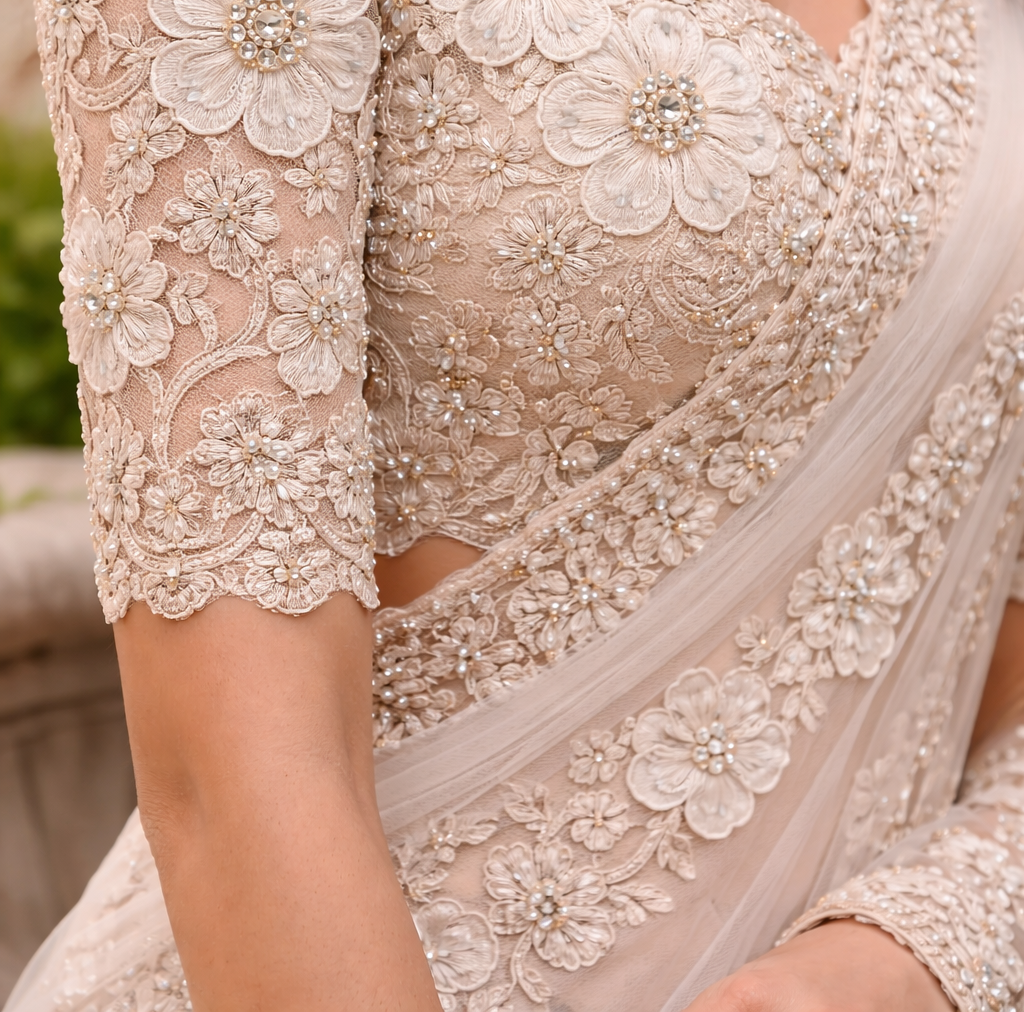
Corded embroidery solves this problem by outlining floral patterns with thicker threads or cords. These raised outlines create depth, making motifs stand out clearly from the base fabric.
Benefits of corded embroidery include:
-
Enhanced texture and dimensional design
-
Stronger pattern definition
-
Better durability during tailoring
-
A more premium, handcrafted appearance
Corded embroidery transforms floral lace from a soft background fabric into a focal design element.
How Rhinestone and Sequin Appliqués Elevate the Fabric
Adding rhinestone and sequin appliqués further enhances the fabric’s appeal. These embellishments are often hand-applied or machine-set within floral motifs, adding controlled sparkle without overwhelming the lace.
Their impact includes:
-
Light reflection for stage, runway, and evening wear
-
Highlighting floral centers or vine intersections
-
Increasing perceived garment value
-
Supporting luxury and bridal aesthetics
When used thoughtfully, rhinestones and sequins complement corded embroidery instead of competing with it.
Common Fashion Applications
Floral lace material with corded embroidery is widely used in:
-
Bridal gowns and wedding veils
-
Evening dresses and cocktail wear
-
Couture blouses and luxury skirts
-
Fashion-forward abayas and formal wear
-
Designer overlays and statement sleeves
The fabric’s balance of softness, structure, and shine makes it adaptable across markets.
Real-World Case Study: Bridalwear Design Studio
The Challenge
A mid-sized bridal design studio in Europe faced rising customer complaints about lace gowns appearing “flat” in photos and under wedding venue lighting. Although the dresses were well-constructed, the lace patterns did not stand out in real-world settings.
The Solution
The design team switched from standard embroidered lace to floral lace material with corded embroidery. They also introduced light rhinestone and sequin appliqués placed at flower centers and along vine edges.
The Results
-
The gowns photographed better in natural and artificial light
-
Floral motifs remained visible from a distance
-
Customer satisfaction improved significantly
-
Average gown prices increased due to perceived value
This shift allowed the brand to strengthen its premium image without changing its core silhouettes.
FAQs
What is floral lace material made from?
Floral lace is typically made using polyester, nylon, cotton blends, or silk. The base is often mesh or net, with embroidered floral patterns layered on top.
How is corded embroidery different from regular embroidery?
Corded embroidery uses thicker threads or cords stitched along design outlines. This creates a raised effect that adds depth and clarity to patterns.
Is corded embroidery suitable for daily wear garments?
Yes, when used lightly. While it is most common in formalwear, subtle corded embroidery can also work in blouses or fashion-forward casual pieces.
Do rhinestone and sequin appliqués make the fabric heavy?
When applied carefully, they add minimal weight. Designers usually balance embellishments to maintain comfort and drape.
Can floral lace with corded embroidery be customized?
Yes. Motif size, cord thickness, and embellishment placement can all be customized for specific design needs.
Conclusion
Floral lace material and corded embroidery together offer a smart solution to common design challenges in modern fashion. While floral lace brings softness and romance, corded embroidery adds structure, depth, and durability. When enhanced with rhinestone and sequin appliqués, the fabric becomes visually strong, luxurious, and highly marketable.
For designers, manufacturers, and fashion brands looking to elevate their collections, this combination provides both beauty and performance. It is not just about decoration—it is about creating garments that look refined, photograph well, and hold their value over time.
As fashion continues to balance craftsmanship with innovation, floral lace with corded embroidery remains a reliable and stylish choice.