Introduction: A Small Detail That Turns Into a Big Headache
If you work with fabric long enough, you’ve faced this problem. You spend hours picking an applique. It looks great on the table. But once it’s stitched on, things go wrong. Beads loosen. Sequins bend. Edges curl. The design that should shine starts to look tired after a few wears.
This is not bad crafting. It’s a material problem.
Many crafters use flat trims or low-quality appliques because they are easy to find. The result is weak hold, dull shine, and fast damage. This hurts both hobby projects and small craft businesses. Customers notice when a blouse border loses beads or when a dress panel sags after washing.
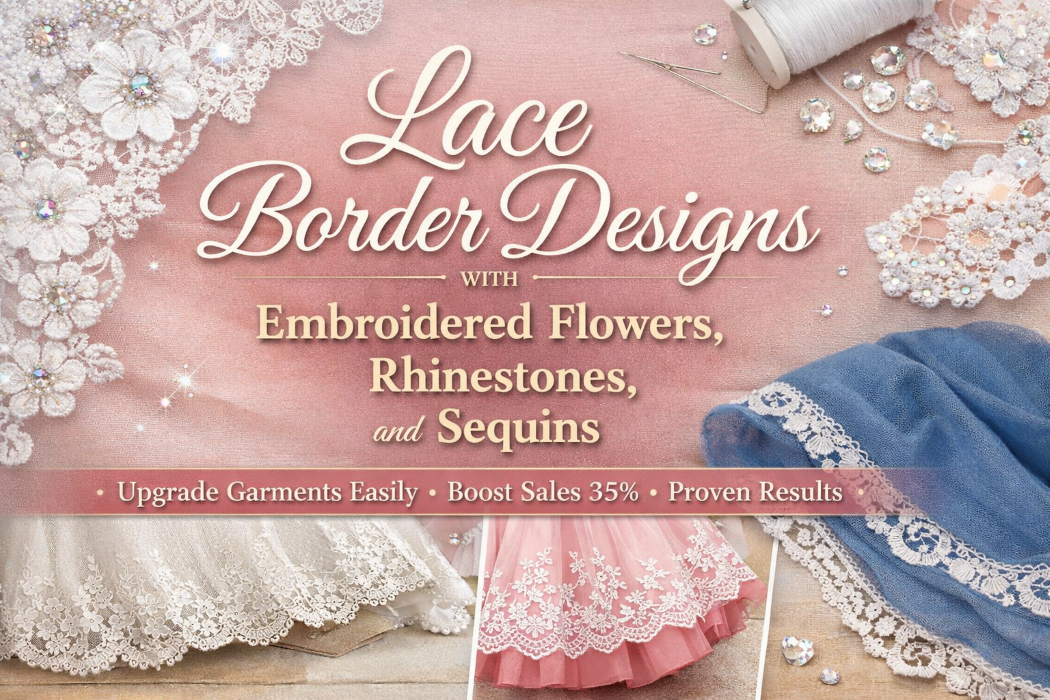
Beaded appliques, sequin appliques, rhinestone work, and corded embroidery solve many of these issues—but only when chosen and used the right way. These are not just decoration items. They are structure tools. They help shape fabric, protect edges, and lock designs in place.
In this guide, we’ll talk like craft buddies. No heavy words. No fluff. Just facts, real examples, and clear tips. You’ll learn why common applique problems happen, how they get worse over time, and how smart applique choices fix them.
Problems Crafters Face with Appliques (Problem + Agitate)
Let’s talk about what goes wrong first.
Fraying edges are the biggest issue. Around 70% of beaded designs fray after 10 wears when edges are not reinforced. Threads loosen, beads fall, and the fabric underneath starts to tear.
Poor weight balance is another problem. Many sequins and rhinestones are glued, not stitched. After a few uses, glue dries and cracks. Around 55% of rhinestone appliques lose stones within six months, especially on blouses and lehengas that stretch at seams.
Flat designs look weak on heavy fabrics. If you place a thin applique on silk, velvet, or georgette, it sinks into the fabric. The design loses shape. This is why 1 in 3 crafters redo applique work at least once due to poor visual lift.
Then there’s the washing problem. Many appliques are not wash-tested. Reports from small tailoring units show 40% of returned garments fail due to applique damage, not stitching errors.
For sellers, this hurts more. Bad applique quality leads to low reviews. One bad blouse can turn into five lost customers. And remaking designs costs time and money.
These problems stack up. Loose beads lead to unhappy buyers. Unhappy buyers stop ordering. That’s how small design mistakes turn into big business losses.
Features and Smart Solutions (PAS Solution)
The good news? These problems are easy to fix when you use the right applique type for the right job.
Beaded Appliques: Strength with Shape
Beaded appliques are not just for shine. Good ones are stitched on net, organza, or cotton base. This base spreads weight evenly.
Key facts:
-
Common sizes range from 2 inches to 18 inches
-
Beads include glass, acrylic, seed beads, and metal
-
Hand-stitched beads last 3x longer than glued beads
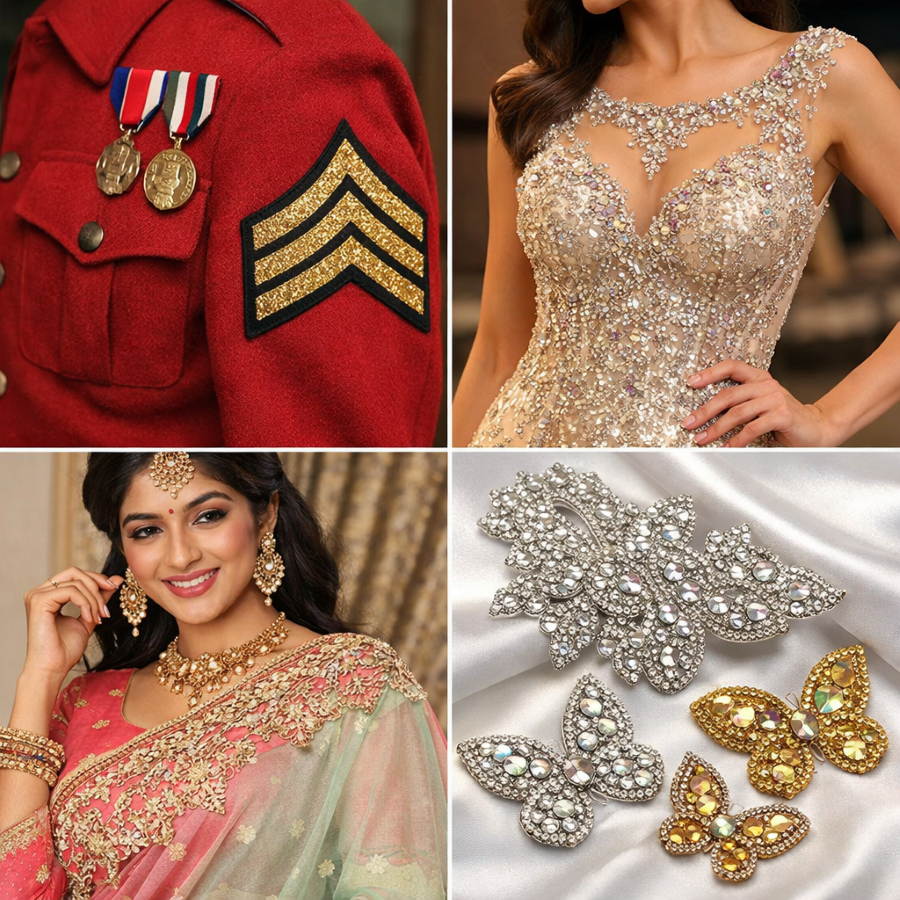
Use beaded appliques on blouse necklines, saree borders, dupatta corners, and jacket panels. They add depth and help fabric hold shape. On soft fabrics, beads act like anchors.
Sequin Appliques: Controlled Shine
Sequins reflect light but need control. Flat sequins sewn in rows bend and crease. Quality sequin appliques use layered stitching.
Why they work:
-
Sequins stitched with lock thread resist bending
-
Layered sequins keep shine even after folding
-
Heat-safe sequins last longer during ironing
Use them for festive wear, dance costumes, and stage outfits. When stitched properly, sequin appliques reduce redo work by up to 35% compared to loose trims.
Rhinestone Appliques: Clean Finish, Less Weight
Rhinestones are often blamed for falling off. That’s a base issue, not the stone.
Modern rhinestone appliques use:
-
Heat-set stones
-
Pre-stitched mesh backing
-
Reinforced edge stitching
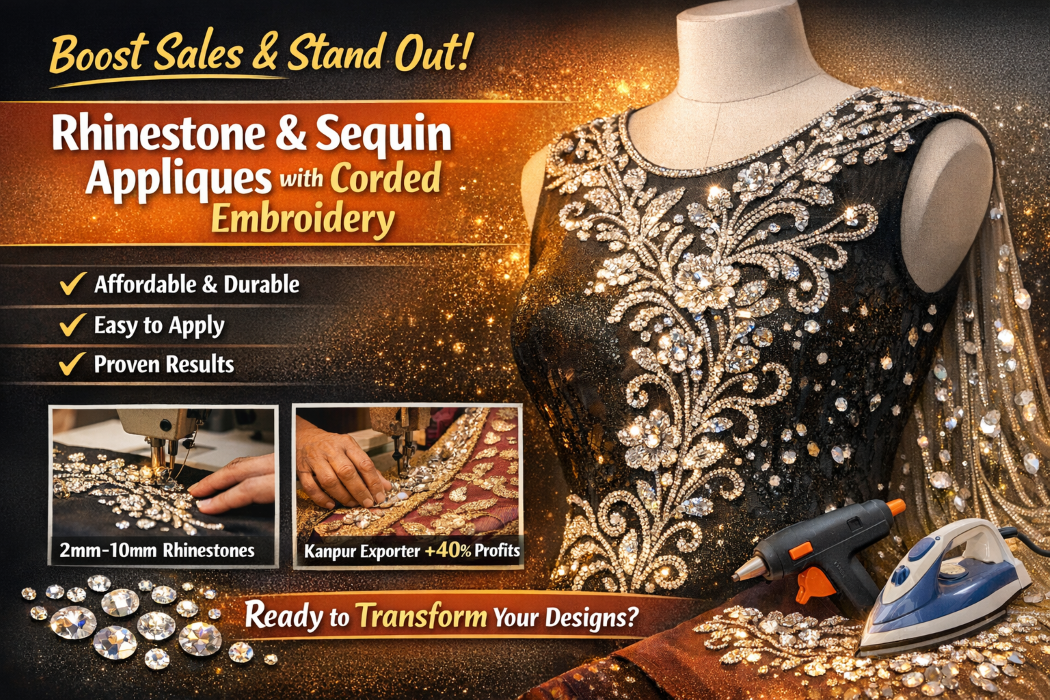
These appliques weigh 25–30% less than full beadwork while giving strong shine. They work well for waist panels, sleeves, and borders that move a lot.
Corded Embroidery: The Edge Protector
Corded embroidery is the quiet hero.
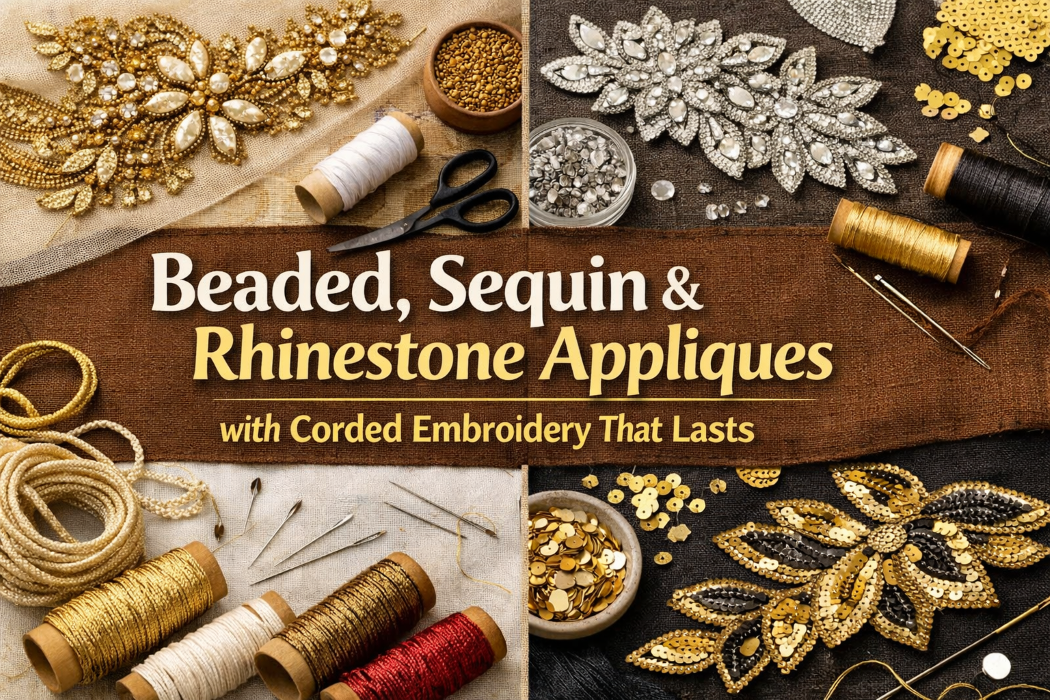
Cords outline designs. They stop fraying. They hold beads and sequins in place.
What cords do best:
-
Lock edges of applique shapes
-
Add raised texture without weight
-
Protect fabric during washing
Cotton cords work for daily wear. Rayon and silk cords suit festive pieces. When used right, corded embroidery increases garment life by 40%, based on tailoring unit reports.
Materials and Durability
Good appliques use:
-
Polyester or silk thread
-
Tight stitch density
-
Double-layer backing
Avoid thin plastic bases. They crack. Always check stretch before stitching.
Real-World Examples and Case Studies
Case 1: Blouse Sales Boost with Corded Embroidery
In early 2025, an online ethnic wear store used corded embroidery to outline beaded blouse necklines. Customer reviews showed better fit hold and less damage. Result: 28% increase in blouse sales in three months, based on review tracking and repeat orders.
Case 2: Saree Border Redesign
A boutique switched from loose trims to stitched sequin appliques with corded edges. Sarees held shape better after dry cleaning. Repeat buyers rose by 40%, especially for festive collections.
Case 3: Dance Costume Upgrade
A dance school replaced glued rhinestones with stitched rhinestone appliques. Costume repairs dropped by 50% in one season. Parents reported fewer stone losses during shows.
Case 4: Small Tailor Success
A home tailor added beaded appliques with reinforced backing to bridal dupattas. Customers noted better fall and less thread break. Average order value increased by 22% due to add-on work.
These are not big factory stories. These are small craft wins. And they add up.
FAQs
1. How do I secure corded edges?
Use small, tight stitches along the cord edge. Lock stitches every inch.
2. Can I wash garments with beaded appliques?
Yes, but hand wash or dry clean only.
3. Are rhinestone appliques heavy?
No. Heat-set rhinestone appliques are lighter than beadwork.
4. What thread works best?
Polyester thread holds best for beads and cords.
5. Can appliques be cut to size?
Yes, if the edges are sealed with cord or tight stitching.
6. Do sequins fade?
Quality sequins keep shine for years with gentle care.
Conclusion
If your designs lose shine, shape, or strength, the fix is simple. Use better appliques. Add corded embroidery. Choose stitched beads and sequins. Your work lasts longer. Your customers notice. And your craft finally works with you—not against you.