Introduction (Problem)
Many garments and textile products fail for one simple reason: they look flat. The fabric may be expensive, the cut may be correct, but without surface detail, the final piece often lacks depth and identity. This is a common problem in bridalwear, occasion dresses, ethnic garments, and even home décor items like curtains and cushions.
Designers and manufacturers constantly face pressure to create visual impact without raising costs too much or complicating production. Plain embroidery alone does not always solve this problem, especially when customers expect sparkle, texture, and definition.
That’s where beaded appliques, sequin appliques, rhinestone appliques, and lace border designs come in. These elements help transform basic fabrics into finished products that feel complete, balanced, and ready for the market.
Why Flat Designs Hurt Sales (Agitate)
In real-world retail, appearance directly affects buying decisions. According to fashion retail studies, customers make visual judgments about a garment within the first 7–10 seconds of seeing it. If a dress or fabric panel looks unfinished or lacks focal points, it often gets ignored—regardless of fabric quality.
Here are common issues designers face without appliques and lace borders:
-
Garments look unfinished at hems, necklines, or sleeves
-
Bridal and eveningwear lacks highlight areas for photos
-
Ethnic and festive outfits fail to stand out in crowded markets
-
Home décor textiles feel plain and mass-produced
Manufacturers also struggle with consistency. Hand embroidery alone can vary from piece to piece, while appliques and lace borders provide controlled, repeatable designs.
Ignoring these details often leads to:
-
Lower perceived value
-
More product returns
-
Reduced pricing power
How Appliques and Lace Borders Solve the Problem (Solution)
What Are Beaded and Sequin Appliques?
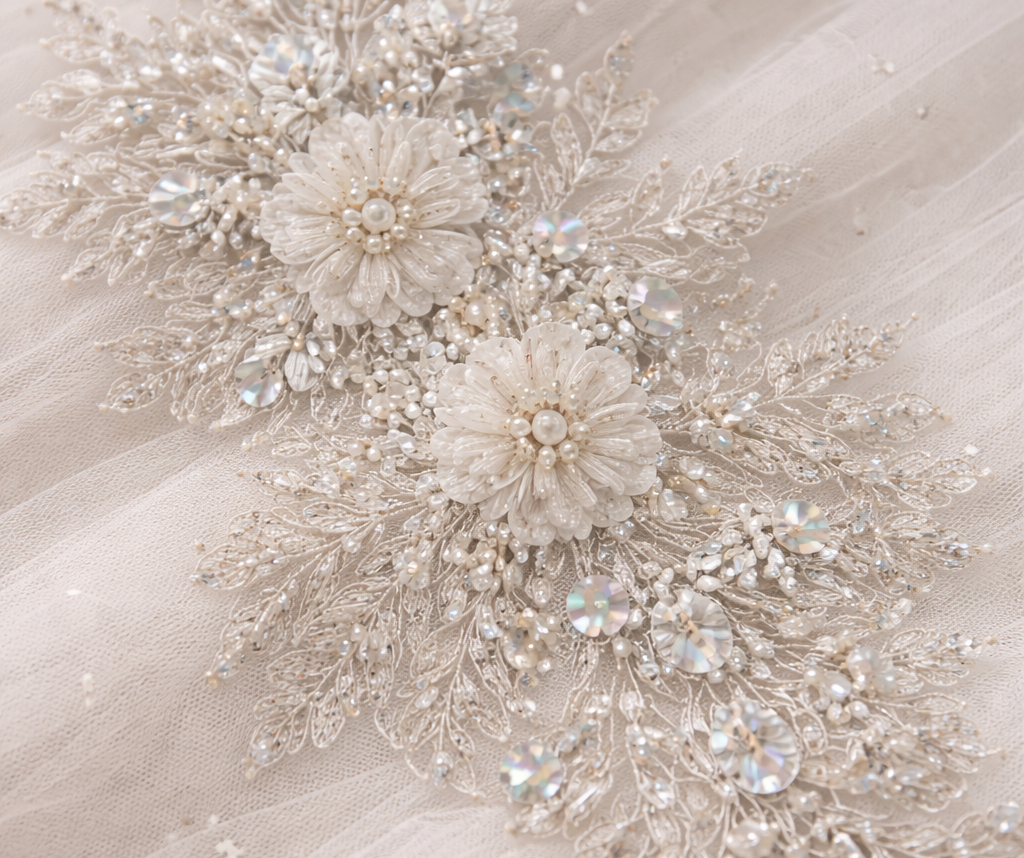
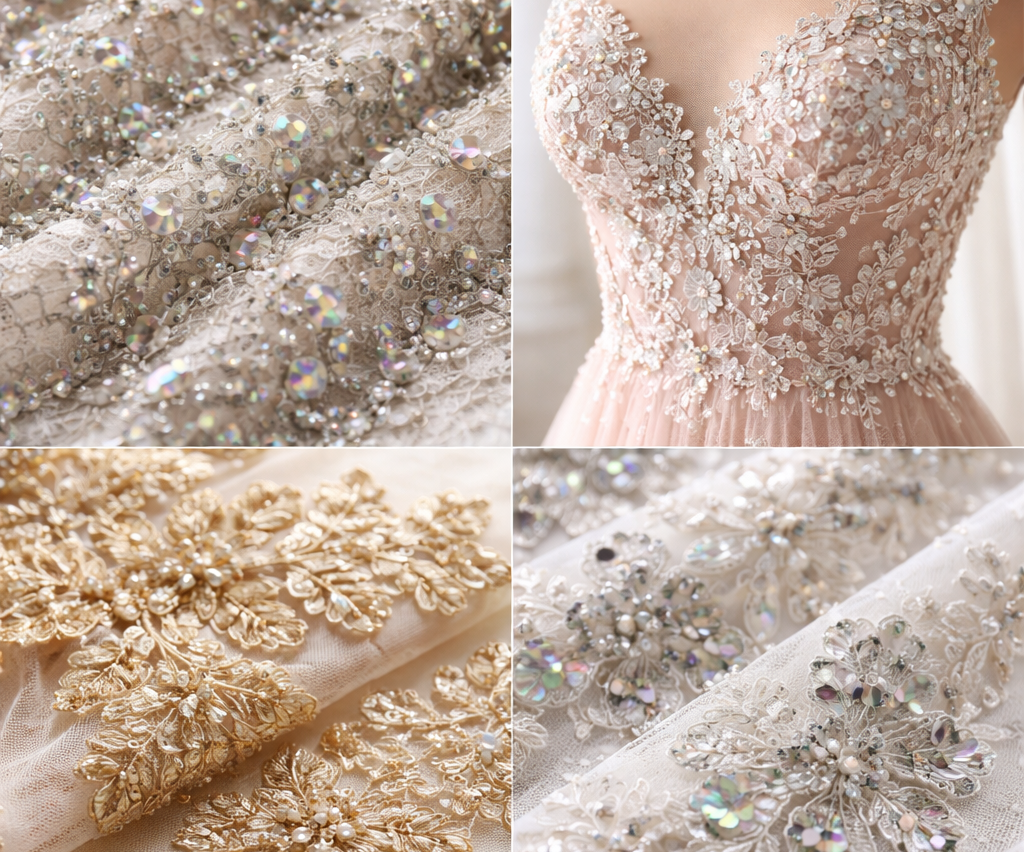
Appliques are decorative elements created separately and then attached to fabric. Beaded appliques use materials like seed beads, glass beads, bugle beads, and pearls. Sequin appliques include flat or cupped sequins stitched onto a base fabric, often combined with embroidery.
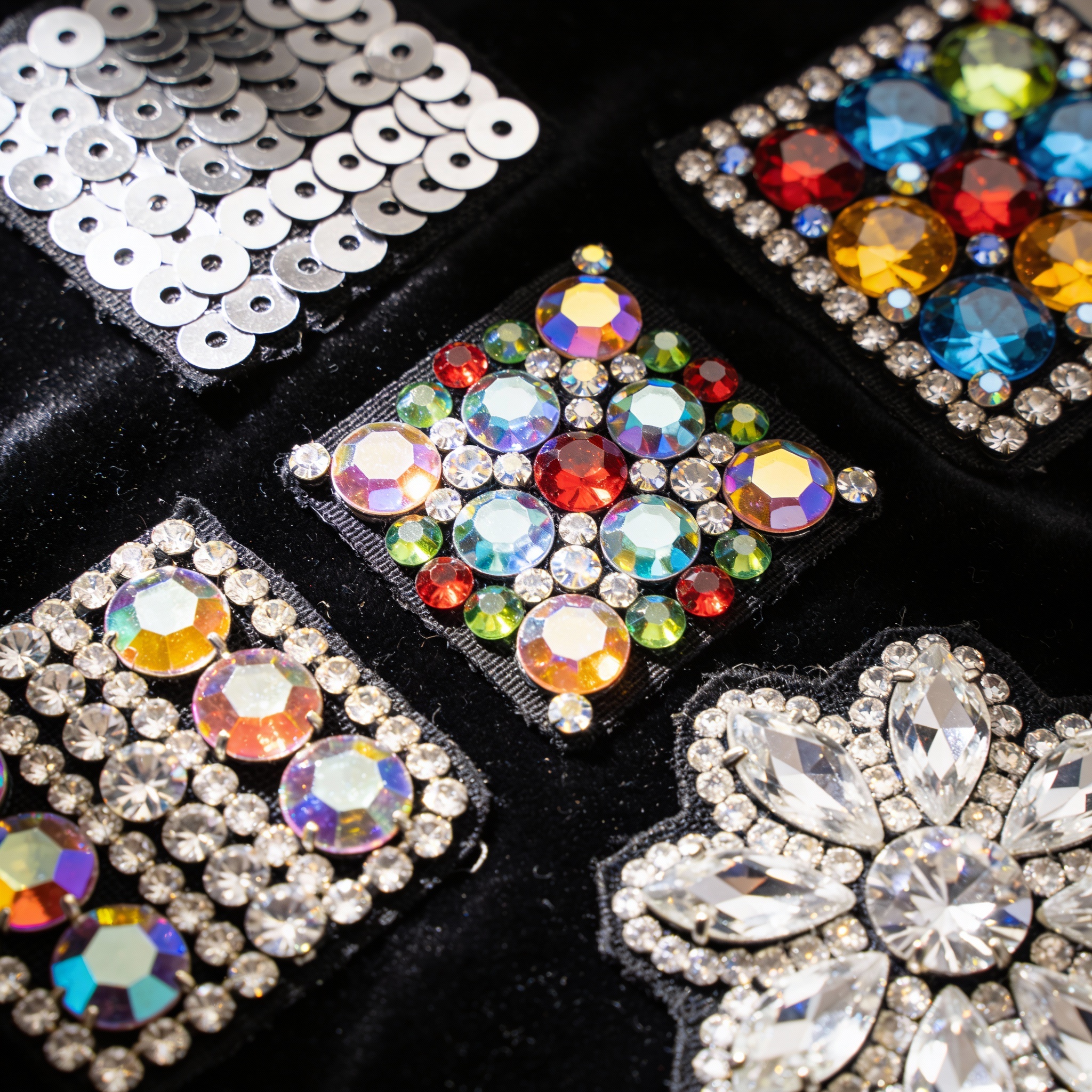
Rhinestone appliques add another layer of shine. These use crystal or glass stones fixed with prongs, stitching, or heat-activated backing. They are common in stage costumes, bridal gowns, and partywear where light reflection matters.
These appliques allow designers to:
-
Add heavy detailing without embroidering the full garment
-
Control placement for symmetry and balance
-
Reduce production time
What Are Lace Border Designs?
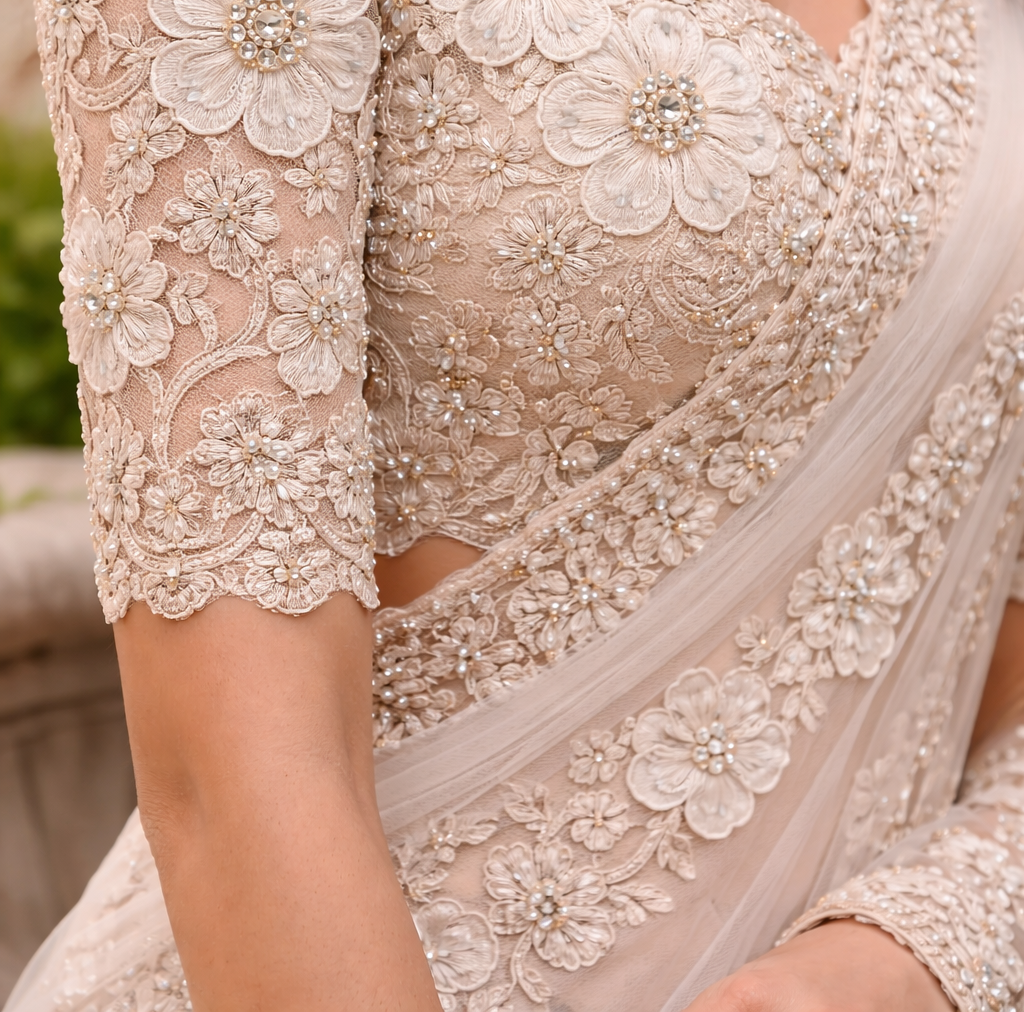
Lace borders are decorative trims applied to edges like hems, sleeves, dupattas, veils, and table linens. They are made using techniques such as chemical lace, needle lace, or embroidered net.
Borders often include:
-
Floral or geometric lace patterns
-
Beads, sequins, or rhinestones for weight and shine
-
Scalloped or straight edges
Unlike full lace fabrics, borders focus attention where it matters most—edges and outlines.
Features and Design Details
Materials Used
-
Base fabrics: Net, organza, tulle, cotton mesh, polyester mesh
-
Beads: Glass beads, plastic beads, pearls, metallic beads
-
Sequins: Flat, cupped, holographic, matte
-
Rhinestones: Glass crystals, acrylic stones
-
Threads: Polyester, nylon, metallic threads
Material choice affects durability, washability, and cost.
Design Techniques
-
Hand Beading
-
Used for luxury and bridalwear
-
High precision, higher labor cost
-
-
Machine Embroidery with Sequin Attachments
-
Faster and consistent
-
Common in ready-to-wear fashion
-
-
Heat-Fixed Rhinestone Appliques
-
Used in sportswear, dancewear, stage costumes
-
Requires heat press accuracy
-
Placement Matters
Successful designs don’t overload the garment. Common placement areas include:
-
Necklines and yokes
-
Waistlines and bodices
-
Sleeve cuffs
-
Hemlines using lace borders
-
Veils and dupattas
Strategic placement improves movement and comfort while maintaining visual impact.
Real-World Examples / Case Studies
Case Study 1: Bridal Wear Manufacturing (India)
A mid-sized bridalwear manufacturer in Surat switched from full hand embroidery to beaded appliques with lace borders for lehengas and gowns.
Result:
-
Production time reduced by 30%
-
Design consistency improved
-
Retail price remained stable while margins increased
Customers responded positively because garments looked detailed without feeling heavy.
Case Study 2: Eveningwear Brand (Europe)
A fashion brand producing cocktail dresses introduced rhinestone and sequin appliques around necklines and waistlines instead of full embellishment.
Result:
-
Lower material waste
-
Easier size adjustments
-
Better comfort for wearers
Sales data showed a 20% increase in repeat orders for these designs.
Case Study 3: Home Décor Startup (USA)
A small home décor business used lace border designs with subtle beadwork on table runners and curtains.
Result:
-
Products positioned as “hand-finished”
-
Higher perceived value on online marketplaces
-
Better product photography appeal
FAQs
Are beaded and sequin appliques durable?
Yes, when stitched correctly and supported with proper backing. Hand wash or dry clean is usually recommended.
Can lace borders be used on everyday clothing?
Yes. Lightweight lace borders without heavy beads work well on casual dresses, kurtis, and tops.
Do rhinestone appliques fall off easily?
Quality rhinestones with proper fixing methods (stitching or industrial heat press) are long-lasting.
Are appliques reusable?
In many cases, yes. Designers often remove appliques from sample garments and reuse them.
Which is more cost-effective: full embroidery or appliques?
Appliques are usually more cost-effective for repeated designs and bulk production.
Conclusion
Beaded and sequin appliques, rhinestone details, and lace border designs are practical solutions to common design challenges in fashion and décor. They help add structure, shine, and visual balance without excessive labor or cost.
From bridalwear and evening dresses to accessories and home textiles, these elements allow designers and manufacturers to work smarter while meeting market expectations. Real-world examples show that when used thoughtfully, appliques and lace borders improve efficiency, consistency, and perceived value.
Instead of covering entire fabrics with heavy work, focusing detail where it matters most leads to better products—and better results.