Introduction
Beaded appliqué, sequin appliqué, rhinestones, and sequin embroidery are everywhere today—from bridal gowns and evening dresses to stage costumes and fashion accessories. These decorative elements are no longer limited to luxury fashion houses. Small brands, boutiques, and even home-based designers use them to add visual impact and perceived value to garments.
However, working with these materials is not always easy. Many people love how they look but struggle with quality, durability, cost control, and application methods. Using the Problem–Agitate–Solution (PAS) approach, this article explains why these challenges exist and how thoughtful use of beaded appliqués, sequins, and rhinestones can solve real design and production problems.
The goal is simple: help you understand what these materials are, how they behave, and how to use them confidently in real-world projects.
Problem: Why Beaded Appliqué, Sequins, and Rhinestones Can Be Tricky
At first glance, beads, sequins, and rhinestones seem straightforward. You attach them, and the garment looks richer. In practice, many designers and buyers face issues such as:
-
Appliqués falling off after a few wears
-
Sequins losing shine or breaking during washing
-
Rhinestones detaching due to weak glue
-
Garments becoming too heavy or uncomfortable
-
Inconsistent quality between suppliers
For businesses, these problems lead to customer complaints and returns. For individual designers or hobbyists, they lead to wasted time and materials. The decoration that was meant to enhance the design ends up becoming the weakest part of the product.
Agitate: Why These Issues Keep Happening
These problems continue mainly because of limited awareness and shortcuts in production.
Many people don’t ask key questions:
-
Are the beads hand-sewn or machine-attached?
-
Are sequins stitched or heat-bonded?
-
Are rhinestones glass or acrylic?
Cost pressure also plays a role. Cheaper appliqués often use glued stones, thin threads, or low-grade plastics. They may look good under showroom lights but fail during actual use.
Another issue is misuse. Heavy beaded appliqués are sometimes applied to soft fabrics without proper reinforcement. Sequins are added to stretch fabrics without stabilizers. Over time, stress from movement causes damage.
Understanding these factors is essential before using decorative embellishments as a “solution” to elevate a design.
Solution: Using Beaded Appliqué, Sequins, and Rhinestones the Smart Way
When selected and applied correctly, beaded and sequin appliqués, rhinestones, and sequins become reliable design tools rather than risks.
The solution lies in three areas:
-
Material selection
-
Application technique
-
Purpose-driven design
Designers who treat embellishments as structural elements—not just decoration—see better results. For example:
-
Using stitched rhinestones instead of glued ones in high-movement areas
-
Applying dense beading only to bodices or panels
-
Choosing lightweight sequins for daily wear and heavier ones for occasion wear
This approach balances beauty, durability, and comfort.
Features: Understanding Beaded Appliqué, Sequins, and Rhinestones
1. Beaded Appliqué
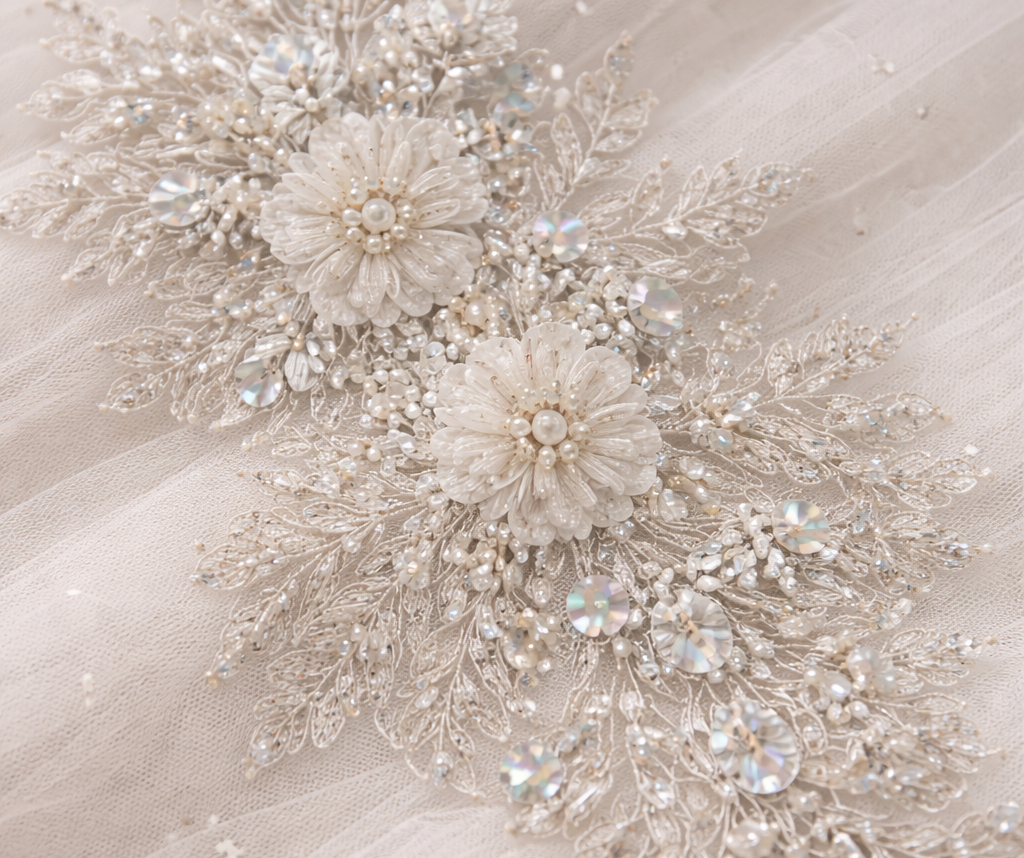
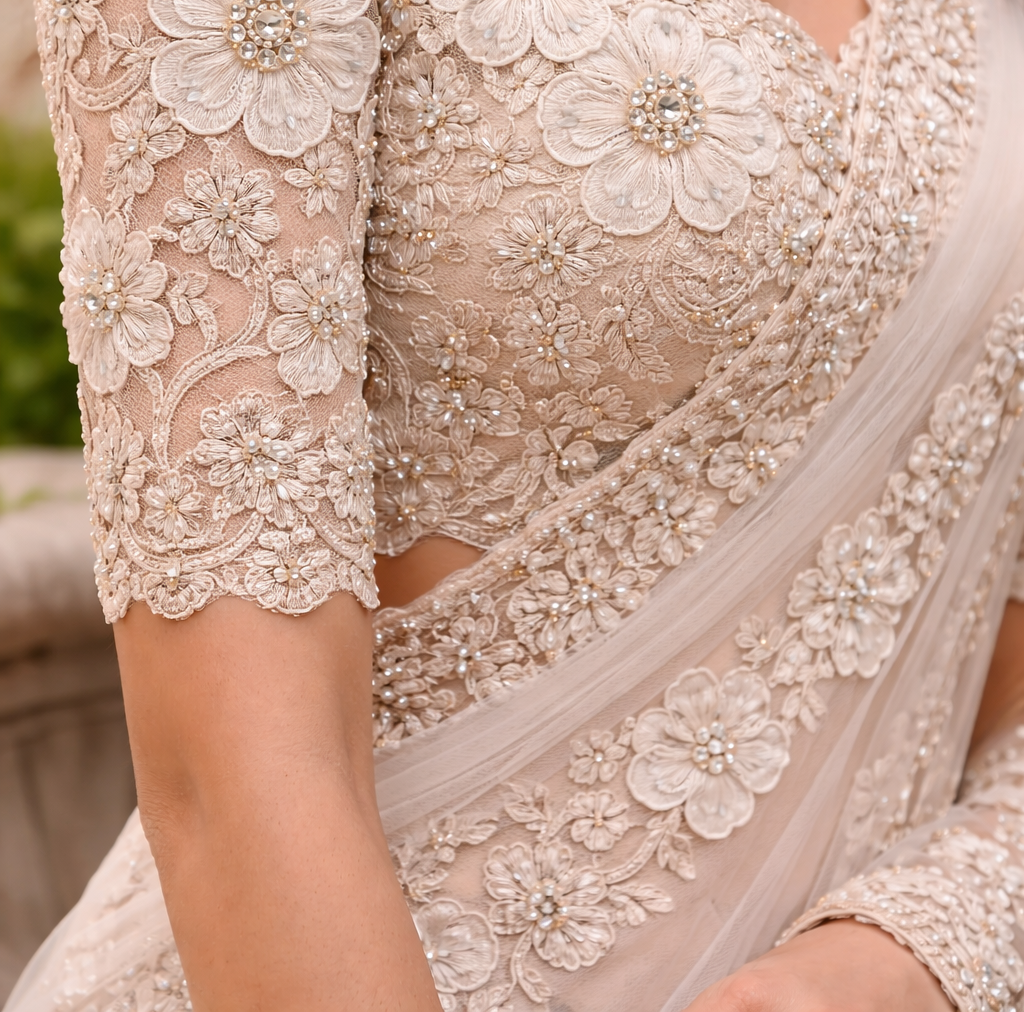
Beaded appliqués are decorative motifs made by stitching beads onto a fabric base such as net, organza, or tulle. Beads may include seed beads, bugle beads, pearls, or crystal beads.
Key features:
-
Usually hand-embroidered or machine-assisted
-
Can be applied as removable patches
-
Available in floral, geometric, or abstract designs
Practical benefit:
Beaded appliqués allow controlled placement. Instead of covering an entire garment, designers can highlight specific areas like necklines, waists, or backs.
2. Sequin Appliqué
Sequin appliqués use flat or cupped sequins stitched onto a base fabric. Sequins can be plastic, metal-coated plastic, or lightweight metallic blends.
Key features:
-
Stitched in patterns or layered for texture
-
Available in matte, glossy, or holographic finishes
-
Often combined with thread embroidery
Practical benefit:
Sequins reflect light, making garments stand out under photography and stage lighting—one reason they are popular in performance wear.
3. Rhinestones
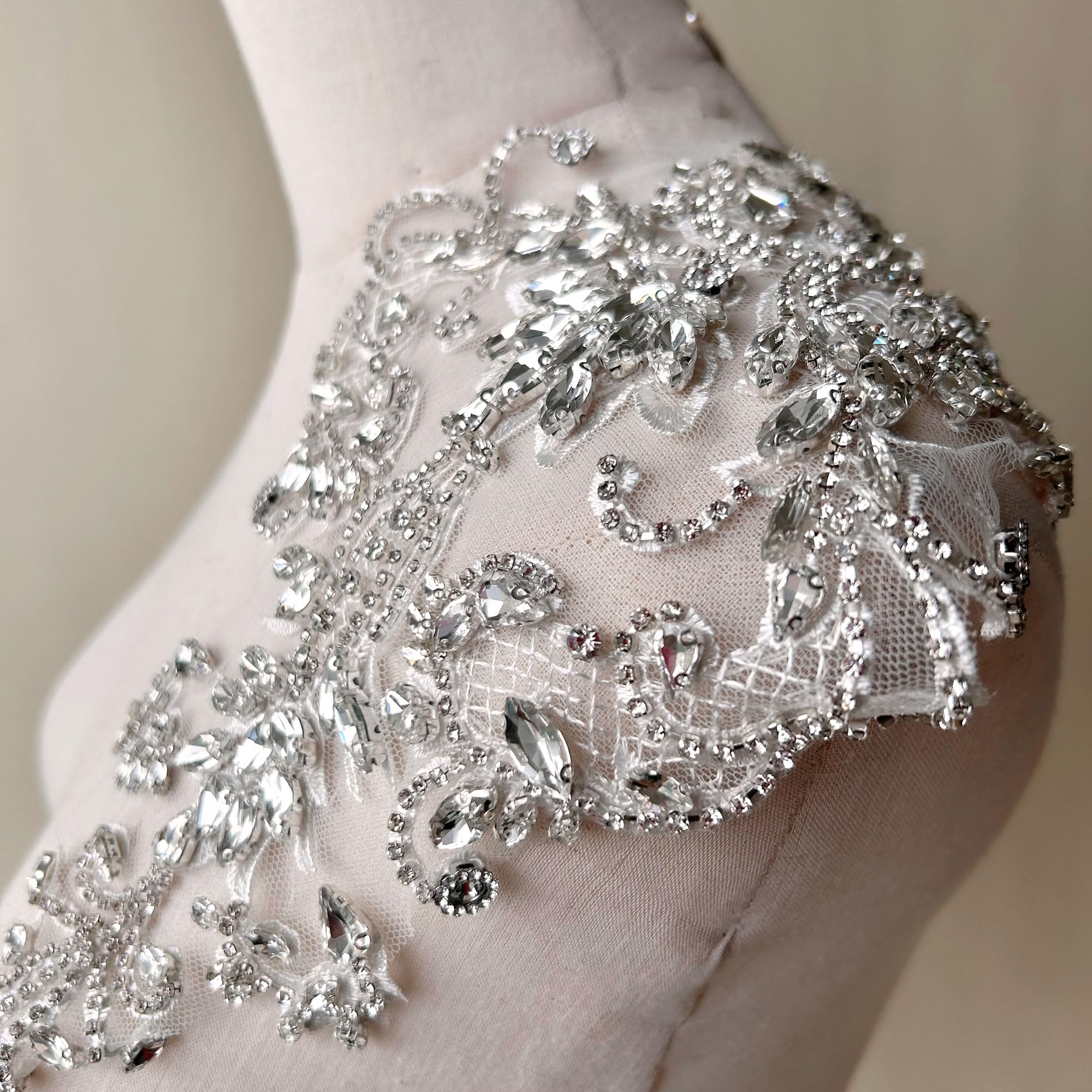
Rhinestones mimic the look of gemstones and are made from glass or acrylic. They are attached by stitching, prong settings, or heat-transfer adhesive.
Key features:
-
Glass stones offer better clarity and weight
-
Acrylic stones are lighter and cheaper
-
Can be flat-back or pointed-back
Practical benefit:
Rhinestones add sparkle without heavy embroidery, making them suitable for modern, minimal designs.
4. Combined Use (Beads + Sequins + Rhinestones)
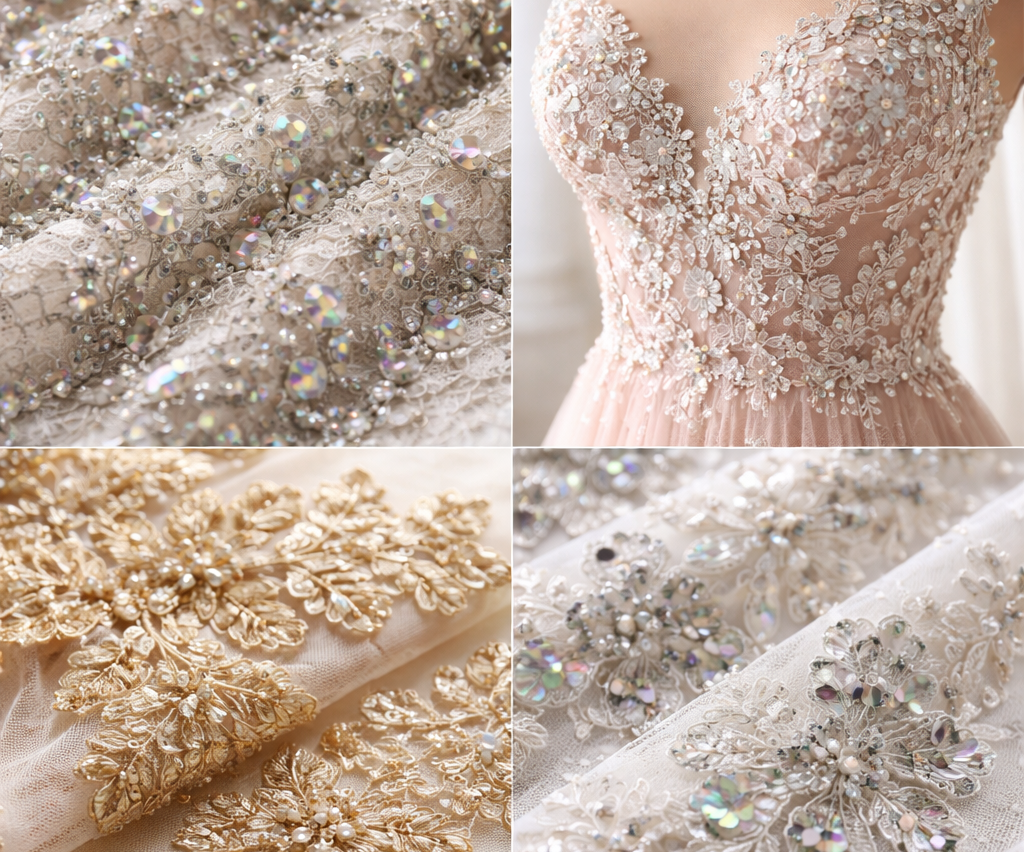
Many appliqués combine all three elements to create depth.
Practical benefit:
Layered embellishment allows designers to achieve a high-end look while controlling cost by limiting coverage.
5. Durability and Wearability Factors
Durability depends on:
-
Thread quality
-
Stitch density
-
Fabric support
-
Placement on garment
High-quality appliqués often survive multiple wears and gentle washing when used correctly.
Real-World Examples and Case Studies
Bridal and Couture Fashion
Bridal brands often use heavy beaded appliqués on bodices while keeping skirts lighter. This balances structure and movement. Industry reports from bridal manufacturers show that stitched beadwork has a lower return rate compared to glued embellishments, especially for destination weddings where garments are transported frequently.
Performance and Stage Costumes
Dance and stage costumes rely heavily on sequins and rhinestones. Costume designers commonly use stitched rhinestones instead of glue because garments undergo frequent movement and washing. According to costume production workshops, stitched stones last up to three times longer in high-motion environments.
Boutique Fashion Brands
Small boutiques often use detachable appliqués. This allows:
-
Easier garment washing
-
Customization for clients
-
Reuse of appliqués across collections
This method reduces production cost while increasing design flexibility.
Textile Export Businesses
Exporters supplying appliqués report higher repeat orders for motifs that combine light beading with sequins instead of fully beaded pieces. Buyers prefer lighter appliqués due to shipping costs and easier garment construction.
FAQs
1. Are beaded appliqués heavy?
They can be, but weight depends on bead type and density. Lightweight beads and smart placement reduce heaviness.
2. Do sequins fall off easily?
Stitched sequins last much longer than glued ones, especially with gentle care.
3. Are rhinestones better than sequins?
They serve different purposes. Rhinestones add sparkle; sequins add shine and texture.
4. Can appliqués be washed?
Yes, but hand washing or dry cleaning is recommended for longevity.
5. Are hand-beaded appliqués better than machine-made?
Hand-beaded appliqués offer detail and uniqueness. Machine-made ones provide consistency and lower cost.
6. Can appliqués be reused?
In many cases, yes—especially if they are stitched rather than glued.
Conclusion
Beaded appliqué, sequin appliqué, rhinestones, and sequins are powerful design tools when used with understanding and care. The main problems people face—poor durability, discomfort, and quality issues—are not caused by the materials themselves but by wrong choices and shortcuts.
By selecting the right type of embellishment, applying it correctly, and designing with purpose, these decorative elements can enhance garments without creating problems. Whether you are a designer, boutique owner, or embroidery enthusiast, learning how these materials work in real conditions helps you create products that look good, last longer, and satisfy customers.
If you are exploring embellishments for your next project, start small, test materials, and build your designs around function—not just appearance.